June 2026
NBGA Newsletter Vol. 5, #6
| | |
Greetings, and welcome to NBGA's June 2026 newsletter!
June has arrived and planting season is in full swing. The Northarvest Bean Growers Association greatly appreciates all the hours growers are putting in to grow the 2026 crop of dry beans and other crops. Thank you, farmers!
In this newsletter, you will find updates about how NBGA Directors, Members, and Staff are advocating for dry beans, a link for more information and registration for upcoming NDSU Field Days, bean recipe ideas from the Bean Institute that work perfectly for July 4th and other summer eating occasions, a summary of a popular NPR article extolling the benefits of beans, and much more.
If you can, please consider sharing this newsletter with someone else to help us spread the word. Anyone can subscribe to our monthly e-newsletter here.
Happy reading!
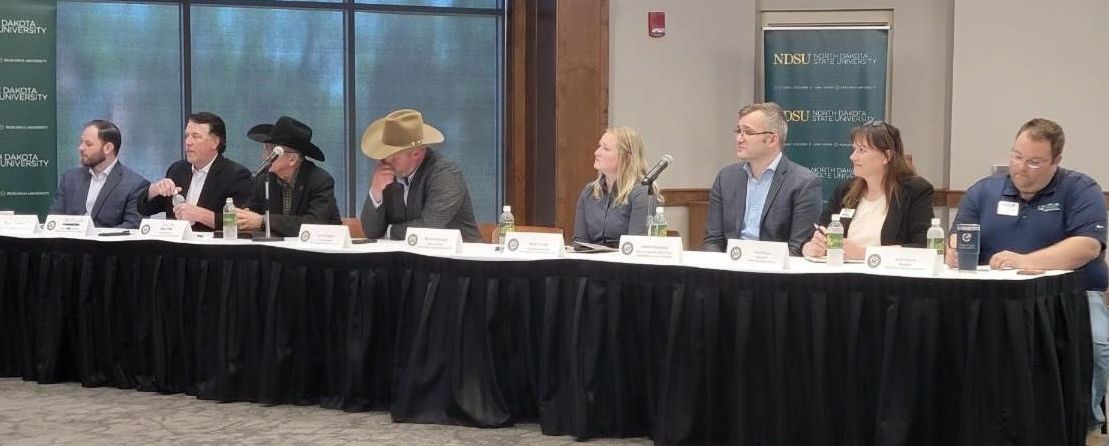
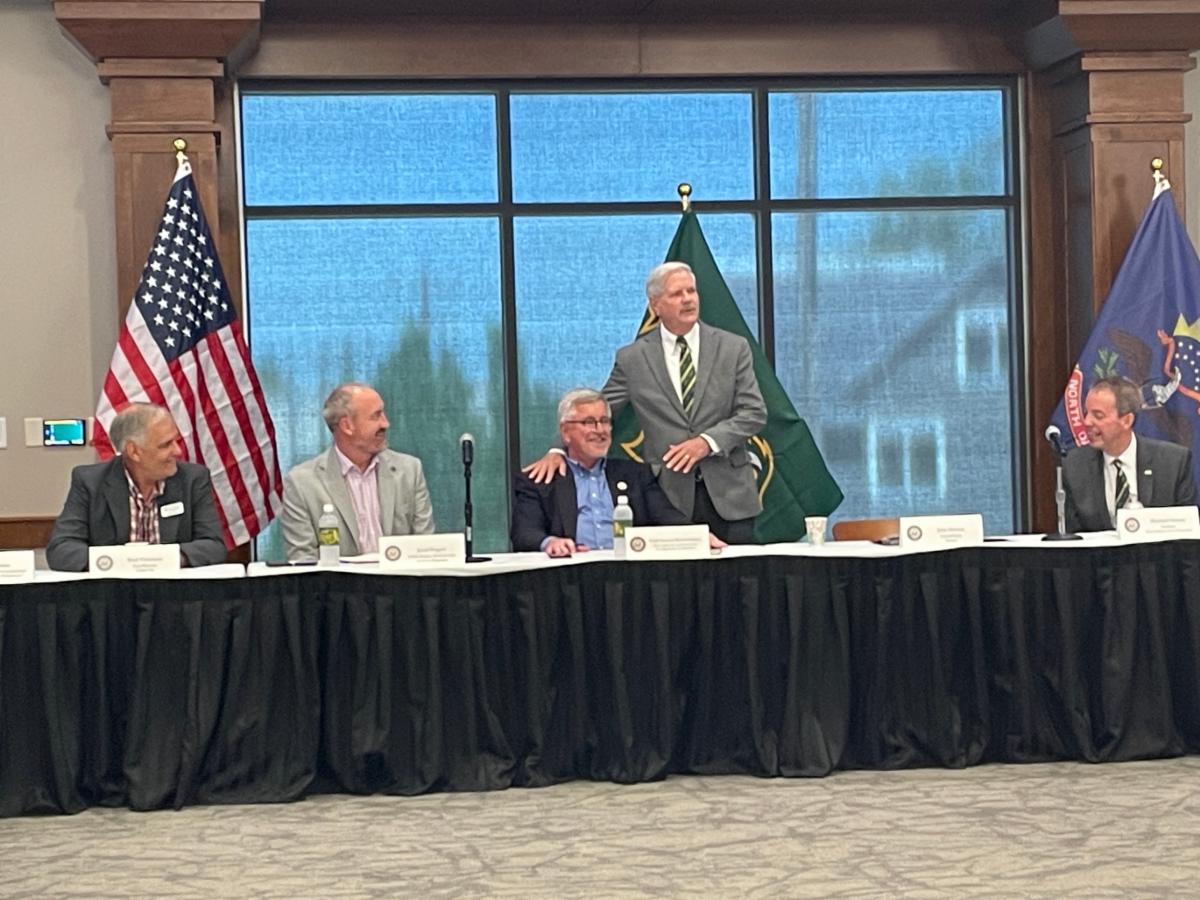
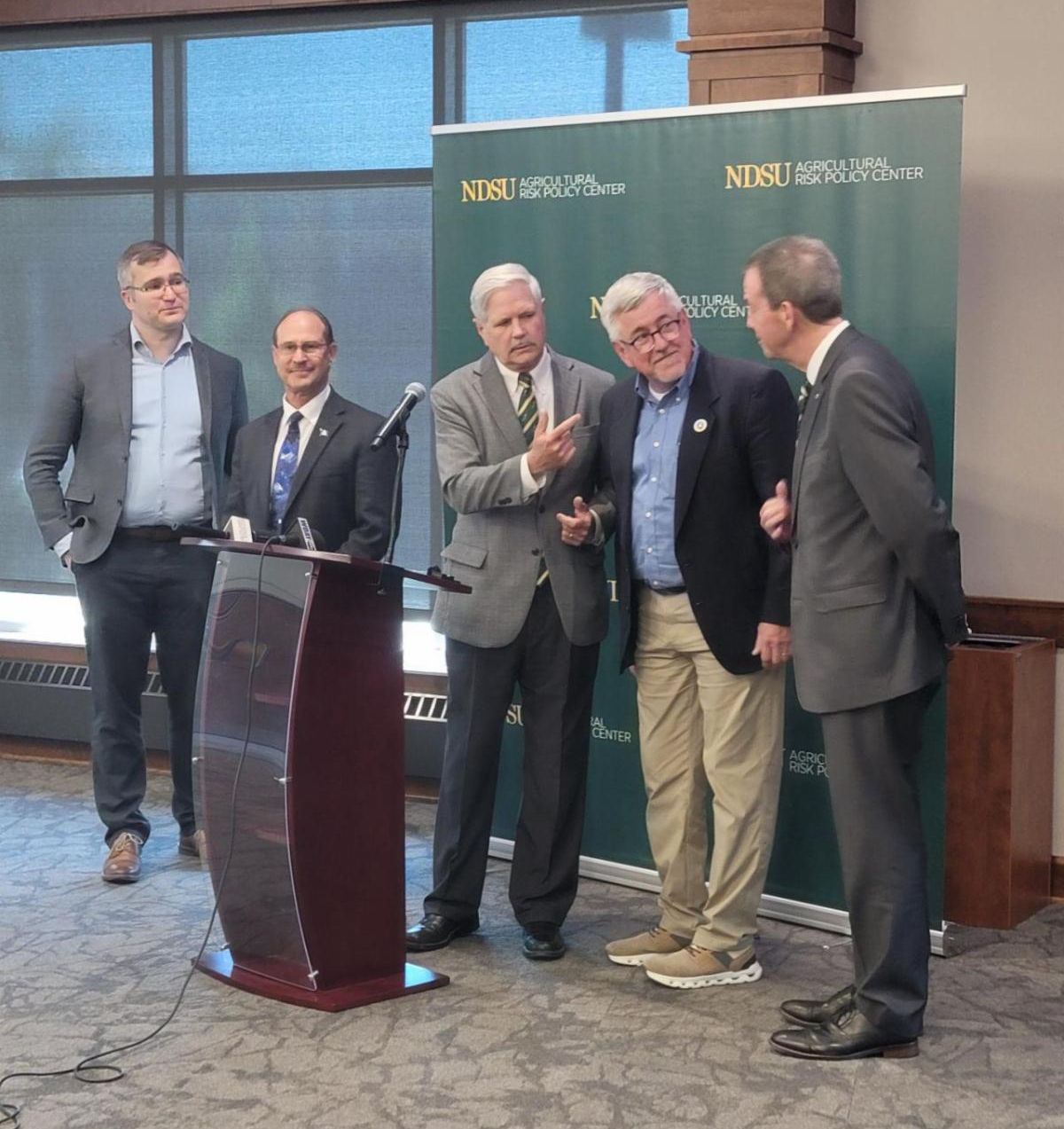
| | NBGA President Tony Richards (2nd from left) represents dry bean farmers at Senator John Hoeven's May 29th Agriculture roundtable at NDSU | | |
June 2026 Newsletter Table of Contents:
- USDA Weekly Dry Bean Market Review
- Bean Institute: Summer Bean Dishes
- Bean Nutrition Corner: NPR Highlights the Benefits of Beans
- Northarvest in the News and on the Move
- The Dry Bean Scene
- Announcements
| | |
USDA Announces Enrollment Period and Payment
Rates for Specialty Crop Farmers
Pre-filled Applications Available Online to Producers with a Login.gov Account
(Washington, D.C., May 29, 2026) – U.S. Secretary of Agriculture Brooke L. Rollins today announced payment rates and the enrollment period for the Assistance for Specialty Crops Farmers (ASCF) program. The U.S. Department of Agriculture (USDA) will issue $1.625 billion in payments to eligible specialty crop producers in response to elevated input costs and market disruptions resulting from foreign competitors engaging in unfair trade practices that impeded specialty crop exports. Producers who have a Login.gov account can access and submit their pre-filled application starting June 1, 2026. Producers who do not have a Login.gov account or prefer to enroll in person at their local Farm Service Agency (FSA) office can request their prefilled application beginning June 8, 2026. The ASCF enrollment period closes on Aug. 7, 2026.
| |
You can find more information about ASCF at the following links:
| | |
Below, you can find links to the most recent USDA Weekly Dry Bean Market Reviews. Click on the date to see the report.
-
The next USDA Weekly Dry Bean Market report will be released soon. You will be able to find that report here.
-
June 8, 2026: "Compared to last week: Trade remained light. According to the NASS Crop Progress report May 31, 2026, North Dakota had 95% dry edible peas and 64% dry edible beans planted, Montana had 74% dry edible beans and 95% lentils and 90% dry edible peas planted. Minnesota had 76%, Colorado had 17%, Nebraska had 41%, and Michigan had 16% dry edible beans planted."
-
June 1, 2026: "Compared to last week: Trade remained light. According to the NASS Crop Progress report May 24, 2026, North Dakota had 78% dry edible peas and 37% dry edible beans planted, Montana had 61% dry edible beans and 85% lentils and 86% dry edible peas planted. Minnesota had 52%, Colorado had 12%, Nebraska had 5%, and Michigan had 2% dry edible beans planted."
-
May 18, 2026: "Compared to last week: Trade remained light. According to the NASS Crop Progress report May 10, 2026, North Dakota had 55% dry edible peas and 13% dry edible beans planted, Montana had 38% dry edible beans and 60% lentils and 61% dry edible peas planted, Minnesota had 17% dry edible beans planted, Colorado had 1% dry edible beans planted."
| | |
Summer is here, and July 4th is just around the corner. This is a great time to enjoy beans at BBQs, picnics, cookouts, and outdoor parties. Here are a few ideas of tasty bean dishes to enjoy during summery eating occasions - although of course you can enjoy them at any time of year!
All recipes and photos below are courtesy of the Bean Institute.
| | |
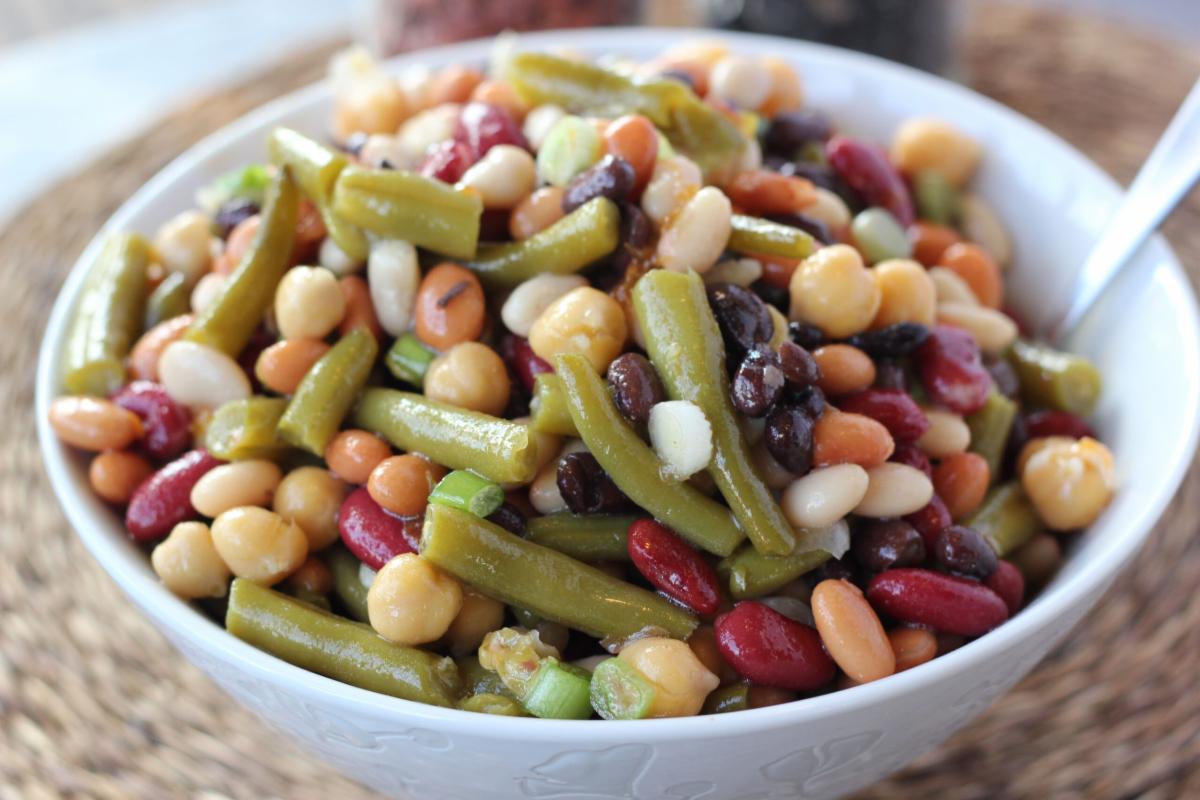
3 + 3 Bean Salad
Why stop at a three bean salad? This bean salad recipe calls for pinto beans, red kidney beans, black beans, and more!
➡️ Find the recipe here.
| | |
Green Chili Black Bean Beef Burger
This recipe was developed by a chef at The Culinary Institute of America. It blends black beans and beef, packing flavor, protein, and fiber.
➡️ Find the recipe here.
| | |
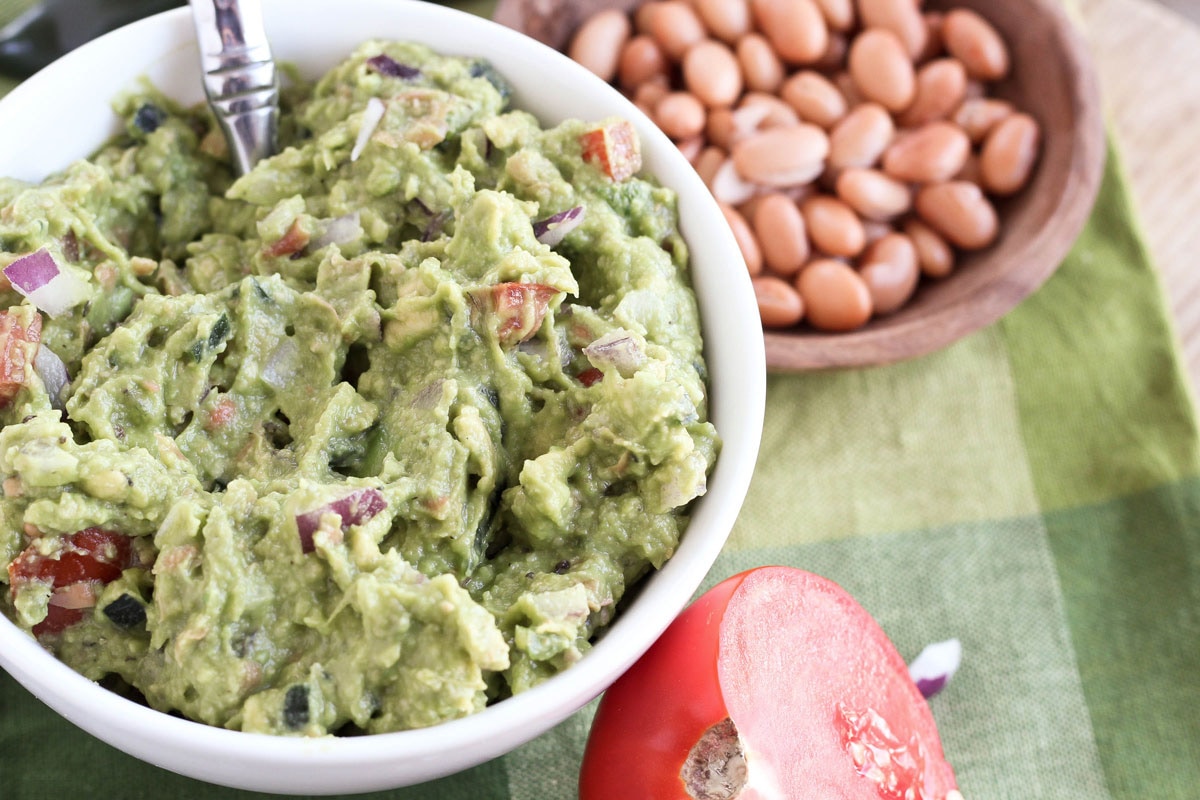
Guacamole with Pinto Beans
Creamy, earthy pinto beans pair perfectly with avocado in this bean-y spin on guacamole.
➡️ Find the recipe here.
| |
|
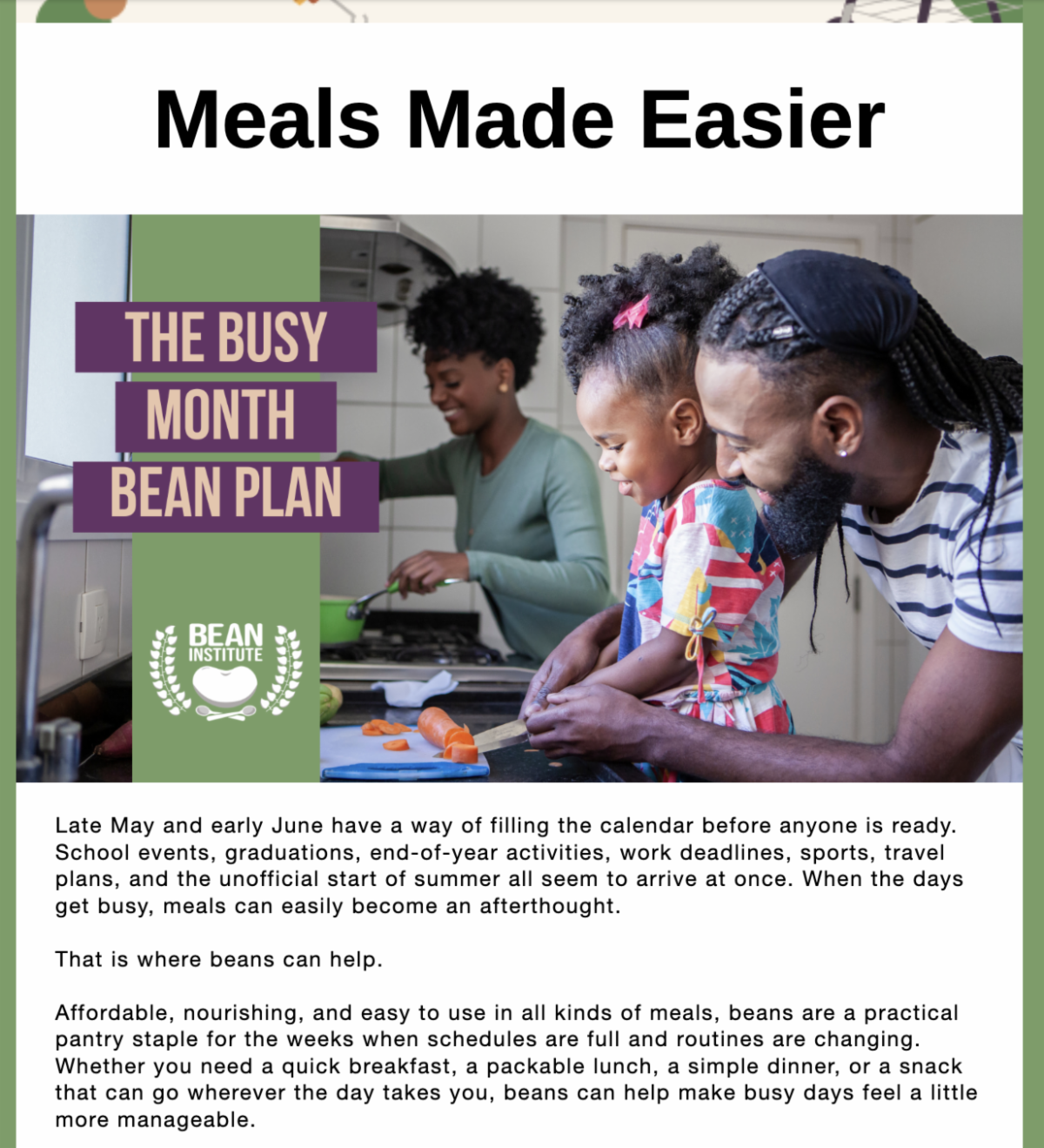
In their May 2026 newsletter, the Bean Institute highlighted how beans are a perfect way to make meals easier. They share how beans can star in breakfasts, lunches, dinners, and snacks, fueling your day with simple and tasty nutrition. "The best busy-season meals do not have to be complicated. They just need to be realistic. Beans can help turn pantry staples into breakfasts, lunches, dinners, and snacks that work for full calendars and changing routines. As summer gets closer, keeping a few bean recipes ready can make it easier to feed yourself, your family, or a crowd without starting from scratch every time."
➡️ Read the full post - The Busy Month Bean Plan - here.
| | | |
More from the Bean Institute
Are you looking for more helpful and fun bean information and some bean recipe inspiration to kick o? Subscribe to the Bean Institute's newsletter: The Bean Bulletin.
➡️ Sign up by clicking here!
| | | |
Did you know you can follow the Bean Institute on Facebook, Instagram, Pinterest, TikTok, and YouTube?
Click the icons below to follow on your favorite platform!
| | NPR Highlights the Benefits of Beans | | |
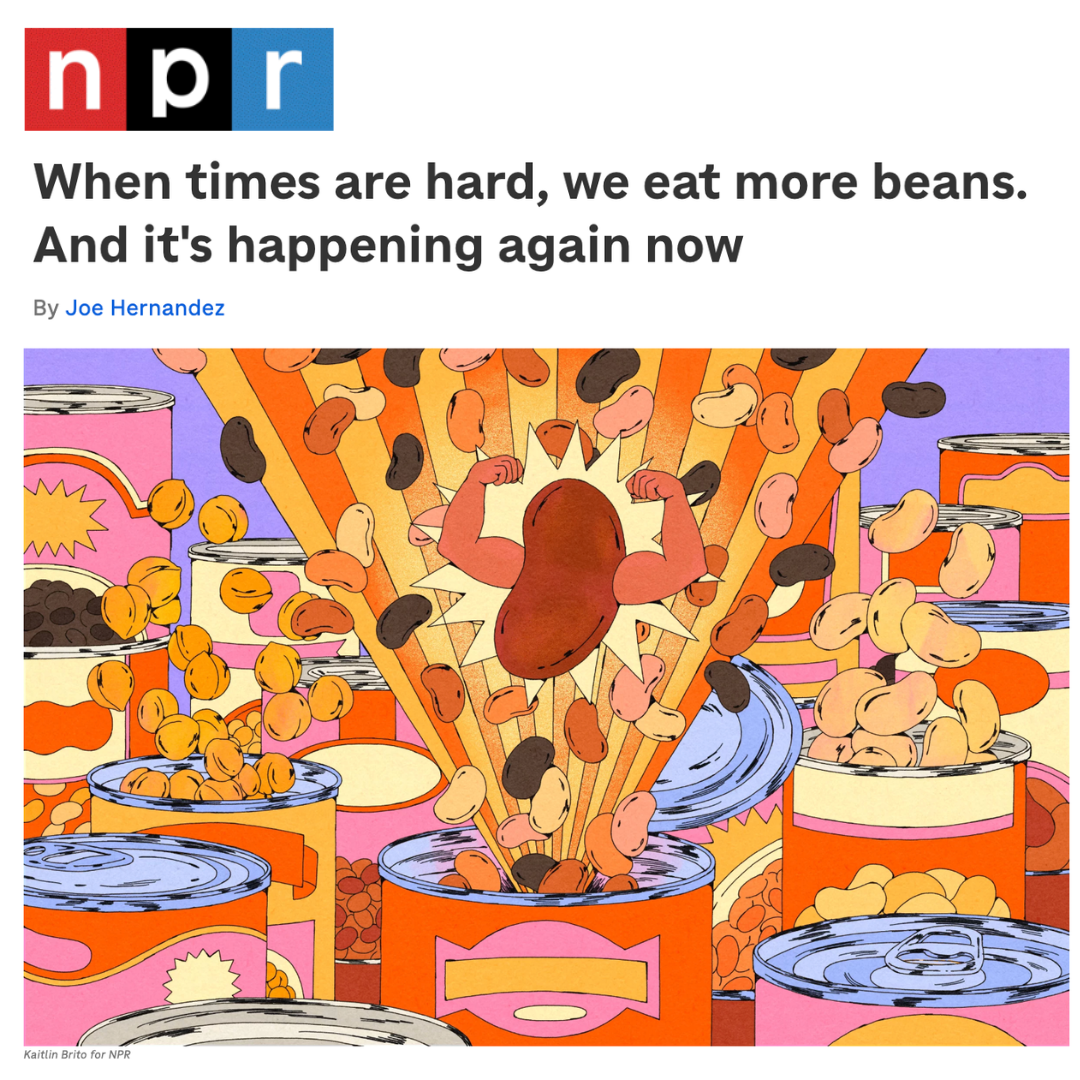
A featured article in NPR's All Things Considered - the most listened-to, afternoon drive-time, news radio program in the country - did a deep dive into beans.
NPR News Reporter Joe Hernandez covered this beany news. The article is also accompanied by a 3-minute episode to listen to, which includes interview clips with Colorado State University Researcher and Professor Dr. Henry Thompson, USA Pulses CEO Tim McGreevy, and others.
| | |
Yes, Beans Are Affordable - But That Isn't All
The title of the article - When times are hard, we eat more beans. And it's happening again now - indicates that as Americans are seeking out cheaper food choices, beans are an excellent option. In periods of economic uncertainty, pulse (e.g., bean, chickpea, dry pea, lentil) popularity tends to increase.
A can of beans costs around $1, and it contains 3.5 servings of beans. "[A]s food prices continue to rise, beans offer a low-cost, nutritious protein source that can keep you as full as beef, one study published in The Journal of Nutrition found."
However, the benefits of beans do not stop at affordable and satiating. As McGreevy states in the article, "Beans can help you feel good. That's their power." This feel-good power can be attributed to the impressive nutritional profile of beans and the numerous health benefits they are associated with, such as helping maintain more stable blood sugar levels, lowering cholesterol, and reducing the risk of cancer.
And the good news is these health benefits come in a delicious, versatile package! On social media, bean-centric recipes are increasingly popular, and you can even find bean-fluencers on BeanTok, sharing a whole array of tasty, creative bean dishes.
Key Takeaways from the Article
-
Beans are critical for agricultural systems and in human history. One of the individuals interviewed, Joël Broekaert, author of A History of the World in Twelve Beans, explains that, "Beans not only are an ancient crop but were one of the things that made ancient agriculture possible at all... That's because beans are nitrogen-fixing plants, which means they contain bacteria that replenish nitrogen in the soil. Bean plants help keep soil healthy when grown alongside crops that absorb a lot of nitrogen, such as grains." For thousands of years, humans have cultivated beans, and beans have played an essential, important role in the human diet throughout history.
-
Beans are nutritious and offer many health benefits. Beans are rich in fiber and protein, in addition to other nutrition. Dr. Thompson details that among the many benefits of beans is the "positive effect on the microbes that live in our gut. 'What we and others have found is the types of microbes that like to eat pulse fiber are beneficial microbes, and the microbes that tend to be associated with diseases are suppressed by pulse consumption,' he said. 'There's your benefit, and it's pretty simple.'" Thompson encourages people to eat beans every day: "[P]eople who want to reap the benefits of pulses should eat a "therapeutic amount" of 1.5 cups per day, which is equal to about one 14.5-ounce can, and ensure they are getting a variety." For instance, when visiting a restaurant like Qdoba or Chipotle, ask for both pinto and black beans instead of just one type.
-
Beans are tasty and versatile. Bean champions, social media influencers, and chefs alike recognize the deliciousness of beans. Some of the bean dishes mentioned in the article include bean banana bread and pinto bean yogurt. You can also find recipes on the NBGA YouTube Recipe playlist and on the Bean Institute website.
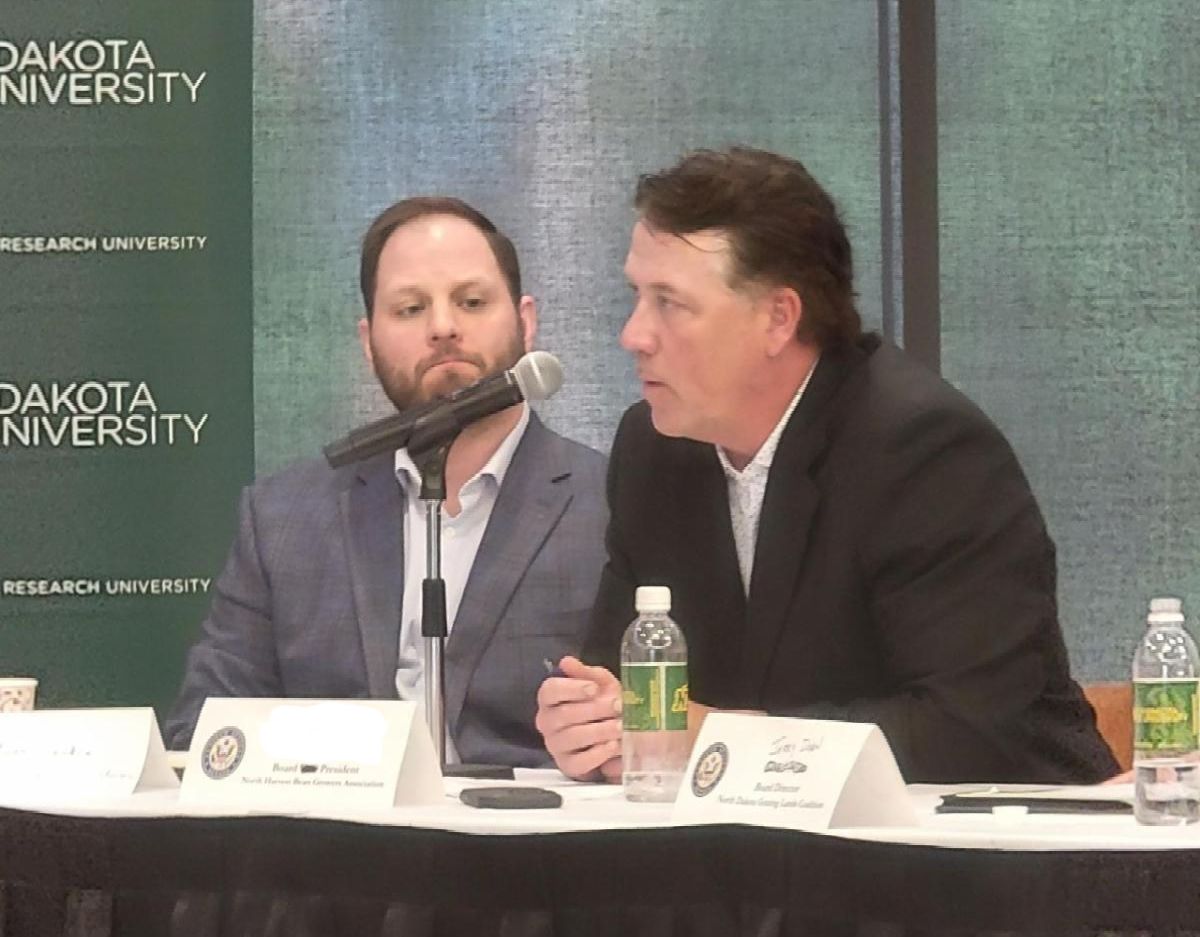
| | NBGA Invited to Ag Roundtable | The Northarvest Bean Growers Association would like to thank Senator John Hoeven for hosting Under Secretary for Farm Production and Conservation (FPAC), Richard Fordyce, at the NDSU Campus. Northarvest President Tony Richards had the opportunity to share with Under Secretary Fordyce about the challenges facing fellow Specialty Crop Farmers. | |
After the round table it was announced that funding was currently being considered and soon to be approved by the Office of Management and Budget (OMB) for Ag producers. (NOTE: See first article for more info)
Northarvest would like to thank President Richards for making the effort to represent his fellow growers and our Industry.
NBGA would like to thank Senator Hoeven for the invitation to the roundtable, and Under Secretary Fordyce for making the trip to North Dakota for an important conversation and taking the concerns of ND producers seriously.
|
| |
Northarvest was the proud sponsor of the recent Bean There, Cooked That: Unpacking the Nutritional Power of Dry Beans webinar, organized by North Dakota State University. Thank you to all the presenters for sharing their expertise! The presentations covered diverse topics ranging from dry bean protein characterization, to how agronomy shapes nutritional quality, to how to simply and deliciously add more beans to our diets, to product development opportunities, and more.
Be sure to check next month's Nutrition Corner for a summary of what was discussed in the webinar! If you want a sneak peek, you can find the YouTube playlist of the webinar recordings here.
|
| First Annual Chili Contest | | |
The Northarvest Bean Growers Association is a proud sponsor of the first annual Chili Contest at the West Fargo Dive Bar. There are prizes for 4 categories plus other giveaways, along with beer, wine, and bourbon tastings.
Mark your calendars for Saturday June 20th, 11 am - 3 pm. We are looking forward to a delicious event - hope to see you there! (And tune in to North Dakota Today tomorrow morning to learn more!)
| | |
The Dry Bean Scene is sponsored, in part, by NBGA. Click on the links below to listen to the most recent episodes.
-
➡️ June 5, 2026: North Dakota Farm Service Agency Program Director Brandi LaFromboise discusses additional assistance for specialty crops.
-
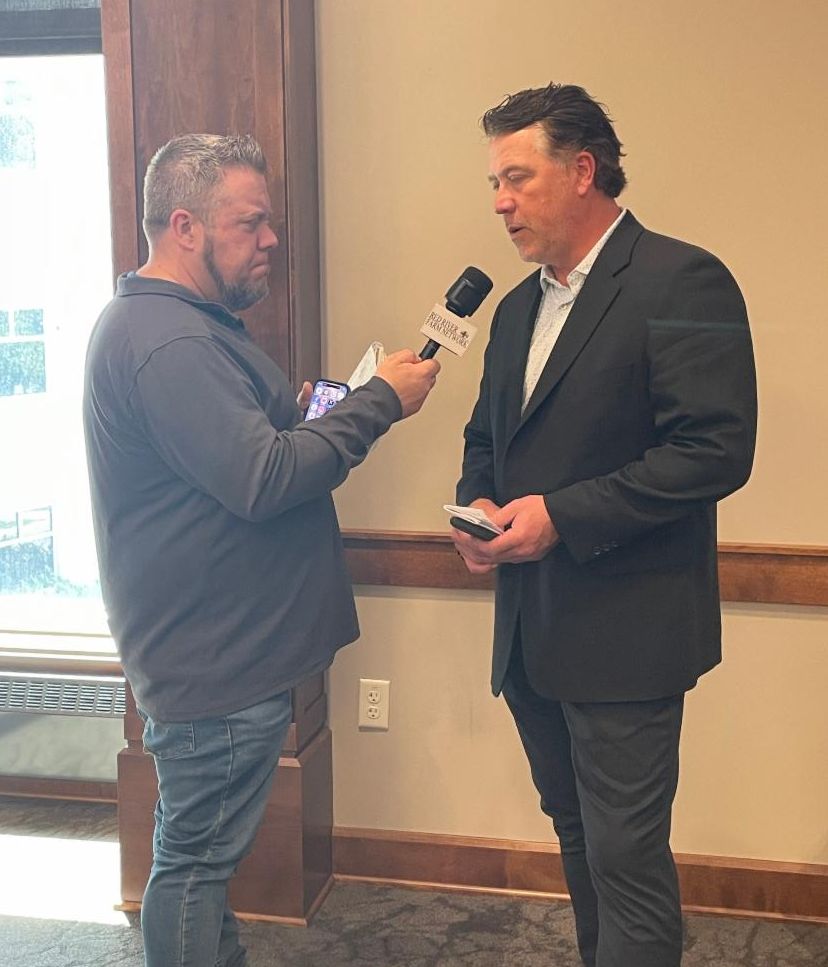
➡️ May 31, 2026: Northarvest Bean Growers Association Board President Tony Richards highlights his comments made at this past week’s farm roundtable discussions.
-
➡️ May 23, 2026: Johnstown Bean Company General Manager Dylan Karley expects a noticeable decline in edible bean acreage. With the recent uptick in soybean prices, ‘swing acres’ could shift away from dry beans.
-
➡️ May 18, 2026: NDSU Extension Cropping Specialist Jeff Stachler talks about wind erosion.
|
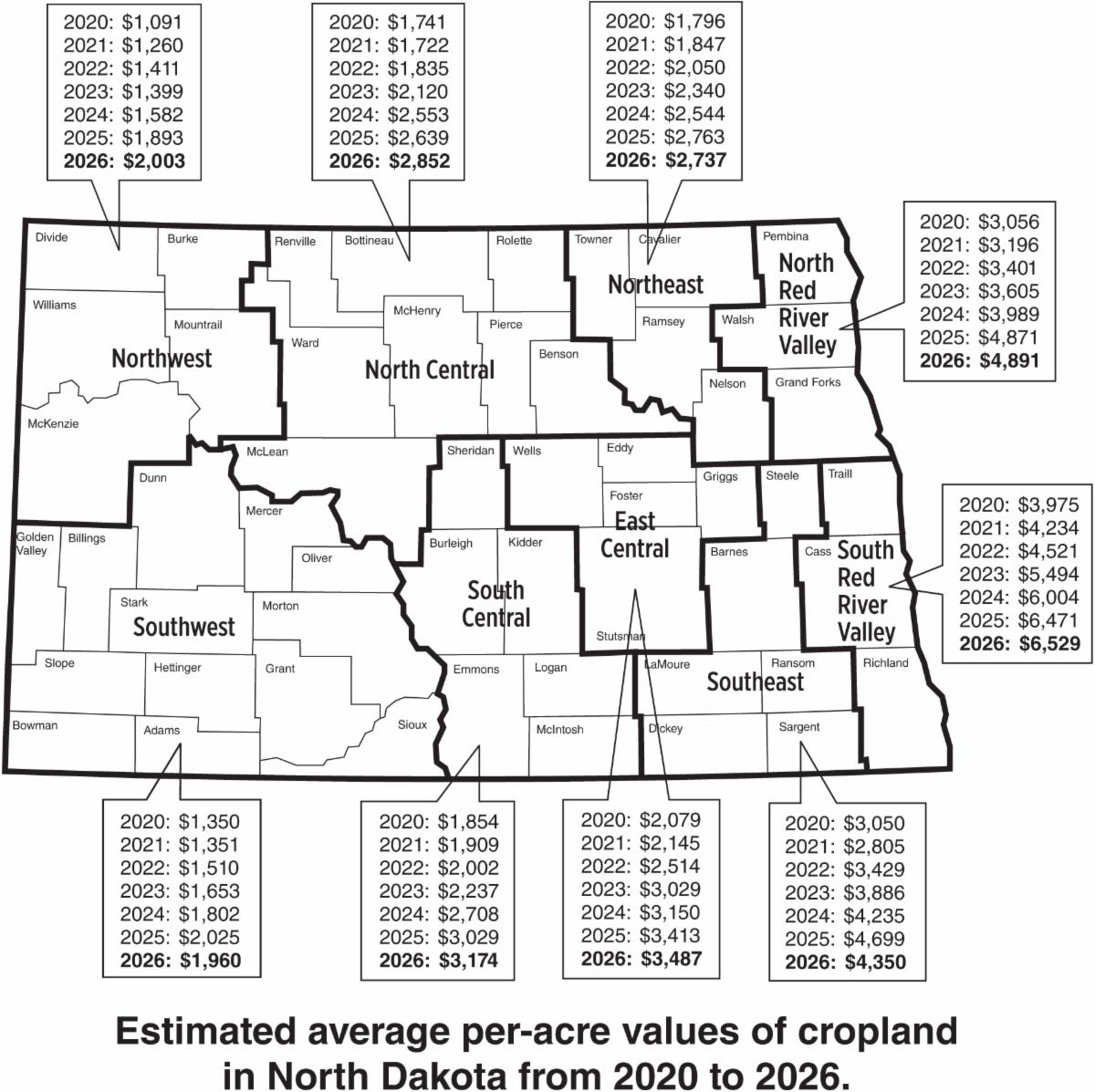
| North Dakota Cropland Values Flatten After Years of Growth | | The information below regarding cropland values is from NDSU. | |
|
After four years of double-digit growth in North Dakota’s average cropland prices, 2026 reports indicate that values have slowed momentum or even slightly reversed the trend in some regions.
According to the North Dakota Department of Trust Land’s annual land survey data, statewide cropland values grew 0.88% from 2025 to 2026. The North Dakota County Rents and Prices Annual Survey is available at HERE.
See the image below of land values.
| | |
Bryon Parman, North Dakota State University Extension agricultural finance specialist, says he sees the average flatten after four straight years of value increases. For easy interpretation across the state, Parman assembled the data by NDSU Extension region.
While the state average showed little or no growth, there were much wider region-specific swings: the North Central had a land price increase of over 8%, the Northwest grew at nearly 6%, the South Central saw an increase of just below 5% and the East Central increased approximately 2%.
However, the Southeast reported a decline in cropland values of nearly -7.5%, the Southwest declined by just over -3% and the Northeast declined almost -1%.
The North and South Red River Valley showed little change in cropland prices from 2025 to 2026.
Rents, for the first time in several years, increased more than land prices, with a statewide increase of 2%. However, rents were less variable than land prices. Three regions — the Southwest, Southeast and North Red River Valley — remained essentially unchanged, moving up or down by less than 1%. The largest rent decline was in the South Red River Valley at -2.5%.
The remaining regions saw rental rate increases. The largest increase occurred in the North Central at 8.2%, followed by the East Central, where rents increased 6.5%. The Northwest increased approximately 4.5%, South Central 2.7% and Northeast just under 2%.
“While it was widely expected that there would be a slowdown in cropland price growth across the state, which the state average supports, it is a bit surprising to see the wider regional swings,” says Parman.
When farm profits are thin and begin to impact land values, the volume of sales tends to slow. When that happens, the sales that do occur will have a much larger influence.
“So, if there were a region where a few individuals are making purchases, this could drive those averages up, while in other regions, a few sales at below the previous years’ averages can pull those averages down further than they normally would,” explains Parman.
However, rental rates typically adjust more slowly, as rents are often multiyear contracts that require several years of low net farm incomes to trigger major adjustments.
For more information, contact Parman at bryon.parman@ndsu.edu.
| | |
2026 NDSU Field Days
The North Dakota State University (NDSU) Research Extension Centers’ annual field days are set. The events take place at the Research Extension Center sites across the state and feature speakers, presentations and tours covering a diverse array of topics. The field days are open to the public.
| | |
Help with Bean Research
NDSU is conducting a research project to determine preferences related to dry edible beans. The research team will use the results of this survey to develop new educational materials, including videos and webinars.
The survey takes about 5-10 minutes to complete, and participants may win a prize through a drawing.
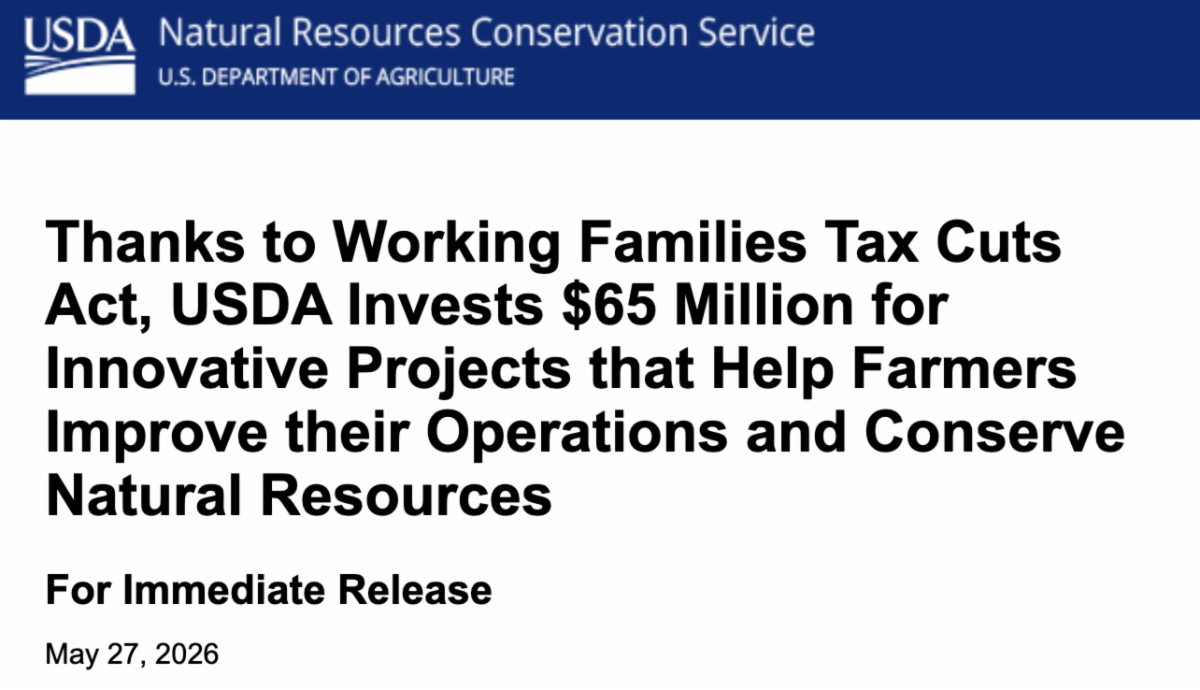
| | Below are excerpts from a May 27, 2026 USDA press release. Click the button to read the full press release, which includes this year's priorities for Conservation Innovation Grants (CIG) CIG On-Farm Trials and CIG Classic. | | |
WASHINGTON, May 27, 2026 – The U.S. Department of Agriculture (USDA) today announced the availability of $65 million in funding this year for new tools, approaches, practices and technologies to further natural resource conservation on private lands through the Conservation Innovation Grants (CIG) program.
CIG is supported by the Working Families Tax Cuts Act (WFTCA), which increased funding for farm bill conservation programs, like the Environmental Quality Incentives Program (EQIP), which funds CIG. The WFTCA strengthens the ability of USDA’s Natural Resources Conservation Service (NRCS) to support farmers, ranchers, and partners in tackling conservation challenges at the landscape scale.
| |
US Dry Bean Convention 2026 in Arizona
The 2026 US Dry Bean Convention will take place in Tucson, Arizona on July 18 - 21. Head over to the conference website for more details.
| | | |
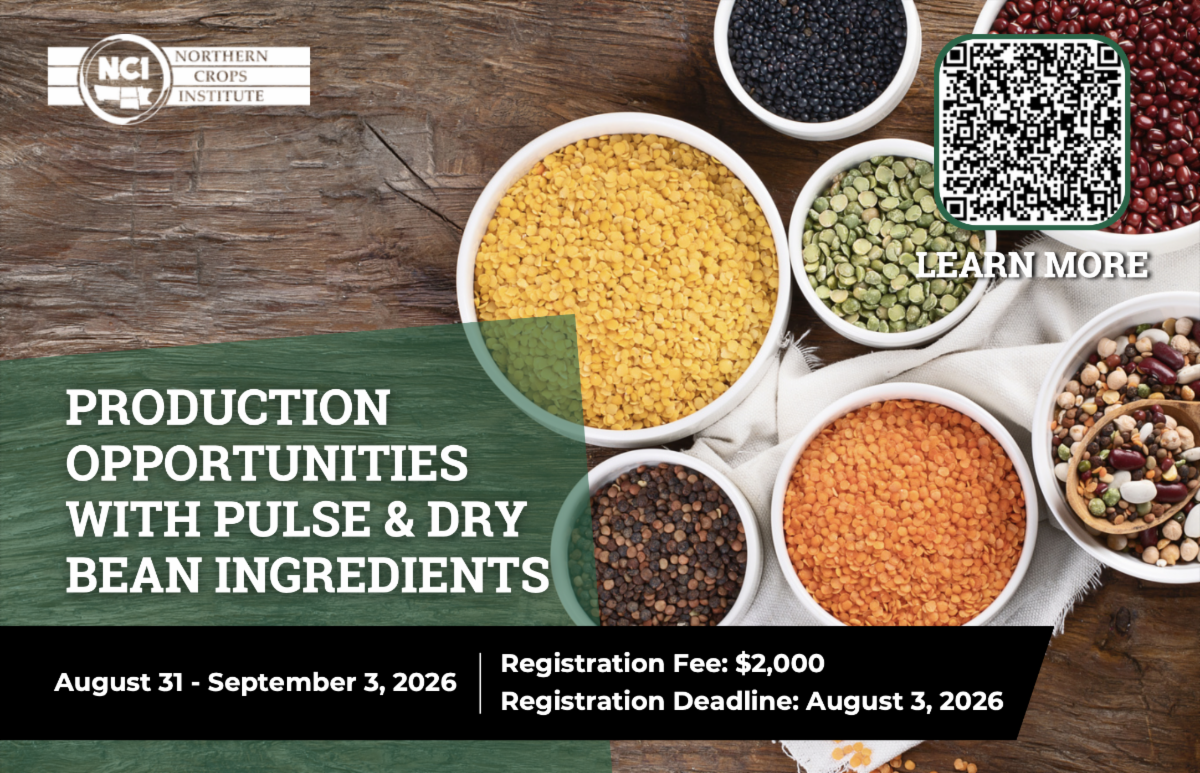
New Course by the Northern Crops Institute on Opportunities for Dry Bean Ingredients
This year, the Northern Crops Institute (NCI) is offering an exciting new course. This course - Production Opportunities with Pulse & Dry Bean Ingredients - will take place on August 31 - September 3, 2026.
For more information, click here or on the image below.
| NCI Program Manager Krista Jansen shares why she is looking forward to the course: “This hands-on course offers a unique opportunity to explore the full value chain of pulse and dry bean ingredients. From milling and functionality to product development and market applications through expert-led sessions and live demonstrations. Participants will leave with practical insights, real-world experience, and new ideas for creating innovative, high-value food products in rapidly growing plant-based markets.” | |
Do you know someone who would enjoy Northarvest News? Forward to a fellow bean grower, family, and friends so they can sign up and be in the NBGA know, too! | |
Thank you for reading. NBGA wishes you a good rest of June, and we look forward to sharing more news and updates in July! | | |
|
4844 Rocking Horse Circle S, Suite 2
Fargo, ND 58104 • info@northarvestbean.org
www.northarvestbean.org
| | | | | |