|
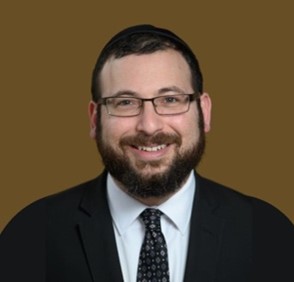
As part of our new initiative to spotlight outstanding RCA members in our newsletter, we are proud to feature Rabbi Nissan Andrews, rabbi of House of Jacob-Mikveh Israel in Calgary. We asked him 12 questions about his career – read his answers (edited for clarity and length) below.
RCA: If you weren’t a rabbi, what would you be?
I think I would likely be an engineer. I actually think of the halachic process as being very, very similar to engineering in that it's very much rooted in mechanisms, rules, interactions, and how they interplay with flow charts and things of the sort.
I very much like learning halacha. I spend a good deal of my available time for learning inyanei halacha, and I view the process much like how an engineer views a machine, or perhaps a problem that has to be solved within a framework, within a system of rules and obligations.
What’s the first thing you do when you sit down to write a shabbos derasha?
Well, I say a short tefillah that I should have, and finding the appropriate thing to say that will resonate with my kehillah. But after that, the first thing that I do is actually, you know, go through the entire parasha, take a look at various midrashim, some of the meforshim that I enjoy looking through. I like to go for walks and mull it over and see if there's any way that I can relate it to whatever challenge I'm facing within the shul or that we as a community are facing.
That's usually where I start. It's with reading the parasha and much time and contemplation.
Read our whole conversation here.
IV) Chomer Ledrush
Some ideas to turn your gears heading into the parsha
1) Esav's Kibbud Av - Yaakov's Morah Av
Esav is praised for his profound Kibbud Av towards Yitzchak. Could it be that he actually outshined Yaakov Avinu – the bachir haAvos – in this area? Not quite, Rav Soloveitchik explains (Yahrzeit Shiur, 1953): “There are two mitzvos governing the obligations of a child towards his parents. One of these mitzvos is kibud, honoring one's parents, while the other is morah, having fear and reverence for one's parents. Kibud involves taking care of the parents' physical needs: providing food, drink, clothing, covering, taking the parent in and out. Morah means respect, recognizing their authority …
Kibud often arises out of an instinctive feeling of self-preservation; the son knows that a time will come when he himself will require the same services as his father does. Kibud can often be found in the animal kingdom as well: young eagles provide for older eagles who can no longer fly.
Chazal portrayed Esau as a master of kibud. A strong instinct drove Esau to honor Isaac. Yet the true gauge of the relationship between father and son is not kibud, but morah. Morah is not an instinct; one has to display genuine understanding to relate with love and humility towards his father …”
2) Why Do I Exist?
(Note: this is one of Rabbi Penner’s “all time favorite drashos,” and the last time Rabbi Lamm zt”l gave feedback on a speech of his.)
Rivka’s reaction to a difficult pregnancy can seem – let’s face it – dramatic. If so, why do I exist? Rav Zvi Dov Kanatopsky z”l, author of the classic Night of Watching, develops a single approach to deal with this question and others that is absolutely astounding. Rivka’s hesitation with the pregnancy stems from self-doubt – her pregnancy is undoubtedly significant, but she questions whether she is worthy of carrying it. We find ourselves asking often, as a people, if so, why do I exist? We may think that the burden of being the “Chosen People” is one best carried by someone else. Like Rivka, though, we are answered with “there are two great nations inside of you” – we carry something significant, and therefore we are both worthy and able.
See the full piece from Rav Kanatopsky.
3) Save it for Later
Yaakov receives many blessings throughout his life, signifying his role as the heir to Avraham's mission and promises from Hashem. The Zohar quotes Rabbi Yosi, who notes that Yaakov strategically decides to use a specific blessing (one from his father before he left for Aram) to deal with immediate challenges – like those posed by Esav – while saving the more powerful brachos for the future needs of his descendants. See an adaption of this stunning Zohar here.
4) Parparos
A deeply fascinating idea from Rav Menachem Genack’s Ha’aros Al HaTorah: Esav was intentional in not trying to kill Yaakov during their father’s lifetime. Not so with Yaakov’s own sons and their brother Yosef (it was only Reuven’s last-minute intervention that prevented bloodshed). Culling from the “Eleh Ezkera” piyyut, we see the possibility that this merit of Esav allowed Edom, his descendants, to persecute the Harugei Malchus, the descendants of the Shevatim. Food or thought, or maybe fuel for Ahavas Chinam in our endless battles against our enemies.
Did our chomer help you over Shabbos? Want to see more of less of an idea? Let us know!
|