Weekly Digest Number 12 - March 22, 2022 |
|
Welcome to the RWU Rail & Labor News! This news bulletin is produced and emailed out each Tuesday morning. We hope you find each week's news and information useful. If so, please share with co-workers, friends, and colleagues. If you like, you can sign them up to get all the news from RWU HERE. Or forward them the link. Note: If you read over this news bulletin each week, you will be sure to never miss the important news of what is going on in the railroad world from a worker's perspective!
|
|
(Editor's Note: The fight is on once again in Canada. Things are heating up! For more info, please read the Special Bulletin below by clicking on the button. |
|
Work Stoppage Begins for CP Rail Workers |
|
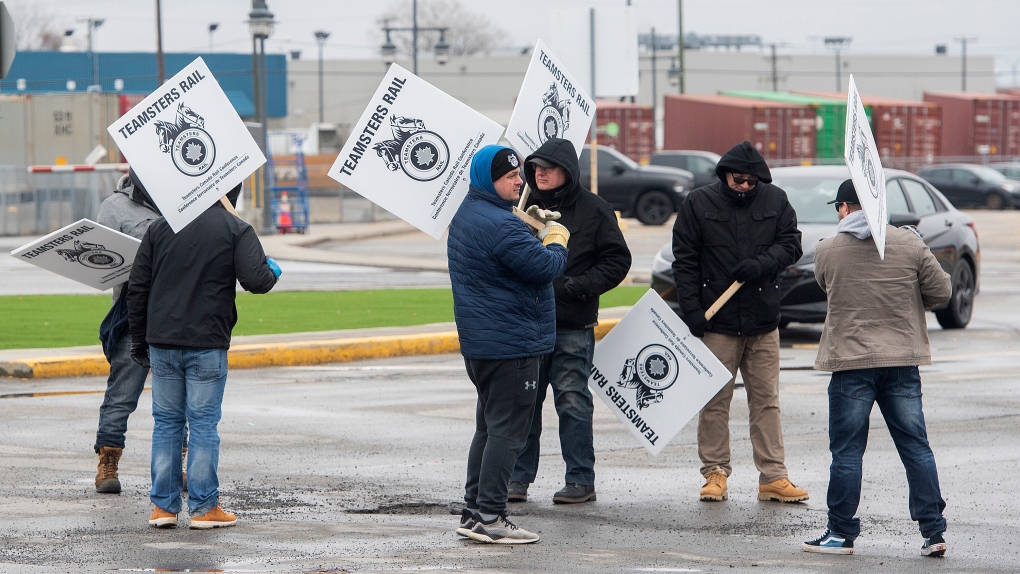
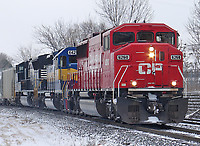
Trains across the country came to a halt Sunday, as CP Rail employees are now off the job and onto the picket lines.
The company’s roughly 3,000 employees, represented by Teamsters Canada Rail Conference (TCRC), are off the job after the two sides failed to reach a deal before a midnight deadline set by the union and the company for either a strike or a lockout.
"We’re disappointed to once again be in a work stoppage; none of us want to be out here on the picket line," said TCRC local chairman Jason Hnatiuk told CTV News while picketing outside a Port Coquitlam CP Rail office Sunday.
|
|
BNSF & NS Declare Impasse Over Crew Size |
|
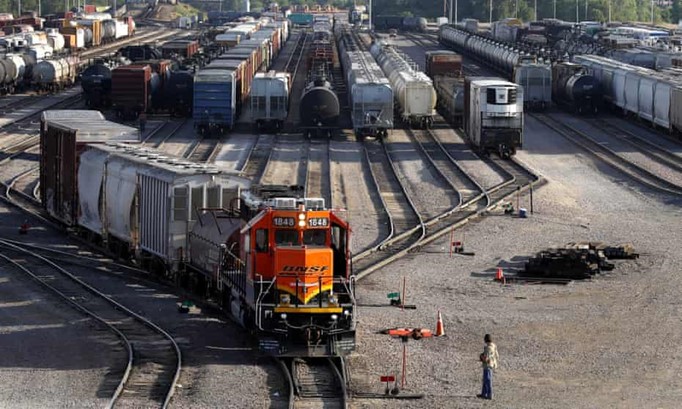
Class I railroad carriers BNSF and NS declared an impasse this week in the mandatory bargaining over crew size under Section 6 of the Railway Labor Act (RLA). In declaring an impasse, the two railroads, represented by the National Railway Labor Conference (NRLC), seek federal mediation as required by the RLA. Union Pacific Railroad is not seeking mediation at this time.
Beginning in October 2019, most Class I carriers served notice under Section 6 of the RLA to force the SMART Transportation Division to bargain over crew size. Today crew size is determined by collective bargaining agreements implemented by Presidential Emergency Board 219 under then-President George H.W. Bush.
|
|
(Editor's Note: All too often, struggles of rail workers are a flash in the pan, and then fade away into the general demoralization. But this fight is far from over. Pushed to the limit, we may just see a mass resistance in the coming weeks and months. The article below from The Guardian is emblematic of the fact that rail workers struggles are catching the attention of the mainstream.) |
|
‘Completely Demoralized’: US Railroad Workers Pushed to the Brink |
|
American railroad workers are criticizing a new restrictive attendance policy at one of the largest railroad freight networks in the US, as they experience grueling schedules and labor cuts in the midst of new union contract negotiations, which have hit an impasse, prompting federal mediation.
The Guardian spoke with several railroad trainmen and engineers who requested to remain anonymous as they are prohibited by their employer from speaking to the media.
On 1 February, BNSF Railway, one of the largest railroad freight networks in North America implemented a new point system attendance policy, criticized by workers and unions representing about 17,000 workers, for being more restrictive, incentivizing going to work fatigued or ill, and increasing threats of discipline.
One train engineer in the network’s Great Plains Region claimed they had to push back a medical procedure for a chronic illness to the summer, when they have vacation time off scheduled, as they would have used nearly all of their attendance points required for the time off needed for the procedure.
“We feel stabbed in the back, completely demoralized with the work we did through the pandemic, understanding the situation, going the extra mile, and doing what we’re asked to do, and then some without complaint,” said the worker.
The new attendance system appears arcane. Workers are allotted 30 career attendance points and docked several points for taking any days off, with points varying on the time of the week and days designated as high-impact days. Workers can get four points back after working uninterrupted for 14 days. Previously, workers were allotted five weekdays off a month and two weekend days off. Workers are continuously on call and have just over an hour to report to work when they are called in.
“Fatigue is a chronic issue with almost everyone I know and work with. We manage it so it doesn’t get too severe,” they added. “We’ve been struggling through the pandemic with fatigue, exhaustion, and we have no chance to even catch our breath.”
|
|
(Editor's Note: Yet another article - from the American Prospect - about rail workers and what they are up against that will enlighten thousands of Americans as to what is actually going on in the rail industry.) |
|
Rail Workers Punished for Taking Days Off, Union Says
Unionized workers at Warren Buffett’s BNSF Railway are angry about a new attendance policy that incentivizes coming to work sick or fatigued
|
|
Last month, the Warren Buffett–owned BNSF Railway drew attention after a federal judge effectively blocked 17,000 engineers, conductors, and yardmasters from striking. Under the federal Railway Labor Act, workers in key transportation sectors like freight railroads cannot strike over so-called “minor” issues, under the theory that it would cause too much damage to the economy.
The ruling led to an outcry about blocking the right to strike and forcing workers back to their jobs. But less attention was paid to the “minor” issue: a new BNSF attendance policy that employee unions claim penalizes their members for taking time off work, will lead to many having to leave their jobs, and will increase the risk of serious accidents on the freight rail system.
Now the unions have escalated their concerns. Earlier this month, the Transportation Trades Department (TTD) sent a letter to Transportation Secretary Pete Buttigieg and Labor Secretary Marty Walsh, asking their departments to investigate and potentially take action to terminate the policy. In an interview with the Prospect, TTD president Greg Regan questioned whether the policy violates the Family and Medical Leave Act and potentially impacts public safety. “Just doing an investigation can put a significant amount of pressure on these companies,” Regan said.
|
|
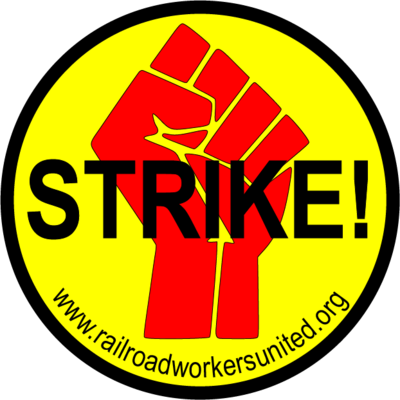
Get Your STRIKE! Stickers Today |
|
Attention all Railroad Workers! There is no doubt about it: Strike Fever is in the air! Last Fall it all got started when workers at NS were polled for a strike vote. In January, workers at BNSF were likewise polled for strike action. Meantime, all of the unions in national handling are well on the road to impasse with the major Class One carriers this spring. And in Canada, workers at CP Rail are out on the picket line, the railroad shut down!
After decades of givebacks and concessions, perhaps the tide is beginning to turn. Maybe our day is coming. But it is not inevitable. We have to make it happen. If we vote to strike - and actually do walk out - we need to win! And that means building the greatest possible solidarity and unity that we can. Passion is running deep and momentum is building. All rail workers need to get involved. Attend your union meeting, hold your leaders accountable, stay informed, stand up for each other, refuse to be beaten down, fight back, and be your brother's/sister's keeper.
Working people are standing up and fighting back in industries across the spectrum. We can proudly take our place among them.!
|
|
(Editor's Note: After stonewalling the unions for more than two years, why do the rail carriers proclaim that the unions' desire to move forward is "premature"? Because it is in their interest to drag negotiations out as long as possible, and to starve the workforce into submission while they hope for a more pro-corporate Congress and/or President in the months and years ahead). |
|
Carriers: Rail Unions' Request to End Mediation is 'Premature' |
|
The committee, which represents the nation’s freight railroads in national collective bargaining, issued its statement in response to two rail unions' request for a release from mediation. The railroads maintain the unions’ request is premature, National Railway Labor Conference officials said in a press release. The parties currently are in mediation under the auspices of the National Mediation Board.
The request came from the Brotherhood of Maintenance of Way Employees Division of the International Brotherhood of Teamsters and the International Association of Sheet Metal, Air, Rail and Transportation Workers – Mechanical Division. Collectively, the two unions represent about 20% of the 115,000 employees participating in the current national bargaining round.
|
|
Canada Commits to Passenger Rail Revival with HFR Certainty |
|
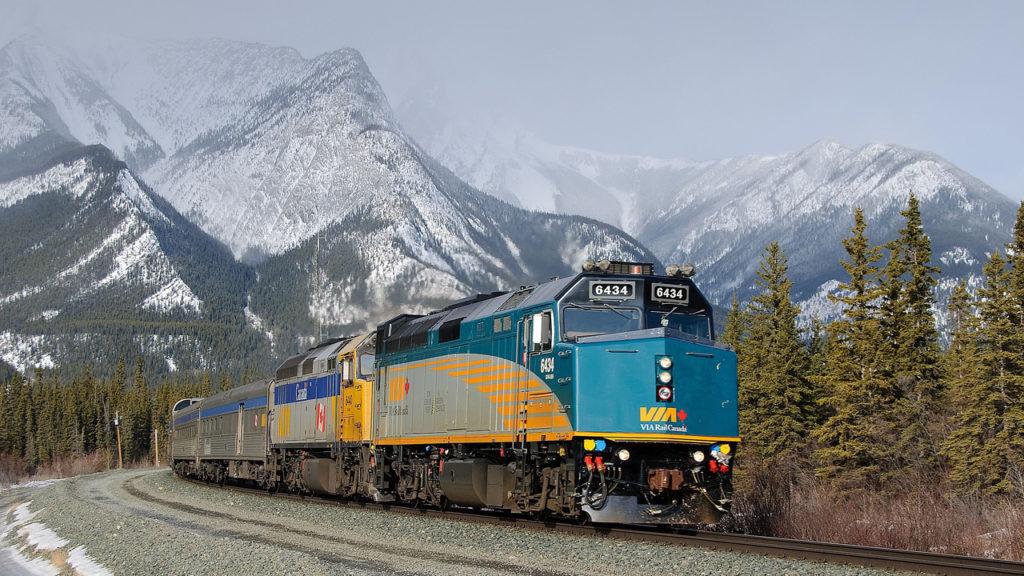
Canada’s public passenger railway VIA Rail has been pulled back from pandemic-induced oblivion by a federal government now framing the scheme for a dedicated, electrified right-of-way linking Quebec City and Toronto as a certainty for the first time since the project was first revealed in 2015.
“High Frequency Rail (HFR) will transform passenger rail service in Canada through the creation of a faster, more frequent, more accessible and more sustainable rail service among the major centers of Québec City, Trois-Rivières, Montréal, Ottawa, Peterborough and Toronto,” Transport Canada declared March 9.
VIA Rail’s single shareholder thus invited the global passenger rail industry to submit ideas for private-sector participation in the provision of train services over the eventual network to be woven from strands of abandoned 19th century routes and still-operating branch-line freight trackage. Private-public partnerships were part of the original concept unveiled to Railway Age in 2015 by then CEO Yves Desjardins-Siciliano. The Montreal lawyer became Canadian CEO of Siemens Mobility in 2020.
|
|
Let’s Build the Train Equivalent of the Interstate Highway System |
|
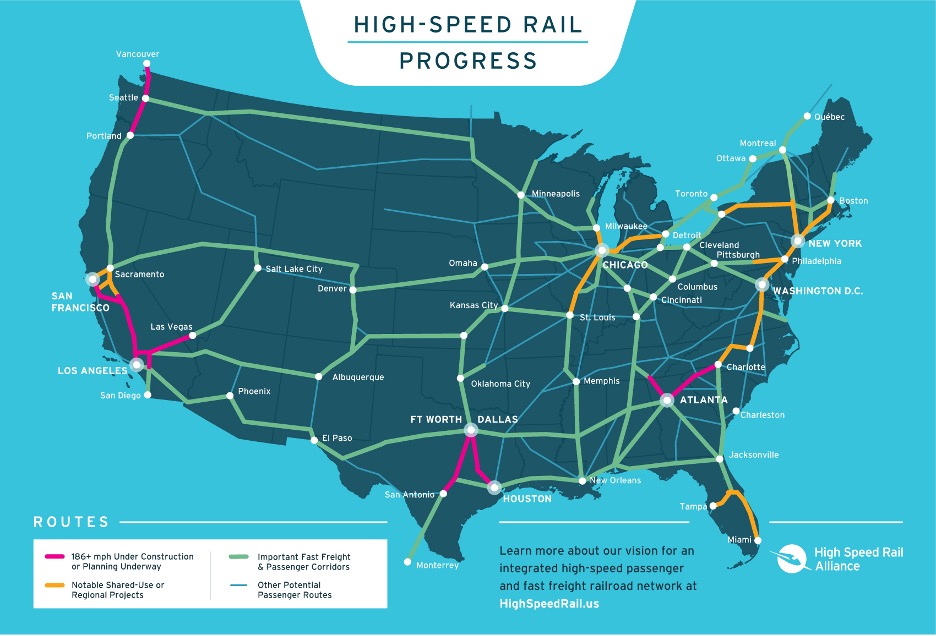
Thank you to everyone who responded to the Federal Railroad Administration’s recent request for input on their Corridor Identification and Development Program for new trains. Using the online tool that the High Speed Rail Alliance provided, 245 of our supporters submitted comments before yesterday’s deadline, and so did seven mayors.
Ever since passage of the Infrastructure Investment and Jobs Act last fall, the Alliance has highlighted the unprecedented opportunities before us. To be more specific about that, the FRA's work on the Corridor Identification and Development Program plays a key role. That’s because it represents our best chance for passenger rail in the United States to finally turn a corner. We now have a chance to move away from simply patching up and working with the struggling routes that Amtrak inherited in 1971. Instead, we can now plan a modern, fast, efficient network of passenger trains well connected to other forms of transportation.
|
|
STB Seems Likely to Move Ahead with a New Reciprocal Switching Rule |
|
Federal regulators seem likely to impose a new reciprocal switching rule that would open up more carload traffic to competition between Class I railroads.
During two full days of hearings that wrapped up on Wednesday night, the Surface Transportation Board was sympathetic to shipper complaints about a combination of high rates and poor service – as well as their suggestions that reciprocal switching would be a remedy for both problems.
The board was skeptical of Class I railroad arguments that widespread reciprocal switching would snarl operations, worsen service, and reduce investments that would help divert freight from road to rail.
The reciprocal switching proposal would allow shippers served by one Class I railroad to gain access to a competing Class I railroad nearby. The current railroad would be forced to hand off the shipper’s traffic at the closest interchange. The idea is to introduce rail competition where none exists.
|
|
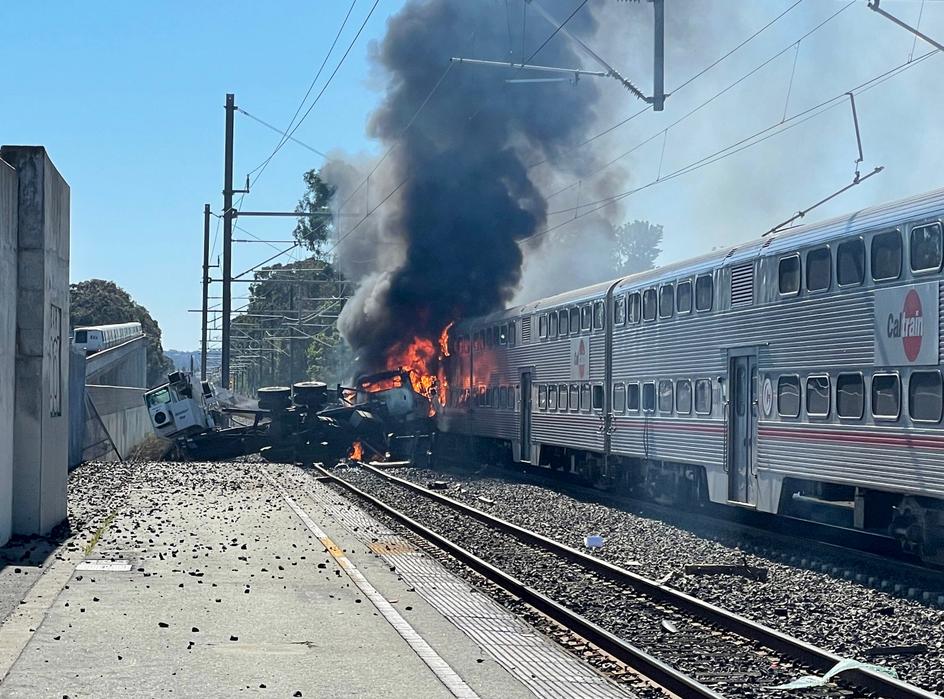
SAN BRUNO, Calif. — National Transportation Safety Board officials say they will be trying to determine why positive train control didn’t prevent the accident as part of their investigation of the March 10 collision and fire involving a Caltrain commuter train.
Thirteen people were reported injured after the train struck on-track equipment involved in the Caltrain electrification in the Thursday morning accident. KGO-TV reports John Manutes, who is leading the NTSB investigation, said the agency “can confirm that positive train control was on and active” at the time of the of the collision.
Investigators will also be looking to determine why the work equipment was on the tracks during the late-morning commuting period.
The ongoing investigation led Caltrain to run an abbreviated schedule on Friday — with a bus bridge around the accident site — and to continue the bus bridge on Saturday. The route was cleared for a resumption of service on Sunday.
The NTSB expects to complete its preliminary report — outlining the basic facts of the accident — in about three weeks. A full report, dealing with probable cause and any safety recommendations, could take up to 18 months.
|
|
High Speed Rail Association Progress Report 2022 |
|
We’ve given input to the Federal Railroad Administration (FRA) on studies they’ve conducted to provide recommendations for train systems throughout the United States, such as the FRA’s Midwest Regional Rail Plan. We’ve received personal thanks and recognition from key FRA staffers, including Administrator Amit Bose.
In 2021, the Alliance played a key role in creating the Illinois High Speed Rail Commission, which can lead the way in revitalizing Chicago’s nationwide rail hub.
We provided ways for our 30,000+ followers to take action online. For example, we prepared online actions in favor of the IIJA’s groundbreaking $66 billion for new trains over the next five years, and in support of California’s high-speed rail project.
We have worked directly with local leaders, such as mayors and other elected officials, who want new or improved train service for their communities. We help them put together successful funding proposals and to advocate for them.
Since the start of 2021, we’ve given more than 100 talks by video to community groups throughout the country, plus two dozen free webinars about aspects of the work to bring modern trains to the United States. You can find the recordings here if you missed any or would like to share them.
|
|
(Editor's Note: What more can one say .... utterly pathetic ) |
|
U.S Railroads Report Traffic Decrease in Week 10 |
|
U.S. railroads logged a 4.7% decrease in volumes for the week ending March 12 compared with the same period in 2021, according to Association of American Railroads (AAR) data.
Total U.S. carloads added up to 232,388 units, a slight increase of 0.9%, while intermodal volume fell 9.1% to 263,746 containers and trailers. Volume for the week totaled 496,134 carloads and intermodal units.
Four of the 10 carload commodity groups that AAR tracks weekly posted an increase. They included chemicals, up 5,958 carloads to 35,933; nonmetallic minerals, up 1,339 carloads to 30,466; and coal, up 485 carloads to 64,589.
|
|
Canadian Pacific Trains Involved in Two Derailments |
|
Canadian Pacific trains were involved in two derailments on Saturday, one in Saskatchewan and one in Minnesota.
An unknown number of cars were involved in the derailment of a train carrying corn near Drinkwater, Sask., but at least 20 cars are visible on their sides or otherwise off the track in a video posted to the Twitter feed of a reporter for the Canadian agricultural news site The Western Producer.
The CBC reports the derailment occurred about 6:30 a.m. and that there were no injuries. An investigation of the cause is under way.
|
|
|
|
|
|
|