|
|
The Limpkin Times
Apalachee Audubon Society Mission Statement:
Protection of the environment through education,
appreciation and conservation.
April 2020
|
|
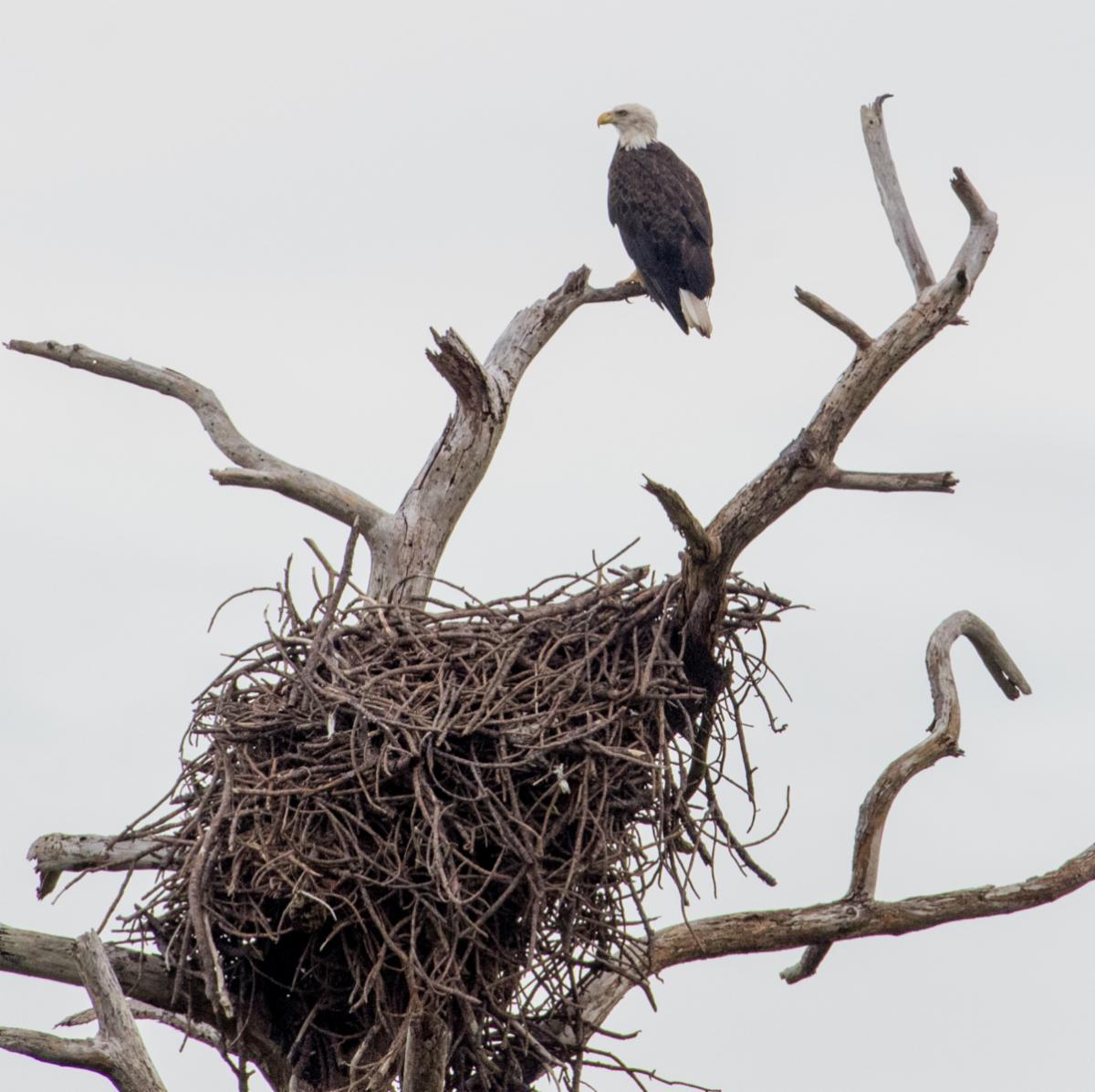
Photo by Nick Baldwin
President's Message
If I let it, the news we are swarmed by takes over my mind and scares me, both in terms of the present and the future. COVID-19 is no joke and, as someone with a 78-year-old father, it rarely leaves my thoughts. I know that all of you reading this have your own concerns about this virus, your own fears, your own uncertainties. I'm not going to use this space to give advice or try to ease your legitimate concerns. But I do want to remind you of two things that Apalachee Audubon can provide.
First, we can help you connect with birds. You may think that I'm crazy since birds might be the last things on your mind right now. But have you watched them lately? I know that I've felt a great deal of peace watching birds raise families and fuel up on their migratory pit-stops, totally oblivious to the worries facing us humans. Today, while feeling especially anxious, a pair of amorous Barred Owls interrupted my negative thoughts and brought me some positivity that I needed by way of their calling through my open window. Perhaps you've felt that same positivity as you've looked out your window at your bird feeder, taken a walk at a local park, or just listened to the bird song that's continued unabated through all of this. Trust me, there's peace to be found when stepping out of your world and into the world of the birds around you. We can help you do this.
Second, we are a community and, as such, can offer support to one another. We are a large group, with people from all walks of life. We have young, old, rich, poor....and everything in between. If there is something that you need, ask. I know for a fact that we have members that can help with online teaching, provide gardening and home project tips, drop off books (sanitized, of course), loan binoculars, offer good local birding tips for your neighborhood, and much, much more. Let's find ways to support one another because, let's face it, we're all in this together. We have a Facebook page where you can post any needs that you have or you can always shoot an email to
apalacheeaudubon@gmail.com
and we will try to connect you with appropriate members. What are we, as a group, if we don't help each other out?
Share love, support, and optimism whenever you can.
Peter Kleinhenz
President, Apalachee Audubon
In this issue:
Chapter Programs
Welcome Home, Hummingbirds
Thank you to Yard Tour Hosts
How to Stop the Off-leash Dog Issue
|
|
NOTE: Due to the COVID-19 virus emergency, our April and May programs have been cancelled. We hope to resume our monthly programs September 2020.
Program meetings are generally held on the third Thursday of the month from September through April.
Time: 7:00 p.m. social; 7:15 p.m. - 8:30 p.m. announcements followed by program.
Location: FSU King Life Science Building, 319 Stadium Dr., Tallahassee, Fl 32304 (see map).
|
|
Welcome Home, Hummingbirds
by Donna Legare
|
|
We had our first sighting of a Ruby-throated Hummingbird on March 30
th
this year, a little later than usual. Folks in north Florida usually have the first arrivals from Central America on or about March 15
th
. Two excellent plants that provide nectar in early spring are Columbine and Red Buckeye. Both are native to north Florida and do best with some shade. Red Buckeye is a small tree with spikes of red tubular flowers. Columbine is a graceful perennial wildflower that has a multitude of red and yellow bell-like flowers.
There are so many great hummingbird plants, it is hard to list just a few. Some wildflowers are Red Sage, Firebush, Indian Pink, Red Swamp Mallow and Ironweed. Be sure to research planting requirements; for instance, Red Swamp Mallow prefers moist sites.
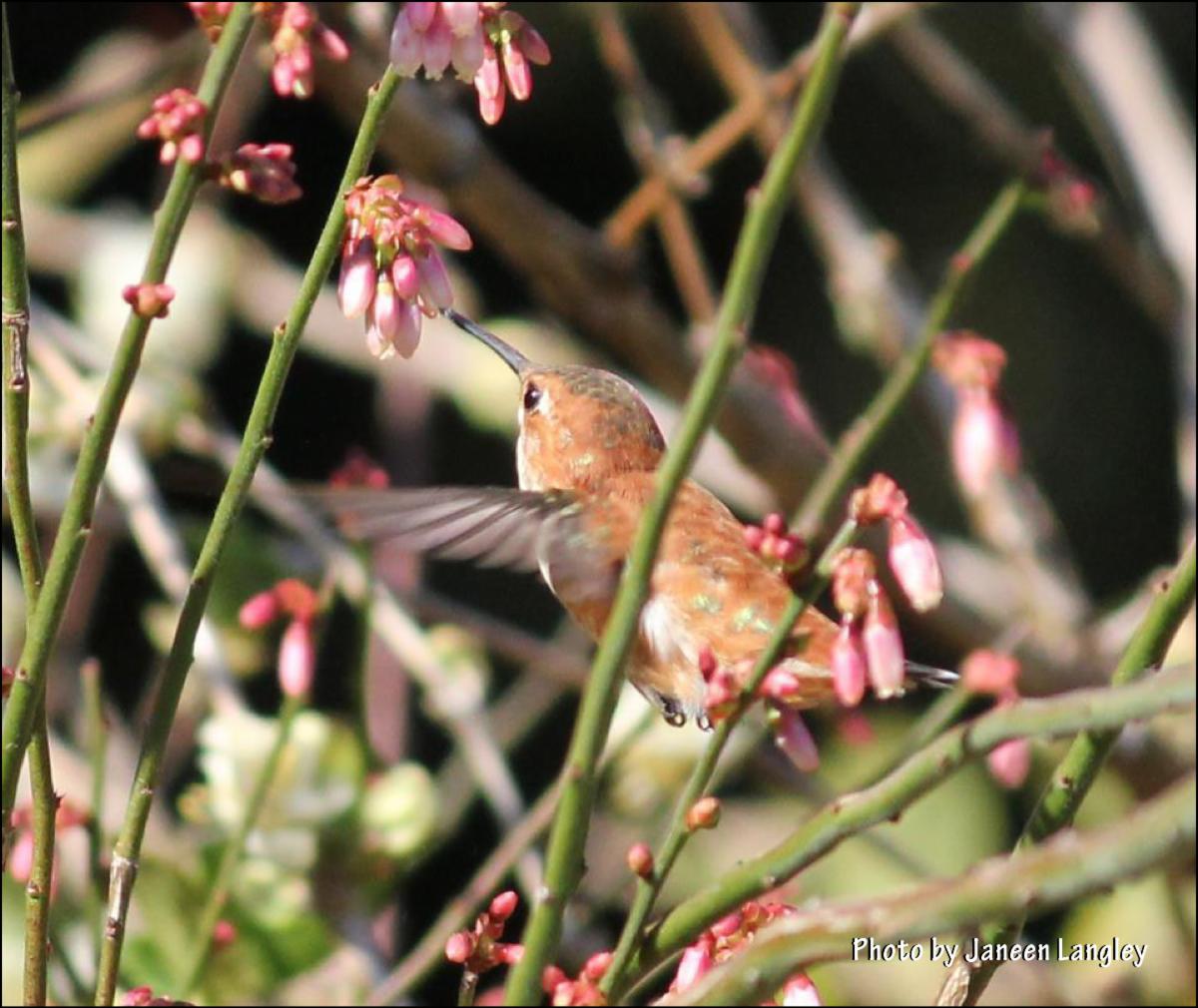
If you’ve got a sunny arbor or post, plant a Coral Honeysuckle vine. Give it a light pruning after each bloom period and it will continue to bloom throughout the season. Flowers do not have to be red. Hummers drink readily from Silverbell flowers and Blueberry flowers, like the Rufous Hummingbird pictured here in Janeen Langley’s yard feeding on native Elliott’s Blueberry flowers.
Top non-native perennials are Red Pentas and just about any Salvia, from the Blue Salvias to the maroon and Red Salvias. The cupheas such as Cigarette Plant or Bat-faced Cuphea are fabulous. Most of these will bloom all summer and fall. I also highly recommend planting Cardinal Guard up close to a window or porch. It blooms in late August until the first frost and is a hummingbird magnet during fall migration.
Most of these plants are planted just outside of our office and living room windows to bring the hummers up close where we can enjoy them. We have so many good hummingbird plants in our yard that we no longer use a hummingbird feeder to entice them.
In addition to plants, you can attract hummers by providing a feeder filled with 4 parts water to one-part sugar. Keep feeders clean and change the solution regularly.
|
|
Thank you for a great 2020 Wildlife-Friendly Yards Tour!
The weather was sunny and cool, which was perfect for another wonderful tour this year. We sold a total of 166 tickets, which made for a constant stream of visitors throughout the day. We had had so many wonderful people working behind the scenes for months to bring it all together. Everyone’s contributions and outstanding efforts are very much appreciated.
Special thanks to the Tallahassee Democrat for publishing our article and pictures on the front page of the Local section the day before the event. There is no doubt this helped increase awareness and introduced some new people to our yard tour tradition. Another special thanks to Native Nurseries and Wild Birds Unlimited. Once again, they have graciously acted as our ticket outlets as well as promoted the event, and we couldn’t pull this off without them!
Our deep appreciation goes to our five outstanding yard hosts this year, who shared their homes and knowledge with friends and strangers. I have received many compliments on what wonderful and gracious hosts they all were. They truly went above and beyond!
Upon arriving at
Jo and Steve Ostrov
’s five-acre certified wildlife habitat on Bobbin Brook Circle, there was a steady stream of visitors enjoying the many nooks and crannies of their woods, as well as relaxing in one of the many gardens and sitting areas. Jo’s charming and entertaining written stories of wildlife experiences on the property were sprinkled throughout for all to read and enjoy. Truly a unique experience!
Just a short distance away on Mosswood Chase is
Sue Hansen
’s
smaller bird sanctuary. With several feeding stations, native plants and 2 bird bath offerings, the birds were actively visiting, showing that you do not need a large space to attract wildlife. Sue reports that ospreys nest on a cell tower she can watch from her yard. During the tour, two ospreys were observed chasing off a hawk, an
d Sue now reports that there is nest building activity beginning.
Over on Meridianna,
Lisa Powers’s
yard offers a wonderful retreat for wildlife. Many native plants and trees attract a wide variety of wildlife to her yard year-round, as well as her water gardens and rain garden. Cleverly carved out mini-trails guide visitors through the large fallen tree and brush piles, making it easy to get around and see everything. Lisa’s plant and tree knowledge and experience no doubt enhanced her guests’ visits and viewing.
Melanie LaHurd and Betty Bell’s
yard near Meyers Park also yielded many native plants along with their bird feeders and baths, plus a beautiful back yard pond. From their deck, many species of songbirds were observed in their very active yard throughout the day, including a cat bird and several different warblers. Melanie and Betty even made some delicious lemon bars from their own Meyer lemons that we enjoyed while bird-watching! Two days after the tour, Melanie reported that a male painted bunting showed up at her feeder. Timing really is everything!
Harry Hooper and Lynn Reynolds’s
yard in Miccosukee Meadows was very active with many species of visiting birds. They have counted 60 different species in the last year! They had a photo album displayed showing a lot of their feathered visitors. Their many bird baths and feeding stations were constantly attracting visitors. They have a custom-made brook with rocks and waterfalls that was made just for the birds, and they have been rewarded with constant observations of birds using and enjoying the brook. Their “bird stories” and pictures were very entertaining!
My heartfelt thanks go to all our wonderful yard volunteers, too! They certainly helped the visitors have a friendly and informative visit, and we couldn’t do it without you. Our yard volunteers this year were Chris Grossman, Sunny Phillips, Judy Goldman, Fran Rutkovsky, Kathleen Carr, Dee Wilder, Rory Reese, Phillip Pollock, Brian Bryson, Pat Press, Carol Franchie, Diane Quigg, Liz Schold, Pat Teaf, and Mike Tucker.
With all the fun and success, we are already thinking about next year’s tour, so please keep it in mind if you know anyone who would be a good yard host or volunteer to be a part of this wonderful experience.
Again, my deepest thanks to all for your contributions, each one of you was a vital part to the enjoyment and success of this year’s tour!
Tammy Brown
|
|
How to Stop the Off-leash Dog Issue
On a recent birding trip to Elinor-Klapp Phipps Park, one of the best birding hotspots in Tallahassee, I encountered a too-common sight. A man, grinning from ear to ear, was walking on the trail while his four dogs were racing through the forest off leash. Now, if this were a place where that was allowed, that would be fine. But multiple signs clearly say that it is against the law for dogs to be off leash there (and at many other local parks, including Lake Elberta).
My chances of seeing any birds or other wildlife were ruined, and I was pissed. Not only was this man's unwillingness to follow the rules damaging to a wild place I love, but it created the potential for conflicts with law-abiding pet owners and created unsafe conditions for runners using the trail as well. I decided to write to the city and county with my concerns.
I was elated to receive a quick response. Lt. Jeffrey Doyle, of animal control, responded with a way that all of us can help them to stop this issue, an issue that all of us should be concerned about as people that appreciate natural areas. Here is his response:
"We have found that the most effective enforcement is that which is targeted to repeat offenders, as random occasional patrols only serve to solve the problem in the limited time we are on scene. What other concerned citizens do is provide us with a description of the animal(s), the person, and the license plate of the vehicle they drive. Photos and/or video can be very helpful. We then work with our liaison at TPD to research the license plate for registered owner contact information. From there we mail out a written warning along with educational materials and information regarding our ordinance and the potential penalty for future violation. Upon a second documented offense, where probable cause is obtained, we can then issue a civil citation with monetary fine. You can email this information directly to City Animal Control at
animalcontrol@talgov.com
.
Please do your part to help enforce this important rule. I love dogs, but I also love wildlife. Following the rules on this matter ensures that both stay safe.
Thanks!
- Peter Kleinhenz
|
|
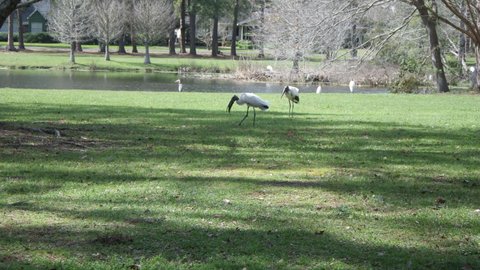
Wood Stork at Harriman Circle. Photo by Peter Kelly.
|
|
|
|
|
|
|