|
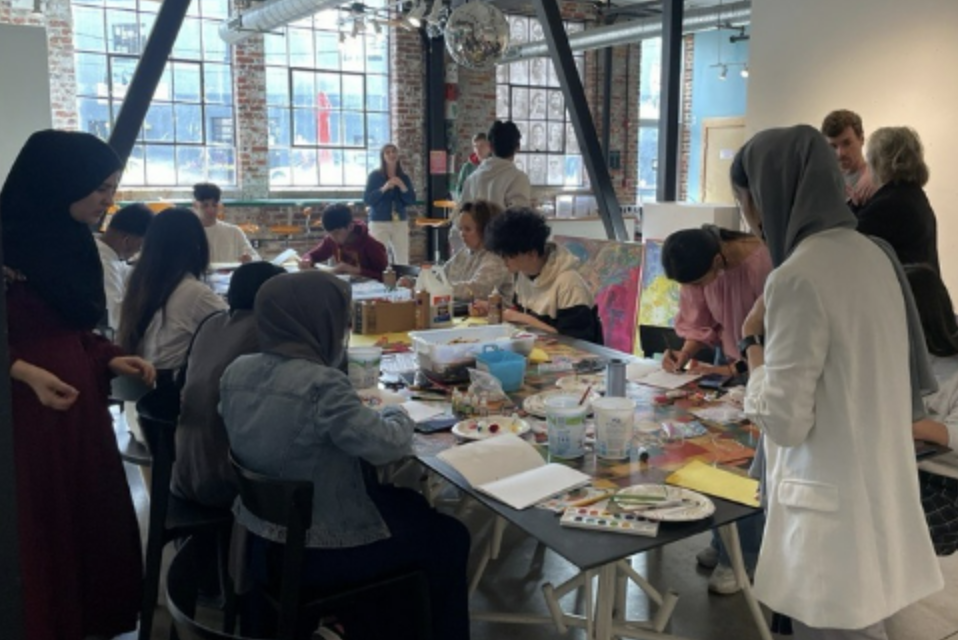
The mission of the International Rescue Committee (IRC) is to help people whose lives have been shattered by conflict and disaster to survive, recover, and gain control over their future. IRC Richmond opened in 2015 and has since served thousands of humanitarian arrivals to the community. Amanda Ketterlinus is the Youth Programs Supervisor and has been with IRC since 2023. [Photo is from a Youth Futures field trip to Art 180.]
Tell us a little about your agency and your role there.
IRC serves diverse newcomer populations including refugees, humanitarian parolees, asylees, victims of human trafficking, and more. Our five strategic outcomes support the successful integration of our clients: Safety, Economic Wellbeing, Education, Health, and Power. I came to IRC in March 2023 to implement and supervise youth programming in Richmond. My role just expanded to Program Manager, Education & Youth, which will encompass both Virginia offices in Richmond and Charlottesville. IRC Richmond’s youth programs serve more than 450 newcomer youth and their caregivers each year, helping some of the community’s most vulnerable families achieve academic success, pursue their goals, and contribute to the vitality of Richmond and the surrounding counties. Our diverse education programs work with clients from preschool-aged children to young adults to ensure they can successfully develop and excel in academics and careers. Each year, the Education & Youth team helps these children to overcome adverse experiences, an unfamiliar language and culture, interrupted schooling, and other barriers to success. Through robust one-on-one support, engagement of parents and caregivers, in and afterschool programming, mentoring, and dynamic partnerships in the schools and community, IRC youth programs are ensuring an inclusive local education system where all young people have the opportunity to thrive.
When and how did your agency become involved with the GRTICN?
I reached out to SCAN when we realized a need for parenting classes for our newcomer population in April of 2024. SCAN facilitated three workshops in October-November, then offered a monthly series starting in spring 2025. IRC provided the space, clients, and interpretation, and conducted interested surveys and provided themes. [SCAN’s Primary Prevention Specialist] Kanika McBride presented in a thoughtful manner based on suggestions and adapted for our clients. We were invited to join the GRTICN in December 2024, and [GRTICN Coordinator] Lucy Rimington asked me to present at the February 2025 meeting about the many barriers and stress service providers should consider when working with newcomer populations.
How has your agency’s participation in the GRTICN impacted its practices and policies?
The monthly presenters are fantastic; it’s great to hear of the good work, and I always bring the knowledge back to IRC. Through networking, I have been able to secure opportunities for clients, am aware of many more resources for clients, and have shared all of the great resources across the organization, so IRC’s Health Team and Safety Officer are able to take advantage of the quality trainings as well.
What are some trauma-informed/resilience-building initiatives or goals your agency is currently working toward?
The IRC Supports newcomers to the US through a trauma-informed lens. Newcomers are given orientations on all aspects of their new life and community, and are supported by youth, employment, and health teams for the first five years in country. Workshops are regularly available to inform and empower clients in areas such as mental health, resume building, financial literacy, benefits navigation, school and family topics, parenting, etc. This year, the youth team built out resiliency-building programming with middle schoolers for the first time, providing SEL support during Ramadan at three middle schools during lunchtime and a Positive Identity Afterschool program at Brookland Middle School. Our newcomer youth leadership afterschool program, Youth Futures, expanded to three high schools this Spring. In order to build more inclusive and welcoming environments for newcomers, the Youth Team gives professional developments on trauma-informed care to schools. Youth programming also offers monthly events for newcomer families to visit a Richmond venue with IRC that they will then be able access on their own. This fiscal year, we have visited Bryan Park, Lewis Ginter Botanical Gardens, a University of Richmond basketball game, James River Parks, and more. If a youth is aged 15-24 and has a specific goal, they may qualify to be paired with a mentor who helps with academic, social emotional, and occupational goals. Additionally, when families or individuals of any age need greater support, IRC offers Intensive Case Management. The ICM Caseworkers are able to walk alongside a family that has greater needs and offer deeper supports while steadily empowering the family to stand on their own. Finally, IRC Richmond is currently developing professional developments for the broader community on best practices working with newcomers.
|