Call to Action: Pause for a safety moment


Sadly, IHSA learned of a fatality in Etobicoke yesterday in an existing residential project involving a trench collapse alongside of the house.


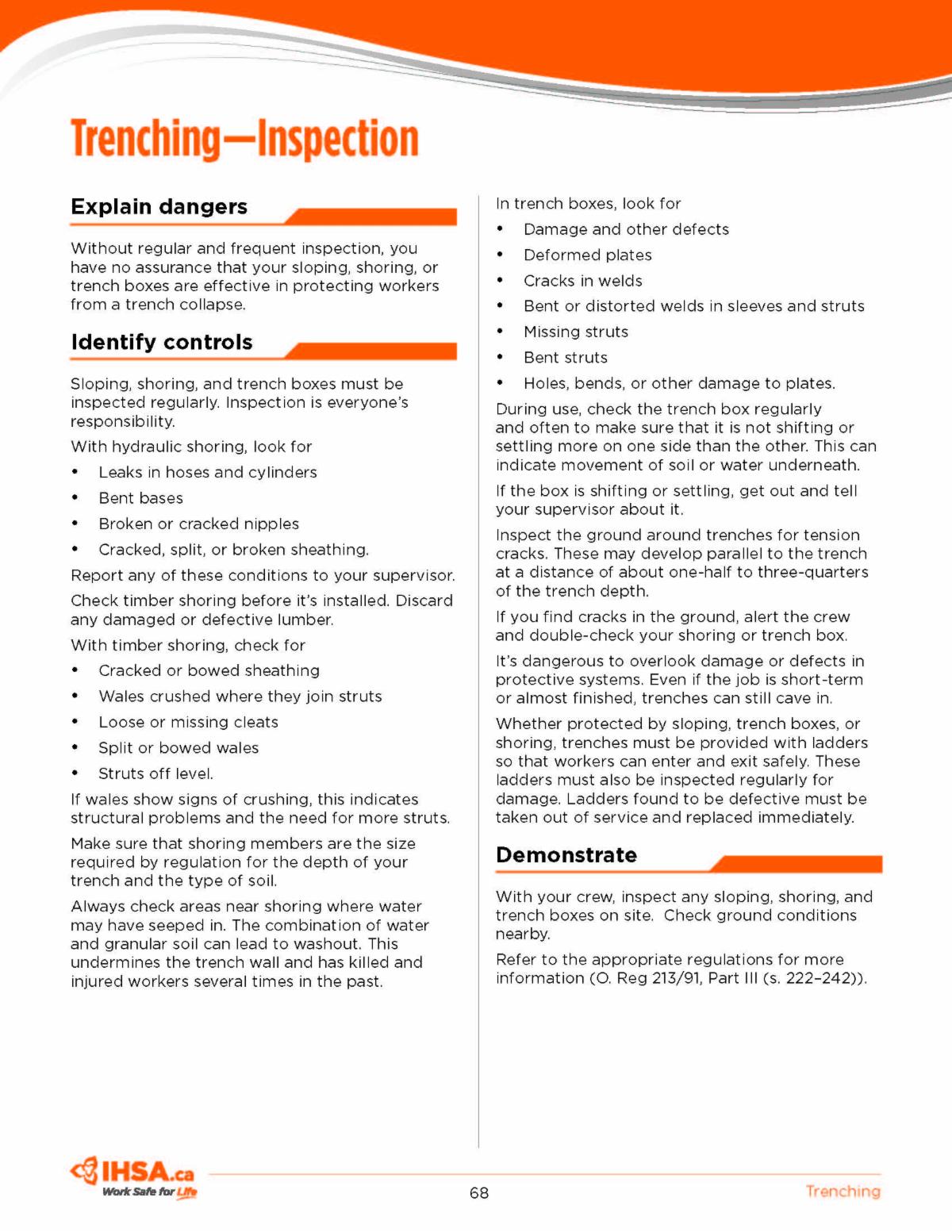
Trenching and excavation work can be hazardous if proper procedures are not followed. There are many risks associated with trenches and excavations, many of which are exacerbated by changing weather conditions. These conditions can cause collapses leading to suffocation, drowning or crushing injuries.


One workplace fatality in any year is one too many, regardless of the sector, industry, or occupation. Please pause all work for a safety moment and re-establish a commitment to the prevention of injuries, illness and fatalities. 


Visit the IHSA's Trenching & Excavation Topic page to access many free resources to consider in controlling the hazards associated with trenching and excavation. We suggest delivering a safety talk as a reminder to workplace parties of the hazards, and more importantly, re-establish safe practices and procedures. 

 
Download Safety Talk 
Download Safety Talk
Download  Safety Talk 

Trenching safety resources

IHSA provides a variety of other information and training on how to prevent incidents related to trenching and excavation work.


Training


Resources


Review the MLITSD's Guidance for Excavation hazards here


Review IHSA's Trenching Safety Manual (M026) Link to Download


Visit the Trenching & Excavation Topic Page


Visit the Emergency Preparedness Topic Page

5 Key Reminders for Workplace Parties

Here are a list of reminders to consider regarding trench safety:


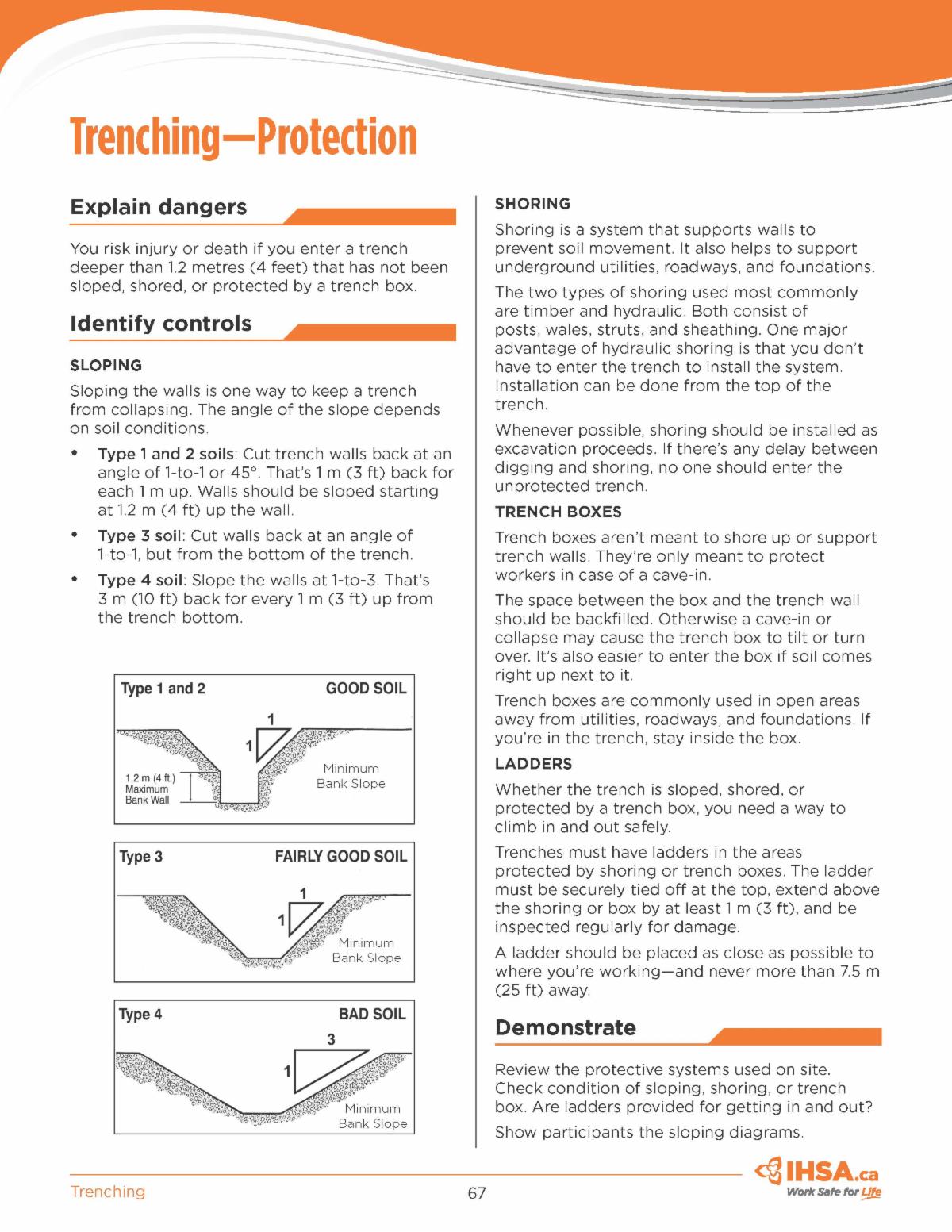
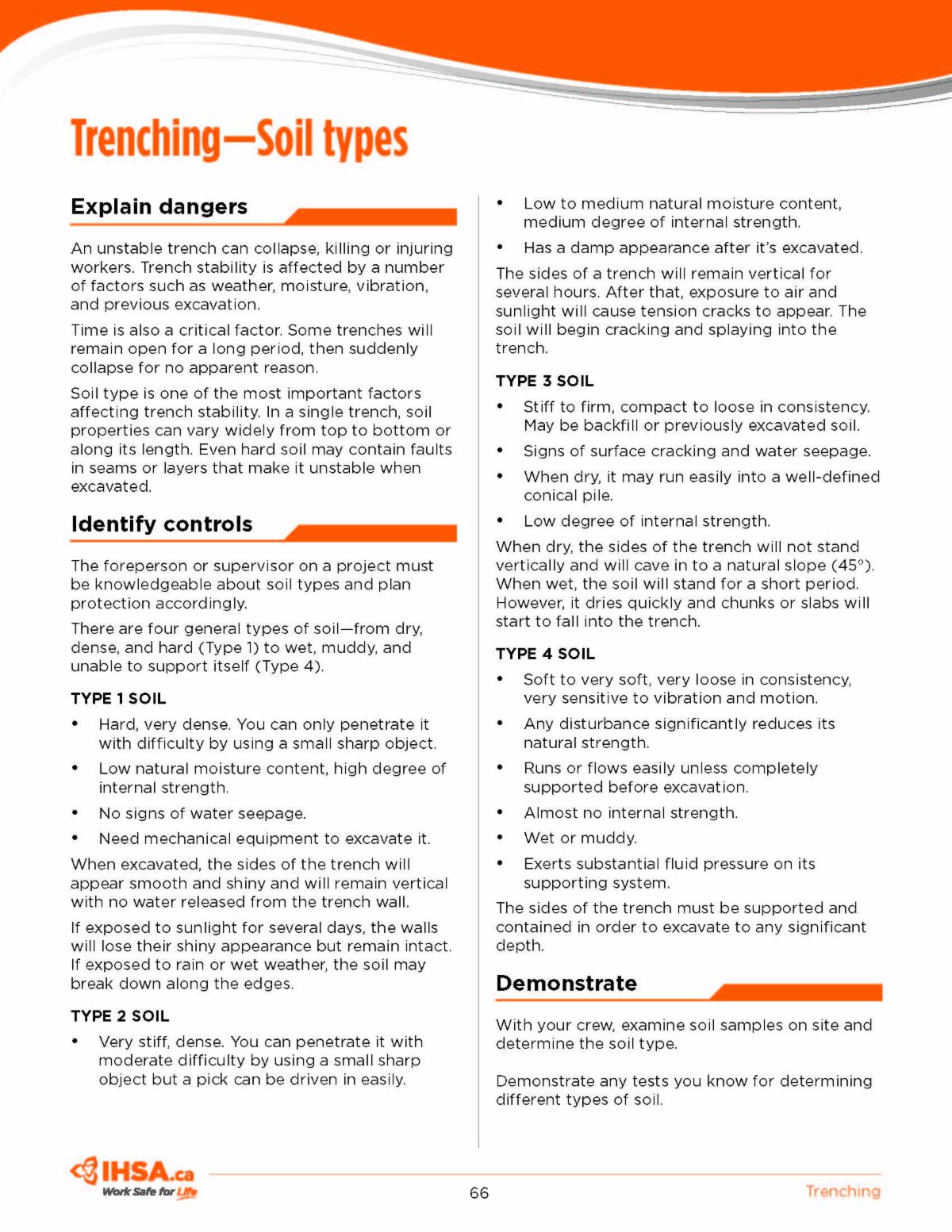
  1. Conduct a Soil Assessment: Before any excavation begins, perform a thorough assessment of the soil type and conditions. This will determine the appropriate protective systems needed, such as trench boxes, shoring, or sloping.
  2. Implement Protective Systems: Use proper trench protection systems such as trench boxes, shoring, or benching based on the depth of the trench and soil type. Ensure these systems are installed correctly and inspected regularly.
  3. Ensure Safe Access and Egress: Provide safe access to and from the trench by installing ladders, ramps, or stairs. Ensure that these are stable and secure to prevent slips or falls.
  4. Monitor Trench Conditions Continuously: Regularly inspect the trench for signs of instability, such as cracks or water accumulation. Stop work immediately if any signs of potential collapse are detected, and take corrective action. Ensuring weather preparedness on construction sites is essential. Weather alert apps can enhance the safety and well-being of workers and those nearby. Adverse weather conditions, such as rain, can create slippery surfaces, reduce visibility, and increase the risk of incidents.
  5. Train Workers on Trench Safety: Provide comprehensive training to all workers and supervisors on trench safety, including the identification of hazards, proper use of protective equipment, and emergency procedures in case of a collapse.


View as Webpage

Sincerely,


Jennifer McKenzie

Director, Stakeholder and Client Engagement

IHSA

IHSA | Website