October 25, 2019
The Out-of-Pocket Health News Digest
|
|
Below you will find briefs about recent health policy news stories. Our hope is for students to have an information outlet at their fingertips to keep up-to-date with the most pressing news stories in health policy.
This compilation is produced by the HPSA Education Committee: Sharoni Bandyopadhyay, Matthew Dunn, Payton Watt and Courtney Zott.
|
|
Implementation of Medicaid Work Requirements Continues to Face Barriers
|
|
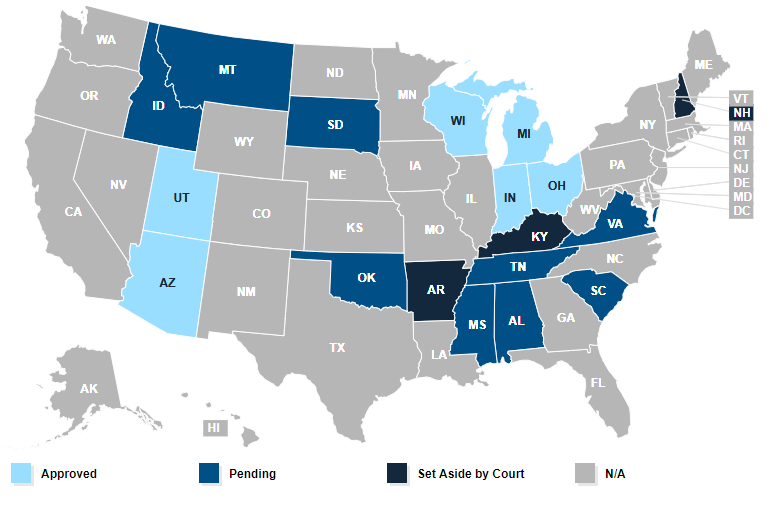
Medicaid work requirement programs continue to face setbacks. During the week of October 7, Arizona quietly postponed its program, and the Government Accountability Office issued
a report
that predicted work requirements would cost states millions of dollars in administrative costs.
In just three sentences on its website, Arizona’s Medicaid program announced the temporary delay and cited “court cases in other states” as the reason. New Hampshire also suspended its program in July before a judge ultimately blocked it.
The GAO’s report estimates that Kentucky’s program—which is currently blocked by a federal judge—would cost the most to administer at $271.6 million. Wisconsin’s program followed at $69.4 million. Based on the high estimated administration costs of the programs, the GAO recommended that CMS take administrative costs into stronger consideration when approving state programs--implying that this has not been a consideration in past approvals.
The Centers for Medicare and Medicaid has given six states approval to implement Medicaid work requirement programs, including Michigan. These programs typically require childless adult beneficiaries to work or participate in other work activities such as volunteering for 80 hours a month to receive benefits. At least nine other states have submitted requests to the agency.
The first major study
on a Medicaid work requirement program suggests that they do not deliver on their purported goal to increase employment. The study on Arkansas’ program, which also has been blocked by a federal judge, found no increase in employment rates, while enrollment rates significantly decreased. Additionally, it found that nearly half of the population to which work requirements applied did not know about the requirement.
|
|
Pennsylvania Judge Rules that Safe Injection Sites Are Legal
|
|
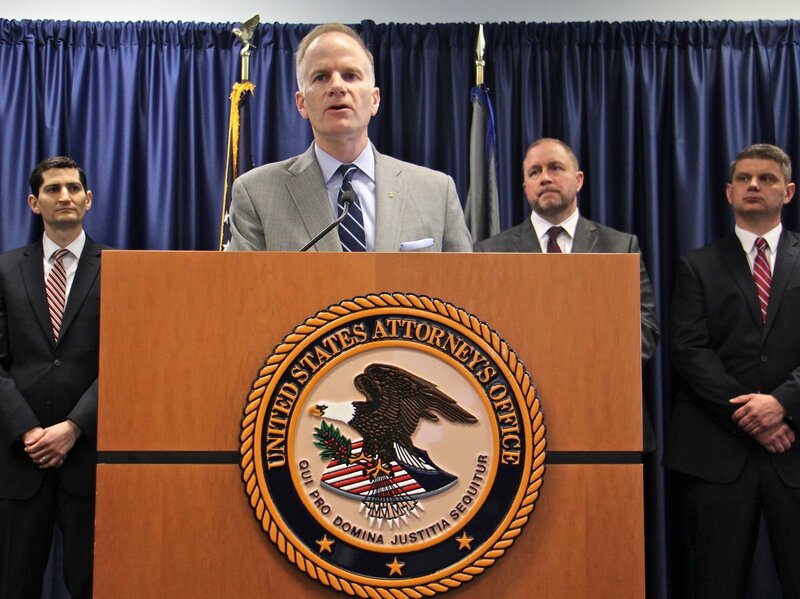
Earlier this month, Pennsylvania Judge McHugh ruled that safe injection sites, spaces that allow for medically supervised drug use, are legal and do not violate federal law-- but the legal battle is not over. In February 2019, federal prosecutors
filed a civil lawsuit
against Safehouse, a non-profit organization aiming to open safe injection sites in Philadelphia to reduce opioid overdoses. This quickly gained national attention, as over a dozen cities are considering similar public health initiatives, including Denver, San Francisco and New York City, and the legality of supervised injection sites has never been addressed.
The government claimed that this would violate
section 856
of the Controlled Substances Act (1971). This provision, also known as the “Crack House Statute,” outlawed the use and purchase of a space to distribute or use drugs, and was originally added during the U.S. crack epidemic in the 1980’s.
However, the
court ruled
that the proposal for supervised injection sites does not facilitate drug use, but rather will reduce drug use, thus will not violate federal law. In Philadelphia, three people die each day from opioid overuse. Those who support safe injection sites argue that the provision and availability of Nalaxone on site will reduce this frequency of overdose and research further indicates that supervised injection sites reduce the risk of infections. The federal government is expected to appeal this decision, but ultimately, this will be a landmark case that set a precedent regarding the legality of future public health interventions that aim to reduce harm from illegal drug use.
Learn More
:
A Tale of Two Crises: Opiates vs. Crack
is a podcast contrasting the political and media responses to the opioid epidemic and the crack epidemic, and the relevant underlying racial and socioeconomic factors.
|
|
Intersection between Immigration and Health Care Warrants National Attention
|
|
More recently, articles exposing the mental health impacts of children and individuals in these detention centers have gained national attention. Studies are finding that migrant children who were held in detention centers under the Obama administration five years ago have
persisting mental health issues, such as PTSD
. It is important to note that the Trump administration has placed much harsher restrictions and conditions on the camps, including the
zero tolerance policy
, which separated parents and children. The effects of this separation policy continue, with deported parents now finding out that their separated children remaining in the US
may be adopted by other families
without their consent
. The long-term impacts of the separation policy and these adoptions are unknown, but are likely extremely detrimental to the child’s mental health.
Sources:
USA Today
,
Politico
,
CNN
,
USA Today
,
USA Today
,
NPR News
,
Robert Wood Johnson Foundation
,
National Conference of State Legislatures
,
U.S. Citizenship and Immigration Services
,
New York Times
,
National Immigration Law Center
|
|
- Price Setting: A settlement has been reached in the class-action lawsuit against Sutter Health, who was accused of violating antitrust law to inflate health care prices in Northern California. (Los Angeles Times)
- Maternal Health: A study led by the World Health Organization found that over one-third of women in Ghana, Guinea, Myanmar, and Nigeria experienced some form of mistreatment at health facilities during childbirth. (WHO)
- Environmental Health: According to a new report, air particle pollution in the United States increased by 5.5% from 2016 to 2018, which is associated with 9,700 additional premature deaths in 2018. (National Bureau of Economic Research)
- Opioid Litigation: Drug distributors AmerisourceBergen, Cardinal Health, McKesson, and manufacturer Teva Pharmaceuticals have reached a settlement with Summit and Cuyahoga counties, amounting to approximately $260 million, while Walgreens remains as a defendant for the Ohio trial. (NPR)
- Immigration: 5 separate district courts issued preliminary injunctions to block the Trump Administration's new public charge rule that attempted to restrict non-citizens’ access to public benefits, including Medicaid eligibility and health care access. (Health Affairs)
|
|
|
|
|
|
|