| |  | Support NICOA with a gift to help us continue our mission! | |
Understanding Disability Support Across Indian Country | |
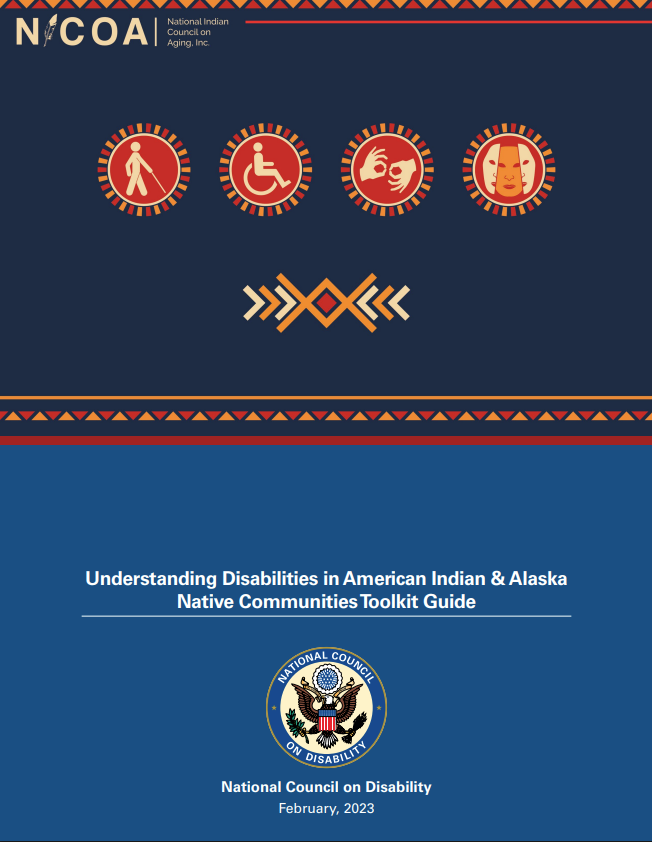
This month’s spotlight highlights the Understanding Disabilities in American Indian and Alaska Native Communities Toolkit Guide, a resource published by the National Council on Disability in partnership with the National Indian Council on Aging. Historically, the vast majority of federal disability legislation and resources have been drafted without accounting for the distinct complexities of tribal sovereignty. This guide was specifically developed to help bridge that gap by offering insight into the unique structural hurdles individuals with disabilities encounter within Indian Country such as healthcare access, academic retention, reliable transportation, and adaptive housing.
Because tribal nations operate under independent legal frameworks, foundational federal protections often do not apply or have limited scope, such as key provisions of the Americans with Disabilities Act (ADA) and the Fair Housing Act. The toolkit carefully maps these regulatory gaps while simultaneously highlighting programs that are already thriving within native communities.
Beyond high-level policy, the guide directly addresses the practical and day-to-day lived realities that standard legislation often overlooks. It examines the true state of accessible housing on reservations, provides strategies for navigating areas with minimal transit infrastructure additionally, it lends insight into how schools serving Native youth manage special education. It also highlights adaptive sports and recreation programs designed for community inclusion and ends with a comprehensive section on grassroots advocacy intended for individuals looking to better accessibility within their own communities.
Ultimately, the toolkit focuses on providing clear and practical information rather than overwhelming people with dense legal jargon. The guide outlines the landscape for individuals with disabilities, their families, and tribal program staff so they can better understand the unique factors at play. With the additional context added to the groundwork, they can more easily decide on the best path forward for their specific situation
| SCSEP Success Story: It's Never Too Late for a New Beginning | |
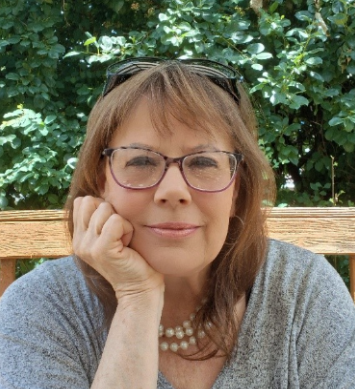
Milwaukee, Wisconsin - After taking early retirement from a rewarding career as a chef, I thought I was ready for a slower pace of life. A few years later, however, I realized two things: my finances were a little tighter than I expected, and I was getting bored. As much as I enjoy cooking, there are only so many gourmet meals you can make for friends!
One day while visiting my local Senior Center in Milwaukee, Wisconsin, I noticed a flyer about NICOA's Senior Community Service Employment Program (SCSEP) for adults age 55 and older. The timing couldn't have been better. The center manager mentioned that NICOA's Employment and Training Coordinator (ETC) was there that afternoon giving a presentation about the program. It truly felt like fate.
After attending the presentation, I was impressed by everything SCSEP had to offer. Paid training, opportunities to build new computer skills, paid holidays and sick leave, and most importantly, the chance to stay active while giving back to my community. I knew I wanted to be a part of it.
The Wisconsin SCSEP program was growing and needed a Program Assistant. My background as a tour guide and in sales, along with my outgoing personality, made it a great fit. I joined the team and quickly discovered how rewarding the work could be. I enjoyed helping enroll participants, completing assessments and Individual Employment Plans (IEPs), supporting Host Agencies, and assisting job seekers as they worked toward their employment goals. Every day gave me the opportunity to help someone move one step closer to success.
I also discovered that I genuinely loved learning. Every new challenge was an opportunity to grow, and I was eager to take on new responsibilities. Building relationships with job seekers became one of the most rewarding parts of my work. I wanted each participant to succeed, and I worked hard to ensure they received the support and encouragement they needed to reach their goals.
Then something unexpected happened. My Employment and Training Coordinator accepted another position. Before leaving, she encouraged me to apply for her job. Her supervisor and even the SCSEP director also encouraged me to apply. Their confidence in me meant so much.
I applied, was selected, and today I proudly serve as NICOA's Employment and Training Coordinator for Wisconsin.
My journey with SCSEP is exactly what the program is designed to accomplish. I began in a subsidized training position, gained valuable skills and confidence, and successfully transitioned into unsubsidized full-time employment with NICOA. What started as a way to supplement my retirement income became a meaningful second career that I truly cherish.
There are challenges in every job, but the support I've received from NICOA has been unlike anywhere I've worked before. My leadership, my coworkers, and the participants have made this one of the most fulfilling experiences of my career. Every day I have the opportunity to help older workers find purpose, gain confidence, develop new skills, and return to the workforce.
My supervisor often describes me as someone who is always willing to learn new things and brings a positive attitude to work every day. She says I truly care about my job seekers and always want the very best for them. She also appreciates my upbeat personality and willingness to jump in wherever help is needed. One of the highlights of my journey was making my first recruiting trip to Green Bay, where I met with prospective Host Agencies and job seekers to help grow the program. My supervisor called me a "go-getter," and that encouragement gave me even more confidence to continue growing in my role.
If you're 55 or older and wondering what's next, don't count yourself out. SCSEP opened a door I never expected, and it may open one for you too. Sometimes the best opportunities come when you least expect them.
- Cassandra Meus (Comerford)
| Connecting with the Community at Red, White, and Boom | |
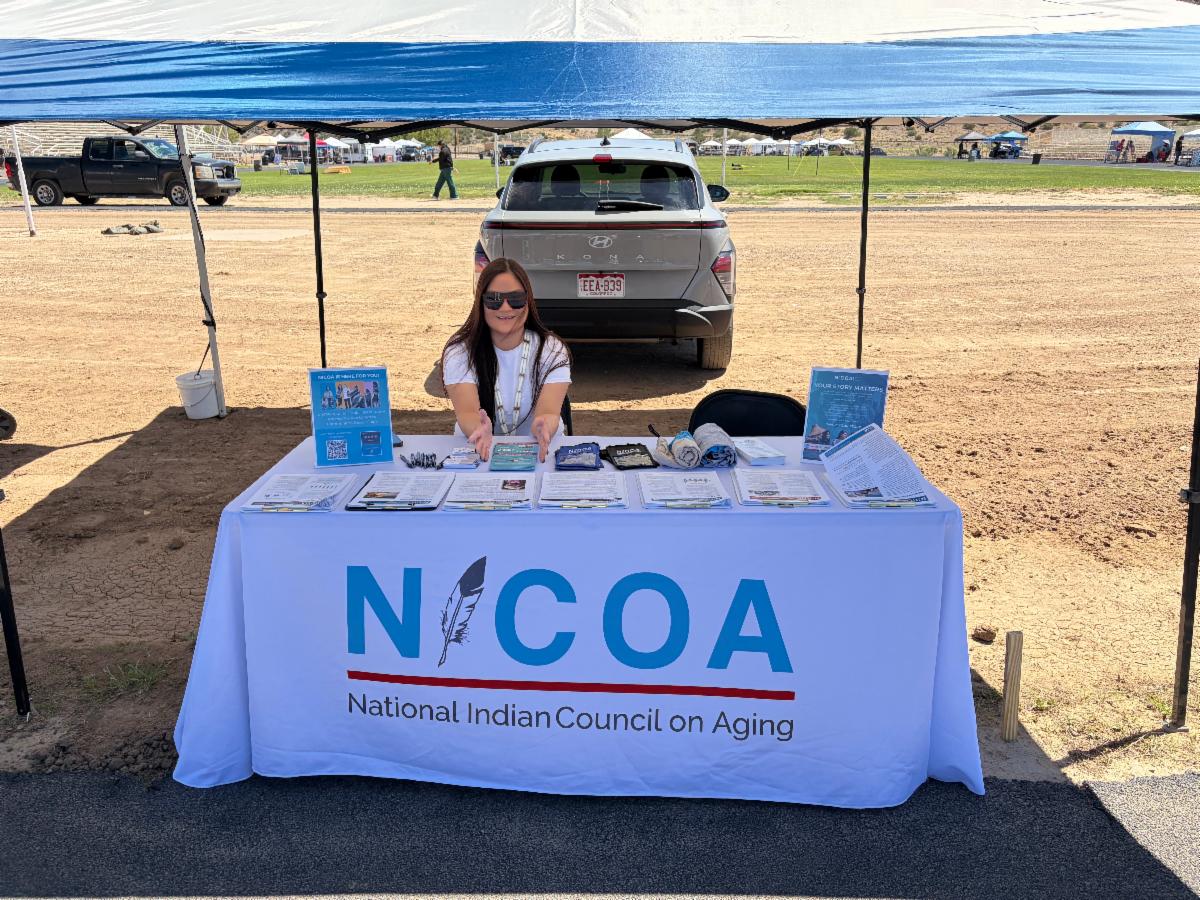
Laguna Pueblo, New Mexico - Our team members, Bernina Gray and Daniel Dolman, recently joined the Pueblo of Laguna for their Red, White, and Boom Independence Day celebration at the Kawaika Center. Tabling at the event provided a wonderful opportunity to connect directly with the community, share our organizational resources, and celebrate together. We had the chance to speak with many tribal members and visitors who stopped by our table while enjoying the local arts, crafts, and food vendors ahead of the evening fireworks display.
The community response was quite positive, sparking meaningful conversations around several of our core initiatives. We highlighted our disability toolkit guide and introduced community members to the Senior Community Service Employment Program (SCSEP). Visitors showed a wealth of interest in our upcoming story mapping project managed by Technical Communications Analyst, Bernina Gray, which focuses on recruiting Native elders with disabilities to share their unique experiences and reflect on how indigenous perspectives shape their journeys. Gathering out in the community allows us to keep these vital conversations moving forward, and we look forward to connecting with more of you at future events.
NICOA welcomes the invitation from New Mexico tribal communities to invite us to your next event. Email us at info@nicoa.org for more information.
| | | | Technical Assistance & Resource Center (TARC) Updates | |
Your Story Matters: TARC's Storytelling Campaign | |
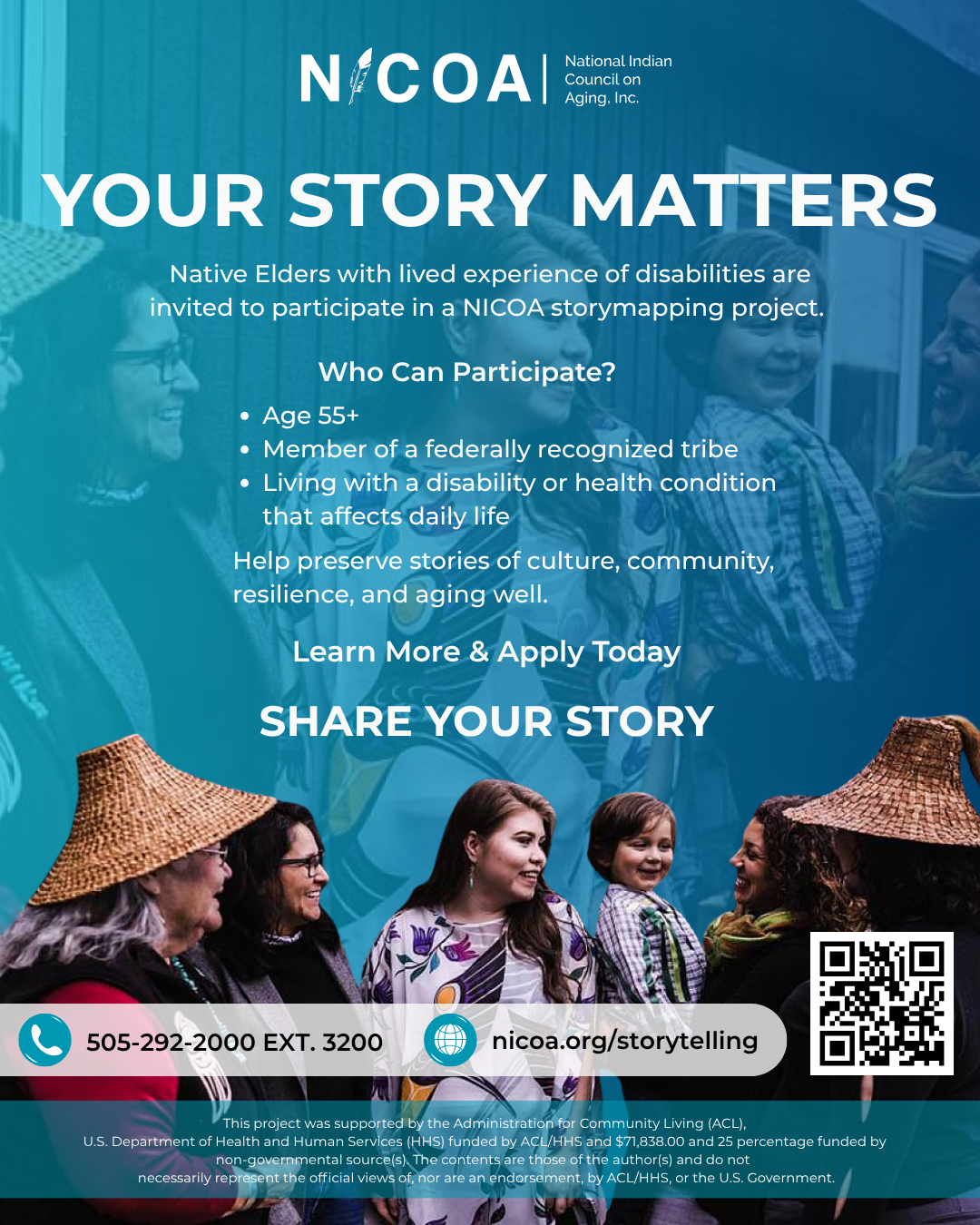
The Technical Assistance and Resource Center (TARC) is pleased to announce the launch of "Your Story Matters," a storytelling initiative designed to highlight the experiences of Native Elders living with disabilities. This project aims to center the voices and perspectives of American Indian and Alaska Native Elders as they navigate aging, health conditions, and community engagement.
Through recorded interviews, participant stories will be developed into ArcGIS StoryMaps that serve as educational and outreach resources. These narratives will contribute to broader awareness and understanding of the unique challenges and strengths within Native communities, while providing valuable insights for caregivers, healthcare providers, and community members.
The project is currently recruiting Native Elders age 55 and older to participate. For those interested in sharing their experiences and contributing to this meaningful work, more information and sign-up details are available below.
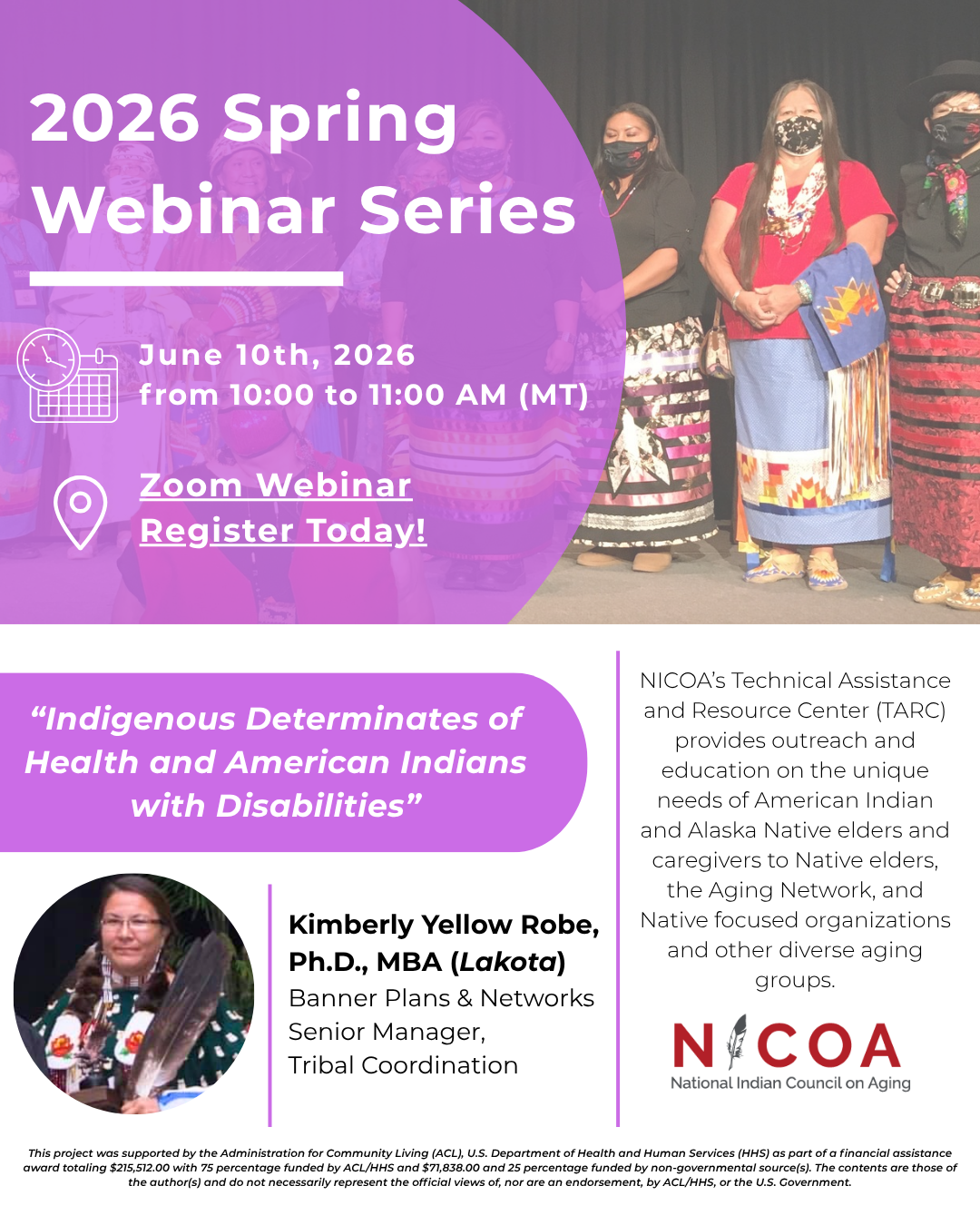
| Indigenous Determinants of Health and American Indians with Disabilities Webinar | |
NICOA recently hosted "Life's final journey: Hospice and palliative care for Indigenous communities," a critical session dedicated to supporting Elders through their final transitions. Led by Dr. Katie Nelson from Johns Hopkins University, the presentation addressed the challenges of navigating advanced care and the essential need for culturally responsive support.
The webinar provided practical guidance on proactive preparation, helping families navigate the care planning process and identify decision-makers. Participants explored the tenets of hospice and palliative care, how to access these services when comfort becomes the priority, and the various factors that impact end-of-life experiences.
A recording of the session is available on the NICOA website, and NICOA Youtube channel for those unable to attend.
| New Factsheet: Two-Spirit & Indigenous LGBTQ+ Elders | |
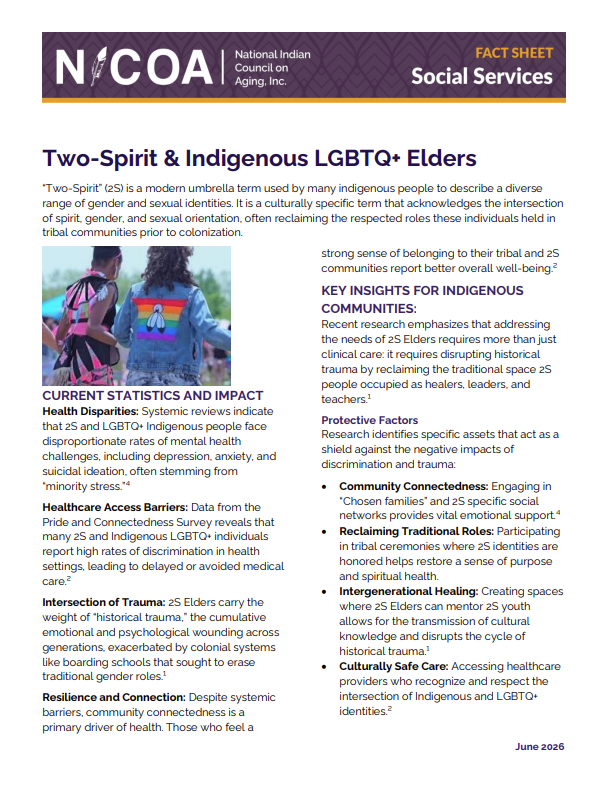
NICOA is proud to release a new factsheet dedicated to honoring and supporting Two-Spirit and Indigenous LGBTQ+ Elders. Long before colonization, Two-Spirit individuals held respected and sacred roles within tribal communities as healers, leaders, and teachers. This factsheet is a step toward restoring that recognition and ensuring our Elders receive the care and dignity they deserve.
The factsheet covers the unique health challenges and barriers faced within Indigenous communities, the protective power of cultural connection and chosen family, and practical guidance for caregivers and allies on how to provide culturally grounded support. It also highlights the importance of moving beyond just inclusion and toward true restoration.
This factsheet was created as a practical resource for communities, caregivers, and advocates supporting Two-Spirit and Indigenous LGBTQ+ Elders, with review support from the SAGE National Resource Center on LGBTQ+ Aging.
Access the full factsheet at NICOA.org to learn more and share it with caregivers, advocates, and community members who support our Elders.
| | | | This project is supported by a grant from the U.S. Department of Health & Human Services, Administration for Community Living/Administration on Aging, ' National Minority Aging Organizations Technical Assistance Consortium: Native American Center Supporting Aging' Grant # 90HDRC0013. | | Indigenous Foodways - 3 Sister's Soup Recipe, by Brian Yazzie | | |
Ingredients needed:
Hominy - 5 cups (Nixtamalized and cooked)
Black Beans - 4 cups (soaked and cooked)
Butternut Squash - 3 whole
Dandelion greens - 2 bunches
Green onions - 2 bunches
Bison roast - 6 - 9 lbs
Culinary sage - 1 bunch (chiffonade)
Agave syrup - 1 cup
Smoked Salt - to taste
Garlic powder - to taste
Sunflower oil
Pumpkin seeds - 1 cup (roasted)
Vegetable stock - 3 quarts
Cooking instructions: (serving 4 - 6 people)
BISON ROAST:
Rub with sage, smoked salt, garlic, and oil. Sear roast on all sides in a sauté pan at high heat. Place roast in a small roasting pan, rub with agave syrup, pour 2 quarts vegetable stock, cover roasting pan and bake at 275 degrees for 3.5 - 4 hours. * cool 15 mins and slice or shred.
SQUASH:
Cut squash in half, clean out seeds, Rub with salt and oil. Place on a sheet face down and bake at 400 degrees for 15 - 20 minutes until tender. Cool down and spoon flesh into a blender. Pour in 1 quart of vegetable stock, salt, garlic powder and blend until pureed. Pour into a small sauce pan and keep warm.
GREENS:
Chiffonade dandelion, sauté at medium heat until dandelion greens are wilted.
COMBINE INGREDIENTS:
Add Hominy and beans to wilted greens and heat thoroughly. Add salt and garlic powder to desired taste.
SERVING:
Ladle squash puree into bowls, spoon vegetables in bowls and top with desired amounts of bison, chiffonade green onions, and pumpkin seeds.
ENJOY!!
| | Monthly Health Segments & Awareness | | National Alzheimer's Awareness Month is a time to raise awareness about a disease that affects millions of families across the country, including a growing number in Native communities. Alzheimer's is not a normal part of aging, and understanding that difference is the foundation of prevention and advocacy. For Native Elders, who serve as living keepers of language, ceremony, and generational knowledge, cognitive health is deeply tied to the cultural continuity of entire communities. Research shows that everyday habits like staying physically active, eating well, and remaining socially connected to family and tribal life can meaningfully support brain health over time. Social connection in particular, through gatherings, storytelling, and sharing knowledge across generations, is one of the most powerful and accessible tools available.
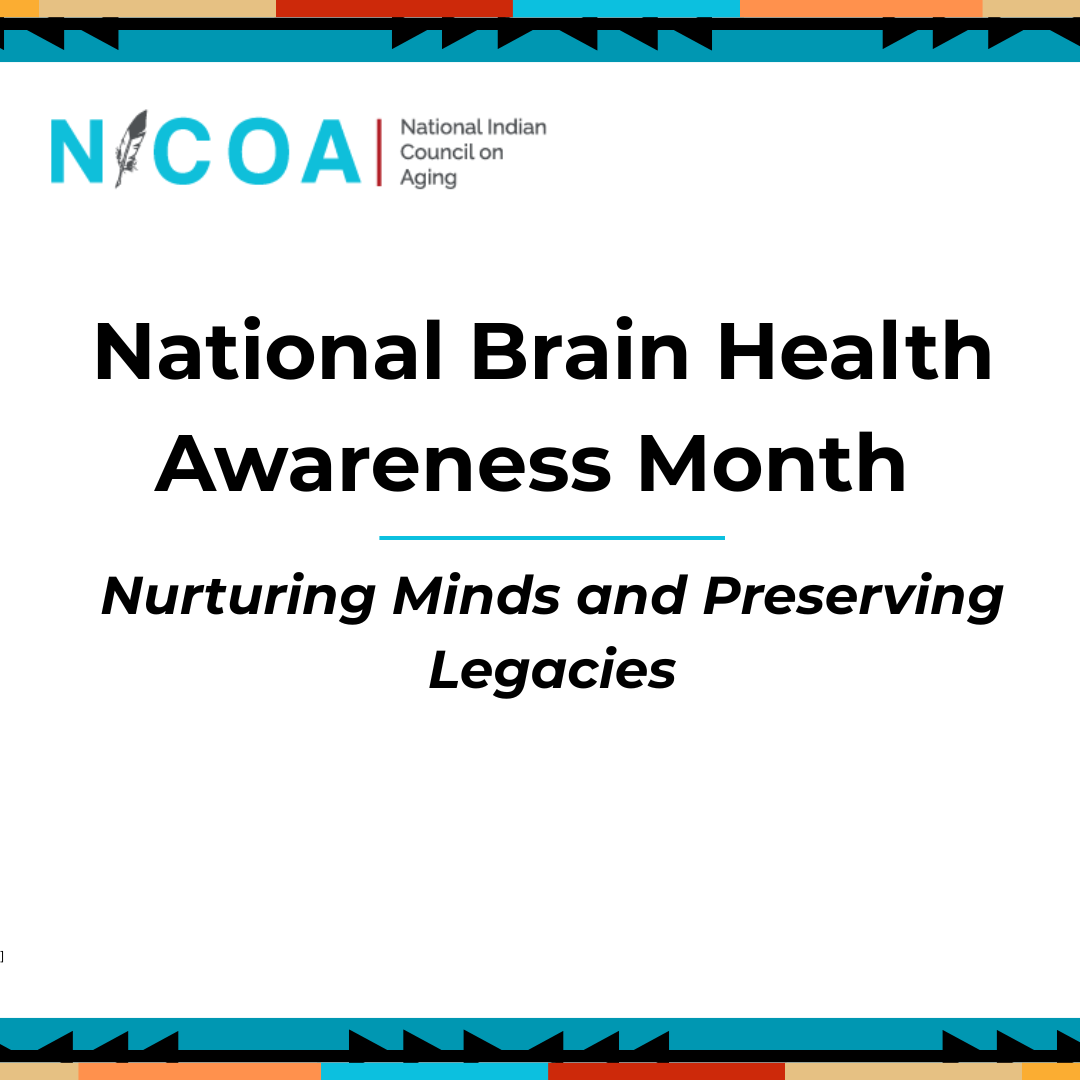
| | National Brain Health Awareness Month is a time in which we can reflect on how to protect and nurture the minds of our elders. Brain health is so much more than just memory. It encompasses the cognitive, physical, and emotional functions that allow our Elders to remain independent and active in community life. Vital functions can be affected by things such as age, injury, mood disorders, or conditions like Alzheimer's. Recognizing early signs of change is essential to ensuring Elders receive the right support. While some forgetfulness is a normal part of aging, everyday habits can go a long way in protecting long-term brain health. Steps that you can take include, staying physically active, eating a balanced diet, getting enough sleep, managing stress, as well as, continuing to learn new things. Above all, staying connected to family and tribal life remains one of the most powerful contributions an Elder can make in their own well-being. Meaningful conversations, participation in community gatherings, and the passing of knowledge to younger generations actively challenges the brain and lowers the risks associated with isolation. Elders are the living keepers of languages, ceremonies, and histories, and supporting their brain health means protecting their legacies. | | |
Historic $1 Billion Investment Allocated to Address Tribal Water Crisis
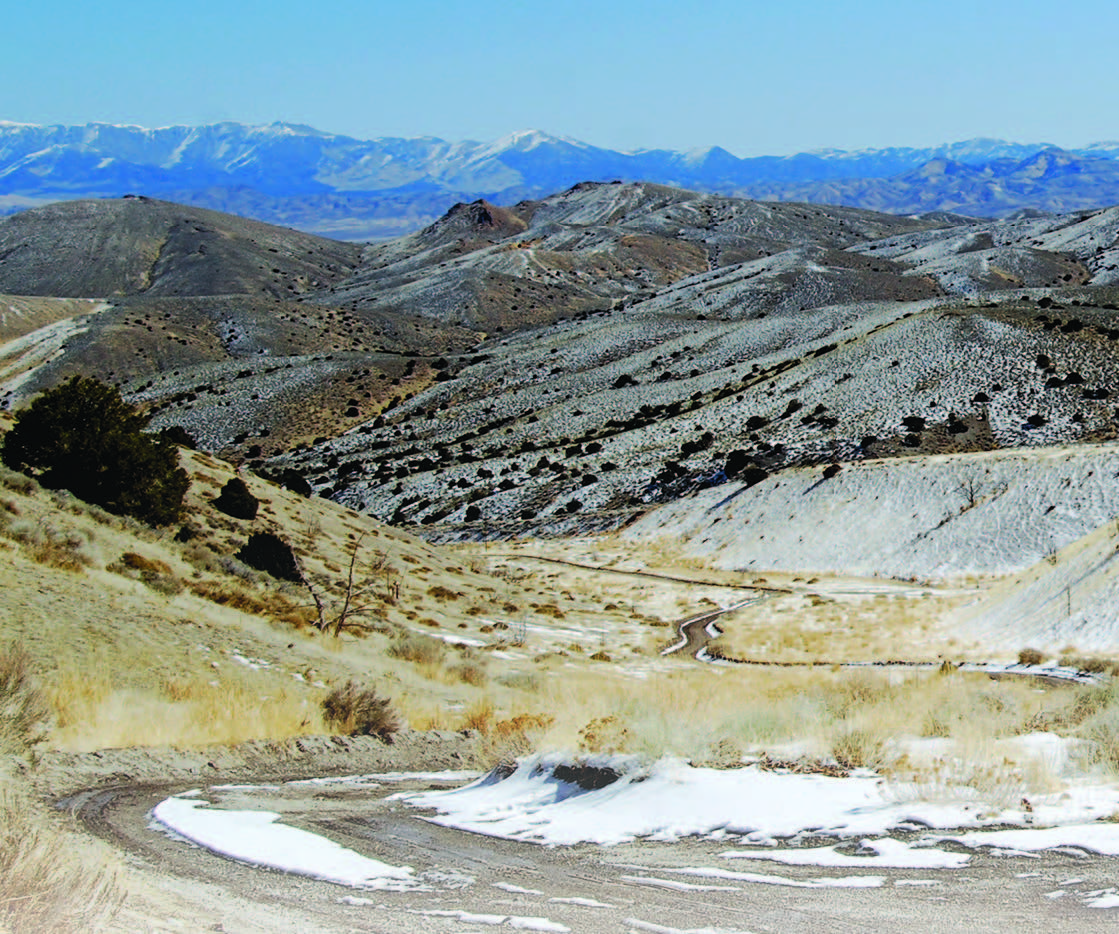
For far too long, many Tribal communities have faced a crisis that threatens the fundamental necessity of clean water. In areas like rural Nevada, decades of early federal policy decisions left remote reservations without adequate water treatment facilities. As a result, tribes have been forced to navigate a sharp increase in water contamination, including the presence of volatile organic compounds in groundwater, and repeated violations of the Safe Drinking Water. These failings directly impact the daily health of families and elders, leading to higher rates of preventable illnesses.
Change is finally on the horizon. Following the first-ever White House Clean Water Summit, the federal government announced a historic $1 billion investment to accelerate the development of drinking water and sanitation systems across Indian Country. Sourced from the Bipartisan Infrastructure Law and coordinated between the Bureau of Reclamation and the Indian Health Service, this funding represents a necessary step in holding agencies accountable to their responsibilities. A dedicated $320 million will specifically target western states, with the potential to fully fund the planning, design, and construction costs for dozens of eligible tribal water projects.
For communities like the Fort McDermitt Paiute-Shoshone and the Shoshone-Paiute Tribes of the Duck Valley Reservation, both of which have navigated numerous water safety violations in recent years, these updates are critically long overdue. Access to safe, reliable water is not just a matter of basic infrastructure; it is a critical matter of public health and inherent sovereignty. By rebuilding these failing systems, tribes can protect their communities from illness, reduce long-term healthcare costs, and ensure future generations can safely thrive on their ancestral homelands.
| | |
Tribal Radio Stations Face Shutdown as Congress Targets Public Broadcasting Funding
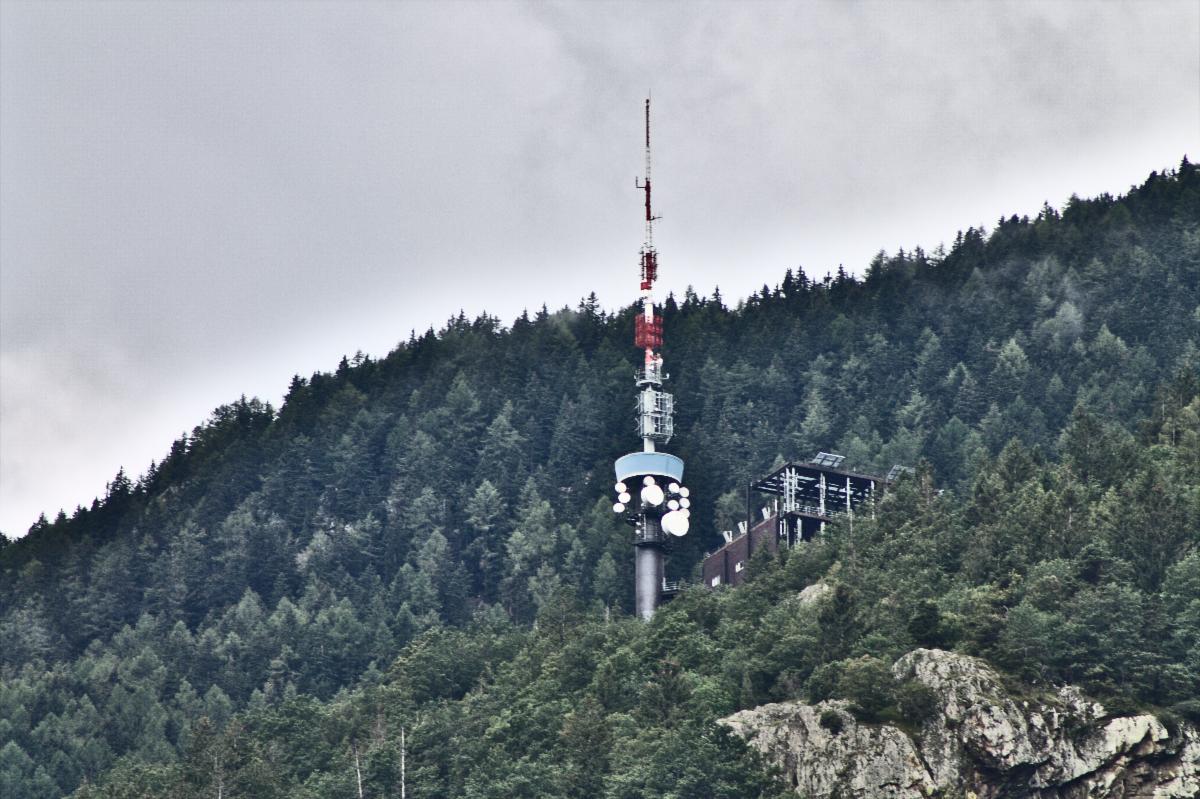
Congress is considering cutting more than $1 billion from the Corporation for Public Broadcasting, a move that would put dozens of Native American radio stations at serious risk of going off air. Of the 59 tribal radio stations currently receiving federal funding, estimates suggest that roughly 90 percent could shut down permanently if the cuts are approved.
For many Native communities, local radio serves as an important source of news, emergency alerts, weather updates, and community information. Broadband internet and cable television often remain inaccessible or unreliable in many rural tribal areas, making radio the most consistently dependable communication tool available. Several stations also broadcast in Indigenous languages, supporting both public safety and language preservation efforts.
The concern is particularly relevant in rural Alaska, where some stations are the only communication outlet for remote communities. Stations there provide critical weather and safety alerts during fishing season, when community members travel long distances by water.
Native Public Media, which supports the network of tribal stations, estimates that the stations collectively reach more than 1.5 million people. A side agreement negotiated during the Senate vote preserved some funding for approximately 14 stations, but advocates say the majority remain at risk
| | IHS Awards Historic Funding for Tribal Long-Term Care Facilities | | |
The Indian Health Service (IHS) has selected three Tribal projects for its fiscal year 2025 Long-Term Care Joint Venture Construction Program. This marks the first time in the program’s history that funding has been dedicated specifically to long-term care facilities. This addresses a critical need for rural and remote Tribal communities where skilled long-term nursing options are limited.
Under this partnership model, the selected Tribes will build the facilities using non-IHS funds. In return, the IHS will petition Congress to fund the long-term staffing and operational costs under a 20-year, no-cost lease.
Out of 14 applications, the IHS selected the following three projects:
-
Coeur d'Alene Tribe (Plummer, Idaho): The new Marimn Health Long-Term Care and Skilled Nursing Facility will provide person-centered, culturally responsive care.
-
Southeast Alaska Regional Health Consortium (Sitka, Alaska): A new 28-bed skilled nursing and long-term care facility will be built adjacent to the Mt. Edgecumbe Medical Center. Co-location of these services ensures that residents can access specialized, continuous care without having to make multiple trips.
-
Yukon-Kuskokwim Health Corporation (Bethel, Alaska):This project will modernize and expand an existing facility to increase skilled nursing and long-term care capacity, ensuring vital resources reach residents living throughout the region's remote rural communities.
Since 1991, this joint venture program has helped over 30 Tribes build or expand more than 35 health centers and hospitals, ensuring American Indian and Alaska Native populations can access quality healthcare closer to home.
| | |
California Launches First-Ever Tribal Stewardship Policy, Setting Goal of 7.5 Million Acres
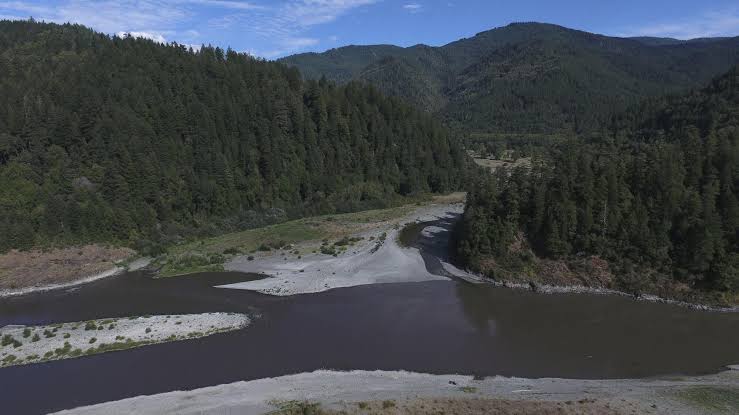
California has taken a significant step toward honoring its obligations to Native peoples with the launch of the state's first Tribal Stewardship Policy, announced by the California Natural Resources Agency (CNRA). The policy establishes a statewide goal of expanding tribal stewardship over at least 7.5 million acres of lands and coastal waters, a figure that carries deep historical meaning.
That number traces back to 1852, when the California Legislature blocked the U.S. Senate from ratifying 18 treaties that had promised approximately 7.5 million acres as permanent tribal homelands. Those treaties were buried for decades, even as tribes continued to honor their commitments. This new policy represents a formal acknowledgment of that history and a commitment to move forward differently.
At the heart of the policy is recognition of tribes as sovereign stewards, and of Traditional Ecological Knowledge as essential to managing California's lands and waters. For generations, state agencies were directed to dismiss tribal expertise and criminalize traditional land practices. The new policy reverses that, formally elevating Indigenous land management as a proven solution to today's environmental challenges, including wildfire, salmon recovery, and coastal resilience. As Mechoopda Indian Tribe Councilmember He-Lo noted, tribes have been "managing and living off of the biodiverse ecosystems we purposefully stewarded" for thousands of years, and that expertise is now being formally recognized by the state.
The policy creates clearer pathways for ancestral land return, tribal access to cultural sites, and meaningful collaboration between tribes and state agencies. As of March 2026, the state has supported the return of approximately 103,000 acres to California Native American tribes, with more expected. Additionally, California State Parks has entered into 15 agreements with tribes covering roughly 939,000 acres, and more partnerships are actively being developed.
For tribal elders and communities who have carried this knowledge across generations, the policy is both a long-overdue validation and an important beginning. The work of fully repairing the relationship between California and its Native peoples continues, but this policy marks a meaningful step in the right direction.
| | |
A California Tribal College Reaches a Historic Milestone for Native Education
California Indian Nations College, located near Coachella, has become the only tribal college in the state to earn accreditation from the Accrediting Commission of Colleges and Junior Colleges. The eight-year accreditation lets the college award associate degrees on its own and qualify for federal grants, financial aid, and easier credit transfers. It is a meaningful step in a state that has the largest Native population in the country, more than 700,000 residents, yet little dedicated funding for tribal higher education.
Tribal colleges exist because Native students have long been underserved by Western education systems, which were too often used to strip away language, identity, and culture. This college offers students a different perspective, students are able to gather for basket weaving, hikes, and sweat lodge ceremonies, and some exams use a talking circle format that draws on discussion and collaboration rather than isolation.
For many students, that approach changes lives. Amelia Giron, 41, enrolled in 2023 while facing homelessness and addiction and estranged from her four children. Two years later she is sober, reconnected with her family, and preparing to graduate with an associate degree in sociology. Two of her children now take courses alongside her. She credits the college with grounding her in culture and keeping her on the path to recovery, a reminder that education rooted in community can heal across generations.
California Indian Nations College has served 517 students since opening in 2018, three-quarters of them first-generation college students. Its accreditation and these legislative efforts point toward a future where Native learners of all ages can pursue higher education without leaving their culture behind. For Native communities, the value runs deeper than just degrees. It is about reclaiming education as a tool for resilience, language revitalization, and keeping families and traditions strong
| | |
Medicaid Cuts Threaten Tribal Health Sovereignty and Treaty Obligations
As federal budget talks continue, tribal health leaders are urging Congress to uphold its long-standing trust and treaty responsibilities to Native communities by protecting Medicaid funding. For Indigenous peoples across the country, Medicaid is not just a federal program. It is one of the main ways the government meets its legal obligations to provide health care to tribal nations.
Medicaid currently makes up about two-thirds of third-party revenue for tribal health providers. This funding helps facilities expand access, improve care standards, and tackle long-standing health disparities in their communities. For example, the Oneida Community Health Center in Wisconsin serves around 15,000 patients and regularly utilizes Medicaid funding to maintain and grow vital services like primary care, behavioral health, dental care, and obstetrics.
Native Americans under 65 depend on Medicaid at twice the rate of white Americans. In addition, more than 40 percent of Native children are enrolled in Medicaid or the Children's Health Insurance Program. These statistics highlight the need for policymakers to focus on equity and prioritize the unique relationship between tribal nations and the federal government.
| |
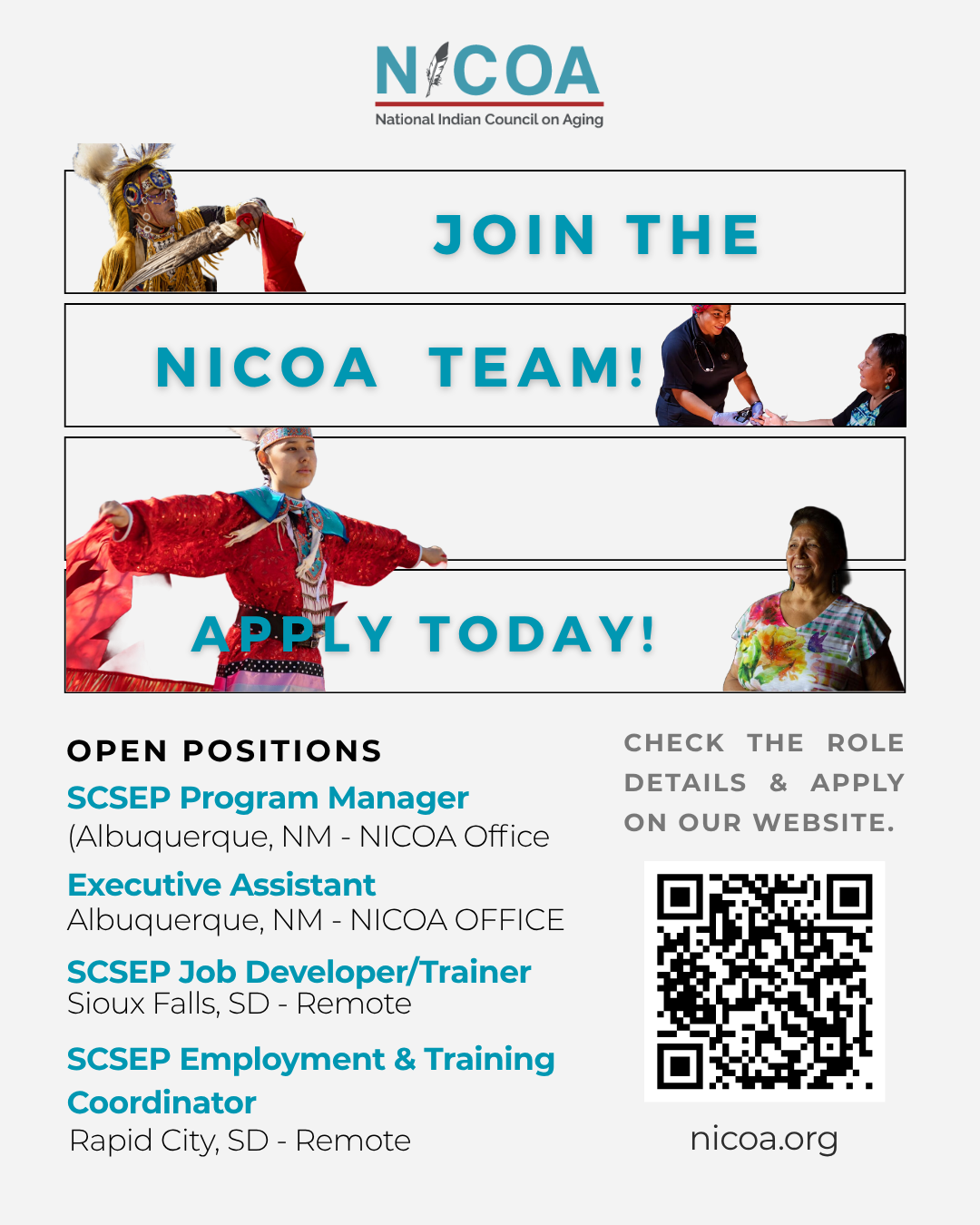
Vacant Position(s) with NICOA. Submit your resume and cover letter on the NICOA Job Opportunities webpage. |
-
Executive Assistant - New Mexico (Albuquerque Area)
This position provides administrative support to the Executive Director which requires knowledge in the areas of aging policy, development, HR management, Board of Directors relations and other relevant areas. The position reports to the Executive Director and is an integral part of the development and planning of events and coordinates the promotion teams; provides a wide variety of administrative, clerical, and organizational functions to assist the Executive Director in day-to-day operations.
-
SCSEP Program Manager - New Mexico (Albuquerque Area)
Directly responsible for the administration and operation of Senior Community Services Employment Program. Provides leadership and supervision to project office staff in daily activities including interviewing applicants, enrollment, orientation, bi-weekly payroll for job seekers, assessment, recruiting host agencies, overseeing placement of job seekers in appropriate jobs, training staff, and monitoring of host agencies to ensure their adherence to program training, supervision and safety rules.
-
SCSEP Employment and Training Coordinator - South Dakota (Rapid City Area)
Provides major job development assistance to SCSEP job seekers. Conduct outreach to area employers including community agencies, tribal entities, and private sector businesses to develop unsubsidized employment and/or additional training for SCSEP job seekers. Provide job seekers with ongoing case management, other training, and job search assistance. Assist with job seeke r recruitment, selection and community service assignments. This position is funded through a grant from the US Department of Labor and is contingent upon availability of funds.
-
SCSEP Job Developer/ Trainer - South Dakota
The SCSEP Employment Training Coordinator prepares current and upcoming SCSEP job seekers for success in finding unsubsidized employment. The Employment Training Coordinator is responsible for building a strong rapport and maintaining contact with community partners and job seekers through various stages of the program. This position is funded by a Department of Labor grant and is contingent upon availability of funds.
| | | | | | |
|
We are committed to providing services for Native elders, but the power to provide starts with you.
Your support brings attention, education, and improved services to elders and people with disabilities across Indian Country. Every elder deserves access to the services and resources necessary to age independently, with dignity, and in their chosen community.
Consider donating to us directly to help us with our mission to improve the lives of American Indian and Alaska Native elders. Your financial support will go directly to supporting our mission to improve health, social services and economic well-being for all Native elders.
| |
| How did you like this email? | | | | The National Indian Council on Aging | 8500 Menaul Blvd. NE, Suite B-470, Albuquerque, NM 87112 | 505-292-2001 | www.nicoa.org | | | | |