| | |
Connecting
Sept. 22, 2026
Click here for the sound of the Teletype
| | |
Colleagues,
Good Tuesday morning on this Sept. 22, 2026,
We lead today’s issue with a statement from The Associated Press after CNN, MS NOW and Politico on Monday sued President Donald Trump’s administration days after they were barred from White House grounds. They called the selective ban — based on the content of their coverage — a “blatant violation” of the First Amendment.
| |
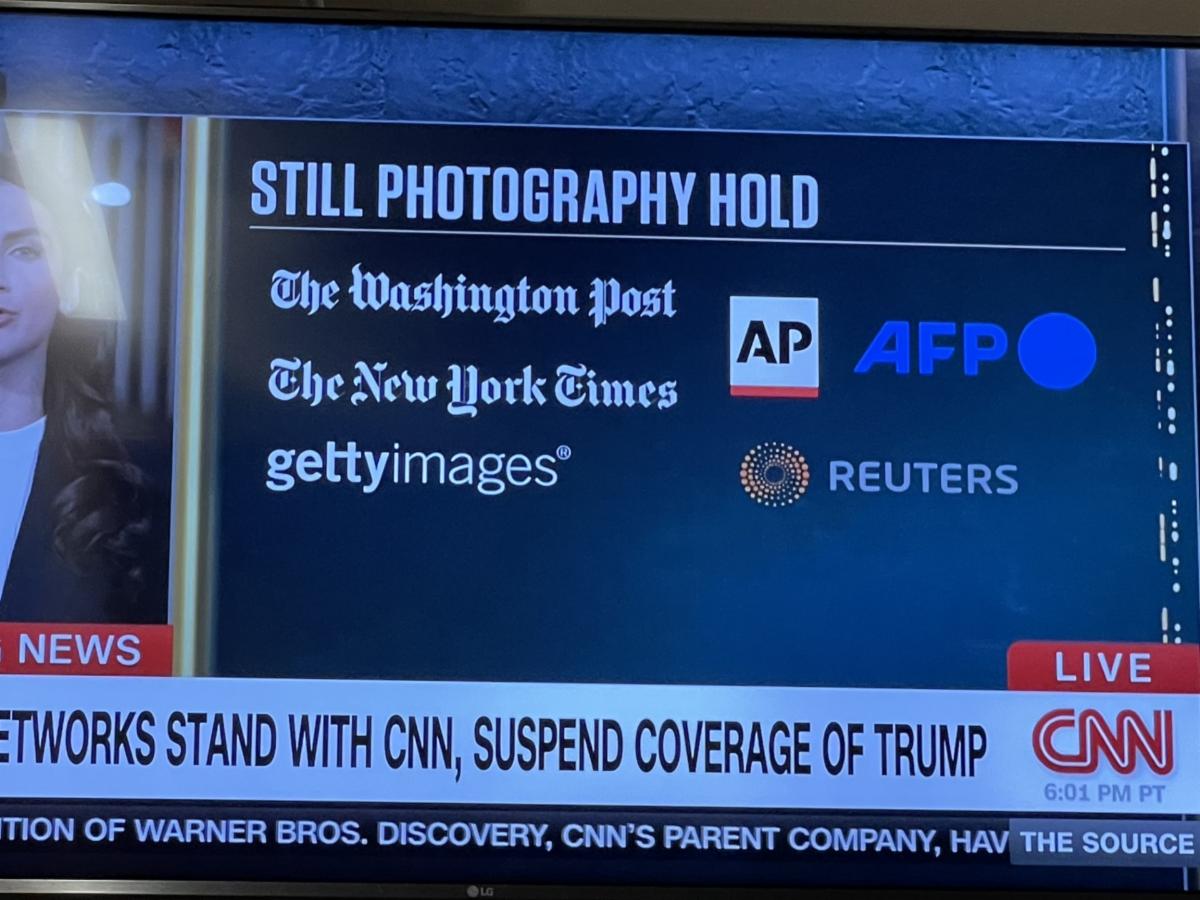
-Screenshot shared by Hank Ackerman
On Monday, the AP joined a number of news organizations, including The Washington Post and The New York Times, in a decision not to publish photographs of presidential events on Monday.
The statement by the AP:
No news organization – or person – should be retaliated against by the government over the words they use. This is why the AP continues to stand for the fundamental American freedom to speak freely without government retaliation, a right enshrined in the U.S. Constitution and one that U.S. District Judge Trevor N. McFadden clearly upheld when he ruled on AP’s case.
We stand with the news organizations who have had their access restricted.
Our colleague Peggy Walsh shared this after viewing a discussion on MS NOW Monday about support of CNN, MS NOW and Politico. In the program, host Stephanie Ruhle pointed out the lack of widespread support for AP when it was banned for its "Gulf of Mexico" stand.
Susan Glasser, celebrated journalist now at The New Yorker, called AP "the backbone" of journalism, pointing out all the places it serves, including small newspapers.
She bemoaned the lack of solidarity supporting AP and said it's now time for other outlets to step up, speak out and unite.
More thoughts in the morning mail:
From Poynter: ‘This is unprecedented’: Trump’s media bans upend White House coverage’
From colleague Ron Fournier, former AP Washington bureau chief: Still Pathetic: The Media Isn’t Doing Enough to Fight Trump
Got your own opinion to share? Please send it along.
Here’s to a great day – be safe, stay healthy, live it to your fullest.
Paul
Trump inaugurates new White House helipad, but networks skip coverage during First Amendment fight
By WILL WEISSERT and SEUNG MIN KIM
The Associated Press
WASHINGTON (AP) — President Donald Trump showed off his new White House helicopter landing pad on Monday, attempting to brush aside a First Amendment firestorm even as major television networks kept their cameras away in protest of CNN being banned from the grounds.
A light drizzle fell on the South Lawn as Trump used oversized gold scissors to cut a red, white and blue ribbon. He then exchanged handshakes with officials and some members of a construction crew wearing green smocks and hard hats — seeking to portray business as usual.
If he had words to mark the occasion, however, it was impossible to hear them over the noise of his waiting helicopter. Normally, TV network crews work to capture clearer audio.
Trump didn’t answer reporters’ shouted questions before climbing aboard Marine One on his way to New York. Instead, he wrote on his social media site, “We are just leaving the White House Lawn on the maiden voyage from the newly built, and very beautiful, Heliport!”
MS Now, Politico and CNN have sued after Trump announced Friday that he was banning them from covering the White House in a clear escalation of Trump’s long-running efforts — in the courts and through administrative action — to restrict news coverage he finds objectionable.
CNN normally participates in a five-network rotation that provides pooled footage of daily events at the White House. When the network was barred from taking its assigned turn on Monday, ABC, CBS, NBC and Fox News agreed collectively to the extraordinary step of skipping Trump’s helipad ceremony.
Read more here.
What is the White House pool? These days, it’s a battleground between Trump and free press rights
By LAURIE KELLMAN
The Associated Press
The White House press pool, a rotating cast of news outlets that covers the president, is now a battleground over free speech rights between President Donald Trump and the media.
On Monday, the issue headed for the courts as CNN, MS NOW and Politico sued the administration over being barred from the White House and, they contend, denied their First Amendment rights. CNN was banned from its scheduled pool duty for the day — and the pool announced that it was canceling its coverage of Trump.
“Effective today, there would be no network pool coverage of the president’s events,” the television pool of five broadcasters wrote in an email to its subscribers. “This follows the White House’s position preventing CNN from fulfilling its assigned pool duties. There will be no replacement pool put in place.”
But the pool is a proxy for the wider fight over whether the president, or anyone, can control the content of news reports — a type of free speech, pillar of American democracy. The developments marked an extraordinary escalation in Trump’s ongoing efforts — from the courts to the Pentagon to the White House — to restrict news reporters and outlets that he finds insufficiently supportive.
Again and again during Trump’s second presidential term, his irritation has focused on the rotating group of reporters who cover the president as representatives of the larger press corps. The practice ensures coverage can be disseminated broadly since not all journalists can be with the president at any given time due to space constraints.
But the pool also is an institution steeped in tradition and anchored in the Constitution’s guarantee of a free press. The relationship between elected American leaders and the journalists who hold them accountable is designed to be adversarial. That’s essential for knowing what the president and his administration are — or are not — doing in the United States’ name, with taxpayer money.
Here’s a look at various aspects of the White House pool.
There may be constitutional issues at play
CNN is one of the major news networks, including ABC, CBS, Fox News and NBC, that are part of a TV pool managed by the networks’ editorial leaders. The networks rotate coverage of presidential events. On Friday, Trump said he was barring CNN, MS NOW and Politico from the White House due to what he called unfavorable coverage and “fake news,” and threatened that more such media bans could be coming.
Reporters from all three were denied entrance to the White House grounds the next day. On Monday, the three outlets said they’ve notified the administration that they will file a lawsuit saying their First Amendment rights had been violated. The complaint also contends that the abrupt confiscation of access violated the networks’ Fifth Amendment right to due process.
Also Monday, CNN was scheduled to travel with the president to the United Nations General Assembly in New York, but a scheduling email from the White House did not name the network. A responding email from the pool said there would be no replacement for CNN — pushback to any notion that the White House can decide who is in the pool and who is out.
The pool follows the president
The First Amendment to the Bill of Rights states that the government “shall make no law ... abridging the freedom of speech, or of the press.” The Trump administration has long insisted that nobody has the right to ask the president questions, especially in the White House — and that goes for members of the pool, whom the president routinely insults in personal terms.
The White House press pool is group of news outlets that ideally are almost everywhere the president goes: in the Oval Office, at state dinners, on Air Force One, in the motorcade, and when the president goes golfing or biking. It is also always on standby in case something happens in the world about which the president needs to speak to the nation.
Last year, the Trump White House upended a decades-long tradition of an independent association of journalists selecting members of the pool. The White House now picks and chooses which members of the media make up the pool, and they almost always select journalists who are outwardly favorable to Trump as part of the mix.
The pool distributes in-person reports and imagery to the broader corps covering the president. When a “pooled” event is over, the print, television and radio poolers share written notes, video and audio with everyone else who is interested.
Traditionally, the White House press pool represents every media format and daily includes The Associated Press and other wire-service writers, the AP and other outlets’ photographers, a television crew, a radio correspondent and writers for print and online publications.
The pool was in President John F. Kennedy’s motorcade in Dallas when he was assassinated on Nov. 22, 1963. That allowed for firsthand accounts of the event as conspiracy theories spread, an example of why independent reporting is critical to understanding what is happening around the president.
Presidents and reporters have an inherently adversarial relationship
Trump is famous for courting reporters even as he publicly criticizes them. And he’s not the first to try to go around traditional outlets.
Franklin Delano Roosevelt had his fireside chats over the radio as some of the nation’s biggest newspapers took issue with government expansion under the New Deal. More recently, television and social media have provided similar workarounds.
In 1798, John Adams signed the Sedition Act, which made it a crime for citizens to “print, utter, or publish ... any false, scandalous, and malicious writing” about the government and used it to jail journalists, according to the National Archives. In 1913, Woodrow Wilson threatened to end presidential briefings with reporters, resulting in the creation of what became the White House Correspondents’ Association that exists today.
Click here for link to this story.
The work of hope
Adolphe Bernotas - The following features Connecting colleague and former AP journalist Jurate Kazickas and her family's philanthropic foundation. (Jurate and I share similar journeys as World War II refugees who fled Soviet occupations of our native Lithuania and settled in the United States.) The article is from Chicago-based Draugas News, English language sister publication of thrice weekly Draugas, oldest continuously published Lithuanian language newspaper in the world and largest in the United States.
| |
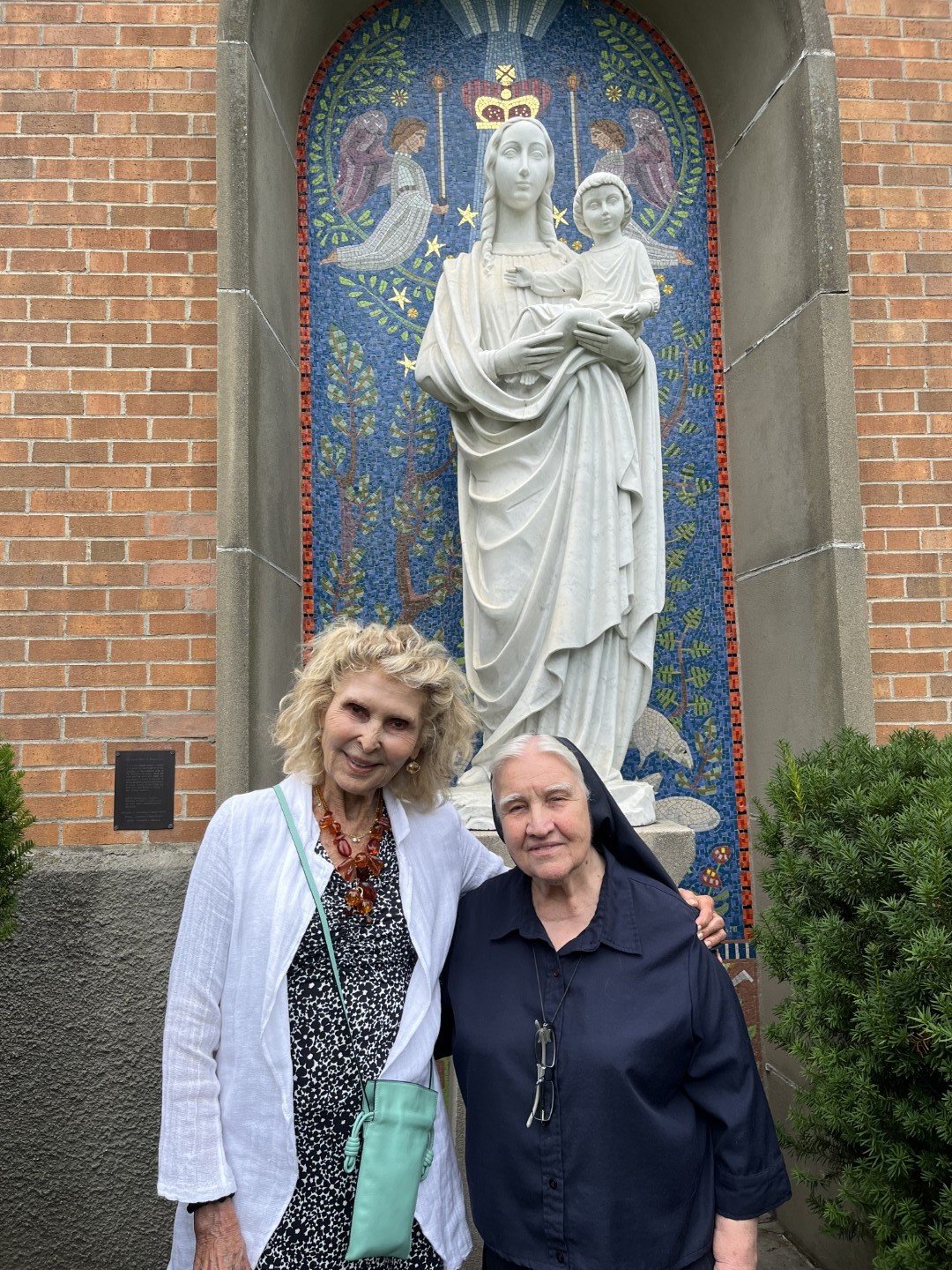
Jurate Kazickas and Sr. Igne Marijošiute, whose connection reaches back to their childhood days at Camp Immaculata, a precursor to today’s Neringa, a Lithuanian camp in Brattleboro, Vermont. Photo Neila Baumiliene.
DARIUS RAZGAITIS
Originally published in Draugas News, August 2026
At a recent conversation at the Immaculate Conception Center in Putnam, Connecticut, Sister Igne Marijošiute of the Sisters of the Immaculate Conception and Jurate Kazickas, president of the Kazickas Family Foundation, reflected on faith, philanthropy, and the next generation. The event was part of the 80th Lithuanian Summer Fest, a festival that grew from the Putnam Picnic the Sisters began decades ago. Both women had attended Camp Immaculata there as girls. (They met at the festival in Camp Neringa, a camp for Lithuanian children at Brattleboro, Vermont.)
For the Lithuanian diaspora that lived through the Soviet occupation, Lithuania’s independence was never inevitable. They had to believe in a free Lithuania without knowing when, or whether, they would see it. That conviction ran through the conversation: hope must be acted upon and passed on.
Keeping the dream alive
For Jurate Kazickas, that conviction began at home. She was only 18 months old when her family left Lithuania, but the country remained a constant presence throughout her childhood. Her father, Juozas Kazickas, believed firmly that Lithuania would one day be free again. He told his children that communist regimes would eventually collapse under their own weight.
In 1968, after working as a war correspondent in Vietnam, Kazickas traveled to Lithuania via the Trans-Siberian Railway. “I really wanted to see Lithuania. But in 1968 it was pretty bad. I was followed by KGB agents at all times, and people were afraid to speak. They weren’t just unhappy, they were depressed. It was very sad for me to see the situation then,” she said.
Her father’s message took on a larger meaning. If people in Lithuania could not safely carry the dream of freedom, the diaspora had to. Even a name could become part of that effort. When Kazickas was sent to a Dominican kindergarten, her mother worried that Jurate might be hard for American children to pronounce (You-RAH-teh) and suggested Kristina or another familiar name. Sister Wilfreda refused: “No, her name is Jurate, and the children will learn to pronounce it.”
At social gatherings, people inevitably asked about her unusual name. Lithuania was barely known to many Americans then. “Where are you from? Never heard of it,” she recalled people asking. “I would explain the history and what’s happening there today and they might also then join in supporting the cause for independence for Lithuania,” she added.
Those lessons became part of her life’s work. The Kazickas Family Foundation was established in 1998, after her father, who had built a fortune in telecommunications, decided to devote part of it to charitable work. With four children and eventually 11 grandchildren, he also saw the foundation as a way to hold the family together. “In America, you move, you travel, you marry, you relocate, and it’s very hard to hold a family together,” she said. “We get together several times a year to discuss, how do we give that money away?”
The foundation focuses on education and on strengthening people and institutions that can shape Lithuania’s future. It supports, among other organizations, Camp Neringa in Brattleboro, Vermont, where young Lithuanian Americans encounter language, culture, and faith. The camp grew out of the Sisters’ earlier all-girls Camp Immaculata in Putnam.
Learning to trust again
Sr. Igne’s connection to Lithuania was shaped by religious life and by returning to a country she had known largely through the memories of others. She went back to Soviet Lithuania in 1986 and met people who spoke carefully and often indirectly. Years of surveillance had taught them to guard their thoughts until trust had been earned.
At first, she took conversations at face value. “I would believe everything people said,” she recalled. For someone accustomed to American life, learning to listen to what people meant – including what they avoided saying – became part of understanding the country.
The change took time. Business and economics adjusted quickly after independence, she said, but human relationships were slower. In the Church, this meant building cooperation where there had been little habit of working together and encouraging people to accept responsibility. It also meant learning that a group could accomplish more than individuals acting alone.
“Obviously, the Church is a man’s world,” she said. On construction projects she led, her background sometimes became an advantage. “Not only was I a woman. Not only was I from America. I was a nun! How do you deal with that?” she joked. She called it her kozeris, her “wild card.”
She has seen a striking growth in people’s trust in themselves and one another. After independence, churches filled with those reclaiming freedoms denied for decades. The crowds later settled into ordinary patterns, but Sr. Igne does not see that as a decline in faith. It is no longer simply a response to oppression, but something people can choose and live more freely.
Einam, darom!
Sr. Igne has no grand explanation for how she or Lithuania arrived where they are today. “You simply go. Day by day. Day by day. Day by day,” she said. “There is God, and you entrust yourself to Him. He gives you an assignment. Maybe you do not understand it. Maybe you do not know how to do it. But you have been entrusted with it, so you take it and do it. Then you learn by doing.”
That is the spirit of the phrase closely associated with her and Neringa: “Einam, darom!” – Let’s go and do it! If something needs doing, she would rather begin than spend hours discussing how to begin. What may look from outside like an extraordinary sequence of accomplishments was simply the next thing that needed to be done. The same spirit applies at Neringa, she said: sometimes one looks up, sees a rainbow, recognizes that God is there, and keeps going.
Neringa remains
Before Neringa opened in Vermont in 1969, the Sisters operated Camp Immaculata at the Immaculate Conception Center in Putnam, Connecticut. Sr. Igne remembered its Raudondvaris building, where five girls to a room was not unusual. “Fire code would never allow that today!” she said.
“There weren’t so many rules back then, in a good way,” she remembered, and that simplicity is what she wants to preserve at Neringa. Longtime board director Linas Orentas had told her earlier that day: “You go back to Neringa and nothing has changed. Everything looks the same.”
Sr. Igne agreed. “That’s it. You don’t change the basics. You don’t search for new values. You uphold 100 percent that what is true and good. You don’t need novelty. The more artificial things you get, the more artificial it becomes.” “Like kneading bread by hand,” she suggested, “you have to do the work yourself to make something good.” “Be strict,” she said. Young people do not need to be constantly entertained; they need to experience the values themselves.
Investing in people
For Kazickas, passing hope forward has taken another form. Her father served for many years on the board of the Lithuanian Foundation in Chicago and supported Lithuanian causes in the diaspora and homeland. In 2007, she joined academics, business leaders, and nonprofit organizations in discussing how to encourage investment in Lithuania and create opportunities for women.
Many Lithuanian women, she recalled, were exceptionally capable but reluctant to speak publicly about their ambitions and ideas. Kazickas called herself a “feminist” and asked participants to look past the word’s negative associations. Feminism, she said, was not about superiority but equal opportunity: equal pay, access to leadership, and respect for women’s contributions.
Over time, she watched women become more confident in their own judgment. They formed networks and discussion groups, mentored younger women, and discussed practical questions: negotiating a raise, dealing with a difficult supervisor, advancing professionally, and helping younger women succeed.
The foundation now increasingly focuses on young people, especially in rural communities facing population decline and limited opportunities. Sports are one way to reach children and teenagers in Lithuania’s kaimai (villages), but the point is not athletics alone. The aim is to give young people reason to imagine a future in Lithuania and to give something back to their homeland. Americans, she noted, do not necessarily experience the same longing for a homeland that generations of Lithuanians did during occupation. For young people in Lithuania, the question is immediate: “Where will they find hope? Where will they find work? What will give them a reason to stay?”
A witness for today
No subject stirred Sr. Igne more than Blessed Jurgis Matulaitis. As the centenary of his death approaches in 2027, she hopes more Lithuanians will rediscover him. “Foreigners often know him better than Lithuanians do,” she observed.
Matulaitis was orphaned as a child; he survived tuberculosis and became a scholar, professor, polyglot, author, religious order founder, Bishop of Vilnius, and a figure in the complicated political history of Vilnius in the 1920s. What inspires Sr. Igne is not the list, but the spirit in which he lived.
His motto, Nugalek bloga gerumu – “Conquer evil with good” — was, she said, a way of engaging a divided world with humility, fairness, and forgiveness. When Matulaitis died in 1927, people of many backgrounds mourned him. In a politically charged environment, he did not answer conflict with violence or retribution.
The Matulaitis Mission in Lemont, Illinois, holds a short online program on the 27th of each month, the date of his death; recordings are available online. Sr. Igne’s invitation was simple: learn as much as you can from Blessed Matulaitis’ life.
Hope becomes legacy
Kazickas carries forward her parents’ conviction that Lithuania would be free and that the diaspora had a responsibility to keep that hope alive. Sr. Igne’s faith does not require knowing the whole plan: trust God, accept what is placed before you, and move forward. Their work is different, but both return to the same task — education, example, and doing the work in front of you. This is not the dramatic hope of the occupation years, but a more practical one: creating conditions in which another generation can choose to remain connected to Lithuania. As Sr. Igne puts it: “Einam, darom!”
A New Play in Budapest Signals a Cultural Reawakening for Hungary
CONNECTING EDITOR’S NOTE: Kati Marton is the daughter of Endre Marton, a prize-winning journalist who sent the first account of the Hungarian uprising of 1956 just weeks after serving a year in prison for covering the events preceding it. He died in 2005 at the age of 95. He served as a correspondent for the AP in Hungary and after settling in the United States, he was for many years the senior diplomatic correspondent for the AP.
By Andrew Higgins
The New York Times
When she returned in 1989 to the homeland that her family fled after Soviet troops crushed an uprising in 1956, Kati Marton was “filled with great hope” as she watched a “young, skinny bearded guy” shout for Soviet withdrawal.
Then, after she started making annual trips to Budapest, the Hungarian capital and place of her birth, Ms. Marton, a Hungarian-American writer, watched aghast as Viktor Orban, no longer young or skinny but Hungary’s strongman leader, cozied up to the Kremlin and championed what he called “illiberal democracy.”
Media outlets he controlled began denouncing her as a subversive who was plotting to overthrow his government in cahoots with George Soros, the Hungarian-born financier and liberal philanthropist. So she halted her visits home.
After Mr. Orban’s crushing defeat in an April election, Ms. Marton recently returned for her first trip back in eight years to attend the Hungarian premiere of a one-woman play based on her 2009 family memoir, “Enemies of the People.”
Read more here. Shared by Francesca Pitaro.
Connecting sky shots
| Bruce Lowitt - A rainbow lands in Tampa. | RAINBOW MOUNTAINS: Zhang Wanli, a Chinese photographer and wife of retired AP newsman Patrick Casey, recently took this photo of the “Rainbow Mountains” in Zhangye Danxia National Geopark in northwestern China, about 750 miles west of Beijing. The mountains get their nickname from layers of mineral-rich rock that create striking bands of red, orange, yellow and other colors. Zhangye was an important stop on the ancient Silk Road beginning in the Han dynasty more than 2,000 years ago. It lies in the Hexi Corridor, the narrow route between mountains and desert that for centuries linked central China with Central Asia. | | Connecting wishes Happy Birthday | | |
Stories of interest
A flashlight and unseen settlers: Photographer conveys West Bank family’s nightly watch in 1 photo
By Leo Correa
The Associated Press
Leo Correa began working in Israel for The Associated Press following the Oct. 7, 2023 Hamas attack and joined the staff the next year.
Since the start of the Israel-Hamas war on Oct. 7, 2023, settler violence has surged across the Israeli-occupied West Bank, with an increase in attacks by Israeli settlers against Palestinians and repeated Israeli military raids.
I visited the Kaabneh family earlier this July on assignment for AP as part of a visual story about life alongside Israeli outposts, on the outskirts of the town of Taybeh. At that time an Israeli settler stepped into the courtyard of their house as another stood next to the fence, trespassing on Palestinian-Bedouin property. Settlers lingered outside talking on their phones and taking videos of the family and also activists, who were there as a protective presence to support the Palestinians.
Like shadows at dusk, once again settlers came around Nayef Kaabneh’s family home, walking around. Nayef grabbed a flashlight to track their movements while also trying to record them on his phone to document what was happening.
Read more here. Shared by Doug Pizac.
-0-
States settle lawsuit over Paramount-Warner merger, clearing key hurdle for $81 billion deal
By Wyatte Grantham-Philips and Michael Sisak
The Associated Press
Twelve states and Hollywood writers challenging Paramount’s buyout of Warner Bros. Discovery agreed to settle their lawsuits on Monday, effectively paving the way for the $81 billion mega merger to cross the finish line, with some new commitments. The blockbuster deal will still bring together two of Hollywood’s oldest studios, key TV networks like CBS and CNN and streaming platforms HBO Max and Paramount+, as well as decades of libraries with titles ranging from “Harry Potter” to “Top Gun.”
But among terms of Monday’s agreement announced by California Attorney General Rob Bonta — who led the states’ case — Paramount pledged to increase domestic production by spending at least an additional $1.5 billion on U.S. film production over the next five years and establish monitoring of editorial independence of the company’s news operations.
Read more here. Shared by Doug Pizac.
-0-
How the Times Lost a Defamation Trial
By Bill Grueskin
Columbia Journalism Review
It is rarely a good sign when the New York Times standards editor fires off an email to you at the end of the day. That’s especially true when that email arrives after your reporter published a “scoop” that was based on a shaky anonymous source and that was rapidly denied by key figures in your story.
But such was the scenario on the evening of March 16, 2023, when Phil Corbett, who was then the associate managing editor, wrote this to the leaders of the Times’ Sports section: “To state the painfully obvious, I hope we’re right on this. Also, I hope we did our usual level of due diligence in handling this anonymous sourcing.”
Corbett’s instincts were justified. The Times’ story was a bad misfire—one that resulted in the paper’s first defamation trial loss in a United States court in more than fifty years. When the trial ended last month, in the United States District Court for the Northern District of Alabama, a jury awarded 9.25 million dollars to a former University of Alabama basketball player named Kai Spears, because the Times had mistakenly placed him as a passenger in a car that was at the scene of a tragic shooting death.
Read more here. Shared by Richard Boudreaux.
-0-
Mistakes? We’ve Made a Few
By Adam Nagourney
Adam Nagourney, a New York Times reporter since 1996, is the author of “The Times: How the Newspaper of Record Survived Scandal, Scorn, and the Transformation of Journalism.”
For most of its existence, The New York Times corrected errors of spelling and facts with a sentence or two, usually tucked inside the newspaper. It wasn’t until it was well into its second century that the paper began to dig deeper into its own lapses and explain its mistakes to readers, or at least some of them. Corrections moved to more prominent positions, typically Page 2 or the front of the second section, and sometimes even to the front page.
One of the first signs of this new era came in the early 1980s, when Abe Rosenthal, the executive editor at the time, created the “editors’ note,” designed, he said in a memo announcing the new policy, to “amplify articles or rectify what the editors consider significant lapses of fairness, balance or perspective.” Rosenthal wrote one of the first notes himself in 1985 after he objected to what he said was the snide tone of a Times story about a friend, Mortimer Zuckerman, the publisher and real estate developer. “Through opinionated phrases and unattributed characterizations, the article established a tone that cast its subject in an unfavorable light,” said the note, which was unsigned.
By 1987, under a different executive editor, Max Frankel, The Times published a correction of more than 1,200 words — as long as many news stories — addressing mistakes in an article that recounted the congressional testimony of Lt. Col. Oliver L. North about the Iran-contra scandal. This appeared on July 13, 1987, under a headline that ran across two columns of the front page: “A Correction: Times Was in Error on North’s Secret-Fund Testimony.”
Read more here. Shared by Ron Fournier.
-0-
Two of Puerto Rico’s legacy newspapers say they will end print editions
By Danica Coto
The Associated Press
SAN JUAN, Puerto Rico (AP) — Two of Puerto Rico’s biggest newspapers announced Monday that they will end their print editions in upcoming days and pivot to digital only, joining a worldwide trend.
GFR Media, a Puerto Rican company that publishes El Nuevo Día and Primera Hora, said Monday that the decision responds to a change in consumer habits. Sept. 24 will mark the last print edition for Primera Hora and Sept. 27 for El Nuevo Día, according to the papers.
"We continue to evolve with the Puerto Rico of the 21st century, one that today numbers more than nine million Puerto Ricans who live on the Island, in the United States, in Europe and in the rest of the world. We have always been, and will continue to be, wherever Puerto Rico is,” María Luisa Ferré Rangel, publisher of GFR Media, said in a statement.
It wasn’t immediately clear how many people would be laid off. A spokesperson for GFR Media said the company's only comment for now was the official statement it issued.
Read more here. Shared by Doug Pizac.
-0-
Photographer Says He Questioned Everything After Shoot With Elizabeth Holmes
By Matt Growcoot
PetaPixel
A photographer has recalled a photo shoot with convicted fraudster Elizabeth Holmes that he now suspects was all a charade.
Reacting to the intriguing and bizarre trailer for an upcoming Nathan Fielder documentary You Can See Everything, photographer Benjamin Rasmussen took to Instagram to spill the tea on his time photographing Holmes for Bloomberg Businessweek in 2015.
“Holmes had always been shown as this Steve Jobs figure, complete with black turtleneck and a piercing gaze,” Rasmussen writes. “But as the cracks were beginning to show, her PR team decided they would reframe the story.”
Rasmussen reveals to CNN that the Theranos PR team decreed that he was only allowed to shoot group portraits, all of them women scientists in lab coats. “It was this really hard pivot to (show) this was a team effort,” he says. “When we walked into this space, we realized how much they were trying to control it.”
Rasmussen says that he and his assistant Ryan Brown had a crisis meeting at the lab and decided that they were going to get the shot they came for, despite the Theranos PR team insisting that the team of women scientists should be in the shot as well.
“Ryan and I realized we could just use the white window shade as a backdrop. So we set up this whole scene with lights and different setups, a big show to please the PR,” he says on Instagram. “We photographed friendly, corporate-looking scenes, then slowly moved Holmes back, closer and closer to the window. Ryan held up a huge reflector directly behind me to block the PR team’s view, and I kept giving super-specific direction to scientists who weren’t even vaguely in frame.”
Rasmussen got the shot he wanted: a head-and-shoulders shot of Holmes looking straight down the camera with a “look of quiet desperation” against a white backdrop.
Read more here. Shared by Doug Pizac.
-0-
American CEO Forced to Leave Canada After Posting AI Photo of Family in ‘Lake America’ Sweatshirts
By Pesala Bandara
PetaPixel
An American CEO was forced to cut her trip to Canada short after posting an AI-edited photo of herself and three family members wearing “Lake America” sweatshirts that went viral and sparked an uproar.
Jane Smith, CEO of Family First Credit Union, which is based in Saginaw, Michigan, has apologized for the now-deleted photo that she posted on Facebook. According to a report by CTV, the AI-edited photo quickly went viral, sparking an angry backlash from Canadians over its reference to the controversial proposal to rename Lake Ontario and gaining national news coverage.
Read more here. Shared by Doug Pizac.
-0-
How Everyday Tiktokers Are Making $6,000 a Month Posting Stealth Ads
By Celia Bernhardt
Wall Street Journal
An 11-second TikTok video with more than a million views shows a young woman named Ceci examining a lengthy breakup text she has received. “HE IS ENDING OUR RELATIONSHIP OVER THIS??” reads the caption.
“I don’t know if I’ll ever understand, but OK,” Ceci says aloud as an on-screen widget, “Dictating with Aqua Voice,” transcribes her reply.
Read more here. Shared by Doug Pizac.
-0-
Trump Has Repeatedly Weighed Moving Entire Press Corps Out of White House
By Meredith McGraw, Josh Dawsey and Philip Wegmann
The Wall Street Journal
President Trump has repeatedly discussed kicking journalists out of the White House, where they have worked for decades, and moving them to a nearby building, according to current and former administration officials.
The president raised the matter as recently as last month, as his frustrations with media coverage of his second term escalated, one of the officials said. Some of Trump’s advisers have cautioned against the move, the people said.
A senior administration official said the president had no plans to kick the press corps out of the White House. The White House didn’t comment on the record.
Read more here. Shared by Doug Pizac, Dennis Conrad.
-0-
CNN’s Future Will Include an Editorial Oversight Board
By John Koblin and Benjamin Mullin
The New York Times
This much is known: CNN is on the brink of having a new owner. And it will have a new independent editorial board.
But that is where certainties about the network’s future end.
Paramount Skydance settled an antitrust lawsuit with a group of 12 states on Monday, paving the way for David Ellison, the company’s chief executive, to close his $111 billion deal for Warner Bros. Discovery. The deal will give him control of Warner’s film and TV studios, and cable networks like HBO, Comedy Central and CNN.
That means that CNN and CBS News, which Paramount already owns, will be under the same corporate boss by early October.
The looming possibility of Mr. Ellison’s ownership has caused anxiety in CNN’s newsroom since the acquisition was announced at the beginning of the year. Mr. Ellison enjoys a friendly relationship with President Trump, who regularly assails CNN as biased and barred the network — along with MS NOW and Politico — from the White House grounds late last week, prompting a lawsuit and a First Amendment outcry.
Read more here. Shared by Doug Pizac.
| Today in History - Sept. 22, 2026 | | |
Today is Tuesday, Sept. 22, the 265th day of 2026. There are 100 days left in the year.
Today in history:
On Sept. 22, 1862, President Abraham Lincoln issued the preliminary Emancipation Proclamation, declaring all enslaved people in Confederate states should be freed as of Jan. 1, 1863, if the states did not end the fighting and rejoin the Union.
Also on this date:
In 1776, during the Revolutionary War, Capt. Nathan Hale, 21, was hanged as a spy by the British in New York.
In 1957, Haitian women were allowed to vote for the first time, 153 years after Haiti became an independent country; François Duvalier was elected president.
In 1961, President John F. Kennedy signed congressional legislation making the Peace Corps a permanent federal agency within the State Department; it became an independent agency in 1981.
In 1975, Sara Jane Moore fired two shots in an unsuccessful attempt to assassinate President Gerald R. Ford outside a San Francisco hotel, missing Ford by inches.
In 1980, the Persian Gulf conflict between Iran and Iraq erupted into a full-scale war that would continue for nearly eight years.
In 1985, rock and country music artists participated in Farm Aid, a concert staged in Champaign, Illinois, to help the nation’s farmers.
In 1993, 47 people were killed when an Amtrak passenger train derailed and plunged off a bridge into Big Bayou Canot near Mobile, Alabama.
In 2014, the United States and five Arab nations launched airstrikes against the Islamic State group in Syria, sending waves of planes and Tomahawk cruise missiles against an array of targets.
In 2017, as the scale of the damage from Hurricane Maria started to become clearer, Puerto Rican officials said they could not contact more than half the communities in the U.S. territory, where all power had been knocked out to the island’s 3.4 million people.
In 2018, militants disguised as soldiers opened fire on an annual military parade in southwest Iran, killing at least 25 people and wounding over 60. An Arab separatist movement claimed responsibility for the terror attack, the deadliest on Iranian soil in nearly a decade.
Today’s Birthdays: Singer-choreographer-actor Toni Basil is 83. Musician King Sunny Adé (ah-DAY’) is 80. Football Hall of Famer Harold Carmichael is 77. Rock singer David Coverdale (Deep Purple, Whitesnake) is 75. Actor Shari Belafonte is 72. Singer Debby Boone is 70. Country singer June Forester (The Forester Sisters) is 70. Singer Nick Cave is 69. Singer Andrea Bocelli (an-DRAY’-ah boh-CHEL’-ee) is 68. Singer-musician Joan Jett is 68. Actor Scott Baio is 66. Actor Bonnie Hunt is 65. Actor Mireille Enos is 52. Soccer player Thiago Silva is 42. Actor Tatiana Maslany is 41. Actor Tom Felton is 39. Actor Curry Barker is 27. Singer Jessie Murph is 21. Olympic gold medal skateboarder Coco Yoshizawa is 17.
| | Got a photo or story to share? | | |
Connecting is a daily newsletter published Monday through Friday that reaches more than 2,000 retired and former Associated Press employees, present-day employees, and news industry and journalism school colleagues. It began in 2013. Its author, Paul Stevens, retired from the AP in 2009 after a 36-year career as a newsman in Albany and St. Louis, correspondent in Wichita, chief of bureau in Albuquerque, Indianapolis and Kansas City, and Central Region vice president based in Kansas City.
Got a story to share? A favorite memory of your AP days? Don't keep them to yourself. Share with your colleagues by sending to Ye Olde Connecting Editor. And don't forget to include photos!
Here are some suggestions:
- Connecting "selfies" - a word and photo self-profile of you and your career, and what you are doing today. Both for new members and those who have been with us a while.
- Second chapters - You finished a great career. Now tell us about your second (and third and fourth?) chapters of life.
- Spousal support - How your spouse helped in supporting your work during your AP career.
- My most unusual story - tell us about an unusual, off the wall story that you covered.
- "A silly mistake that you make"- a chance to 'fess up with a memorable mistake in your journalistic career.
- Multigenerational AP families - profiles of families whose service spanned two or more generations.
- Volunteering - benefit your colleagues by sharing volunteer stories - with ideas on such work they can do themselves.
- First job - How did you get your first job in journalism?
- Most unusual place a story assignment took you.
Paul Stevens
Editor, Connecting newsletter
paulstevens46@gmail.com
| | | | |