|
New York State Announces $1.6 Million to Prevent Suicides in Rural Areas
The New York State Office of Mental Health last week announced a four-year $1.6 million initiative aimed at strengthening community-led prevention and resiliency efforts to address the higher suicide rates experienced in rural areas of Broome, Genesee, Orleans, Wayne, and Yates counties. The announcement followed a two-day conference on rural suicide prevention that was hosted in Ithaca last week by the Suicide Prevention Center of New York, which is located within OMH. “Each of the 1,700 New Yorkers who die by suicide annually represents an incalculable loss,” OMH Commissioner Dr. Ann Sullivan said. “They were our family members, colleagues, our friends, and our family members – our loved ones. At OMH, we have an unwavering commitment to reducing the tragedy of suicide by reducing isolation and removing barriers to care, especially in our high-risk rural communities.” Read more here.
| |
HHS Recommends Science-Based Thresholds to Target Dangerous Enhanced Kratom Products
The U.S. Department of Health and Human Services (HHS) provided a new recommendation to the Drug Enforcement Administration (DEA) that establishes science-based thresholds for 7-hydroxymitragynine (7-OH) and mitragynine pseudoindoxyl (MGPI), potent opioid compounds associated with products marketed as kratom. The Department of Justice last Friday announced that DEA issued new Notices of Intent reflecting HHS’ updated scientific analysis and recommendations, including a new Notice of Intent for 7-OH and MGPI incorporating HHS’ recommended concentration and ratio thresholds. Following a review of available scientific data and comments, HHS Assistant Secretary for Health Admiral Brian Christine, M.D., recommended that DEA use concentration or ratio-based thresholds to determine which products containing 7-OH and MGPI are subject to Schedule I control for purposes of temporary scheduling of these substances under the Controlled Substances Act. The recommendation is designed to target concentrated or chemically altered products while distinguishing them from natural botanical kratom products, which may contain trace amounts of 7-OH and MGPI. Read more here.
Related: Addiction clinics see rising cases of kratom and 7-OH withdrawal
| |
New York Counties Face $170M In Additional SNAP Costs
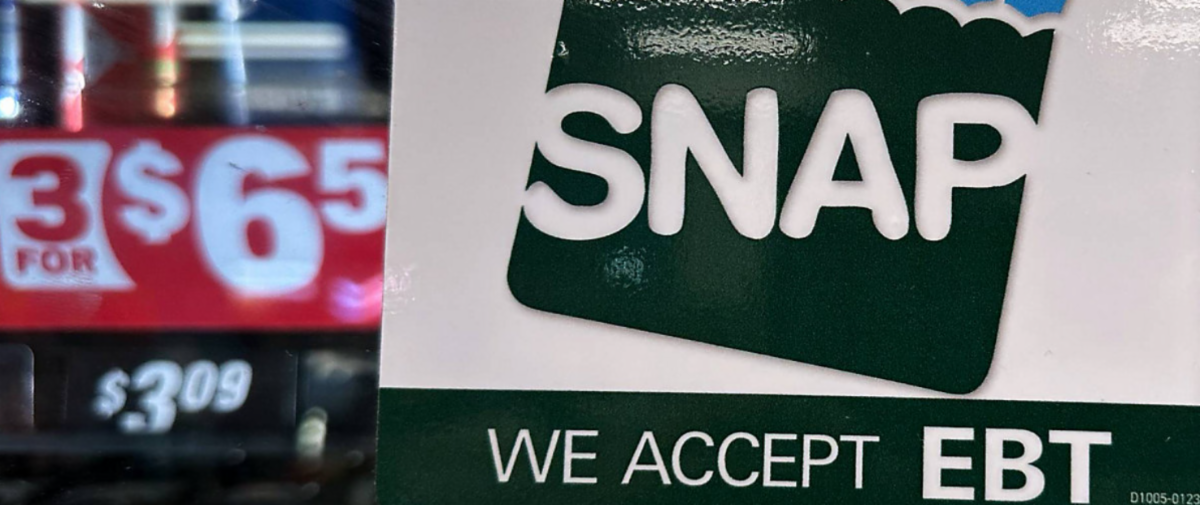
New York counties are facing an estimated $170 million in additional annual costs to administer the Supplemental Nutrition Assistance Program after a new federal law reduced Washington’s share of the funding. The change, part of President Donald Trump’s One Big Beautiful Bill Act, took effect Oct. 1, reducing the federal government’s contribution toward SNAP administrative costs from 50% to 25%. With counties preparing their budgets for next year, local leaders say the additional expenses could force difficult decisions about spending on other services. Stephen Acquario, executive director of the New York State Association of Counties, said counties may have to reduce spending elsewhere to cover the costs. “We have to cut programs and services, pave less roads and bridges, reduce expenditures for other non-mandatory or what’s called discretionary spending programs for the elderly,” Acquario said. Read more here.
Related: New York pours $26M into SNAP outreach as federal work rules shrink enrollment
| |
Fahy, McDonald Introduce Legislation to Cut the Red Tape and Streamline the Human Service Provider Background Check Process
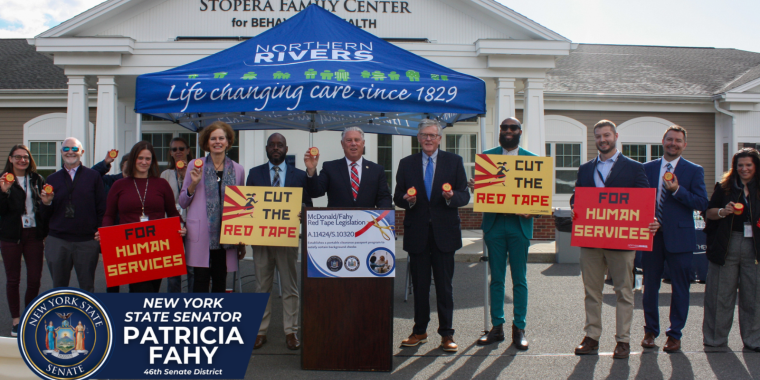
Senator Patricia Fahy (D-Albany) and Assemblymember John T. McDonald III, RPh (D-Cohoes) were joined by Bill Gettman from Northern Rivers and human services providers to highlight Fahy/McDonald legislation (S10320/A11424), a bill that seeks to streamline the background check process for human services providers. There is a shortage of employees who are working in the human services field, and this legislation would remove any unnecessary delay when a human services worker switches to a job that requires a background check through the NYS human services agencies, including the Justice Center, Office of Children and Family Services (OCFS), Department of Health (DOH), Office of Mental Health (OMH), and Office for People with Developmental Disabilities (OPWDD). These employees will no longer start at square one and will not have to undergo a duplicative background search. Instead, they can get to work sooner and provide much-needed services to members of our community. Read more here.
| |
Expanding Behavioral Health Access In Rural Communities Series
Rural communities face persistent barriers to behavioral health care, including workforce shortages and limited local services. Health care providers and community-based organizations (CBOs) are increasingly using community-based workers — including peer support professionals, community health workers, and community paramedics — to extend the reach of care and connect rural residents to behavioral health services. To explore how these approaches are being implemented, the Center for Health Care Strategies interviewed rural providers and CBOs across 10 states. A brief highlights key findings and practical considerations for providers seeking to expand behavioral health care access. This profile series builds on the brief by highlighting how community-based workforce approaches are being put into practice in rural Georgia, North Carolina, and Tennessee. The profiles offer practical approaches for strengthening service delivery, addressing access barriers, building local workforce capacity, and creating more coordinated systems of care. Read more here.
| |
States Now Have to Decide How to Spend Meta’s Settlement Billions
After Meta agreed to pay as much as $17 billion to settle claims that it had built Instagram and Facebook to hook children, attorneys general in several states outlined how the money should be spent. The funding should “repair the harms of unhealthy social media use,” expand youth crisis intervention and restore the mental health and safety of children, they declared in news releases. But the settlement with Meta in August cements little in required allocations toward those goals. And if earlier settlements with the tobacco and opioid industries are any guide, it is much simpler to win the money than ensure it reaches the intended beneficiaries. In an appendix to the Meta agreement where each state set terms for spending its share, most specify no purpose. Wyoming sends every dollar to its general fund. Alaska splits its share between the general fund and its attorney general’s enforcement budget. The total includes $459 million settling what a spokesperson for California’s Justice Department called “a prior, unrelated multistate investigation” into Meta’s Cambridge Analytica data leak. Read more here.
Related: ChatGPT for Teens has special safeguards. A watchdog group finds most don't work
| |
The Substance Use Prevention Workforce: Results of a National Assessment
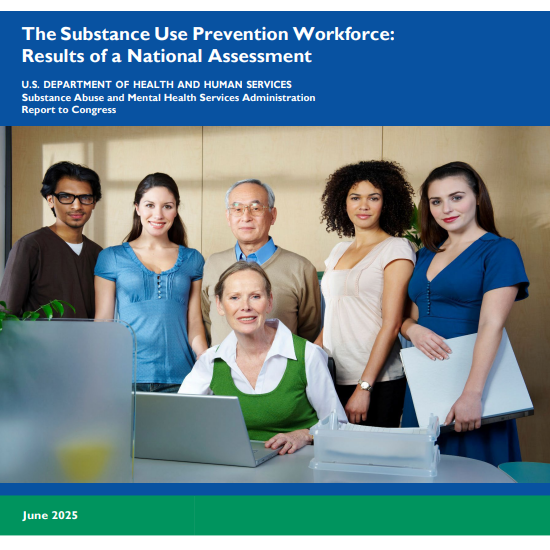
Delivering substance use prevention via a skilled workforce offers a cost-effective, life-saving way to avoid the devastating, costly consequences of substance misuse. The report is the first national assessment of the substance use prevention workforce — and offers key findings and implications to address challenges.
| |
Measurement-Informed Psychiatric Care: If Not Now, Then When?
For those of us who regularly use measurements in practice, their utility is unquestionable in empowering and engaging patients, dealing with payers, talking to families, and making more precise, timely, and shared clinical decisions. But many of us remain reluctant to use measures to inform better diagnostic, treatment-delivery, and patient-management decisions. I first learned about measurement-based care (MBC) from Aaron T. Beck, MD, as a resident (although it wasn’t called MBC at the time). We used the Beck Depression Inventory (BDI) to assess treatment effectiveness and identify cognitions to target in cognitive therapy. Subsequently, when conducting controlled trials, regularly measuring depressive symptoms helped me make personalized dose adjustment decisions. I found that many patients would tell me, “I’m not getting better,” yet their self-reported depression rating scale was already showing meaningful improvement. Read more here.
| |
5 State Strategies for Aligning Substance Use Policy and Investments with Community Needs
Decisions about how to invest resources to address the toll of the opioid and substance use crises can be strengthened with meaningful input from communities most impacted by substance use disorder (SUD). Though significant progress has been made in decreasing overdoses across the United States, overdose rates and related substance use harms have persisted and widened among certain demographics and geographic areas. Understanding the specific challenges faced by those communities requires direct communication with impacted people and the providers who serve them. This collaboration may better inform state substance use policies and investments that more closely meet the needs of communities most impacted by substance use harms. To better support states in engaging SUD-impacted communities, NASHP partnered with the American Institutes for Research® (AIR) in the Measurements for Accountability to All People in Policy Solutions (MAAPPS) Project. Read more here.
Related: DEA warns of potent synthetic drugs complicating overdose response
Patients with Opioid Use Disorder Diagnoses Increased Almost 33 Percent from 2022 to 2025
| | |
UPCOMING EVENTS & TRAININGS
Bridging the Gap: Using Hixny Data to Power 30-Day Transitional Care
October 15, 1 - 2 pm, NYS Association for Rural Health
Early Childhood and Youth Mental Health: Strengthening Crisis Response for Infants, Young Children, and Their Caregivers
October 15, 2 - 3 pm,
What Rural Hospitals Are Doing to Build Stronger Leadership Pipelines: Lessons From Nearly 500 Healthcare Leadership Placements
October 15, 2 - 3 pm, NRHA Services Corporation
Connecting With Youth: A Toolkit for Child Welfare Professionals Supporting Families Affected by Substance Use
October 15, 2 - 3 pm, SAMHSA
Workforce Solutions Jam | Beyond Burnout, Sustaining the Workforce Through H.R.1
October 20, 1 - 2 pm, National Council for Mental Wellbeing
Bringing People to the Table: Community Voices and Policy Choices to Improve Substance Use Systems
October 21, 2 - 3:15 pm, NASHP
Empowering Families: Making Sense of AI & Social Media
October 21, 3 - 4 pm, NYPCC
Using MyCHOIS for Recipients
October 22, 2 - 3 pm, OMH
New and Upcoming Primary Care Policies in NYS Medicaid
October 26, 2 - 3:30 pm, DOH
Common Practices that Hurt Survivors and Their Antidotes
October 28, 12 - 1 pm, NAADAC
Disclosure Processes During Opioid and Other Substance Use Disorder Treatment and Recovery
October 28, 12 - 1 pm, SAMHSA
Beyond the Training Budget: Innovative Ways to Invest in Leadership Development
October 28, 1 - 2 pm, National Council for Mental Wellbeing
Securing and Sustaining Funding: Best Practices for Grant Planning, Implementation, and Evaluation
October 28, 1 - 2 pm, National Council for Mental Wellbeing
Navigating the Menopause Transition: Substance Use, Mental Health, and Lived Experience
October 28, 2 - 3 pm, SAMHSA
Cannabis Use among Youth and Young Adults: Prevalence, Assessment, Dependence, and Comorbidities
October 29, 12 - 1:15 pm, NEATTC
Using PSYCKES for Crisis Work
November 4, 10 - 11 am, OMH
Strengthening Rural Communities: Innovations and Partnerships to Address Substance Use Disorders and the Opioid Crisis
November 5, 2 - 3 pm, SAMHSA
Gambling in Justice- Involved & Reentry Populations (Overview, risks, Screening, and Recovery Supports)
November 9, 12 - 1:30 pm, NEATTC
PSYCKES for County Local Government Units
November 19, 1 - 2 pm, OMH
Bridging Community Health and Public Safety: Deflection, Situation Tables, and Cross-Sector Collaboration
November 18, 12 - 1:30 pm, NAADAC
The Power of Protective Factors: What Recovery Professionals Can Teach Prevention (and Vice Versa)
December 2, 12 - 1 pm, NAADAC
Considering Ethics in Documentation of Clinical Supervision
December 9, 12 - 1:30 pm, NAADAC
| |
CLMHD CALENDAR
October
CLMHD Fall 2026 Full Membership Meeting
October 21 - 23, Lake Placid
November
Executive Committee Meeting
November 4: 8 - 9 am
Quarterly LGU Billing Staff Call
November 4: 11 am - 12 pm
LGU Clinic Operators Call
November 10: 10 - 11 am
CLMHD Office Closed - Veterans Day
November 11
Addiction Services & Recovery Committee Meeting
November 12: 11 am - 12 pm
Mental Health Committee Meeting
November 12: 3 - 4 pm
Children & Families Committee Meeting
November 17: 12 - 1:30 pm
CLMHD Membership Call
November 18: 9 - 10 am
CLMHD Office Closed - Thanksgiving
November 26 - 27
| |