____________________

One story, curated by Gregory Bufithis. More about me here.

____________________


Four systems that hold modern life together broke in 48 hours. Not one of them was attacked.


Modern digital and physical systems can fail simultaneously due to routine maintenance errors and aging hardware rather than malicious cyberattacks.


____________________


15 November 2026 (Athens, Greece) - Over the weekend, technology analyst Dustin Patrick noted:


Four systems that hold modern life together broke in 48 hours. Not one of them was attacked.


1. On Friday the 13th, the FAA stopped every departing flight in the United States. It was only the second nationwide ground stop since 9/11. No hackers. Old switches and routers in a network nobody had replaced simply got overloaded and gave up.


2. The day before, Microsoft 365 went down across 74 countries and stayed down for over 24 hours. Email, Teams, Copilot. Hospitals, schools, police departments, banks. The cause was a network configuration change.


3. Friday morning, Claude went dark worldwide.


4. Then Workday went down on payday, locking workers at some of the country’s biggest retailers out of their pay and their hours.


Meanwhile the real attacks keep coming.


- Hackers are breezing through every the very security gateways companies bought to keep them out.


- In Ukraine, power plants are being hit so often that repair crews cannot finish a shift.


- And the man who built the chips that every AI on Earth runs on lost his company in a week through his own volition and political subterfuge.


People keep asking what is going on. Is it sabotage? Is it coincidence? Is it a sign?


The honest answer is quieter, and worse.


This morning in her weekly science column, Anna Abrigo, my Science Researcher and Editor, wrote a piece on how AI advancements in mathematics has been all the rage over the last few months, a summary of where we are at, and what it might mean for society.


One of our readers, a former U.S. military jet pilot who was in commercial aviation for 25 years (and just retired) noted that the "official word" on the FAA flight stoppage last week was not due to AI, that the highly vaunted new aviation AI "SMART system" had not been pluggeded in. But he noted:


"The reality is we use a lot of AI. We use predictive AI algorithms to optimize flight paths, weather routing, and fuel consumption.


But I simply cannot tell you the countless times we cannot route or repair physical router traffic bottlenecks, data spikes, or failing copper-to-fiber transitions due to old, antiquated, legacy systems. AI ain't gonna fix that. The U.S. aviation system is not fit-for-purpose".


Dustin really nails this.


Personal note: he and I bonded awhile ago, having the same mantra/philosophy: "Human intuition is linear. The AI transition is exponential. Our job is to translate one of the most important story in human history into signal, not noise".


Dustin notes:


For thirty years, we built everything to be efficient. Fewer people. Fewer backups. One cloud, one vendor, one login, one genius at the top.


Every layer of slack we removed showed up as profit. Every one of those layers looked like waste right up until the day it was the only thing holding.


We did not build a fragile world on purpose. We built a world that runs perfectly as long as nothing goes wrong, and called that progress.


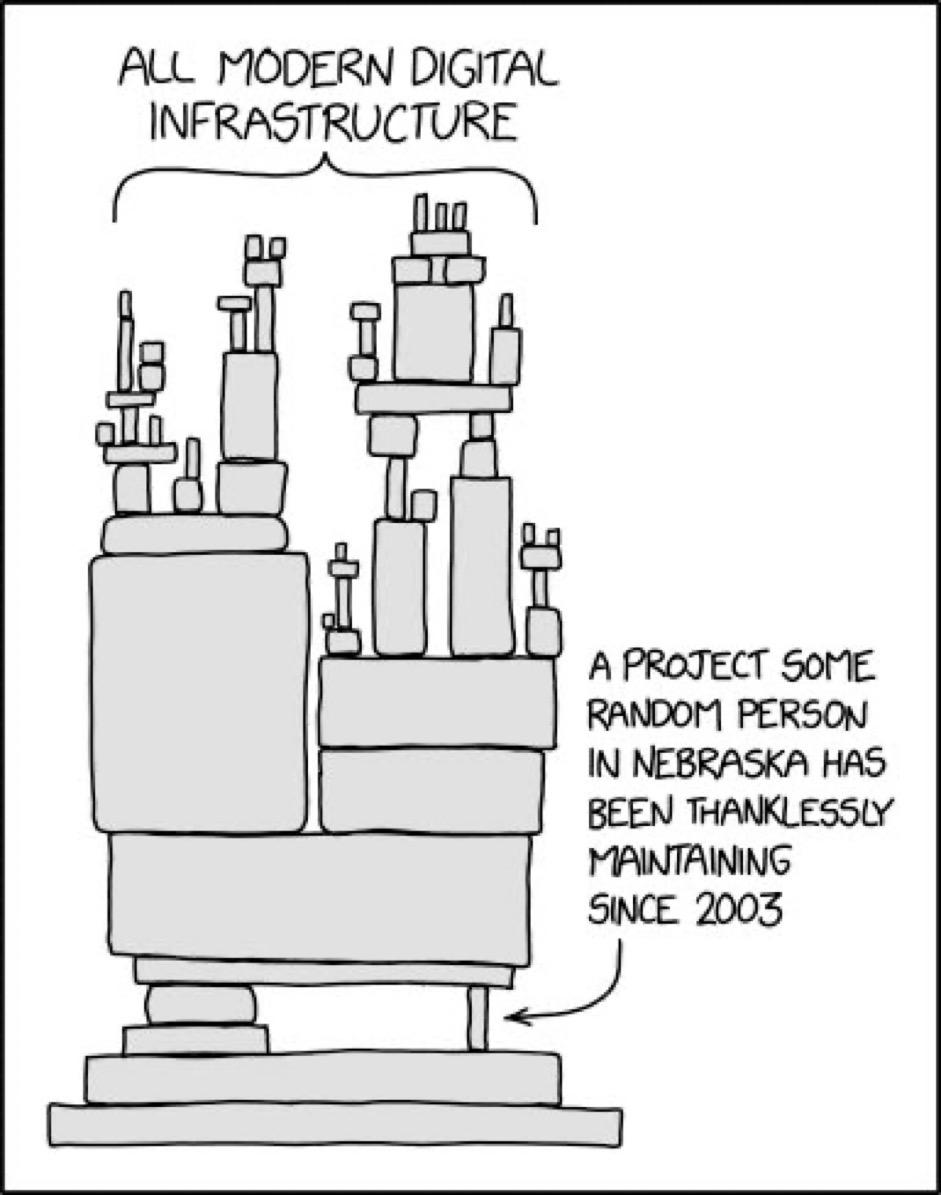
Now hardly anyone alive fully understands the systems we depend on. The people who built them retired. The people who maintain them were cut. The ones who remain are told to move faster.


So the world does not collapse. It flickers.


A ground stop here. An outage there. A founder gone. A power plant dark. Each one fixed in hours, each one explained away and forgotten by morning.


But every flicker teaches the same lesson, and almost nobody is learning it.


Civilization is not the buildings, the planes, or the code. It is the quiet, invisible work of keeping things from breaking, and we have spent a generation treating that work as a cost to cut.


The question is not whether the lights will go out.


The question is whether anyone will still remember how to turn them back on.


I have quoted this a gazillion times. Almost 50 years ago there was show on British television where the host opened the first episode with the line:


"We are living in a technology trap".


The show was "Connections", a landmark documentary series hosted by science historian and broadcaster James Burke that originally aired in 1978 and became one of the most-watched programs in PBS history. I still have the companion book which I have referenced multiple times. And still have the DVD set.


In the series, Burke explored how historical scientific discoveries and technological innovations are deeply interconnected, warning that modern society has put itself into a structural "technology trap" where daily life depends entirely on complex systems that most people do not understand or control, and we have no idea where this will take us.


It has gotten a million times worse since then. Today, we absolutely require AI just to help understand what is broken, and think it will.


It won't. Oh, AI is exposing decades of software shortcuts. They need fixing before hackers exploit the weaknesses. But can AI fix them.No.


Every complex system is filled with skeletons of ugly compromises and shortcuts. When the builders leave, the systems can keep running, but if things change, it’s very hard to find and exorcise those skeletons.


And, of yes, the cyber hacking will get far, far worse. Already stories are circulating about a major U.S. law firm being hacked over the weekend but it is being kept mum due to the tsunami of bad news out there.


But you only need to look at 3 recent stories:


  • On Oct. 29, hackers that FBI analysts link to North Korea stole nearly $6.4 billion from Binance, the world’s largest cryptocurrency exchange - roughly four times the previous record for a crypto theft.


  • About a week earlier, the National Security Agency told anyone running a website on PHP, the programming language behind roughly 7 in 10 websites, to install an emergency fix or take the site offline after vulnerabilities were discovered.


  • In Japan, more than 20 major companies recently suffered cyberattacks, and a ruling-party official called it “a state of emergency in cyberspace”.


Our friends who run banks and keep the lights on in critical infrastructure are using the word “panic”.


Our friends at the artificial intelligence frontier labs are more blunt: the next couple of years are going to be brutal.


The rumblings shaking the internet are only the beginning. The systems we run our daily lives on (see above) are far more fragile than people realize - and the sins of our cyber past are coming due.


AI has been used in almost all of these attacks - cyberattacks simply multiply and get better and better and better.


Finding a serious software flaw used to be a needle-in-a-haystack hunt for a skilled hacker. Modern AI hands the haystack to a fast, easy-to-use machine and then hands the machine to both elite and amateur hackers.


Unfortunately, the haystack is enormous, because engineers and system architects constructed it that way. For decades, developers built software quickly and badly because the cost of getting it wrong was never high.


For most of those years, few understood cybersecurity well enough to know what we were skipping. Those sins - speed, scarcity and ignorance - created a thousand shortcuts in a million systems. Every one of them is still out there, waiting to be found.


Look at the PHP flaws.


Security researchers used AI to find them, in code written in 2012. Within 45 minutes of their official disclosure, the internet security company Cloudflare was seeing tens of thousands of break-in attempts. Within two hours, hundreds of thousands. Within 24 hours, millions. Then the security firm Bitsight found that nearly 60 percent of exposed PHP servers run versions so old that no official fix exists for them; a week after the fix came out, only about a third of the servers it tracked had installed the patch. Bad software is like asbestos. Asbestos was cheap and no one understood the health consequences, so it went everywhere. Bad software is now everywhere too, and we are starting to see how toxic it can be.


Now consider that two systems help hold up the internet: Border Gateway Protocol, which directs traffic across the internet, and Domain Name System, the internet’s phone book, which turns “washingtonpost.com” into the string of numbers machines actually use. Both date to the 1980s, and neither was built for the scrutiny they are about to face.


Here is where this goes.


One day, someone finds a flaw in the software that puts the padlock on your browser, which nearly every website uses to keep your information private. A criminal gang or foreign government exploits the flaw to break into whatever it wants, and the rest of us learn about it only when things stop working. Hospitals look up patient records only to find they’re locked out. Paychecks do not go out.


Nobody can be sure which systems have been compromised and which remain secure, so the operators - hospitals, payroll companies, utilities - do the only safe thing: unplug. Thousands of them, all at once. Chinese state-sponsored hackers who have spent years hiding inside America’s power and water networks see every defender busy and choose that moment to strike. The disruption drags on for years because millions of old machines cannot be fixed and are picked off, one by one.


  • The internet does not go dark.
  • It flickers.
  • A country built on the assumption that the internet would always be on learns what happens when it isn’t.


The fragility is real. The people uncovering it responsibly today will soon be joined by others with the same tools and no scruples. And there is no more time.


We got away with writing sloppy software for so long that we never thought there would be a price. The penance has arrived, and it is not cheap. We can pay now, on our schedule, or later, on theirs.


* * * * * * * * * * * * * * 


For the URL link to this post, please click here


If this post was forwarded to you and you'd like to subscribe,

please email me at luminative.media@gmail.com


To read my other thoughts and musings,

please see my full web site by clicking here


* * * * * * * * * * * * * * 


Megalo Chorio

Southern Aegean

Greece


To contact me: 

Luminative.Media@gmail.com