|
Key takeaways
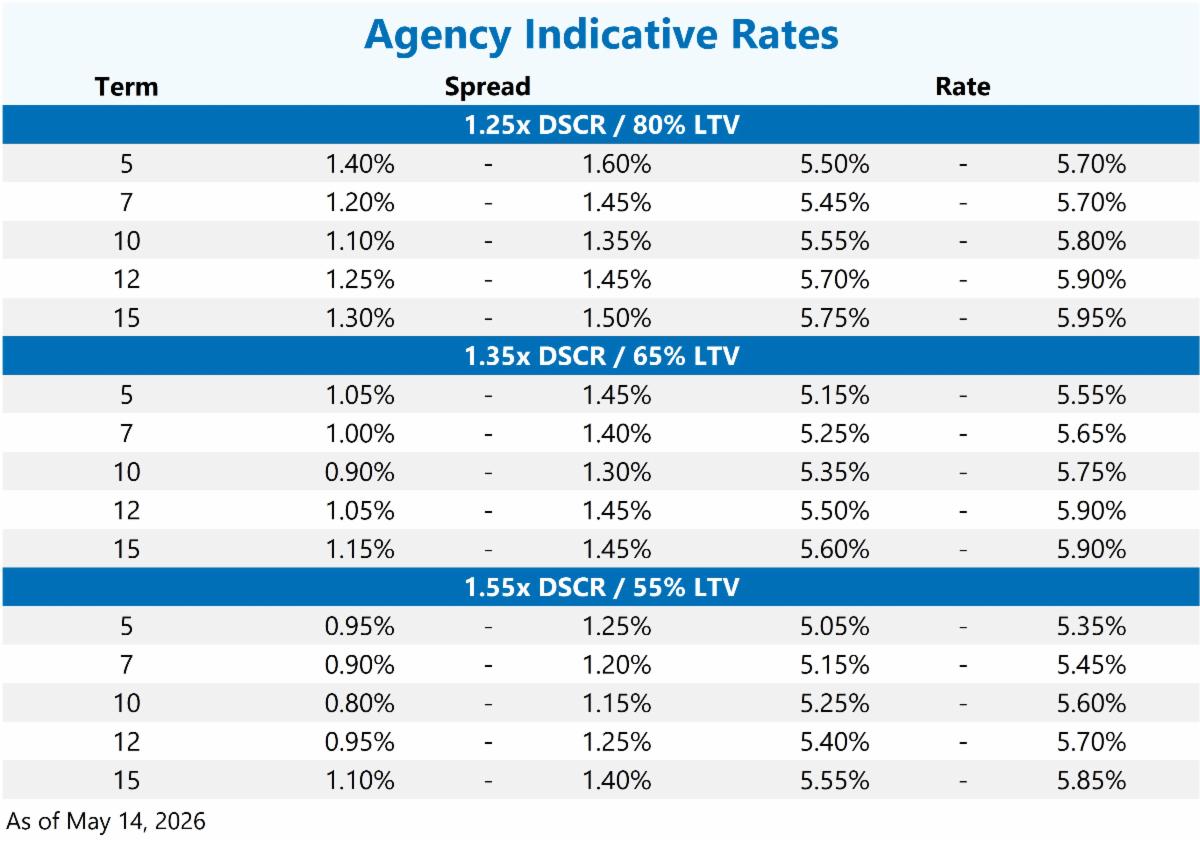
- Treasury yields are near YTD highs, ~4.3% to 4.45% on 10-yr
- Rate cuts appear increasingly unlikely in the near term
- Markets are beginning to price in a small probability of future rate hikes
- Persistent geopolitical risk is keeping upward pressure on energy prices and yields
- Strong labor data supports a resilient economic backdrop, April nonfarm payrolls +115K vs. +65K expected
Macro and geopolitical overview
Market sentiment into early May has been dominated by geopolitical tensions in the Middle East, particularly disruptions in the Strait of Hormuz. Ongoing diplomatic uncertainty between the U.S. and Iran has contributed to elevated oil prices and increased volatility in global markets. Efforts to reopen shipping lanes have produced some progress, keeping energy supply risks elevated and prolonging inflation concerns.
Interest rates and Fed outlook
U.S. Treasury yields have trended higher, with the 10-year yield hovering in the mid-4% range and testing year-to-date highs. Market expectations have shifted meaningfully: while the Federal Reserve remains in a 'wait-and-see' stance, investors are increasingly assigning a small but growing probability to additional rate hikes rather than cuts. Fed commentary and strong economic data have weakened the prior easing bias, reinforcing expectations that policy will remain restrictive for longer.
Labor market strength
April employment data surprised to the upside, with Nonfarm Payrolls increasing by 115,000 versus expectations of 65,000, and the unemployment rate holding steady at 4.3%. Job gains were concentrated on healthcare, transportation, and retail, while wage growth remained moderate. Overall, the labor market continues to demonstrate resilience, reducing urgency for near-term monetary easing.
Energy markets
Oil prices have remained elevated due to supply disruptions, with Brent crude trading above $100/barrel throughout the period. Energy price volatility continues to be a key driver of inflation expectations and interest rate movements.
Inflation and economic data
Inflation remains a central focus, with rising energy costs posing risk that CPI might increase in the near term. Upcoming data releases, including CPI, PPI, and Retail Sales, are expected to provide further insight into inflation trends and consumer strength. While core inflation remains the key metric for policymakers, elevated oil prices may complicate progress toward the Fed’s 2% target.
|