April 18, 2025

Facebook  Instagram  LinkedIn  X

The Senate worked through several bills on the floor and took up numerous bills in committees and subcommittees in preparation for their debate of the budget bill (H. 4025) on the floor next week. The Senate will reconvene Monday to hold a rare proceeding on the floor to remove the state treasurer from office and will begin debate on the budget Tuesday. Meanwhile, the House was on furlough this week and will return to statewide session Tuesday.


Bills of interest to counties are discussed below.

Revenue, Finance and Economic Development

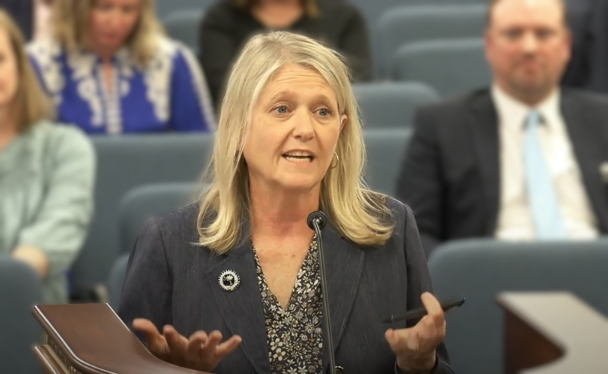
Saluda County Chairman Jim Moore and Oconee County Auditor Christy Hubbard testify at a Senate Finance subcommittee hearing about S. 317 on boat property taxes.

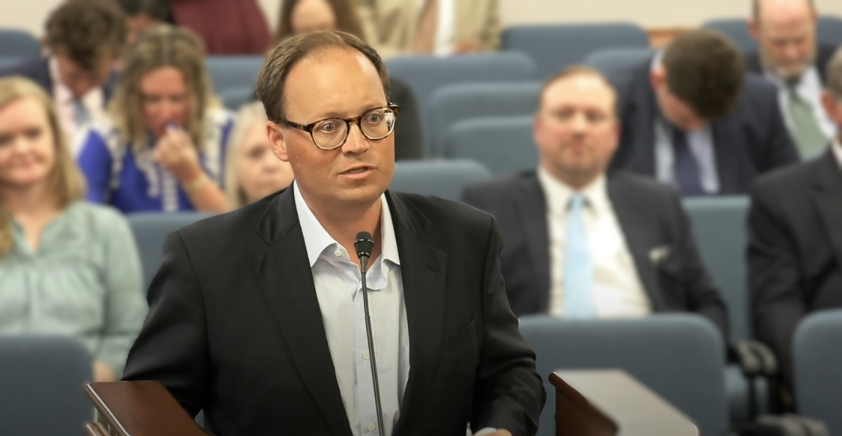
Boat Property Tax Reduction — S. 317 and H. 3858. These bills give boat owners a 50% property tax reduction on boats registered and titled in South Carolina, which would ultimately be subsidized by small businesses, car owners, renters, and other taxpayers. The House bill also eliminates the titling and taxing of all outboard motors. SCAC staff, Saluda County Council Chairman Jim Moore, Charleston County Auditor Peter Tecklenburg, and Oconee County Auditor Christy Hubbard testified in opposition to S. 317 on Tuesday. A Senate Finance subcommittee carried over S. 317 due to concerns over the devastating impact the bill, as drafted, would have on local governments, as well as other taxpayers.


Thank you to the county officials who showed up in opposition of S. 317 and to all county officials for contacting your senators and sharing your concerns. This combined effort is the reason the subcommittee did not move this bill forward!


Also, please thank Sens. Karl Allen, Greg Hembree, Danny Verdin, and Kent Williams for voicing their concerns and carrying the bill over!


H. 3858 has not been scheduled for a hearing, but please continue to talk to your representatives and ask them to oppose the bill due to the detrimental fiscal impact it will have on your county’s finances and the burden it will place on other taxpayers!


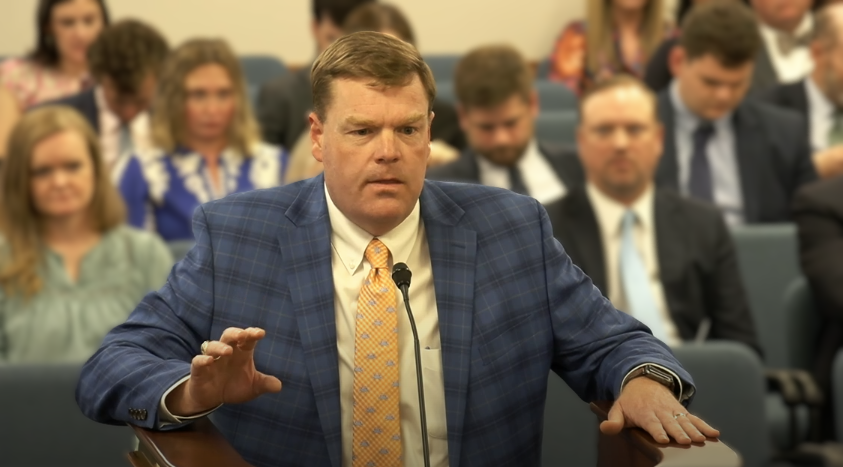
Charleston County Auditor Peter Tecklenburg testifies on S. 317 at a Senate Finance subcommittee hearing. Anderson County Treasurer Jason Phillips testifies on S.97, a bill on county treasurer qualifications.

County Treasurer Qualifications — S. 97. This bill provides qualifications for eligibility to hold the office of county treasurer, an SCAC Policy Position, as requested by the South Carolina Association of Auditors, Treasurers, and Tax Collectors (SCATT). Anderson County Treasurer Jason Phillips testified in support of S. 97 at a subcommittee hearing Tuesday and requested an amendment on behalf of SCATT to also require 40 hours of training and exclude treasurers currently holding the office from the requirements. The subcommittee adopted the amendment and gave the bill a favorable report as amended. S. 97 will be on the next full committee’s agenda.


County Auditor Qualifications — S. 98. This bill provides qualifications for eligibility to hold the office of county auditor, an SCAC Policy Position, as requested by SCATT. A Senate Finance subcommittee adopted an amendment requested by SCATT to also require 40 hours of training and exclude auditors currently holding the office from the requirements. The subcommittee then gave the bill a favorable report as amended, and the bill will be on the next full committee’s agenda.


Manufacturing Property Tax Reimbursements — S. 439. This bill would increase the reimbursement cap for the 42.8571% manufacturing property tax exemption provided for in Section 12-37-220(B)(52) from $170 million to $300 million. Revenue and Fiscal Affairs predicts the current cap would be exceeded by more than $30 million in FY 2025-26. The reimbursements will continue to come from the Trust Fund for Tax Relief, and the increase in reimbursements will come from the General Fund. A Senate Finance subcommittee gave S. 439 a favorable report, and the bill will be on the next full committee’s agenda.


Redevelopment Authorities: Tax Increment Financing for Affordable Housing — H. 3333. This bill adds certain affordable housing projects to what qualifies as a redevelopment project of a federal military installation, known as a Redevelopment Authority (RDA). It includes an affordable housing project (defined referencing median income percentages according to the U.S. Department of Housing and Urban Development) where all or a part of new property tax revenues generated in the tax increment financing district (TIF) are used to provide or support publicly and privately owned affordable housing in the district or are used to provide infrastructure projects to support affordable housing. It also extends the bonding period for redevelopment projects from 15 years to 35 years, allowing municipalities to spend TIF dollars outside of the RDA for items such as infrastructure support. The Senate recalled H. 3333 this week from the Senate Labor, Commerce, and Industry Committee, and the bill is pending second reading on the Senate calendar. 

Public Safety, Corrrections and Judicial


Liquor Liability — H. 3497. As passed by the House, this bill allows a person licensed or permitted to sell alcoholic beverages for on-premises consumption to qualify for a liquor liability risk mitigation program to lower the required liability insurance amount from $1 million to as little as $250,000 if the person and the entity satisfy certain operating conditions. The establishment may lower the requisite amount of liability insurance required through a combination of the following: 


  •  It has their alcohol servers or a manager complete an alcohol server training program; 
  •  It stops serving alcohol at certain times; or 
  •  It derives less than 40% of their total sales from alcohol sales. 


The bill also reforms the current driving under the influence (DUI) law to allow for additional fines or terms of imprisonment in certain circumstances and requires a defendant to participate in a DUI victim impact panel. The bill also creates a new felony offense for second-degree DUI that results in moderate bodily injury and requires a person convicted of the offense to install an Ignition Interlock Device for one year. The Senate struck the language passed by the House on Tuesday and inserted their language from the tort reform bill, S. 244. This bill increases the damages cap found in the Tort Claims Act and amends the definition of occurrence. SCAC’s writeup for this bill, as passed by the Senate, can be found here. H. 3497 received second and third readings and was returned to the House. 


Assault and Battery —– S. 346. This bill amends the statute on assault and battery to state that unlawfully injuring a health care professional during their duties, or injuring someone in a health care facility, constitutes high-and-aggravated assault and battery, with specified penalties. The Senate Judiciary Committee adopted a subcommittee amendment to include correctional facility employees, including local detention center employees. This is an SCAC policy position. The committee gave the bill a favorable report, as amended, and S. 346 is pending second reading on the Senate calendar.


Hands-Free Driving — H. 3276. This bill creates the “South Carolina Hands-Free and Distracted Driving Act” to enhance the provisions of the state’s current hands-free statute and to increase the penalties under the new act. The bill offers several exceptions, including use by a first responder while performing official duties. The bill also shifts 25% of the fine and fee revenue that would otherwise flow to counties to the Department of Public Safety for use to educate the public on the dangers of distracted driving. As passed by the House, the bill also specifies:


  • for a second or subsequent offense, a person must be fined $200 and have two points assessed against their driver’s license;
  • a violation of this provision must not be reported to the driver’s vehicle insurance provider;
  • a law enforcement officer may not stop a person for a violation of this law unless they have probable cause that a violation has occurred based on the officer's clear and unobstructed view of a person who is using a wireless electronic communication device;
  • for the first 180 days of the enactment of this bill, a law enforcement officer may only issue a warning ticket.


A Senate Transportation subcommittee amended the bill to make technical updates, change the language requiring probable cause back to reasonable suspicion, and require insurance agencies be notified when a second offense is committed and points are assessed against a driver. The Senate Transportation Committee took up the bill later in the day, adopted the above amendment, and reported the bill out. H. 3276 is now pending second reading on the Senate calendar.


Mistreatment of Police Animals — S. 427. This bill increases the associated penalty schedules related to the mistreatment or injury of police animals. The Senate Judiciary Committee gave S. 427 a favorable report, and the bill is pending second reading on the Senate calendar.


Small Estates in Probate — H. 3472. This bill increases the limit of a small personal estate from $25,000 to $45,000 to allow more estates to go through summary administration in probate. The Senate Judiciary Committee gave the bill a favorable report, and H. 3472 is pending second reading on the Senate calendar.


Probate Trusts — H. 3432. This bill amends the Rule Against Perpetuities in the probate code to increase the vesting time from 90 to 360 years to make South Carolina a more trust-friendly state. The Senate Judiciary Committee gave the bill a favorable report, and H. 3432 is pending second reading on the Senate calendar.


Telecommunications Location — S. 114. This bill requires a wireless telecommunications carrier to provide call location information concerning the telecommunications device of a user to a law enforcement agency upon its request to respond to a call for emergency services or in an emergency situation that involves the risk of death or serious physical harm. The Senate Judiciary Committee amended the bill to conform with federal law by changing “risk of death or serious physical harm” to “immediate death or serious bodily injury.” The committee then gave the bill a favorable report as amended, and S. 114 is pending second reading on the Senate calendar.


Discharge of Firearms — H. 3650. This bill states that anyone who knowingly and intentionally discharges a firearm at or into a dwelling, house, other building, structure, enclosure, vehicle, aircraft, watercraft, or other conveyance, device, or equipment is guilty of committing a violent crime. The person must be fined no more than $20,000 and imprisoned for no more than 10 years. If a person inside any of the structures is struck or has bodily injury as a proximate cause of the firearm discharge, the maximum penalty increases to a $50,000 fine and 15 years imprisonment. The Senate Judiciary Committee gave the bill a favorable report, and H. 3650 is pending second reading on the Senate calendar.


First responder automobile insurance premiums — H. 3259. This bill prohibits insurers and agents from considering the work-related driving records of first responders when setting the premium rates for their personal automobile insurance policies. Additionally, the bill defines "first responder" as any law enforcement officer or firefighter who is employed by local, state, or federal government. This also includes volunteer law enforcement officers and firefighters who are engaged by local, state, or federal government. The bill also prohibits an insurer from considering the work-related driving record of a first responder if he is involved in a collision when responding to an emergency call. Finally, the bill requires the first responder to furnish a copy of the police incident report, investigative report, or uniform traffic collision report in a timely manner to the insurance agent or insurer and extends the definition of first responder to include EMTs and paramedics. The Senate Banking and Insurance Committee gave the bill a favorable report, and H. 3259 is pending second reading on the Senate calendar.


Public Transit Trespass — S. 399. Like library no trespass provisions, this bill states that a person who enters a transportation facility without legal cause or good excuse, after having been warned not to do so by the transit director, transit supervisor, or the designee of the transit director or transit supervisor, is guilty of a misdemeanor. The person must first be given a warning notice, in writing, in the presence of a law enforcement officer. The warning notice must include the following:


  • the alleged criminal law violation or transit authority’s code of conduct;
  • the duration of the prohibition to return; and
  • the procedure to appeal the notice warning to the transit authority board


A person wishing to appeal a warning notice must submit a request for hearing to the board within five business days of receiving the notice, and the board must conduct a hearing within 10 business days of the appeal. A trespass violation can be tried in the municipal or magistrate court with jurisdiction over the offense. A trespass notice can be enforced by any state or local law enforcement officer within the jurisdiction of the offense. The Senate Judiciary Committee gave S. 399 a favorable report, and it is now pending second reading on the Senate calendar.

Land Use, Natural Resources and Transportation

License Plate Reader System — S.447. This bill allows certain entities to use an automatic license plate reader system and provides compliance requirements for the use of the system. Additionally, the bill requires the state Department of Transportation to establish a permitting process for the installation of cameras on non-interstate highway rights of way. Further, the bill creates a misdemeanor for the improper use of license plate data. A Senate Judiciary subcommittee gave S. 447 a favorable report, but the full committee carried the bill over without discussion.

Transfer of Development Rights — S. 288. This bill permits local governments, by ordinance, to allow for the voluntary transfer of development rights (TDR) permitted on one parcel of land to another parcel of land. TDR allows landowners to sell or transfer their rights to develop property to developers in other locations where development is encouraged and infrastructure and services are already in place. Additionally, the bill allows two or more local governments to establish a joint TDR program. The Senate Judiciary Committee gave the bill a favorable report, and S. 288 is pending second reading on the Senate calendar.

County Government and Intergovernmental Relations

Office of Behavioral Health — S. 2. Last session, a bill to create the Executive Office of Health Policy died after the House and Senate could not come to an agreement. This year, the Senate introduced S.2 to create the Department of Behavioral Health and Developmental Disabilities. The bill strikes the Departments of Aging; Alcohol and Other Drug Abuse Services; Disabilities and Special Needs; and Mental Health from the list of departments under the executive branch. The proposed new department’s director, appointed by the governor with the advice and consent of the Senate, has numerous duties and responsibilities, including establishing and appointing members to a health planning advisory committee tasked with developing a comprehensive plan for services that various offices must provide.


The House adopted an amendment that makes technical changes and requires oversight and annual reporting to the General Assembly by the Department of Behavioral Health and Developmental Disabilities. The Senate concurred with the House amendments, and S. 2 was enrolled for ratification.


Informed Consent to COVID-19 Vaccine — S. 343. This bill establishes an informed consent protocol that must be followed prior to administering or receiving the Pfizer-BioNTech COVID-19 vaccine. The Senate Medical Affairs Committee adopted two amendments to clarify the definition of “vaccine” to state that the vaccine “may be contaminated,” and to require the vaccine to include the statement “this contamination may be hazardous for your health.” The committee then gave the bill a favorable report.

Newly Introduced Legislation

See below link for summaries of legislation introduced this week that are of interest to counties:


Senate Bills


View/Download Full Text for Newly-Introduced Legislation


You can also go to www.scstatehouse.gov and click on "Legislation," then "Introduced Legislation."


Note: If you would like to offer comments to the SCAC staff, please call us toll-free at 1-800-922-6081, fax to (803) 252-0379, or send an email.

 
X Share This Email
LinkedIn Share This Email