Newsletter
February 2020
CDC Releases 2020 Recommended Vaccine Schedules
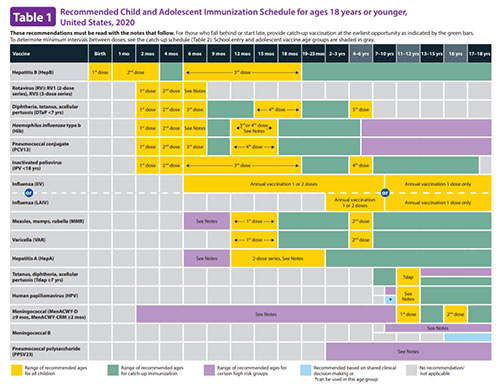
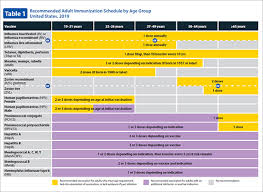
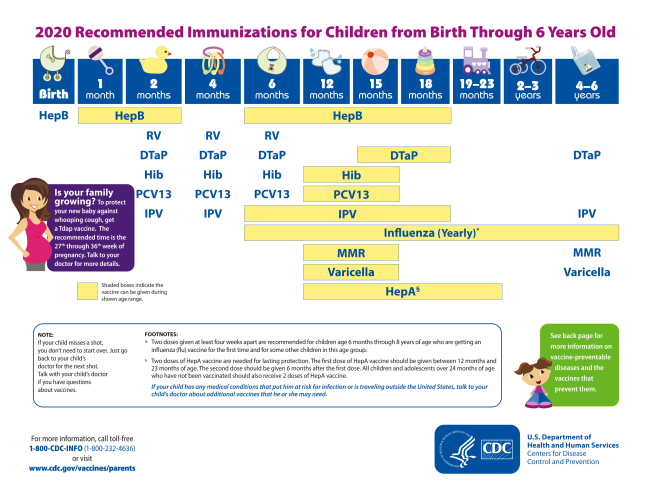
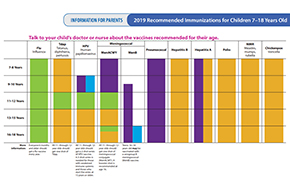
Each year, ACIP updates the immunization schedules to reflect current recommendations for licensed vaccines. The following 2020 schedules indicate the recommended ages for routine administration of currently li​censed vaccines for children, adolescents, and adults.
Immunization Schedules for Health Care Providers
Parent-Friendly Vaccine Schedules
There's an App for That...
Healthcare providers can access all CDC recommended immunization schedules and footnotes using the CDC Vaccine Schedules app. This free tool provides the most current version of the:
  • Child and adolescent schedule with immunization recommendations from birth through age 18.
  • Catch-up schedule for children and adolescents 4 months through 18 years.
  • Adult schedule, including recommended vaccines for adults by age group and by medical conditions.
  • Adult contraindications and precautions.

Few US youths receive MMR Vaccination before traveling internationally
(Reprinted from AAP Initiatives Newsletter)

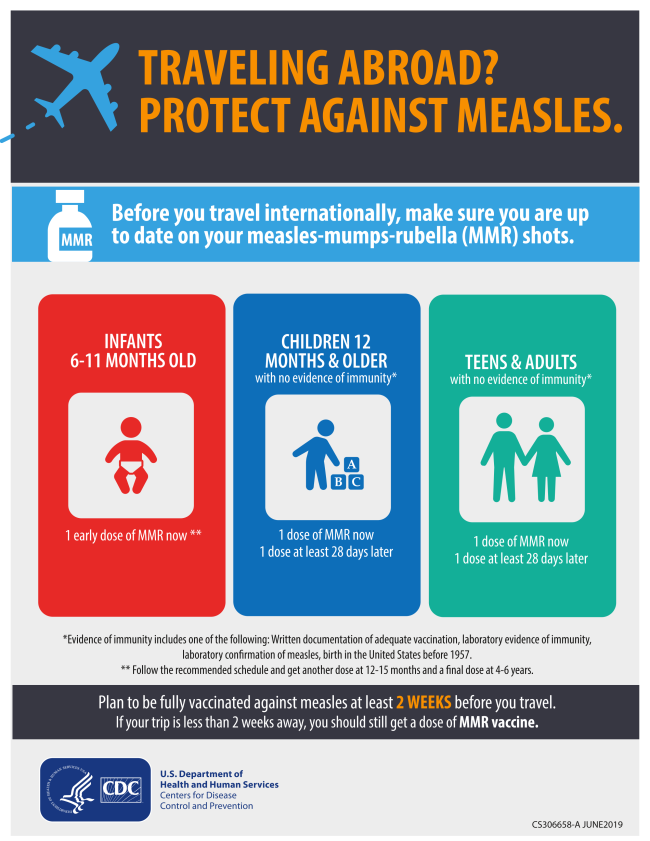
A recent study in JAMA Pediatrics reports that only 41.3% of children ages 6 months to 18 years received the measles, mumps and rubella (MMR) vaccine before traveling overseas. Researchers reported that of those children who did not receive MMR before travel, about 40% of their parents or guardians refused the vaccine, and about the same percentage were not offered it by their provider. Authors concluded that providers should consider the vaccine for any children eligible, given the increased risk international travelers face. Click here to read the full article (login may be required). 

TRAININGS AND WEBINARS

Measles - Maintaining Disease Elimination and Enhancing Vaccine Confidence
Tuesday, February 18, 2020 at 1:00 PM
Hosted by: CDC Public Health Ground Rounds

Presented by: Manisha Patel, MD, MS (CDR, USPHS), Howard Zucker, MD, JD, Oxiris Barbot, MD
Amanda Cohn, MD (CAPT, USPHS)
This session of Public Health Grand Rounds will focus on measles in the United States and the response to and lessons learned from the outbreaks in New York in 2018-2019.

---

Shared Clinical Decision - Making for Immunization Recommendations
Wednesday, February 19, 2020 from 12:00 PM - 1:00 PM
Hosted by: National Foundation for Infectious Diseases

Presented by: France M. Lee, MD, MPH, ACIP Pneumococcal Vaccines Work Group Chair and Professor of Pediatrics at Stanford University.
ACIP Shared Clinical Decision Making Recommendations
Frequently Asked Questions...

These frequently asked questions (FAQ's) are intended to provide clarity on the Advisory Committee on Immunization Practices' (ACIP shared clinical decision-making recommendations and guidance and implementation considerations for these recommendations. Click here to access the FAQ's.
Influenza Surveillance in the U.S.

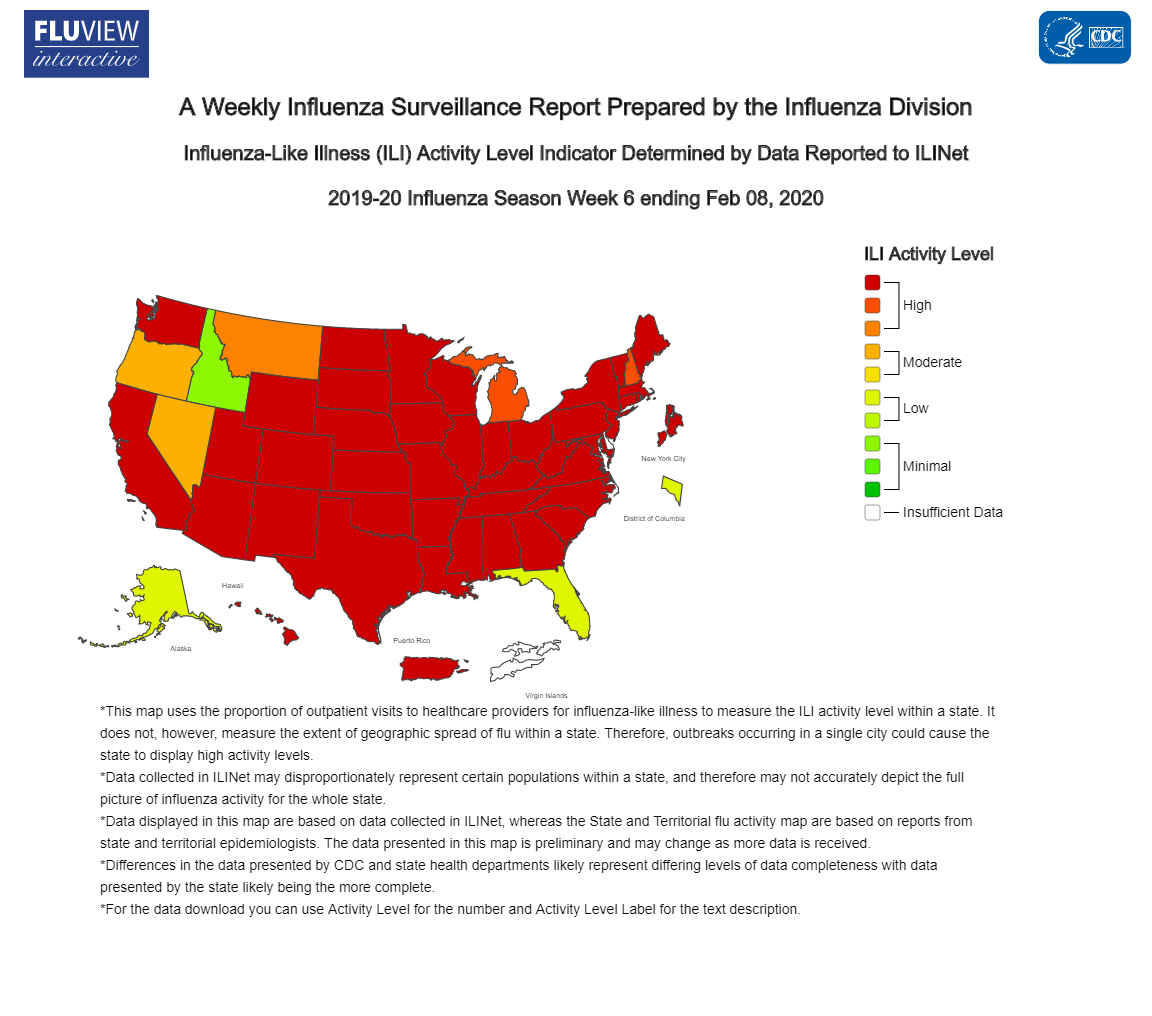
Flu activity in the U.S. is tracked through collaborative efforts between the Centers for Disease Control and Prevention and partners including public health and clinical laboratories, healthcare providers, state, local, and territorial health departments, clinics, emergency departments, and vital statistics offices. The following five systems are used to monitor flu activity in the United States and allow the CDC to answer the questions of where, when, and what flu viruses are circulating:
  1. Virologic Surveillance
  2. Outpatient Illness Surveillance
  3. Geographic Spread of Influenza
  4. Hospitalization Surveillance
  5. Mortality Surveillance

Every week during the flu season these surveillance systems are uploaded to CDC's FluView.


TAKE YOUR BEST SHOT
Request for Applications and Application Now Available

DEADLINE for application March 13, 2020

The Take Your Best Shot project was developed to address the problems associated with low vaccination rates among adolescents throughout West Virginia. Adolescent immunization rates for Tdap and meningococcal vaccination have surpassed Healthy People 2020 goals; however, influenza and HPV vaccination rates are still lagging and a recommendation for meningococcal B vaccination was added to the adolescent vaccination schedule in the last few years. Thus,  TYBS projects are focused on improving HPV, meningococcal B, and influenza vaccination rates among adolescents 11-21 years of age, in accordance with the Advisory Committee on Immunization Practices’ recommendations

For mor information about the TYBS project or to access the Request for Proposal and Application please visit our website West Virginia Immunization Network.


About the WV Immunization Network (WIN)
The WV Immunization Network (WIN) is a statewide coalition of over 400 members from the public and private sectors who are focused on improving immunization rates and protecting West Virginians from vaccine-preventable diseases. The Center for Rural Health Development serves as the lead agency for WIN.

For more information, please contact: 
The Center for Rural Health Development
Phone: (304) 397-4071
Follow us on Facebook.