Get Involved With VEG
Home | Subscribe To Our Newsletter
 
 
NEWSLETTER 246
 
VIRTUAL EVENTS GROUP


“The future of the world will be decided by a group of people who fit in an elevator.” 

—Anthropic investor Jaan Tallinn


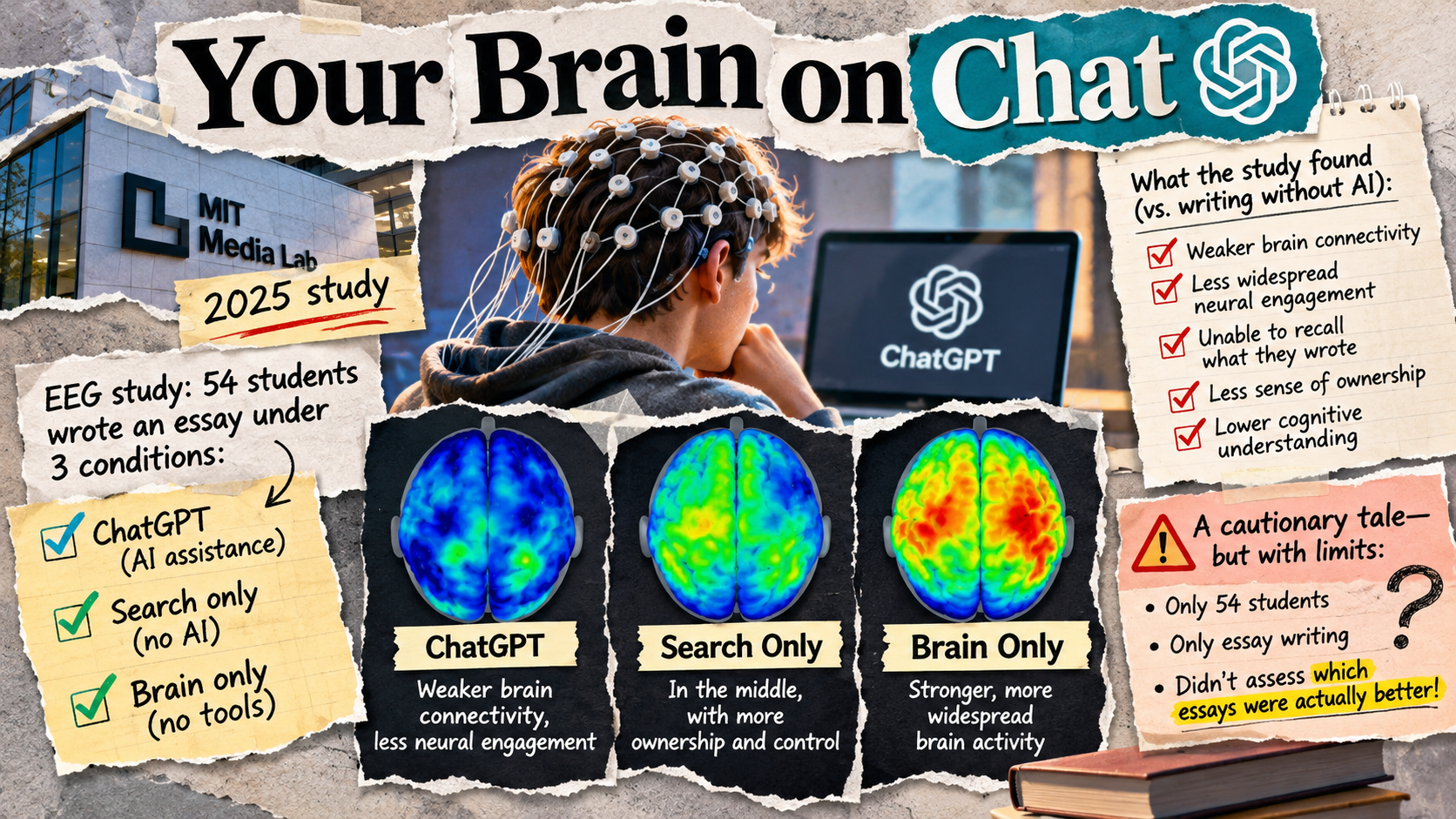
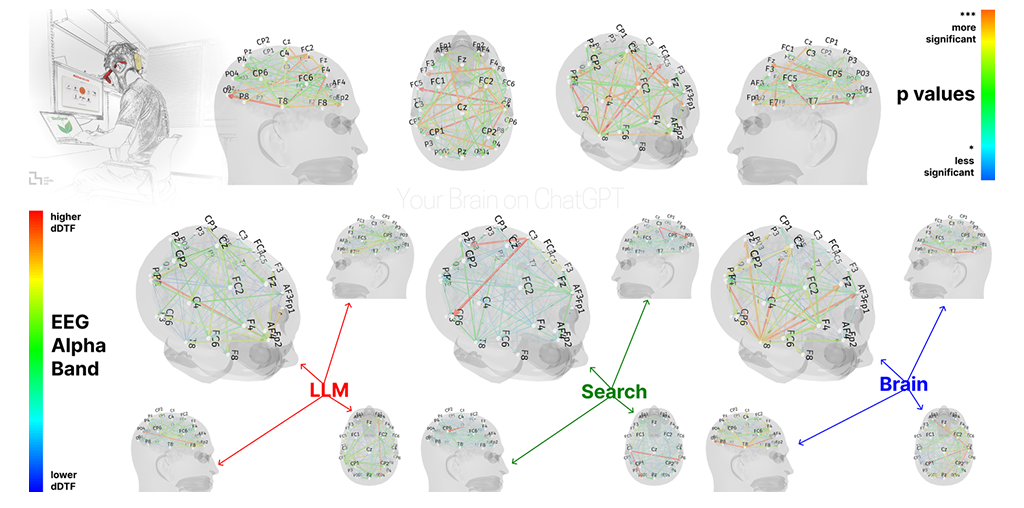
Not new, but worth repeating, a 2025 MIT Media Lab study used EEG recordings to track what happens in the brain when people write with ChatGPT rather than on their own. Researchers measured brain activity using EEG headcaps while students were asked to write an essay. 


Those using ChatGPT showed weaker brain connectivity and less widespread neural engagement than those who wrote without AI assistance. Participants using ChatGPT were unable to recall what they’d written and reported feeling less ownership. The student group that relied on their brain alone had a better cognitive understanding of their work. A third group of students, allowed to use Search but not AI, fared somewhat in the middle, with more ownership and control. Note that there were only 54 students involved in the study, and it was solely devoted to essay writing, but it’s a cautionary tale. Especially when you look at the images of the brain under the various conditions. Funny part?  The study didn’t comment on which essays were actually better! 


Results of MIT Media Lab study showing student writing essays using the ChatGPT LLM, search engines, or relying solely on brain power.
 
 
Meet the New Journalists: They’re Personality Driven
 

As I write this, Election Day has come to a close. And among the many divides we saw in the country is the generational divide in the way we consume election news. A new breed of journalists, and some defectors from trad journalism, are influencing young voters on digital platforms, particularly YouTube and TikTok. 


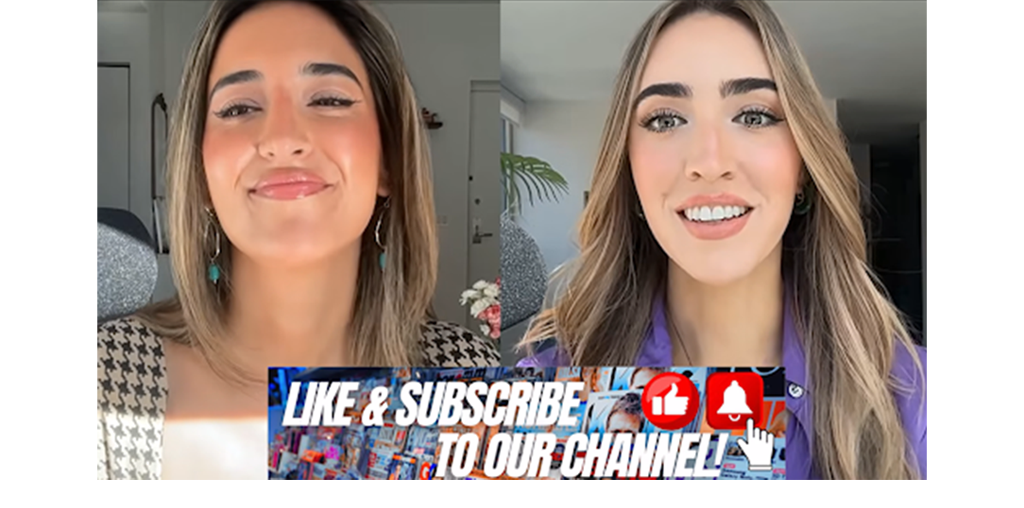
Newsgirls is like a cross between Barbie (very pink) and Vice. Wren Wilson and Mabel Kabani met while working at CBS’s 60 Minutes and now they have a following where they cover stories such as “Obama and Trump Fight Over CheeseCake Factory” and “Epstein’s Money Trail is Still Missing.” They’ve thoroughly dissected billionaire spending in the midterms.


Wren Wilson and Mabel Kabani
 

The Philip DeFranco Show is one of the earliest (2006) YouTube news programs. DeFranco covers politics, current events, internet culture, and entertainment. He became one of the platform’s early examples of an independent creator building a large news audience. He’s super well-informed and has that NewsMax/Andrew Cuomo rapid-fire delivery. 


Tizzyent, who’s real name is Michael Worter, is a tatted-up guy with a southern drawl who lives in Florida. His style is more sleuth/expose than traditional news, and he has followers on both YouTube and TikTok. Worter does his homework on his targeted subjects, many of whom he exposes in the name of social justice. You can also see him on his Discovery Channel series “How to Catch a Dirtbag.” 


David Pakman, a left-of-center host, has created his own media empire with political podcasts on various platforms, books, and merch. He breaks down complex subjects like the effect of gerrymandering on election outcomes. Pakman is a frequent guest on many other political talk shows, and he is well versed in how social media’s algorithms drive behavior. He had his start in radio but is now fully digital.


Kara Swisher deserves a special shout-out as the grand dame of streaming news. Kara and her wonderful sidekick Scott Galloway often focus on the tech community, but they have recently widened the spotlight to politics, longevity, and more. Kara started in trad journalism at the Washington Post, but then became a pioneer in digital media, first with ReCode (along with the legendary Walt Mossberg), and then with Pivot and On. She’s prolific, polished, authentic, and a journalist to the core. Her biggest beef? The handful of hoodie tech-bros that want to control the fate of the world.


Taylor Lorenz, who’s written for the Washington Post, the NYT, and The Atlantic, is another leader in this space. She is now an independent and insightful commentator on culture and digital life.


What do they all share? Personality-infused journalism. Love them or hate them, you’ll quickly see that they insert their opinions  into their coverage.  Traditionally, journalists were taught to keep themselves “out of the story” and report on “just the facts, ma'am.” The new journalists are turning those rubrics inside out. You will get your news from people you trust.


And according to a recent Pew study, “shift happens”. Younger adults are especially likely to get their news on TikTok. Among Americans ages 18 to 29, around four-in-ten (39%) say they do this regularly. Many traditional journalists are leaving their cozy jobs to set out as digital news commentators, and TikTok and YouTube in particular have made them feel welcome by cultivating programs to support digital journalists. 


Hungry for IRL
 

The events scene this year is brimming with new shows and new ways to convene. The hunger to gather in person for a shared moment has never been greater. That message hasn’t been lost on creators and digital celebrities taking to the road to make physical contact with their fans and followers. 


Kara Swisher and Prof. Scott Galloway (mentioned above) are on a road tour with their Pivot Show, playing to sold out audiences at places such as The Beacon Theatre in NYC. Travis and Jason Kelce are out on tour with their New Heights podcast. Dude Perfect is touring cities, drawing crowds to watch them perform wacky stunts. Rhett and Link have been touring their Good Mythical Morning show, which began digital, but morphed into live productions. And there’s Alex Cooper, whose Call Her Daddy podcast laid the foundation for Unwell, the media company that she built, which, of course, features the Unwell Tour. 


Live is a distribution platform, folks. One that generates both income and fandom.


Scuttlebutt


What Could Possibly Go Wrong? 
As an events person, I’ve lived through Avian flu, a crypto denier that tried to attack me for running an event, a Mandalay Bay shooting, fire-code violations, and the first exposure to COVID, to name a few. David Adler, friend of VEG, has dissected 34 crisis scenarios across six categories: safety, accessibility, operations, security, crisis communications, and AI in his new study.  You can read it as if it were your apocalyptic bible at GatheringArchitecture.com.


Freeman’s New Pre-event Study
Have you ever been so busy planning for the big day that you forgot the lead-up? Freeman Co.’s  new study  dissects what makes people want to attend your event. Spoiler: human behavior and trusted peers are the secret sauce. 


What is Your Event’s DNA Score?
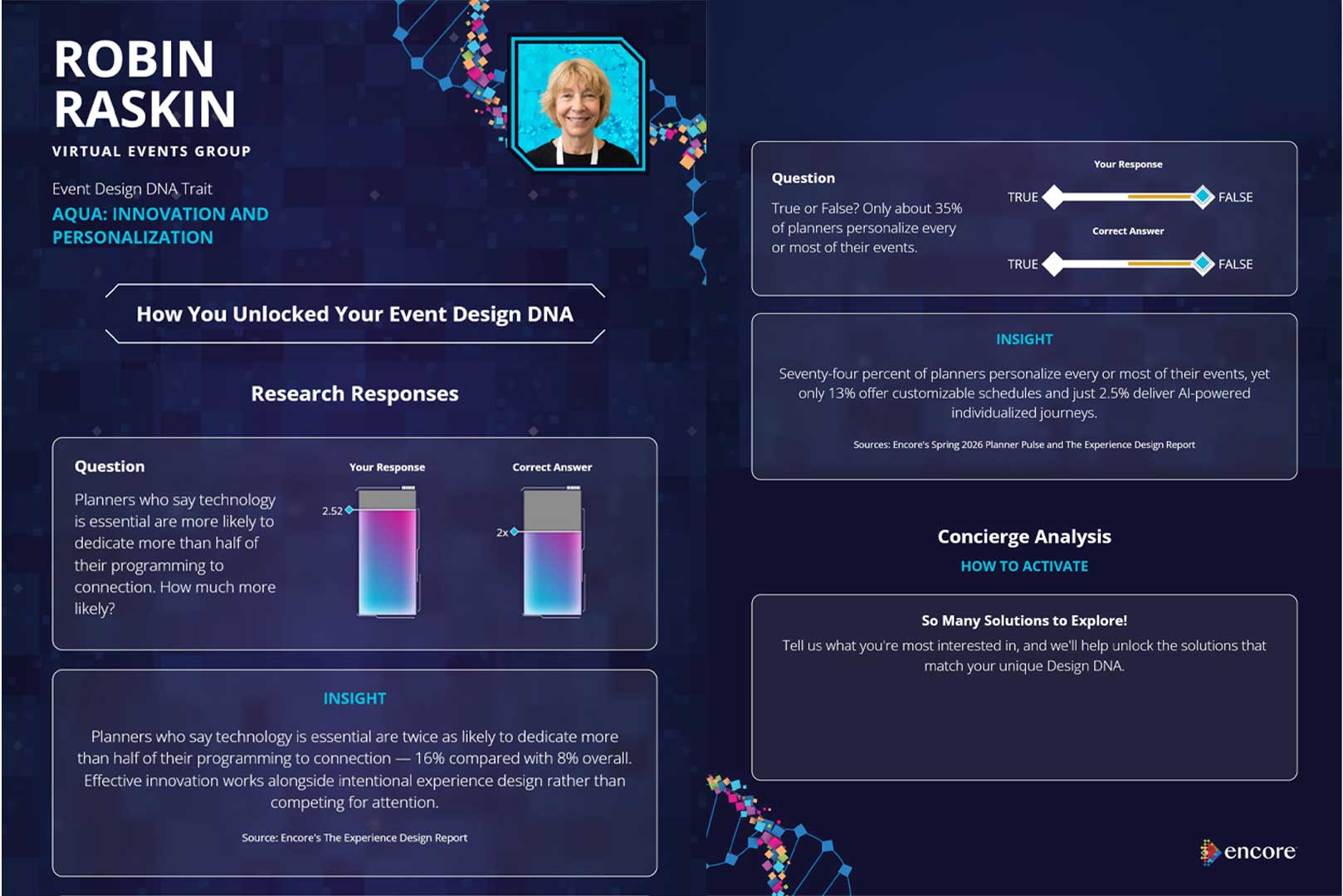
At IMEX in Las Vegas Encore, a full-service event production firm, analyzed my personal “event DNA” score in a cleverly designed, AI-powered exhibit. While you can’t take the interactive, immersive experience test that I took, you can read the full report on Immersive Design.


How’s my Event DNA looking?


Sign up to get us in your inbox.
 
Get the
Most Recent News
 
SUBSCRIBE
 
 
LINKS
 
Home
Platforms
Tools
Productions
Events


Contact Us
 

Robin Raskin |  robin@virtualeventsgroup.org

Gigi Raskin | gigi@virtualeventsgroup.org

Tyler Priest-Heck | tyler@virtualeventsgroup.org