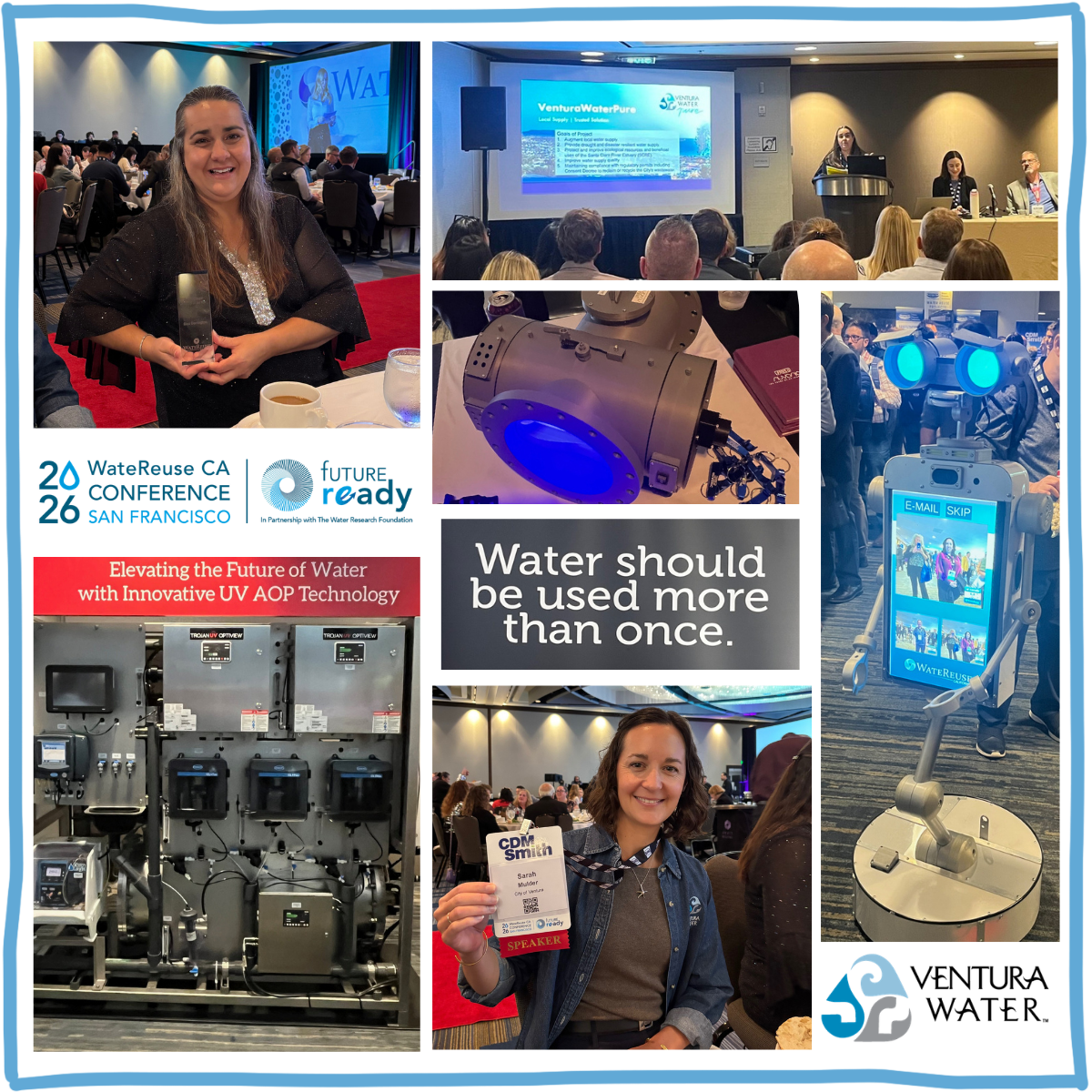
Ventura Water had a strong presence at the 2026 WateReuse California Conference, sharing with other agencies about VenturaWaterPure and implementing advanced water purification technology.

General Manager's Message

I had the honor to attend the 2026 California WateReuse Annual Conference with some of the Ventura Water Team this past week. What always amazes me at these conferences is how much work water and wastewater professionals are doing. At this conference especially we heard from so many agencies who are starting to plan implementation of potable reuse like VenturaWaterPure to address the same water issues we are facing in Ventura. Ventura Water presented two topics at this conference, an economic analysis of VenturaWaterPure and the environmental impacts of VenturaWaterPure on watershed resilience. Both presentations were standing room only, which indicates that the industry is looking to Ventura as an example of how to plan for the future of water. I was humbled to represent the City of Ventura and Ventura Water by receiving the conference's Recycled Water Advocate of the Year award. The engagement and outreach we have had with our community this year was a team effort, and I enjoyed being able to lead the team through it.


Great things are happening in Ventura Water and projects are progressing. The East to Midtown Interconnection pipeline is nearing completion, the Membrane Bioreactor has wall forming and a crane being constructed, the State Water Interconnection project is nearing groundbreaking and VenturaWaterPure is progressing in design. With so many issues facing the State regarding water supply, I feel confident the City of Ventura is going to be in a very secure water future.


Respectfully,


Gina Dorrington

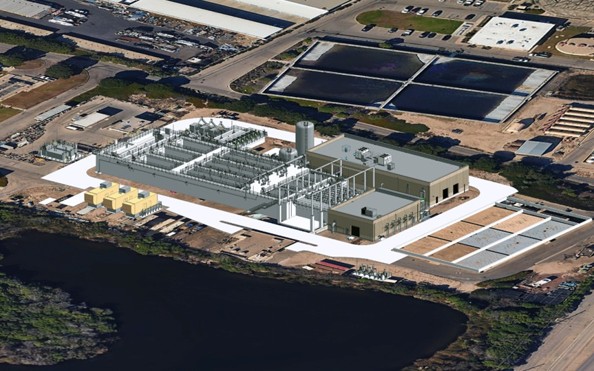
Rendering of the completed Membrane Bioreactor facility, located at the Ventura Water Reclamation Facility.

Investments That Secure Our Water Future

The following article appeared in the VC Star on September 1, 2026:


Behind every tap and drain in Ventura are dedicated people and a complex system working around the clock to provide reliable water and wastewater service. Ventura Water maintains approximately 400 miles of water pipelines, 300 miles of sewer lines, three water treatment facilities, one wastewater treatment plant and a network of supporting infrastructure that helps deliver safe, reliable service to residents and businesses.


Read more...

Gardening Series 2026

Science combines with gardening at our September class specially designed for children ages six and older. To be held at the Cornucopia Community Garden on September 12, 2026, from 10:00 a.m.-11:30 a.m., this free workshop will peer into the magical world of earthworms and their importance to life on Earth. Kids will learn about the life cycle and behavior of the amazing earthworm and each participant will build their own mini earthworm farm to take home! Parent/guardian is required to accompany participants. Space is limited, therefore only register the number of child participants. Sign up to attend here.

Invasive Golden Mussels

The golden mussel (Limnoperna fortunei) is a freshwater bivalve mollusk native to Southeast Asia. Averaging an inch long, their ecology includes latching onto hard surfaces and forming dense colonies. They are a resilient species that tolerates a wide range of water quality and in their natural environment, predators include over 50 fish species. Golden mussels were first detected in North America in October 2024 and were quickly identified as a threat to native game fish due to competition for food sources and as a contributor to algal blooms. Able to tolerate a wider range of temperature and salinity than the also invasive quagga and zebra mussels, their presence prompted an emergency response by the California Department of Fish and Wildlife.


Biofouling in water treatment is the accumulation of unwanted materials on or within filtration or membrane surfaces, reducing system efficiency and increasing costs. Problems start when mussels inhabit treatment structures— clogging pipes and contributing to pressure loss, overheating, corrosion, wear on materials including metal and concrete, jamming of moving components, sealing failures and sediment accumulations. Economic losses can be significant. Chemical treatment to prevent invasive mussel infestation has proven less effective due to increased tolerance. Treatments, including filters, ultraviolet light and chemical coating may be effective in controlling the settlement of golden mussel colonies. The state's Department of Water Resources is deploying advanced monitoring, treatment and infrastructure upgrades to protect the State Water Project. Currently no golden mussels have been detected in Ventura Water’s surface water sources, (i.e. Lake Casitas or the Ventura River). 


An important step in control is prevention measures. California’s AB 149, signed last year, expands the current mussel prevention programs to reduce the unintentional movement of invasive mussels between water bodies. The Mussel Fee Sticker is required on DMV-registered vessels boating in freshwater bodies, and the yearly $16 fee goes toward programs to protect state waters from infestation. The Clean, Drain, Dry practice, required after access to any freshwater body, applies to all watercraft and equipment. Freshwater anglers must dispose of unwanted bait and fish parts into trash receptacles.


Recent laws prohibited the importation, transportation, possession, or live release of specificized wild animals including invasive mussels, except by a restricted permit issued by the Department of Fish and Wildlife. This year, in response to the rapid spread of the golden mussel, within six months AB 2032 was introduced, passed and became law. It requires public or private agencies that operate a water supply system to implement measures to avoid infestation. And it streamlines compliance for water system operators by removing the need for a restricted species permit for certain mussels under a proven control plan, enabling faster, more efficient responses to infestations, while still requiring robust prevention and eradication measures. It will support both environmental protection and the operational integrity of California’s water infrastructure. 

The Water Commission meets every fourth Monday of the month. The next Water Commission Meeting will be held on Monday, September 22, 2026, at 5:30 p.m. The public is invited to join us in-person at the Ventura City Hall, Community Meeting Room, Second Floor, or watch live online.


Click here for meeting agendas and more information.

Employment Opportunities

Facebook  Twitter  Youtube  Instagram