Play with Pumpkins
Fall is a great time to explore the textures, smells, tastes, sounds, and sights of the season! From apples to pumpkins, cooler air to crunchy fall leaves, getting out and having meaningful experiences in the outdoors is a wonderful way for your child to explore nature with their senses and develop important concepts.

We love pumpkins because they come in so many shapes and sizes! While it’s fun to visit a pumpkin patch, it’s even easier to explore a pumpkin in your own home with these ideas HERE.
Five Little Pumpkins in a Box
EI-TVI Janet Anderson adapted the “Five Little Pumpkins” rhyme into a fun story box to encourage her student Matthias to touch and count the pumpkins and make choices about which ones will go in the hole in the box’s lid. 
 
To make your own “Five Little Pumpkins in a Box,” all you need is five small fabric pumpkins from the crafts store, a cardboard shoe box (preferably one with a dark lid for contrast or glue black paper on the lid), five self-adhesive, 7/8-inch Velcro squares, white rick rack trim, craft glue, and scissors.

Cut out a hole big enough for the pumpkins to fit through the hole in the center of the lid. Glue a rick rack fence around three sides of the hole. Stick the Velcro squares around the fence and on the bottom of each pumpkin. Attach the pumpkins to the box.

As you and your child start saying the rhyme, count the number of pumpkins out loud. Pick a pumpkin (maybe the one who saw a witch!) and put it in the hole. When you say “Ooooo! Went the wind,” pick all the pumpkins and put them in the hole or roll the box when the pumpkins roll out of sight. You can also play with the box without the rhyme.
What We Love in October
Making pumpkin pie play dough with your child is a fall sensory experience filled with smells, textures, sounds, bright colors, and maybe even a taste or two. Plus, it’s always fun to make something together while your child learns new concepts and perhaps tries to poke, roll, or pat the dough. This recipe is always in our teachers' toolboxes this October. Make it HERE.
Orientation & Mobility and the ECC
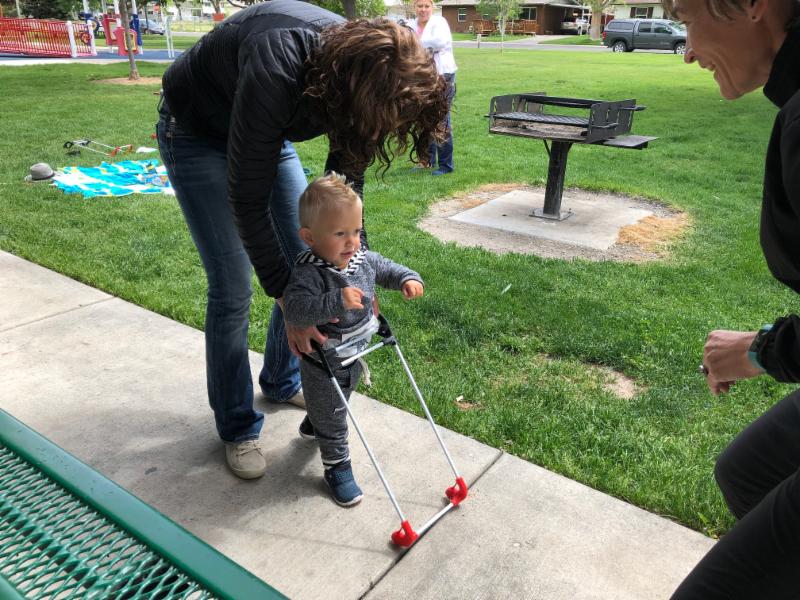
For babies and toddlers who are blind or visually impaired, moving independently and safely in their environment is called orientation and mobility. This is one of nine vision-related skills in the “Expanded Core Curriculum” that are taught to children who are blind or visually impaired. 

A teacher from A Shared Vision trained in orientation and mobility helps a family learn to encourage a child’s purposeful movement, teach body parts and directional concepts, and help their child with an early mobility device such as a push toy or small cane.  Learn more about orientation and mobility HERE. 
How to Travel Without Leaving Home
Other than going to other family members’ houses or appointments, caregivers usually spend a lot of time at home with their child who is blind or visually impaired. That is the best place for early learning to occur. Their typical day moves from one routine to another. As children become more mobile, they move purposefully from one activity to the next. The better understanding their child has of location and travel concepts, the better equipped they will be to navigate their home with confidence.
 
This Learning Experience introduces the concept of orientation and mobility through a traveling activity inside your home – without ever packing a suitcase or walking out the front door. Whether traveling with a baby toddler or a child in a stroller or wheelchair, you and your child will form a team to explore your house and discover important landmarks along the way. Try it HERE.
An Attitude of Gratitude
We are so grateful for the support from two Colorado foundations! The Buell Foundation just awarded A Shared Vision $20,000 to support Colorado families with very young children who are blind or visually impaired. This sizeable grant will help us close the gap in identifying all very young children with blindness or visual impairments, provide high-quality in-home vision services, and meet the growing demand for vision services with more teachers.

The Gerald Erikson Fund of the Pikes Peak Community Foundation has awarded A Shared Vision $5,000 toward our vision screening education program.
A Shared Vision is a 501(c)(3) nonprofit and the leading provider of in-home and community early intervention vision services in Colorado. We inspire and empower families to nurture the development of their very young children who are blind or visually impaired so that all children may discover their brightest future.
Share this email: