Another Milestone Today in School Funding Case |
|
Today, the attorney team from ELC, Public Interest Law Center, and O’Melveny filed key documents on behalf of our petitioners in the post-trial legal proceedings of our historic school funding lawsuit. The parties submitted proposed findings of fact and conclusions of law to Commonwealth Court.
Still ahead: Interested parties have until May 16 to file amicus briefs, and in June and July, we will be filing briefs about the legal issues in the case – addressing questions such as what type of education Pennsylvania students are entitled to receive under the state’s constitution and whether education is a fundamental right.
|
|
Corrected Study:
School Funding in Pa. Is Regressive
|
|
The accuracy of the institute’s original analysis, which had shown Pennsylvania as slightly progressive, came into question in February during the school funding trial. The corrected analysis shows that Pennsylvania’s districts serving poor students are receiving 3% less funding and districts serving Black and Hispanic students receive 6% less funding. Pennsylvania is among a small number of states where students from low-income families receive less education spending than wealthier students. Overall, school spending in the U.S. is slightly progressive, with 1% more of funding going to poor students.
|
|
Act 1: New Pa. Law Helps Students to
Graduate This Year, Removes Barriers
|
|
Pennsylvania’s Department of Education has issued new guidance to school district superintendents regarding Act 1 of 2022, a recently adopted law that provides additional support to students who experience “education instability” due to homelessness, involvement in the foster care or juvenile justice systems, or court-ordered placements. The law removes barriers to fully participating in school and ensures that students are not penalized due to lost or unrecognized credits or the inability to take a course required by their current school.
Schools must assign a “Point of Contact” to assist these students in assessing full and partial credits, determining whether certain courses may be waived, and developing an individualized graduation plan. ELC’s new fact sheet provides details on the provisions of the new law. ELC has also developed a series of tools to assist advocates to request help under Act 1.
To learn more about Act 1, join ELC and Juvenile Law Center for a webinar on May 10 at 4 p.m. to learn how advocates can help students benefit from the law this school year. To sign up for the webinar, please email info@elc-pa.org, and we will send you the login information.
|
|
Overcoming Credit Barriers Following Placement |
|
Following a call to our intake line, ELC’s Independence Foundation Public Interest Law Fellow Ashli Giles-Perkins began representing Ms. B. and her son “John,” who were experiencing barriers to re-enrollment after John’s return from placement. John was trying to re-enroll in courses but was told he had not earned enough credits and would need to repeat the 12th grade, instead of graduating in June. Act 1 now protects students like John to make sure they can graduate on time.
Ms. B. obtained and provided three different transcripts from John’s schools. Ashli began to untangle the information so that John could be re-enrolled into the proper grade. John had been enrolled in two schools already this year and had three different sets of coursework. Ashli contacted both school districts and worked successfully to ensure that John was awarded partial credits for the first three quarters of this school year that he completed at his prior school, as required under Act 1. John is now re-enrolled, his transcripts have been reviewed to properly reflect all of his credits, and best of all, he is back on track to graduate on time next month.
|
|
ELC's Paige Joki Is SPIN’s
Public Interest Impact Award Recipient
|
|
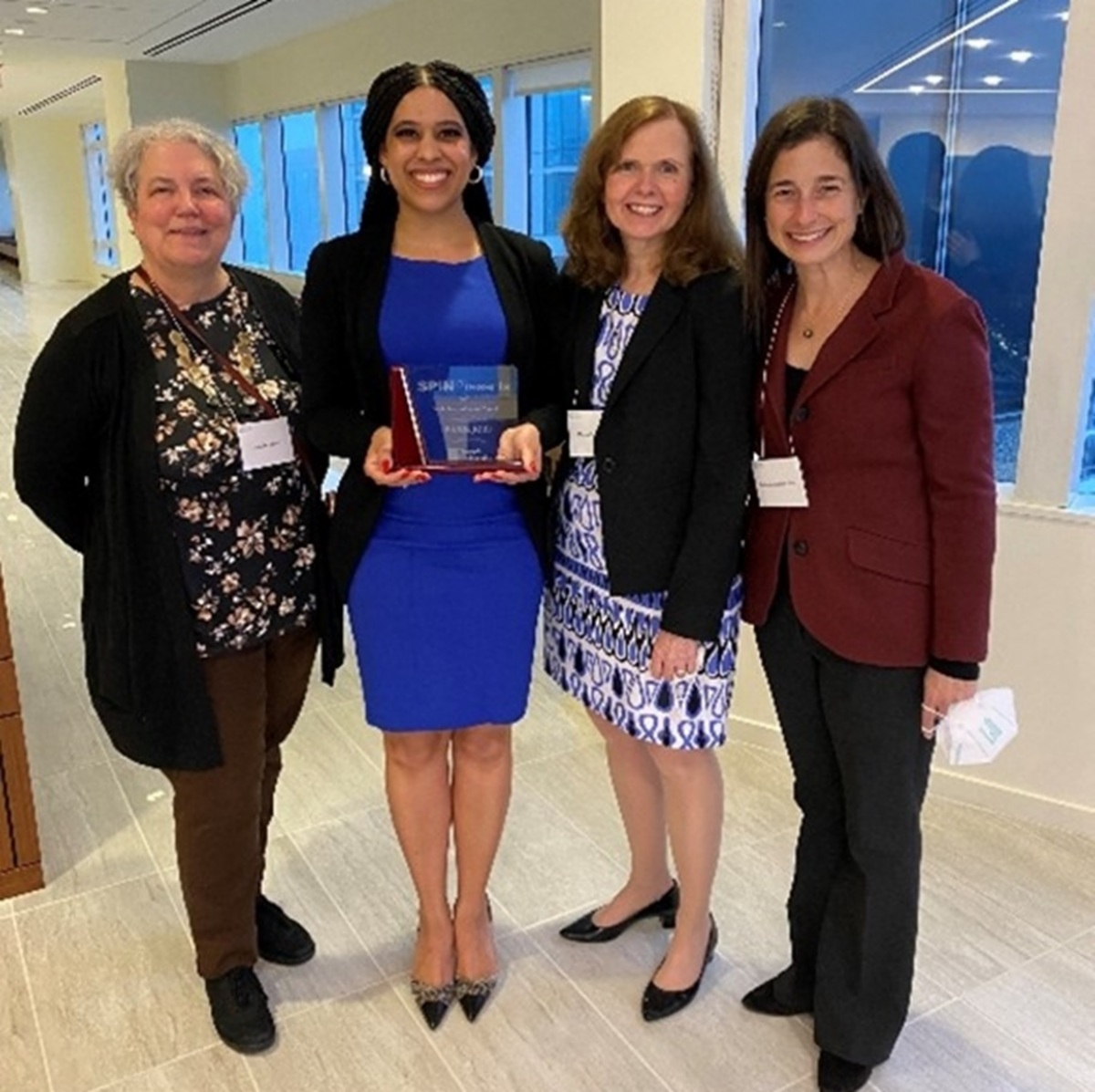
ELC is thrilled to announce that staff attorney Paige Joki has been honored by the Temple University Beasley School of Law Student Public Interest Network as their inaugural 2022 Public Interest Impact Award recipient, in recognition of her passionate, effective advocacy on behalf of Pennsylvania public school children, particularly students experiencing homelessness and Black girls.
The Public Interest Impact Award is given to a Temple Law graduate who has distinguished themselves in a public interest career. We are immensely proud of Paige and her work!
|
|
Paige Joki with her award and with ELC board member and Temple Law professor Susan DeJarnatt,
legal director Maura McInerney and executive director Deborah Gordon Klehr.
|
|
Supporting a Federal Initiative
for Education of Foster Youth
|
|
ELC joined national partners in calling for a $30 million federal budget proposal to improve the education of children in foster care. The proposed federal funding would support a five-year grant program to launch, implement, and evaluate new or existing Foster Youth Education programs. These programs seek to improve the academic outcomes of students in foster care by employing professionals responsible for regularly connecting with students in foster care and providing guidance, mentoring, educational advocacy, and decision-making, focused on foster care students’ needs. Investments such as these are necessary to ensure that students in care don’t face barriers to learning and are not subject to inequitable school conditions. |
|
Panel: Combating Education Injustice |
|
ELC staff attorney Paige Joki represented ELC on an April expert panel convened by the Pennsylvania Human Relations Commission to address “Restoration: Redirecting the Path Towards Positive Educational Outcomes.” She discussed the history of educational deprivations survived by Black people and called for more effective legal tools to combat the ongoing legacies of harm currently felt by Black schoolchildren in Pennsylvania and beyond.
Learn more about student's rights to be free from racism at school here and learn about what schools can do to support Black girls and address systemic harms here. ELC remains invested in ensuring that conditions in Pennsylvania schools are transformed to fully serve and celebrate Black children, providing them with an adequate, equitable education free of racism.
|
|
May 11 Webinar:
How Public Education Funding Works in Pa.
|
|
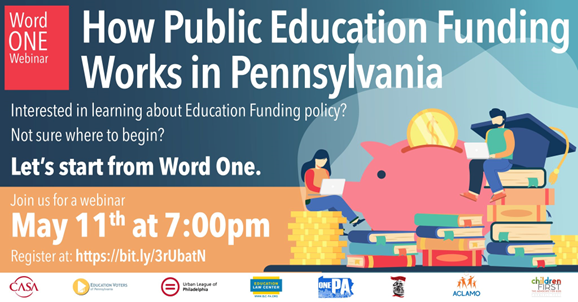
Interested in learning about how public education funding works? Does Pennsylvania’s complex system have you wondering where to start? Join our Resource Equity Funders Collaborative partners for a webinar on May 11 at 7:00 p.m., where we will start from Word One to explain Gov. Wolf’s proposed education budget; he has proposed increasing education spending by $1.75 billion. The webinar will explain how it will be allocated, and what the money will mean for your local school district. No previous advocacy or public policy experience is required!
If you are ready to learn about education funding policy and you are just getting started – this is the webinar for you. Spanish interpretation will be available. Register here.
|
|
Welcome Rebecca, Our Newest Staff Attorney! |
|
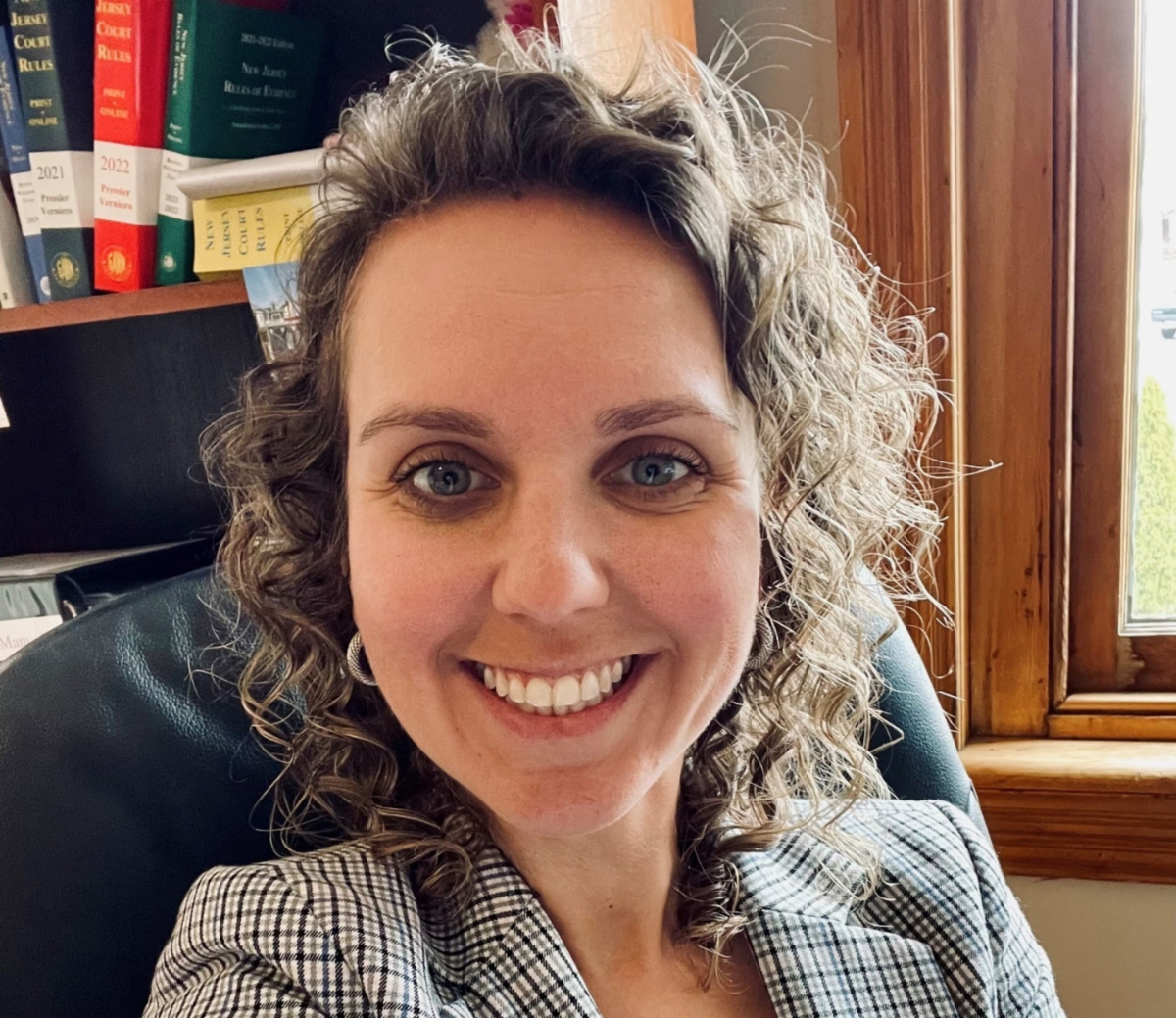
We are excited to announce that Rebecca Preuss has joined the Philadelphia office of Education Law Center as a staff attorney. She focuses on direct representation of clients and overseeing our Helpline and supports ELC’s impact litigation, working with community partners, and informing our policy advocacy across all ELC’s issue areas.
Rebecca previously worked as a staff attorney at South Jersey Legal Services for seven years, where she provided legal advice and representation to low-income individuals across a variety of civil matters, including housing and public benefits issues. Rebecca was a legal fellow at Pennsylvanians for Modern Courts, where she engaged in public advocacy and education regarding issues of judicial selection reform and systemic court reform. Rebecca is a graduate of Penn State University and Drexel University Kline School of Law. Welcome, Rebecca!
|
|
Join Our Team: We're Hiring! |
|
ELC is seeking a director of our Western Pennsylvania office in Pittsburgh, who will report to the executive director in Philadelphia. The candidate should have a demonstrated commitment to public interest law, civil rights, racial justice, and advancing the rights of underserved populations. The Pittsburgh director provides leadership and direction to the Pittsburgh office, including overseeing direct service to underserved students, participating in local and statewide policy advocacy and litigation, building and strengthening community partnerships, and engaging with funders and board members.
|
|
Education Law Center | 215-238-6970 (Philadelphia)| 412-258-2120 (Pittsburgh)| |
|
A copy of the official registration and financial information of the Education Law Center may be obtained from the Department of State by calling toll-free, within Pennsylvania, 1-880-732-0999. Registration does not imply endorsement. |
|
|
|
|
|
|