|
|
University of New Mexico
METALS
Superfund Center
Metals Exposure and Toxicity Assessment on Tribal Lands in the Southwest
|
|
|
Welcome to our February 2024 Newsletter! |
|
Environmental Science & Engineering - Particulate Matter (ESE PM)
Transport and bioavailability of uranium (U) and co-occurring metals in particulate matter from agricultural tribal lands affected by mining legacy
Leads: Drs. Adrian Brearley, Ph.D. and Eliane El Hayek, Ph.D
|
|
How microplastics interact with uranium in agricultural soil.
A collaborative work between the UNM METALS center and the Center for Native Environmental Health Equity Research investigated the effect of the coexistence of high-density polyethylene (HDPE) and uranium (U) in water and agricultural soil and their physical and chemical interactions. The role of the collection and precipitation of U in microplastics (MPs) on its mobility in soil is not well understood, which justifies the need for the work presented. The reaction of uranium in water with agricultural soil and HDPE through multiple laboratory studies was investigated.
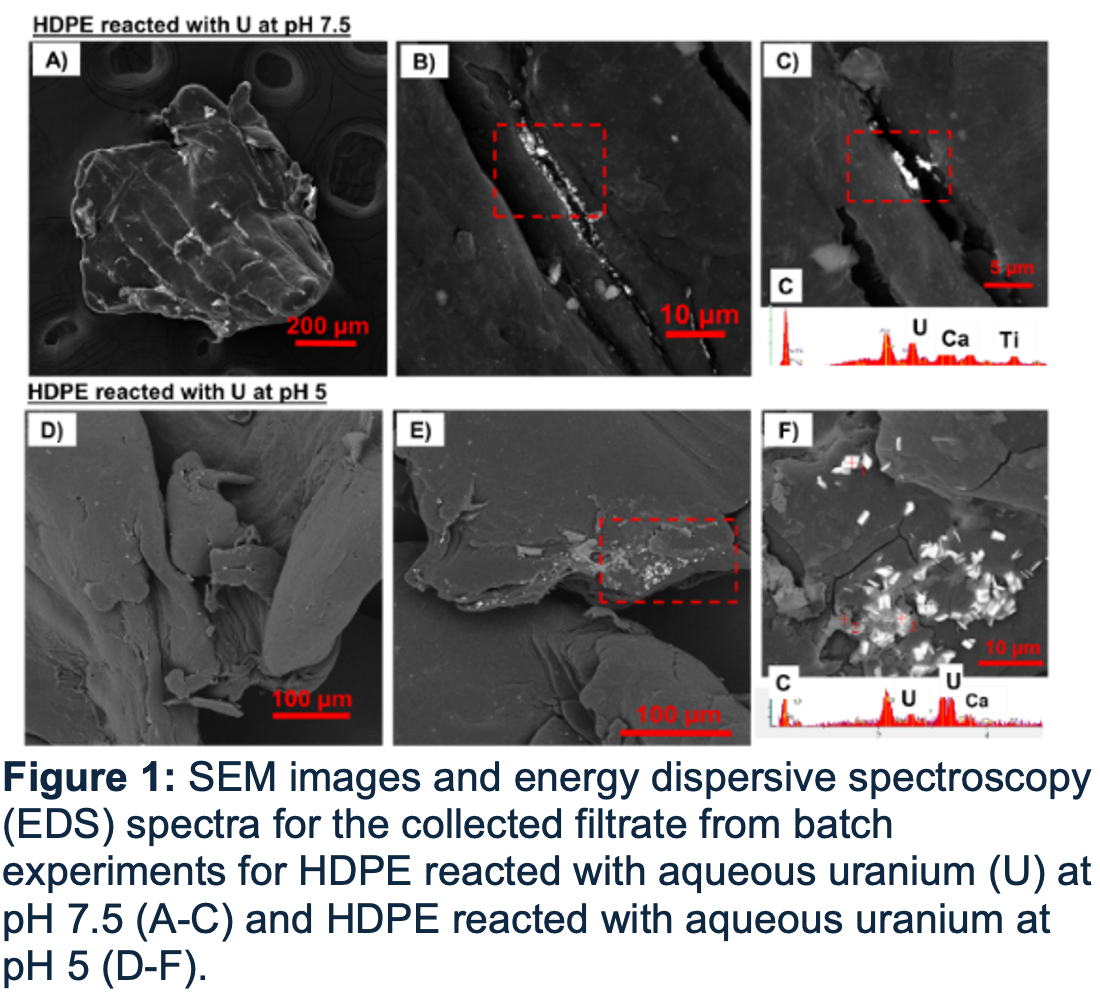
Findings show that HDPE modified the initial removal of uranium in agricultural soil depending on pH, particularly within the first hours of the experiments. The study also confirms the weathering of HDPE surface after two weeks of movement in water with the increase of surface cracks and oxygen content level as determined by imaging techniques such as scanning electron microscopy (SEM) analysis (Figure 1) and by X-ray photoelectron spectroscopy survey scan, respectively.
Given the persistent character of MPs in the environment, this research stresses the need to investigate how U and MPs interact and cause re-release into the environment over time. Formation of uranium-plastic solids is a critical understudied exposure pathway that may enhance exposures to uranium in agricultural soil. This study opens new avenues for future investigations into how metals and MPs move through the environment at co-contaminated sites and the potential health impacts of human exposure to the particulate form of U in plastics.
|
|
Constraining the nature and formation of particulate matter derived from weathering of uranium deposits and mine waste from the Jackpile mine.
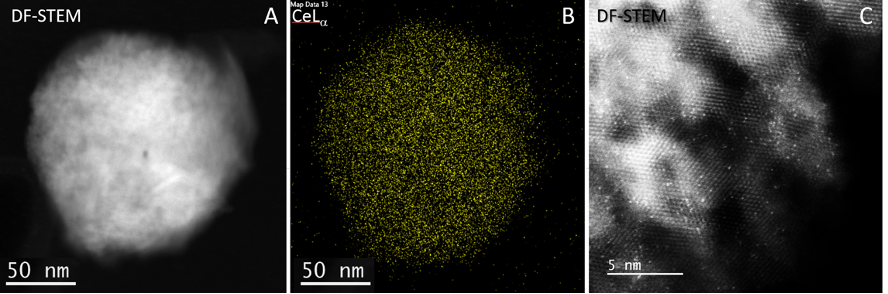
The particulate matter (PM) and dust produced by wind-driven erosion of exposed mine wastes from abandoned uranium mines is currently poorly understood. Inhalation, or the process of breathing in, of such particulate matter is an important potential exposure pathway that is of concern for Native American communities that live close to AUMs, particularly in the Southwest USA. As part of the ESE-PM METALS project, we are characterizing particulate matter that has been formed by natural erosion of solid materials using a variety of electron microscope techniques. Collections of eroded sediments associated with exposed solids contain a diverse range of U-bearing minerals within the <20 micron fraction of the dust, including U-bearing REE phosphates (Fig. 2A,B)) and the uranyl vanadate phosphate, carnotite, frequently with grain sizes <200 nm are present. In addition, submicron clusters of the Fe oxyhydroxide, ferrihydrite, commonly occur that EDS X-ray analysis shows contain several percent U. Atomic resolution STEM imaging shows that the U occurs as single ions absorbed on to the surface of the nanocrystals of the ferrihydrite. This is the first direct observation of adsorbed U on a natural Fe oxyhydroxide.
|
|
Figure 2. Scanning transmission electron microscope (STEM) images and X-ray maps of U-bearing particulates resulting from weathering of exposed ore bodies at the Jackpile Mine, Laguna Pueblo. A) Dark-field STEM image of a U and REE enriched apatite grain, B) STEM X-ray map showing elevated concentration of Ce in the apatite grain and C) atomic resolution dark-field STEM image showing disperse ions of U (bright spots) dispersed on nanocrystalline ferrihydrite (order array of lines that represents the crystalline lattice of the structure)).
|
|
These observations show that weathering not only produces PM2.5 grains of U-bearing minerals that can potentially be transported readily by winds and be an inhalation hazard, but also releases Fe oxyhydrooxides that are a significant carrier of U. These nanocrystalline collections of ferrihydrite may be especially problematic if inhaled, because U ions could easily be released from lung fluids and carried into the blood stream. |
|
Establishment of a particulate matter monitoring system within the Jackpile uranium mine, Laguna Pueblo. |
|
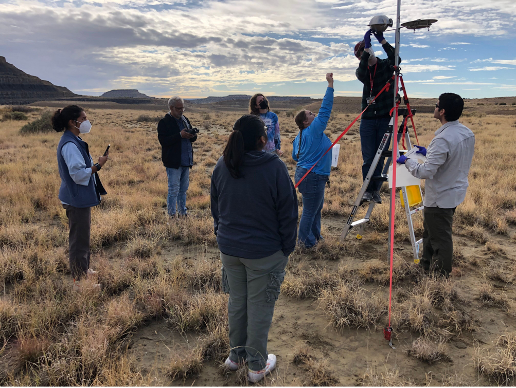
Figure 3. Graduate student Andreanna Roros demonstrates the process of changing particulate matter collector filters to a group of UNM undergraduate students at one of the passive monitoiring sites within the main pit of the Jackpile uranium mine, Pueblo of Laguna, New Mexico.
|
|
Despite the very extended history of mining at the Jackpile mine, followed by a period of remediation in the early 1990s, there has been no systematic study to understand the nature of particulate matter that was and is currently being
released from the mine site. To address community concerns about airborne exposure to U-bearing dust, and inhalation risks from the mine, graduate student Andreanna Roros on the ESE-PM METALS project has been establishing a particulate matter monitoring system within the mine site (Figure 3). At five different locations covering the mine site, we have established dust monitoring collectors, one to collect wind blown dust and a second to collect dust settling from unmoving air. Our preliminary analyses indicate that U-bearing dust particulates are extremely rare, but a variety of other particulates are present in the dust that may be caused by other, human sources, such as automobiles and industrial emissions that come from sources that are external from the mine site. Our objectives for the study are to gain a long term perspective of the types of particulates that may represent potential exposure hazards for the local communities and develop strategies to reduce these exposures. We are especially interested in seasonal variations in particulate matter that may result from, for example, higher and stronger winds that are common during the spring time in the Southwest USA.
|
|
Meet the ESE PM Project Trainees! |
|
Paige Haley
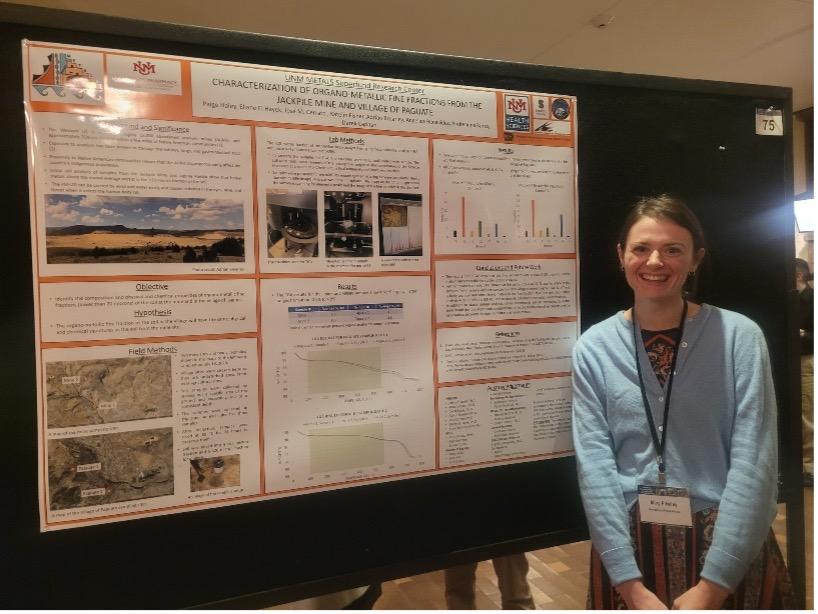
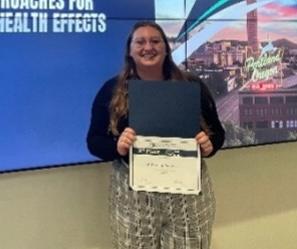
Paige is a second-year master's student in the Nanoscience and Microsystems Engineering Program (NSME) at the University of New Mexico. She studies the role of living organisms in how heavy metals move and collect in certain areas within the village of Paguate. Paige recently received the graduate student award in the Environmental Science and Engineering category at the Superfund Research Program Annual Grant Recipient meeting for her poster titled "Characterization of Organo-Metallic Fine Fractions from the Jackpile Mine and Village of Paguate."
|
|
Mackenzie Freeman
Mackenzie is a master’s student in geology in the Department of Earth and Planetary Sciences at the University of New Mexico. Under the guidance of Drs. Adrian Brearley and Eliane El Hayek, she is working on using lichens to evaluate the legacy environmental dust released from the Jackpile mine. She is analyzing the mineralogy and make up of dust particles accumulated by lichens that have grown on rocks in around the Jackpile mine to understand how toxic metals may have been transported in windblown particulate matter during the active period of mining. Lichens are used in this research due to their ability to retain metals over a long period of time.
|
|
Andreanna Roros
Andreanna is a second-year MS student in the department of Earth and Planetary Sciences at the University of New Mexico. She is working with her advisors to investigate metals present in collected dust from the Jackpile Mine on the Pueblo of Laguna (POL). Her research focusses on understanding how windblown dust from the mine could expose people in the POL community to heavy metals and uranium. Andreanna won third place at the graduate platform at the PANWAT conference in September 2023.
|
|
|
|
Superfund Indigenous Cultural Training
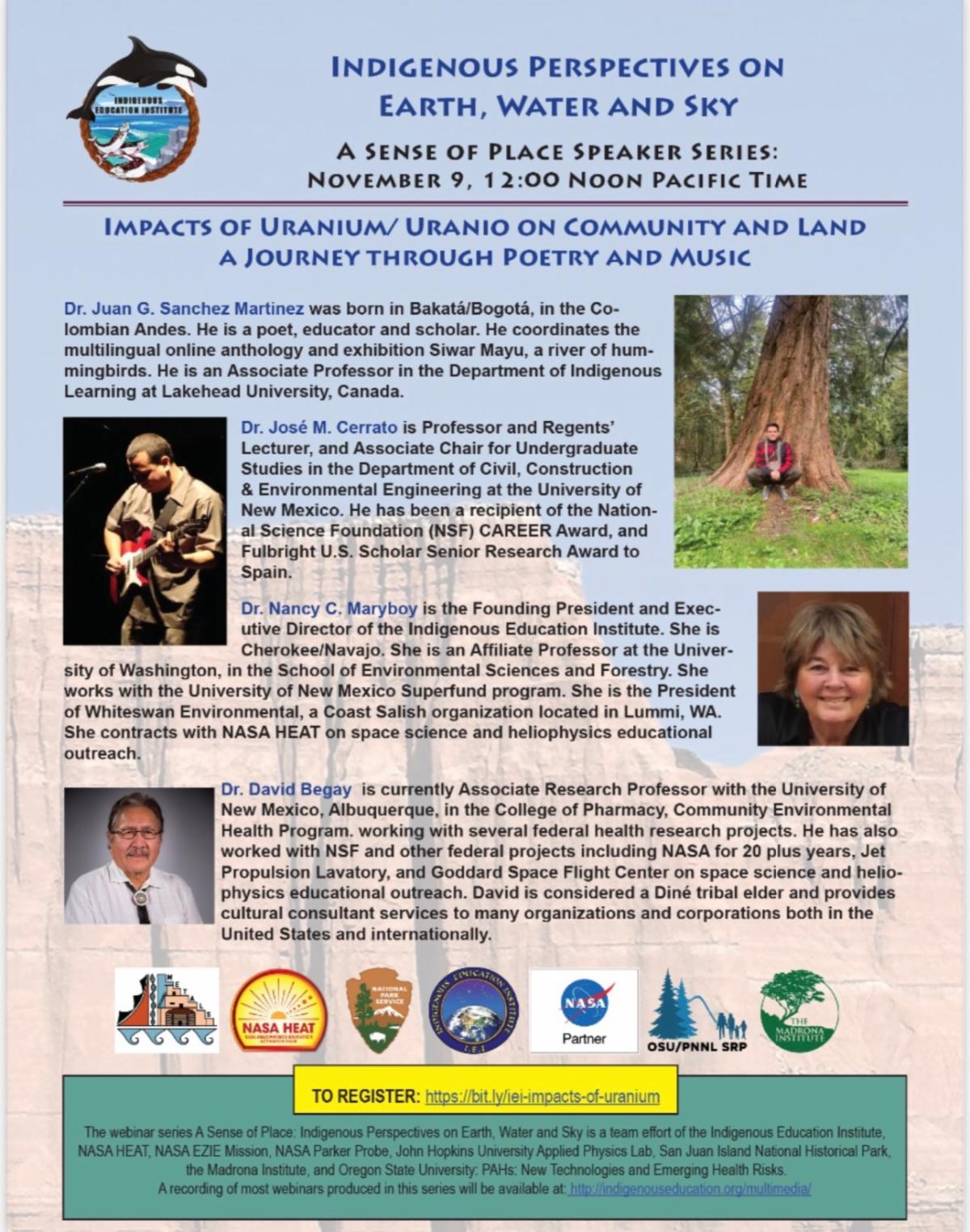
On November 9th, METALS partner, IEI (Indigenous Education Institute), held a "Sense of Place Webinar Series" on "Impacts of Uranium/Urania on Community and Land, a Journey through Poetry and Music" featuring METALS researchers.
Drs. Maryboy and Begay read and discussed the poem "Uranio" with author Juan Sanchez Martinez and Jose Cerrato accompanied on guitar. IEI "Sense of place" webinar recordings can be viewed at https://indigenouseducation.org/multimedia/
|
|
Scientific American Researcher Profile |
|
Bourzac, K., 2023. People Who Are Changing the Environment One Community at a Time. Nature, 621(7979), pp.35-37.
|
|
Previous METALS director, Dr. Johnnye Lewis, was profiled in Scientific American for her community-based environmental work on abandoned mines on tribal lands with Indigenous research partners. The article focused on four researchers who are highlighting environmental inequities and improving the health of their communities
|
|
|
|
Sumira Phatak
Sumira Phatak is an IRACDA ASERT Fellow at the University of New Mexico and postdoctoral scholar in the laboratory of Dr. Matthew Campen. The Campen group explores how common environmental contaminants, like metals or wildfire smoke, impact health and aging. She also collaborates on projects to investigate how ozone or pregnancy impact gene expression in the brain (Dr. Shahani Noor) and to understand the intersection of nutrition and microplastic intake on metabolism (Dr. Eliseo Castillo).
|
|
|
Zhuoming Liu
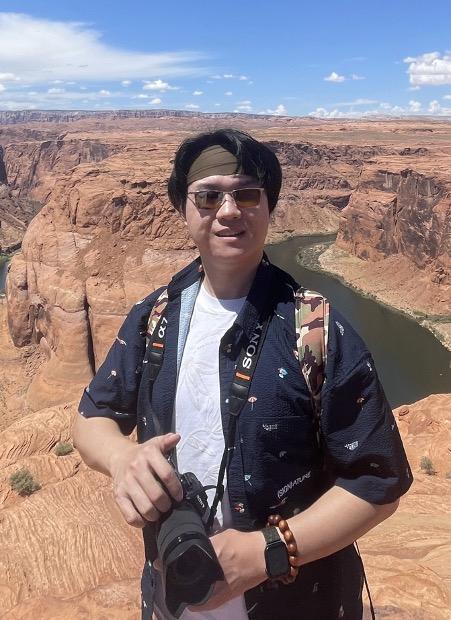
Zhuoming Liu is a 2nd-year PhD student in the Computer Science Department at the University of New Mexico. Under the guidance of Drs. Yan Lin and Joseph Hoover, he’s working on data mining, especially on GPS data. Combining with GPS data and environmental data, his current work includes analyzing animal behavior patterns and building a model for estimating livestock’s exposure potential to abandoned uranium mines and other environmental pollution.
|
|
|
December 7, 2023- ABC news article “Navajo Nation faces possible new threats after decades of uranium mining” includes interviews with METALS researchers, Keyanna and Shuey, and community partners.
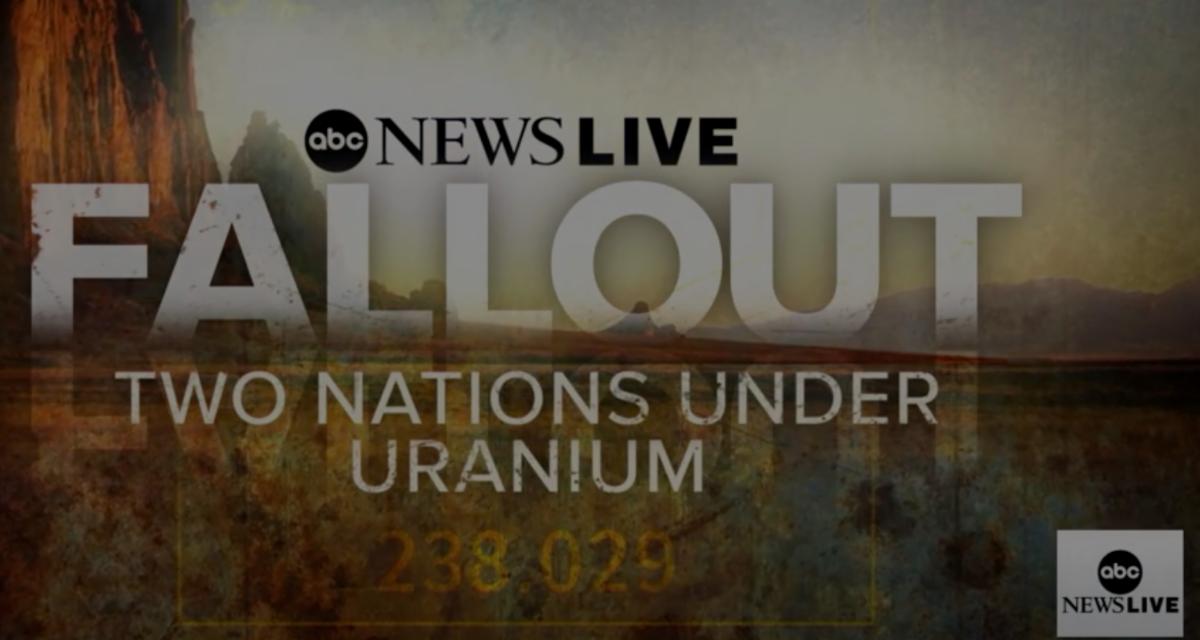
November 30, 2023- METALS Community Engagement Lead, Chris Shuey and METALS community partners were interviewed for an ABC news segment "Fallout: Two Nations Under Uranium" Families at the center of the nuclear arms race say it's damaged their communities and health. ABC News' Mireya Villareal shows how America's nuclear past is still very much present in the Southwest.
|
|
IACHR GRANTS THEMATIC HEARING ON IMPACTS TO INDIGENOUS PEOPLES’ HUMAN RIGHTS FROM URANIUM EXPLOITATION
Historic Hearing to be Held in Washington, D.C.
Weds, Feb. 28th at 11am EST/9am MST
How to attend: In-person at IACHR/Organization of American States (OAS) located at 1889 F St. N.W., Washington, D.C. 20006 or watch online on IACHR’s YouTube channel.
Additional Background Information
In a decision that coincides with an uptick in uranium development activity, the Inter-American Commission on Human Rights (IACHR) has agreed to hold a "thematic" hearing on how U.S. uranium exploitation policies have resulted in human rights abuses in Indigenous communities across the country.
|
|
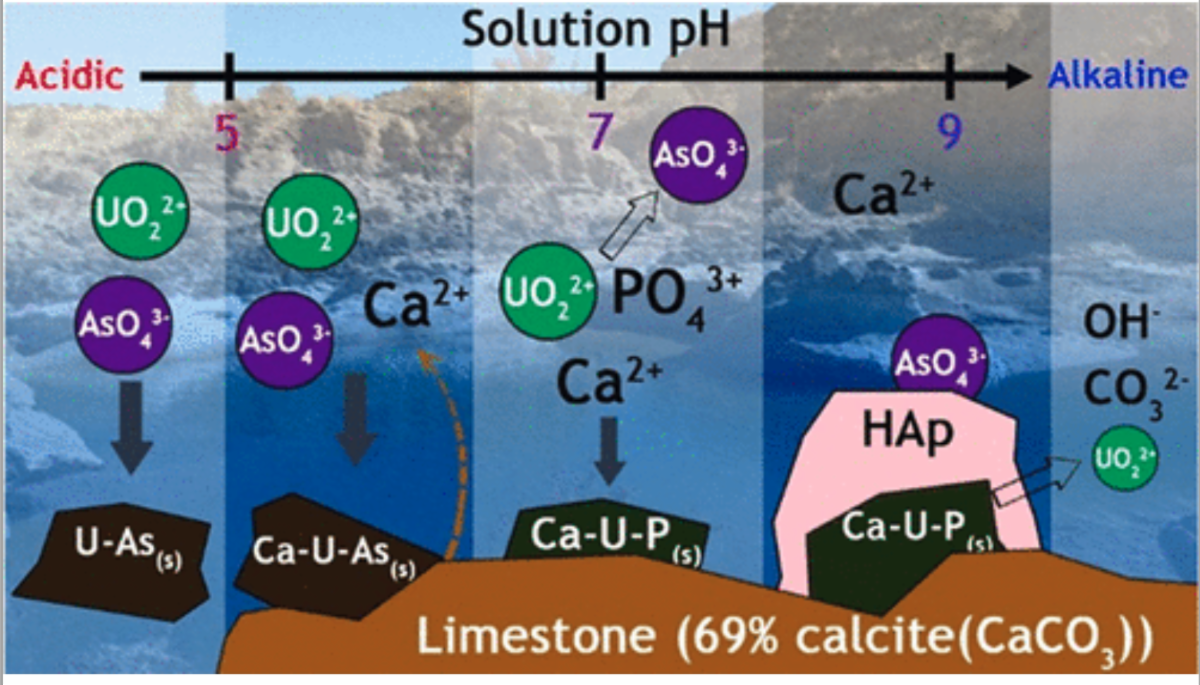
Meza I, Hua H, Gagnon K, Mulchandani A, Gonzalez-Estrella J, Burns PC, Ali AM, Spilde M, Peterson E, Lichtner P, Cerrato JM. Removal of Aqueous Uranyl and Arsenate Mixtures after Reaction with Limestone, PO43–, and Ca2+. Environmental Science & Technology. 2023 Nov 29. https://doi.org/10.1021/acs.est.3c03809
Meza I, Jemison N, Gonzalez-Estrella J, Burns PC, Rodriguez V, Sigmon GE, Szymanowski JE, Ali AM, Gagnon K, Cerrato JM, Lichtner P. Kinetics of Na-and K-uranyl arsenate dissolution. Chemical Geology. 2023 Jul 26:121642. https://doi.org/10.1016/j.chemgeo.2023.121642
Quiambao J, Hess KZ, Johnston S, El Hayek E, Noureddine A, Ali AM, Spilde M, Brearley A, Lichtner P, Cerrato JM, Howe KJ, Gonzalez-Estella, J. Interfacial Interactions of Uranium and Arsenic with Microplastics: From Field Detection to Controlled Laboratory Tests. Environmental Engineering Science. 2023 Jun 12. https://doi.org/10.1089/ees.2023.0054
|
|
Hoover JH, Coker ES, Erdei E, Luo L, Begay D, MacKenzie D, NBCS Study Team, Lewis J. Preterm Birth and Metal Mixture Exposure among Pregnant Women from the Navajo Birth Cohort Study. Environmental Health Perspectives. 2023 Dec 18;131(12):127014. https://doi.org/10.1289/EHP10361
|
|
Read Previous Newsletters
|
|
NIH/NIEHS P42 ES025589 (UNM METALS) This material was developed in part under cited research awards to the University of New Mexico. It has not been formally reviewed by the funding agencies. The views expressed are solely those of the speakers and do not necessarily reflect those of the agencies. The funders do not endorse any products or commercial services mentioned in this presentation.
|
|
|
|
|
|
|
|