DHCS Sending Federal Rules Changes Letter to Medi-Cal Members | |
In September, the Department of Health Care Services (DHCS) will send a letter to Medi-Cal members about the Work and Community Engagement and Six-Month Renewal rules that go into place in 2027 as part of H.R. 1.
We encourage providers to view the letter here to be prepared to help their Medi-Cal patients with these upcoming changes.
| Street Medicine Opens New Control Center and Expands Into Four Communities | |
As our Street Medicine Program grows to include four additional Orange County communities, a new space to better coordinate the program’s efforts has opened its doors.
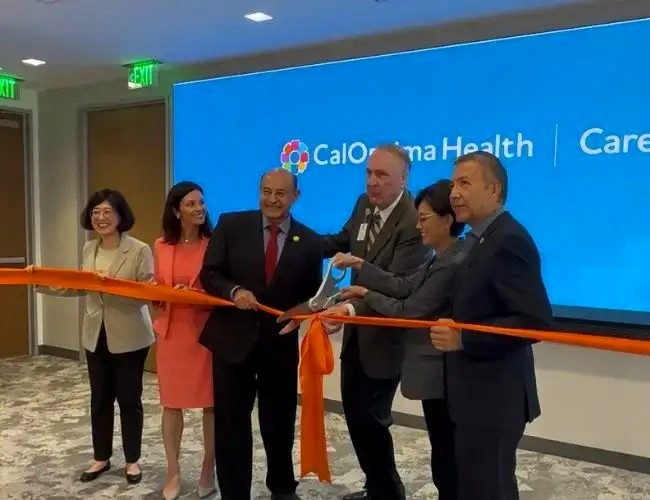
The CalOptima Health Care Traffic Control Center held its grand opening on August 13, 2026. This innovative, one-of-a-kind space is designed to improve health care outcomes for members experiencing homelessness and promote collaboration across CalOptima Health’s Street Medicine Program teams. Supported by a $2 million federal grant and CalOptima Health reserve funds, the center is a hub that brings all the CalOptima Health Street Medicine field teams together so they can combine resources, learn from each other and ultimately strengthen service delivery.
U.S. Representatives Lou Correa and Young Kim led the effort to secure the federal grant for CalOptima Health as both represent areas served by the Street Medicine Program. The heart of the new center is a coordinated data system, which connects clinicians, care navigators and team leaders to members’ records, facilitates real-time navigation to resources, and gathers consistent information used to measure program success. The data can be shown on a cutting-edge 20-by-5.5-foot ultrawide display screen that fills the room where the teams gather for meetings. More than 40 team members work in the center.
“Today marks a milestone for CalOptima Health and the communities we serve,” said Kelly Bruno-Nelson, DSW, Executive Director, Medi-Cal/CalAIM, who oversees the Care Traffic Control Center, during the grand opening. “This facility welcomes our partners and invites them to embrace our health plan’s vision of innovation and compassion. By uniting our dedicated teams and harnessing technology, we meet members where they are and provide them with the dignified services they deserve on their journey to permanent housing.”
The opening of the Care Traffic Control Center comes on the heels of the CalOptima Health Board of Directors’ August 6 approval to expand the Street Medicine Program using a new regional approach, joining together Fountain Valley, Huntington Beach, Seal Beach and Westminster as the Coastal Cities Continuum. The new program is anticipated to launch in mid-2027.
Street Medicine plays a key role in CalOptima Health’s comprehensive strategy to address the unhoused in Orange County by bringing urgent and primary care to the streets. The program, which now operates in Garden Grove, Costa Mesa, Anaheim and Santa Ana, uses interdisciplinary teams who canvas communities to reach members living in parks, under freeways and other unsheltered spaces. Services include health care, behavioral health, substance use treatment and case management, along with expanded whole-person care resources, seeking to reduce unnecessary emergency department visits and increase access to permanent housing.
| OneCare P4V Program Moves to Real-Time Incentive Payments | |
The CalOptima Health OneCare Pay for Value (P4V) program now rewards providers with real-time incentives as they close member care gaps.
Previously, the P4V program was an annual, retrospective pay-for-performance model. Now, OneCare CalOptima Health Community Network (CHCN) providers who qualify for the Measurement Year (MY) 2026 P4V program will receive monthly payments throughout the measurement year. This will be handled through our new Cozeva quality and risk management platform, which enables providers to view care gaps, earn incentives, and receive real-time updates and incentive payments.
For 2026, OneCare providers can also earn a one-time $1,000 incentive for adopting electronic funds transfer (EFT) for claims and incentive payments, and an additional $1,000 for registering their practice’s first user on the CalOptima Health Provider Portal.
To learn more about the new P4V program, please review the updated program manual here.
For any questions regarding the P4V program, please contact the Quality Initiatives team at QI_Initiatives@caloptima.org.
| DHCS Reminds Providers They Cannot Charge Patients for Completing Forms | On July 24, 2026, DHCS notified managed care plans (MCPs) that the Office of the Ombudsman has received an increase in inquiries involving providers attempting to charge members a fee for completing forms or providing information needed to support a claim or appeal related to eligibility for a public benefit program. As a reminder, providers are prohibited from charging such fees under Section 123114 of the California Health & Safety Code. A 2024 provider reminder from DHCS with more information is available here. | | | Prior Authorization Required for Medi-Cal Hospice Services After November 1 | |
Starting November 1, 2026, all Medi-Cal members who require new hospice services and recertification from a CalOptima Health-contracted hospice provider will need prior authorization for all hospice levels of care. Hospice claims submitted for dates of service on or after November 1, 2026, without an approved hospice authorization will be denied.
To request hospice authorization, please download the Authorization Request Form (ARF) from our website, www.caloptima.org, and submit it to the applicable Utilization Management fax number on the form with the required clinical documentation supporting your request. Required clinical documentation includes:
- DHCS Hospice Election Notice (NOE)
- Hospice Certification of Terminal Illness (CTI)
- Most recent History & Physical (H&P) report
For more information on prior authorization requirements, visit the Prior Authorization page on our website.
Please note:
- For inpatient discharges to hospice, please follow the standard authorization process for all discharge planning needs.
- We will conduct utilization reviews to confirm hospice eligibility and may request additional records at any time.
-
Only contracted and credentialed providers should be rendering nonemergency services to our members. Contracted hospice providers can be found through the CalOptima Health Contracted Hospice Search.
| DHCS Reminds of MCP Hospice Billing Requirements | |
On July 27, 2026, DHCS reminded MCPs regarding current hospice policy and requirements in anticipation of the issuance of the revision to All Plan Letter (APL) 25-008 and in response to concerns that DHCS has received from hospice providers.
When a dual-eligible member residing in a skilled nursing facility (SNF), nursing facility (NF) or intermediate care facility (ICF) elects hospice under Medicare, Medicare remains the primary payer. The MCP remains responsible for the separate Medi-Cal room and board payment.
- The Medi-Cal room and board payment is a distinct payment obligation and is not payment for Medicare hospice services, Medicare hospice cost sharing or a Medicare crossover claim.
- The MCP does not assign or approve the member’s Medicare hospice provider, cannot require use of an in-network hospice provider and cannot require authorization for the hospice provider to bill for room and board.
- MCPs cannot require a copy of an Explanation of Benefits, Remittance Advice or denial letter from Medicare to accompany room and board claims.
-
MCPs have timely payment obligations as outlined in APL 23-020.
Regarding Medi-Cal only members, MCPs cannot require authorization as a condition of payment for room and board for members who are receiving hospice services and reside in an SNF, NF or ICF. MCPs cannot separately and solely deny room and board claims for members who have a valid hospice election and have been authorized hospice care, whether in-network or out-of-network.
| Final Phases of Timely Access Survey Underway | |
The final two phases of our Measurement Year (MY) 2026 Timely Access Survey are currently underway. Our contracted vendor, ATTAC Consulting Group, is conducting the survey using the Department of Managed Health Care (DMHC) Provider Appointment Availability Survey (PAAS) methodology for both our Medi-Cal and OneCare lines of business.
MY 2026 Timeline
- Phase 1 (June–August 2026): Initial Survey — Complete
- Phase 2 (September 2026): Education and Noncompliance Notices — In Progress
- Phase 3 (September–October 2026): Full Resurvey
- Resurvey of all noncompliant providers
- Corrective Action Plans (CAPs) issued as needed
Survey Participation
- Survey completion typically takes fewer than five minutes
- Contact is via fax, phone or email (initial outreach sent by fax)
- Please return your fax survey by the stated deadline to prevent follow-up calls
- If no response is received, the vendor will reach out by phone or email
- Participation is required by state regulation and contractual agreement
- Refusal to participate may result in escalation
Survey Completion
- Complete all survey fields
- If contacted by phone at an inconvenient time or if the answering staff member cannot complete the survey:
- Request the survey be resent via fax or email
- Ask for a call-back number or schedule a return call
- If any provider contact information is incorrect, please note corrections directly on the survey or inform the surveyor
- When reporting appointment availability, include both:
- The schedule of the provider listed in the survey
- Availability of other clinicians who may be able to see the patient sooner (e.g., physicians, nurse practitioners or physician assistants)
- Remember to include telehealth and same-day appointments when providing availability
Thank you for your partnership in ensuring timely access to care for our members. Please look for the survey outreach and respond promptly.
| Behavioral Health Providers Should Review Updated Urgent Access Standard Guidance | |
We are reminding our contracted behavioral health providers to review the updated guidance on meeting the National Committee for Quality Assurance (NCQA) six-hour urgent access standard. The update includes requirements for:
- Integration of 988 Suicide & Crisis Lifeline when an urgent appointment cannot be accommodated
- Documentation for NCQA audits
- Patient education
The full guidance can be found here. Your attention to these guidelines ensures members receive timely and clinically appropriate behavioral health support.
For any questions or feedback, please contact Provider Relations at 714-246-8600.
| Mobile Mammography Is a Key Way to Improve Breast Cancer Screening Access | |
Increasing access to breast cancer screening remains one of our key priorities for improving quality health outcomes. One effective way to close breast cancer screening gaps is through our partnership with Alinea Medical Imaging for members in our CHCN and Optum networks. This approach provides convenient, on-site screening options for patients facing transportation or access barriers.
Benefits of hosting mobile mammography
- Increases patient engagement and screening completion
- Builds member rapport and trust with providers
- Convenient on-site services tailored to your clinic’s schedule
- Opportunity to leverage these on-site events to follow up with members who are due for other preventive screenings
- New MY 2026 P4V Program incentive
To improve our breast cancer screening Centers for Medicare & Medicaid Services (CMS) Star ratings, we highly recommend providers leverage this opportunity and focus on screenings for the OneCare population.
If your practice is interested in scheduling a mobile mammography event or for general questions about these services, please contact Tommy Nguyen at tommy.nguyen@caloptima.org.
| | | Lung Cancer Screening Texting Campaign Launching in September | |
We have partnered with mPulse Mobile, a Cancer Screening and Support Program grantee, to launch a two-way texting campaign about lung cancer screening for select Medi-Cal members starting September 16, 2026.
The campaign will reach Medi-Cal members ages 50–80 who currently use tobacco, have a cigarette nicotine dependence or have a personal history of nicotine dependence. The goal is to increase awareness of cancer prevention, assess member barriers to screening, provide support and resources, and focus on early cancer detection. We hope members will call their primary care providers (PCPs) to schedule an appointment. Please expect an influx of member calls to your office during this campaign.
Once the campaign concludes, we will compile your list of members who indicated they need help scheduling an appointment and share it with you via the CalOptima Health Provider Portal. Once you’ve received your list of patients, please reach out to them and provide support. Please note that members with assigned health networks have been delegated to their respective networks for follow-up.
If you would like a copy of the texting script for reference or have any other questions, please contact the CalOptima Health Cancer Screening and Support general inbox at CancerScreen@caloptima.org.
| | | Providers Should Review These Steps for Arranging Peer-to-Peer Discussions | To help providers understand the process for peer-to-peer discussions regarding denied authorizations, we have put together this Q&A flyer. Please take time to review this flyer and the proper steps to set up a peer-to-peer discussion. | CalOptima Health Program of All-Inclusive Care for the Elderly (PACE) is no longer using the fax number 714-468-1073. Moving forward, PACE’s main fax number will be 714-954-2290, and the authorization fax number will be 714-481-6385. | Join the Provider CME/CE Trainings Happening in September and October | |
We invite providers to attend five Continuing Medical Education/Continuing Education (CME/CE) trainings in September and October. The trainings are:
- Culturally Responsive Support for Arab Americans (1.5 CE credits only, no CME credits offered) — An in-person training that will provide a deeper understanding of Arab American patients and families.
- Date: September 8, 2026
- Time: 11:30 a.m.–1:30 p.m. (lunch provided at 11:30 a.m.)
- Location:
CalOptima Health (Room 109-N)
505 City Parkway West
Orange, CA 92868
-
To register for this training, please use this link.
- Culturally Responsive Health Care for Newly Immigrated Iranians in Orange County (1.5 CE credits only, no CME credits offered) — An in-person training providing an overview of culturally responsive care for newly immigrated Iranians.
- Date: September 22, 2026
- Time: 11:30 a.m.–1:30 p.m. (lunch provided at 11:30 a.m.)
- Location:
CalOptima Health (Room 109-N)
505 City Parkway West
Orange, CA 92868
-
To register for this training, please use this link.
- Access: The Song That Never Ends (1.0 CME/CE credits offered) — This Zoom webinar will explore how providers can manage visit demand and supply, improve scheduling strategies and optimize patient experience.
- Date: September 29, 2026
- Time: Noon–1 p.m.
- Location: Zoom webinar
-
To register for this training, please use this link.
- Motivating Patients to Change Their Behavior (1.0 CME/CE credits offered) — This Zoom webinar will teach practical, evidence-based strategies rooted in motivational interviewing to help clinicians effectively engage patients, overcome resistance and inspire meaningful behavior change.
- Date: October 6, 2026
- Time: Noon–1 p.m.
- Location: Zoom webinar
-
To register for this training, please use this link.
- Thriving in a Busy Practice (1.0 CME/CE credits offered) — This Zoom webinar will explore the drivers of provider burnout, its impact on patient care and provider performance, and strategies to help providers cope and thrive.
- Date: October 13, 2026
- Time: Noon–1 p.m.
- Location: Zoom webinar
-
To register for this training, please use this link.
For questions regarding these trainings, please email continuingeducation@caloptima.org.
| September Virtual Training Will Cover the Whole-Child Model Program | |
CalOptima Health is partnering with California Children’s Services to host a virtual training on the Whole-Child Model (WCM) Program on September 15, 2026, at 11 a.m.
The 60-minute webinar will discuss various aspects of WCM, including case management, private duty nursing, aging out, annual Medi-Cal redetermination and intercounty transfers. Physicians, health network staff and hospital staff are encouraged to attend. Please register in advance using this Zoom link.
For questions about this training or how to register, please contact Soledad Arguello at 657-900-1778 or soledad.arguello@caloptima.org.
| Provider Support Can Improve Gynecologic Cancer Outcomes | |
Gynecologic Cancer Awareness Month supports conversations that help your patients understand their reproductive health and recognize when symptoms warrant follow-up. Gynecologic cancers include cervical, ovarian, uterine, vaginal and vulvar cancers. Each presents differently, and early detection leads to better outcomes. The CDC Inside Knowledge Campaign highlights the importance of patients noticing changes that are not normal for them.
Cervical cancer remains the most preventable gynecologic cancer. The cervical cancer prevention resource on the Health Hub page of our website emphasizes the value of HPV vaccination and routine screening in lowering risk. Pap and HPV tests can identify cellular changes long before cancer develops. Providers can reinforce screening intervals during annual visits and help patients better understand their results. HPV vaccination also protects against cervical, vaginal and vulvar cancers.
Other gynecologic cancers often begin with subtle symptoms. Ovarian cancer may present with persistent bloating or pelvic pressure. Uterine cancer may appear as postmenopausal bleeding or new discharge. Vaginal and vulvar cancers may involve itching or skin changes.
The CDC recommends evaluation when symptoms last two weeks or longer. Providers can help patients share concerns early by including brief symptom questions in routine visits.
Practical ways providers can support patients:
- Ask about changes in bleeding, pelvic discomfort or persistent bloating during preventive care visits
- Encourage follow-up when symptoms do not improve
- Reinforce HPV vaccination
- Review family history of ovarian or uterine cancer
- Offer guidance on smoking cessation and weight management when appropriate
- Provide culturally and linguistically appropriate education
Integrating these steps into routine care helps patients feel supported, reduces stigma around discussing gynecologic symptoms and encourages timely evaluation. Through clear communication and early recognition, providers create an environment where patients feel confident seeking care when something does not feel right.
| Providers Play an Important Role in Preventing Suicide | |
September is Suicide Prevention Awareness Month, and we are highlighting the important role providers play in fostering open dialogue, reducing stigma and connecting patients to life‑saving support. Every interaction presents an opportunity to encourage conversation, increase understanding and help patients feel heard and supported.
Suicide risk can appear in various ways. Patients may express hopelessness or be emotionally overwhelmed, while others demonstrate more subtle behavioral shifts, such as parting with meaningful or valued possessions, withdrawing from routines or showing sudden mood changes. Stressful life events, including chronic illness, trauma, financial strain or recent loss, can increase vulnerability. Routine check‑ins allow providers to identify concerns early and offer meaningful support.
A focused suicide risk conversation, informed by Substance Abuse and Mental Health Services Administration (SAMHSA) recommendations, helps clarify a patient’s thoughts about self‑harm, level of intent, access to potential means and the supports that may reduce risk. Collaborative safety planning further empowers patients by identifying coping strategies and supportive individuals. Discussing safe storage of medications or firearms is a practical step that significantly reduces immediate risk.
The 988 Suicide & Crisis Lifeline offers confidential, 24/7 support by phone, text or chat. When appropriate, a warm handoff helps reinforce connection and safety. Follow‑up within 24–72 hours after a concerning visit strengthens continuity and reduces isolation.
Meaningful actions providers can take this month:
- Encourage open conversations about emotional well‑being
- Integrate brief suicide‑risk questions into routine assessments
- Display 988 Lifeline information in clinical spaces
- Share stigma‑reducing mental health resources with patients
By listening closely, offering reassurance and connecting individuals to support, providers help create a community where every person feels valued and safe seeking help.
| What Providers Need to Know About Childhood and Adolescent Immunizations | |
Guidance from the American Academy of Pediatrics (AAP) and American Academy of Family Physicians (AAFP) remains the standard for pediatric and adolescent immunization. We remain dedicated to the highest standard of care for the children, adolescents and families we serve. Immunizations should continue in alignment with evidence-based clinical guidance that offers the highest protection for children, adolescents and young adults as outlined by the AAP and the AAFP.
On August 10, 2026, a federal directive instructed agencies to adopt the Centers for Disease Control and Prevention’s (CDC) January 2026 immunization schedule update, which reduces the recommended childhood vaccines from 17 to 11 and shifts several vaccines into high‑risk or shared clinical decision-making categories. Providers should follow the childhood and adolescent immunization schedule guidance from the California Department of Public Health (CDPH), which aligns with AAP and AAFP vaccination guidelines, even when the CDC issues different guidance.
Recommendations for Providers:
- Communicate clearly with families about vaccine safety and benefit coverage.
- Document immunizations accurately and report to the California Immunization Registry (CAIR).
- Follow established billing and documentation requirements.
- Maintain performance expectations for Healthcare Effectiveness Data and Information Set (HEDIS) Childhood Immunization Status and Immunizations for Adolescents measures.
All vaccines remain covered at no cost to eligible members through private insurance, Affordable Care Act plans, Medicaid, Children’s Health Insurance Program (CHIP) and the Vaccines for Children (VFC) program. California Assembly Bill 144 ensures continued coverage for vaccines recommended by CDPH regardless of federal changes. The law also provides liability protection for providers who administer vaccines in accordance with CDPH guidance, which is based on AAP and AAFP standards. HEDIS immunization measures remain unchanged and aligned with AAP guidelines. Providers will continue to be evaluated on their performance on HEDIS immunization quality metrics as previously.
Your role is essential in sustaining strong immunization coverage. By following AAP and AAFP guidelines, you help protect the health of children, adolescents and families. We appreciate your continued commitment to providing safe, timely and evidence-based care.
| DHCS Sunsetting STPHH Community Support | |
On July 23, 2026, DHCS provided an update to MCPs regarding Short-Term Post-Hospitalization Housing (STPHH). California plans to transition federal authority for Recuperative Care from Section 1115 waiver authority to In Lieu of Services (ILOS) authority and sunset STPHH as a separate Community Support at the end of the demonstration period on December 31, 2026.
To ensure a smooth transition, DHCS has provided MCPs with the following guidance:
-
Limited duration of new authorizations for STPHH: Limit STPHH authorizations for members requesting maximum service duration and issue Notices of Action (NOAs) when shorter durations are authorized.
-
Member notifications: Issue NOAs to notify members why the maximum duration cannot be authorized and shorten authorizations if they extend beyond December 31, 2026.
-
MCPs must issue the separate STPHH member notice to all members no later than December 1, 2026.
-
Transition plans: Ensure all members with active STPHH authorizations approaching December 31, 2026, receive appropriate transition planning.
-
Removal of STPHH references in member- and provider-facing materials: Remove references to STPHH from the member handbook, provider directory and welcome packets. Update provider-facing information, such as provider portals.
-
Network provider agreements for STPHH: Terminate or update relevant network agreements to sunset STPHH or transition a provider’s scope of practice to contract as a recuperative care provider.
| DHCS Distributes Updated PHM Policy Guide and RSST Implementation Plans | |
In July 2026, DHCS distributed an updated Population Health Management (PHM) Policy Guide, Risk Stratification, Segmentation, and Tiering (RSST) Implementation Plan Information Notice, and Implementation Template outlining the RSST implementation plan submission process.
Significant updates in the July 2026 PHM Policy Guide include:
- Updated definition for local planning to align the PHM Policy Guide with the 2024 MCP Contract.
- RSST requirements will become effective January 1, 2027, instead of July 1, 2026.
- Clarification on identification of a care manager when there is overlap of Transitional Care Services (TCS) and Enhanced Care Management (ECM), and exceptions for longitudinal single point of contact requirement for high-intensity TCS.
| AMA Updates Obstetric CPT Codes | |
On August 6, 2026, DHCS informed MCPs that, effective January 1, 2027, the American Medical Association (AMA) will replace the current global obstetric CPT code structure with a new, disaggregated framework that separately identifies antepartum care, labor management, delivery care and postpartum services. The overall updates to the CPT Editorial Panel-approved codes and guidelines are available here.
In total, 17 codes were deleted, 12 codes were added and six codes were revised. The updates also include new subsections and revised guidelines, and the relocation of some existing codes. DHCS plans to follow the recommendations as announced by the American College of Obstetricians and Gynecologists (ACOG) and align with the AMA coding changes in prenatal care billing subject to approval by CMS.
For more information on this upcoming change, as announced by AMA, visit the CPT 2027 Maternity Care Services code changes webpage on AMA’s website. Additional details will be provided in a future Medi-Cal Update.
| | | |
Based on Medi-Cal Bulletins and NewsFlashes, CalOptima Health has updated the procedure codes and other relevant information for the subjects listed below:
- Justice-Involved (JI) Reentry Initiative: Claim Submission and Timeliness Reminder
- AMA to Update Global Obstetric CPT Code Structure
- Penmenvy Is a Medi-Cal Benefit With CPT Code 90624
- Reminder: Medi-Cal Hospice Program Attestation Form Transition to Provider Portal
- Provider Manual Revisions
- MCP Manual Section Clarification
- Psychological Associate Services Billable at All-Inclusive Rate for Tribal FQHCs
- Lentocilin Reimbursable Under HCPCS Code J0561
- Family PACT HPV Testing Updates
- CPT Code 87494 Added to Family PACT Laboratory Policy
- Guidance for Medicare/Medi-Cal Crossover Claim Submission on the Paper CMS-1500
- Reminder: Medi-Cal Providers May Not Charge Members to Complete Forms or Provide Information
- Update: ICD-10-CM Requirements for FQHCs, RHCs, IHS-MOA and Tribal FQHCs
For detailed information regarding these changes, please refer to General Medicine Bulletin 626, Medi-Cal Program & Eligibility Bulletin 49, Clinics and Hospitals Bulletin 623,
Family PACT Bulletin 227, and Medi-Cal NewsFlashes from July 21, August 13 and August 14.
To access the updated Physician Administered Drug Prior Authorization List (PAD PA List), please refer to: www.caloptima.org/en/ForProviders/ClaimsandEligibility/PriorAuthorizations.aspx.
| Policies and Procedures Monthly Update | |
Click on the link below to find an outline of changes made to CalOptima Health policies and procedures during August 2026. The full description of the policies below is available on CalOptima Health’s website at:
www.caloptima.org/for-providers/provider-resources/manuals-policies-and-guides
Policies and Procedures Monthly Update
| | |
- CalOptima Health Board of Directors: September 3 at 2 p.m.
- Joint Meeting of the Provider and Member Advisory Committees: October 8 at Noon
All meetings have an option for virtual attendance. Visit the CalOptima Health website for more information.
| | | Follow Us on Social Media | | | CalOptima Health regularly posts on social media to engage members with health tips, community resources, event dates, program updates and other pertinent information. Follow us on Facebook, Instagram, X and LinkedIn. | | |
CalOptima Health, A Public Agency www.caloptima.org
| |
| | | |