Aloha to New and Continuing Governing Council Members | |
|
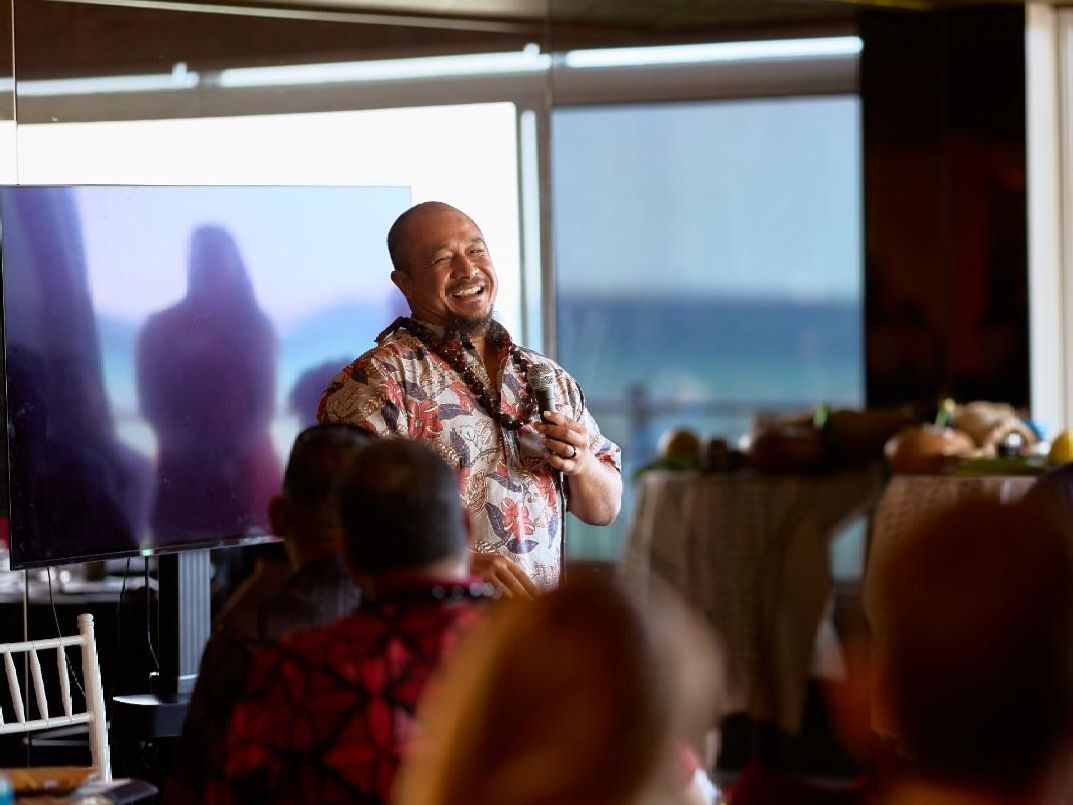
Elections were held to fill five seats on the PacIOOS Governing Council. Elected for three-year terms, the incoming members will join our diverse council with representation from across the Pacific Islands region. Aloha and welcome to new member Pu'amavae Ah-Mai, of the Department of Port Administration (American Samoa seat), and to the following returning members: Captain Jennifer Conklin, United States Coast Guard, (Hawaiʻi seat); Bertha Reyuw, Micronesia Conservation Trust (Federated States of Micronesia seat); Jason Biggs, Guam Department of Agriculture Division of Aquatic Resources (Guam seat); and Captain Ken Wallace, United States Navy (Regional seat).
The full 18-member Governing Council will gather for its annual meeting in Honolulu on December 3-4th, to advise on ongoing and future directions for PacIOOS and to identify opportunities for synergy and collaborations to support ocean data needs. [Photo: Pu'amavae Ah-Mai at the Backyard Buoys All-Hands Meeting, February 2024. Credit: Lloyd Pikok, Jr.]
| |
Celebrating One Year of the Majuro Backyard Buoy | |
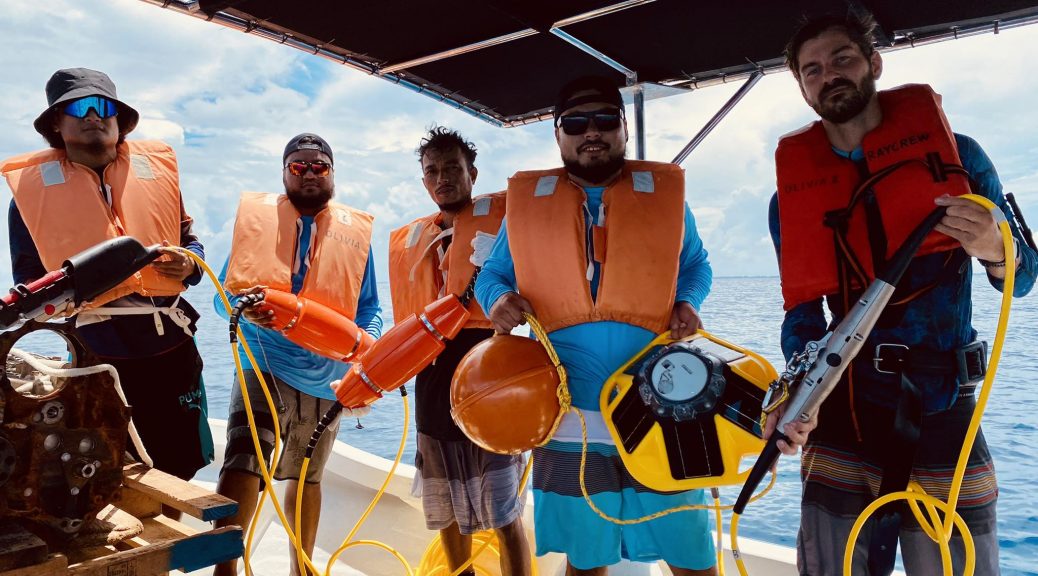
 | | The Majuro spotter buoy marked its first anniversary on October 20! Deployed through a collaboration between the Marshall Islands Conservation Society (MICS) and Ajeltake Community Development Association (ACDA), this buoy is an essential tool providing community-led ocean observing. Located in the main channel of Majuro Atoll, next to Kalalin Island, the buoy offers near real-time information on wave height, direction, period, and water temperature. Over the past year, the buoy has captured significant variability in ocean temperature, corroborating a NOAA alert to the RMI region to expect an increase in water temperature during the year. The importance of this data has been underscored by recent observations of coral bleaching in the region. As water temperatures rise, coral reefs become stressed, leading to bleaching events. The buoy's ability to track these temperature changes provides guidance for marine conservation efforts and helps local communities prepare for potential impacts on their marine ecosystem. Boaz Lamdrik, a councilman from Ajeltake Village, emphasized the buoy's importance for disaster preparedness, stating, "Maan japopo nan idrin" (Help us stay informed to avoid disasters). This sentiment rings even truer now, as the buoy continues to provide data crucial for understanding and responding to changing ocean conditions.
The Majuro buoy is part of the Backyard Buoys program, which is currently funded by the National Science Foundation Convergence Accelerator and managed by multiple partners, including PacIOOS. Backyard Buoys represents a significant step towards community-stewarded ocean observing, providing Indigenous and coastal communities with ocean data that is accessible and locally relevant. To watch a YouTube video describing Backyard Buoys, click here.
| |
Ocean Exploration Trust Nautilus Program | |
|
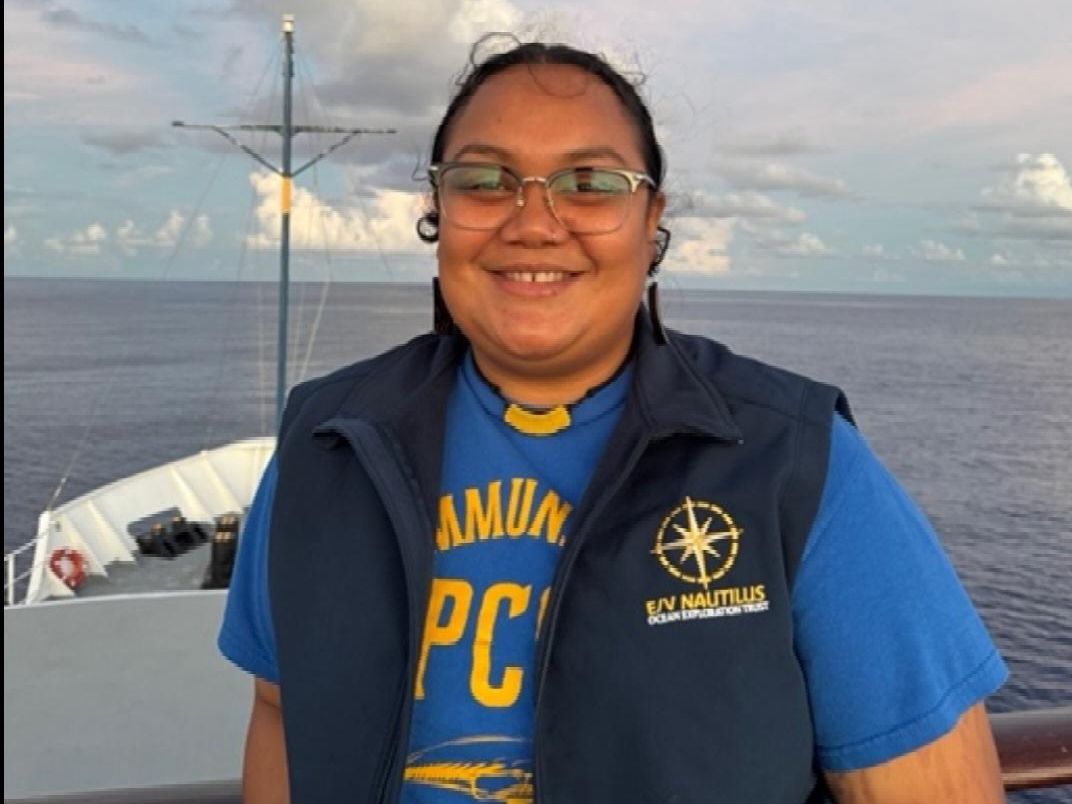
Palau Community College Cooperative Research and Extension researcher Elchung Gladys Hideyos recently participated in a groundbreaking deep-sea expedition aboard the E/V Nautilus in the Palau National Marine Sanctuary (PNMS). As a Science Communications Fellow on Lebuu’s Voyage I (October 29–November 8, 2024), Elchung engaged with global audiences through live-streamed sessions and student outreach, sharing the ship’s 24/7 scientific research and discoveries.
The mission explored uncharted seamounts and deep-sea regions of the PNMS, reaching depths of 4,000 meters with advanced multi-beam sonar mapping and remotely operated vehicles (ROVs). For many Palauans, the deep sea is unfamiliar territory, as traditional life centers on nearshore areas. This expedition offered a rare glimpse into the hidden ecosystems of the PNMS, which is very abundant with so much biodiversity—colorful corals, shrimps, lobsters, sea stars, brittle stars, sponges, sea cucumbers, eels, fish, etc.
Elchung plans to share her experiences with Palauan students and communities, emphasizing the connection between offshore and nearshore environments. By linking ocean health to issues like climate change and food security, she hopes to inspire greater stewardship of Palau’s natural resources. Her passion for environmental sustainability and Palauan traditional ecological knowledge drives her commitment to sharing this knowledge and empowering others to protect Palau’s marine heritage. [Photo: Elchung aboard the E/V Nautilus]
| |
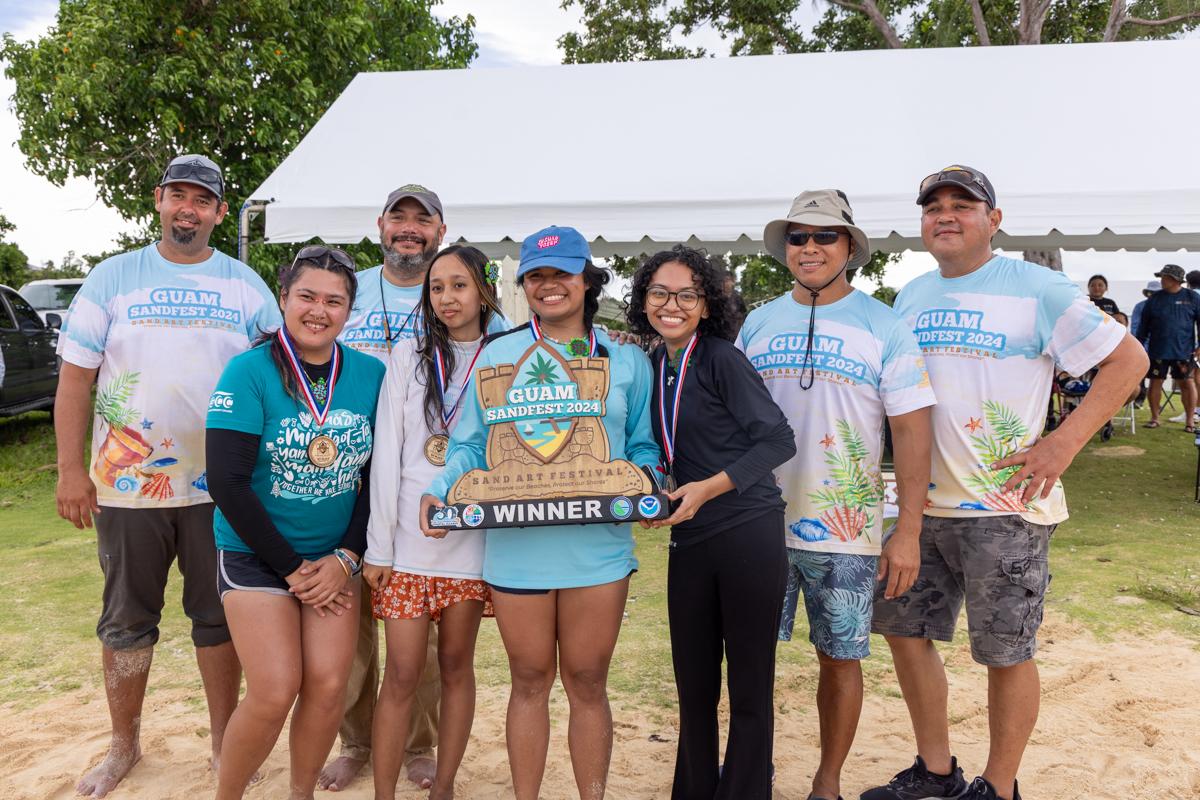
| | | The Guam SandFest, held on September 21, 2024, at Ypao Beach, was the island's first-ever sand sculpting festival. This event was organized in conjunction with the 30th Annual Guam International Coastal Cleanup. The Bureau of Statistics and Plans (BSP) Guam Coastal Management Program (GCMP) led the initiative, collaborating with the Office of the Governor and the Lt. Governor's Islandwide Beautification Task Force. The concept and execution of SandFest were spearheaded by GCMP Outreach Coordinator Steve Dierking, with assistance from ADZTECH. The festival aimed to raise public awareness about critical environmental issues, including beach litter, shoreline erosion, and the importance of green infrastructure. SandFest featured a coastal and marine-themed Sand Sculpting Competition, professional sand sculptor demonstrations, educational booths, and environmentally themed activities. By combining creativity with conservation, GCMP successfully created a platform celebrating the island's natural beauty while empowering individuals and communities to take ownership of their environment and work toward a more sustainable future. [Photo: Guam SandFest Winners. Credit: SandFest 2024]
| | | | |