Weekly Digest Number 6 - February 7th, 2023 |
|
Welcome to the RWU Rail & Labor News! This news bulletin is produced and emailed out each Tuesday morning. We hope you find each week's news and information useful. If so, please share with co-workers, friends, and colleagues. If you like, you can sign them up to get all the news from RWU HERE. Or forward them the link. Note: If you read over this news bulletin each week, you will be sure to never miss the important news of what is going on in the railroad world from a worker's perspective!
|
|
(Editor's Note: Without the fight that rail workers have just waged this past Fall, none of this would even be happening. Ironically, what the carriers may possibly soon be granting could have been easily negotiated. Instead, the rail carriers pushed the envelope, risked a national rail shutdown, and in effect blackmailed the government into blocking such a strike. And now they have the unmitigated gall to come to us and offer sick days, with the ink barely dry on a contract that provides not one.) |
|
Railroads Offer Paid Sick Days, Schedule Changes to Retain Employees |
|
When railroad employees get sick, they’re usually faced with a tough choice: use one of their limited personal days, head into work anyway or, if neither of those is an option, risk their job by staying home.
That may soon change.
Railroads including Union Pacific, Norfolk Southern, and CSX are weighing offering paid sick days — or are already doing so — along with schedule changes and other steps to improve employees’ work-life balance. The sweeping efforts, coming alongside a revised union contract that raised pay, aim to improve worker relations in an industry that has struggled to hire and retain employees.
‘’We don’t consider our front-line workers as simply costs to the company’s bottom line,’’ Joe Hinrichs, chief executive of CSX, said via e-mail. ‘’Instead, they are the primary driver of our profitability.’’
Costs will still be a key consideration for the railroads — and their investors. Voluntary paid sick leave and more flexible schedules would add to the expense of the labor agreement, which over five years raises salaries by 24 percent, pays bonuses totaling $5,000, and adds one day a year of personal leave. That could come at the expense of dividends and share buybacks, which have soared in recent years.
Workers remain skeptical that they’ll truly benefit from the trade off. Railroads historically have been quick to furlough staff during downturns, have required long hours with little flexibility, and have imposed strict attendance policies that allow the railroads to operate with fewer workers. The strains led workers to the verge of a nationwide strike last year, requiring White House intervention to help bridge the divide.
Travis Dye, a 41-year-old train engineer who has worked for Union Pacific almost half his life, nearly quit because of the challenging conditions.
‘’You have no off days. It’s just work, work, work,’’ he said. ‘’It wears on you.’’
The new labor contract calls for the railroads to negotiate for fixed time off, but doesn’t require the companies to offer sick days. During the labor talks, ‘’it became clear’' the railroads needed to do more, Norfolk Southern said.
‘’In response, we are developing industry-leading changes in partnership with our union leaders,’’ said Tom Crosson, a Norfolk Southern spokesman. ‘’We are in active discussions to gather their input on the issues, including paid sick leave, that are most important to their members.’’
|
|
(Editor's Note: The UE union represents the locomotive builders at the WABCO-GE plant in Erie, PA as well as rail crew van drivers across the country in various terminals. We expect other unions will follow suit in the coming weeks and months, and to call for public ownership of the railroads, just like they did 100 years ago when faced with a similar situation. Please push for your union - rail or otherwise - to support this bold and forward thinking idea.) |
|
United Electrical (UE) Union Supports Public Ownership of Railroads
Railroads Must Be Brought Under Public Ownership
STATEMENT OF THE UE GENERAL EXECUTIVE BOARD
|
|
Railroads are a crucial part of our nation’s infrastructure. Nearly every sector of our economy depends on goods shipped by the railroads, which haul forty percent of all long-distance freight in the U.S., measured by ton-miles. A third of all exports travel by rail. Furthermore, the greater fuel efficiency of using rail to move both people and freight means that moving more of our transportation onto the railroads will be necessary to address the existential threat of climate change.
Yet the private owners of our nation’s Class 1 railroads have shown themselves utterly incapable of facing the challenge of the climate crisis, dealing fairly with their own workers, or even meeting the most basic needs of their customers. The railroad companies cannot even be said to be in the business of moving freight; they are merely in the business of using their monopoly control over the nation’s rail infrastructure to squeeze as much profit as possible from customers and workers at the behest of their Wall Street shareholders.
Therefore, we demand that Congress immediately begin a process of bringing our nation’s railroads under public ownership. Public ownership of part or all of their rail systems has allowed many other countries to create rail systems that can move people and goods quickly, affordably, and in an environmentally sound way. With public ownership, governments can take the long view and make crucial infrastructure investments — and prevent price-gouging.
Railroads are, like utilities, “natural monopolies.” The consolidation of the Class 1 railroads in the U.S. into five massive companies over the past several decades has made it clear that there is no “free market” in rail transportation. With most customers having no other choice, and no central authority mandating long-term planning, each individual railroad company has little incentive to make investments in infrastructure and every temptation to take as much of their income as possible as profits. Even Martin Oberman, chair of the Surface Transportation Board, the federal agency that regulates rail, has called the railroads “monopolists” who are cutting services and raising prices because “that’s the easiest way for them to get rich.”
|
|
Results from three of the top four US Class I railways for the past year should please shareholders, despite poor service records.
There are indications that their top brass are looking to address this issue, but it remains to be seen how far these efforts will go.
The large US rail carriers rolled through 2022 piling up huge earnings, seemingly impervious to service problems and massive network congestion. For the final quarter of the year, Norfolk Southern (NS), CSX and Union Pacific (UP) tabled net earnings in excess of $1 billion.
NS reported record operating revenue and income, both for the fourth quarter and full year. In the final three months, net income rose 5%, to $1.2bn, on $3.2bn in operating revenue, up 13% year on year. Revenue per unit climbed 15%.
For the full year, the carrier saw a 14% increase in operating revenue, to $12.7bn and income from rail operations rise 8%, to $4.8bn.
CSX, the other Class I giant from the eastern US, registered a 6.5% rise in operating income, to $1.46bn in Q4, with net earnings reaching $1.02bn, an increase of 9.2% from a year earlier.
Revenue for the full year rose 19%, to $14.9bn, while operating income increased 8%, to $6bn. Net earnings climbed 10.3%, to $4.17bn.
UP clocked up an 8% rise in revenues in the fourth quarter to $6.18bn. For the full year, operating revenue was 14%, up to $24.9bn, driven by higher fuel, while operating income grew 6%, to $9.9bn. For the year, UP reported net income of $7bn, up half a billion dollars from 2021.
|
|
(Editor's Note: You guessed it, the host freight railroads. And while the head of the AAR was quoted as saying that both the freight railroads and Amtrak have the same goals, "efficient and reliable service," this is not true. The freight railroads' goal is profits, and the last few years have seen a dramatic decline in their efficiency and service. Ask any shipper. This was no accident. Note that they have all been raking in record profits due to their lack of "efficient and reliable service", caused by cuts in maintenance, staffing, and infrastructure. Which of course has contributed in turn to Amtrak delays.) |
|
Why Is Amtrak Service So Slow in Most of the U.S.? |
|
Outside the Northeast Corridor, Amtrak service is often slow and infrequent. The company’s worst performing train is delayed by an hour and a half on average. But the rail network says it has wanted to invest in new and improved routes for years.
Amtrak’s biggest obstacle? Freight railroads. Here’s why. See video segments
0:00 Why hasn’t Amtrak expanded?
1:17 Why most Amtrak trains run on freight-owned tracks
1:47 How freight rail is an obstacle to Amtrak today
3:06 Why Amtrak hasn’t asserted its legal right against freight companies
4:05 Amtrak files a complaint against Union Pacific Railroad
5:05 Amtrak says it’s in a better financial position now to expand
|
|
Significant Intermodal Drop Keeps January Rail Traffic Below 2022 Figure |
|
WASHINGTON — U.S. rail traffic began 2023 in sluggish fashion, with overall volume for January down 3.2% from the first month of 2022, according to the Association of American Railroads.
Weekly traffic for the week ending Jan. 28 was also down compared to the corresponding week a year earlier.
The January figures included a 2.2% increase in carload traffic — led by a 22.6% rise in crushed stone, sand, and gravel, and a 13.4% increase in motor vehicles and parts — but an 8.1% decline in intermodal traffic. It is the fifth straight month in which rail traffic has been down compared to the previous-year figure.
“Rail traffic began 2023 much the same way we ended 2022 — demonstrating reasons for both optimism and caution,” AAR Senior Vice President John T. Gray said . “For example, this was the best January for carloads of crushed stone and sand on record, largely due to the growth in domestic natural gas production and the need for frac sand. Automotive traffic, although not yet at pre-pandemic levels, had a healthy improvement over 2022. Negatively, it was the worst January for intermodal since 2013, with major retailers cutting back on inventories and consumer spending — especially on goods — having contracted.”
|
|
(Editor's Note: This long running battle with the freight railroads may finally be coming to a head, as after 12 years or more, Amtrak is finally able to appeal to the STB that a freight carrier - in this case Union Pacific - is in violation of the federal statute that mandates that the freight "host" railroad expedite Amtrak's trains between LA and New Orleans.) |
|
Amtrak Eyes STB Investigation Into ‘Substandard’ Sunset Limited Service |
|
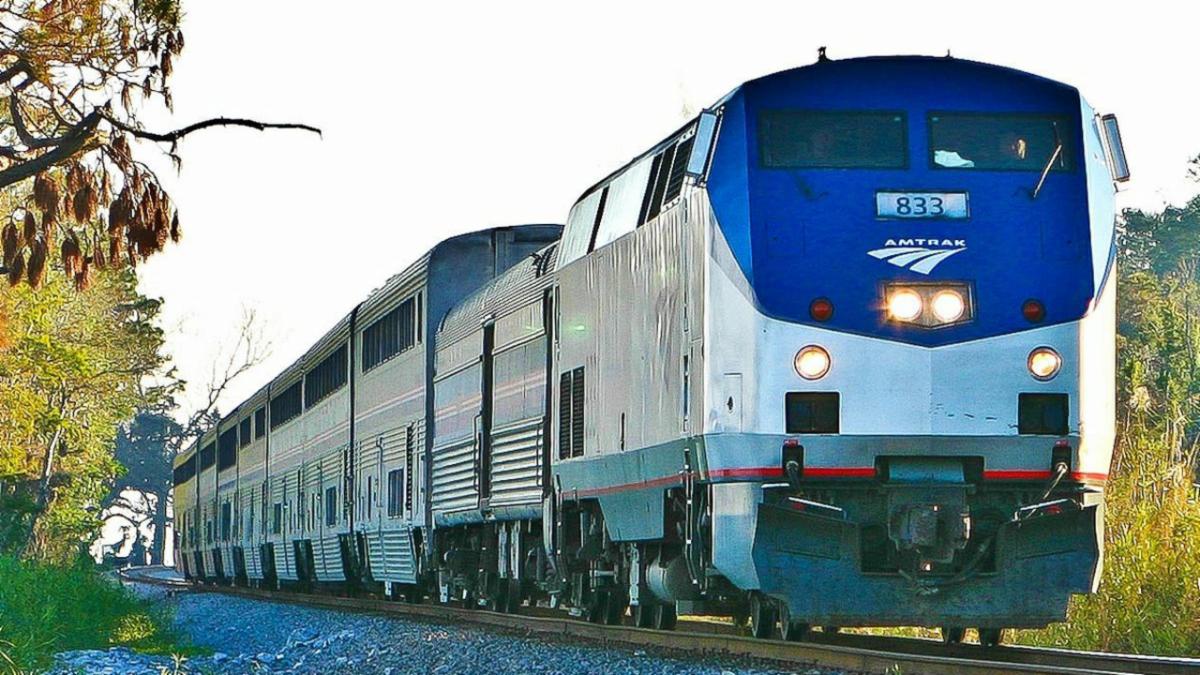
Amtrak in December called on the Surface Transportation Board (STB) to initiate an investigation into “substandard” customer on-time performance for Sunset Limited service between Louisiana and California. Host freight railroad Union Pacific (UP)—which Amtrak said will likely be the prime focus of the investigation—asked the STB on Jan. 27 to order mediation for Amtrak, UP and the other host railroads involved “to resolve or narrow the issues in dispute.”
The Sunset Limited is Amtrak’s long-distance intercity service that runs three times weekly between New Orleans and Los Angeles. It travels for most of that route over track that is hosted by UP, in addition to small portions of BNSF and CN trackage.
“Pursuant to Section 213 of the Passenger Rail Investment and Improvement Act of 2008,” Amtrak on Dec. 8, 2022 filed a complaint and petition to initiate an investigation by the STB into the performance of its Sunset Limited service, including Trains 1 and 2, and following that investigation, for STB to “undertake remedial proceedings to award Amtrak damages and other appropriate relief” (download filings below). Additionally, “America’s Railroad” proposed a framework for the STB to follow in this proceeding, and offered guidance on the information that should be collected and reviewed.
According to Amtrak’s filings, long-distance intercity passenger routes, such as the Sunset Limited, “continue to be plagued by substandard on-time performance that hurts Amtrak, its passengers, and the public interest. In Section 213, Congress established a mechanism for those harms to be investigated and remedied by the Board. This is the first complaint initiated by Amtrak since the Federal Railroad Administration (‘FRA’) promulgated the metrics and standards for measuring on-time performance in November 2020.
|
|
(Editor's Note: Bus drivers and others at numerous locations where international transportation giant Keolis holds contracts are striking and fighting back. We re-print this here because in addition to a dozen or so bus contracts, Keolis likewise has contracts with at least two major U.S. rail passenger providers, and has earned a bad reputation with its rail employees as well. Rail and bus Keolis workers need to take action together!) |
|
Teamsters at Keolis Vote to Strike
Company’s Failure to Respect Workers a Consistent Pattern of Behavior
|
|
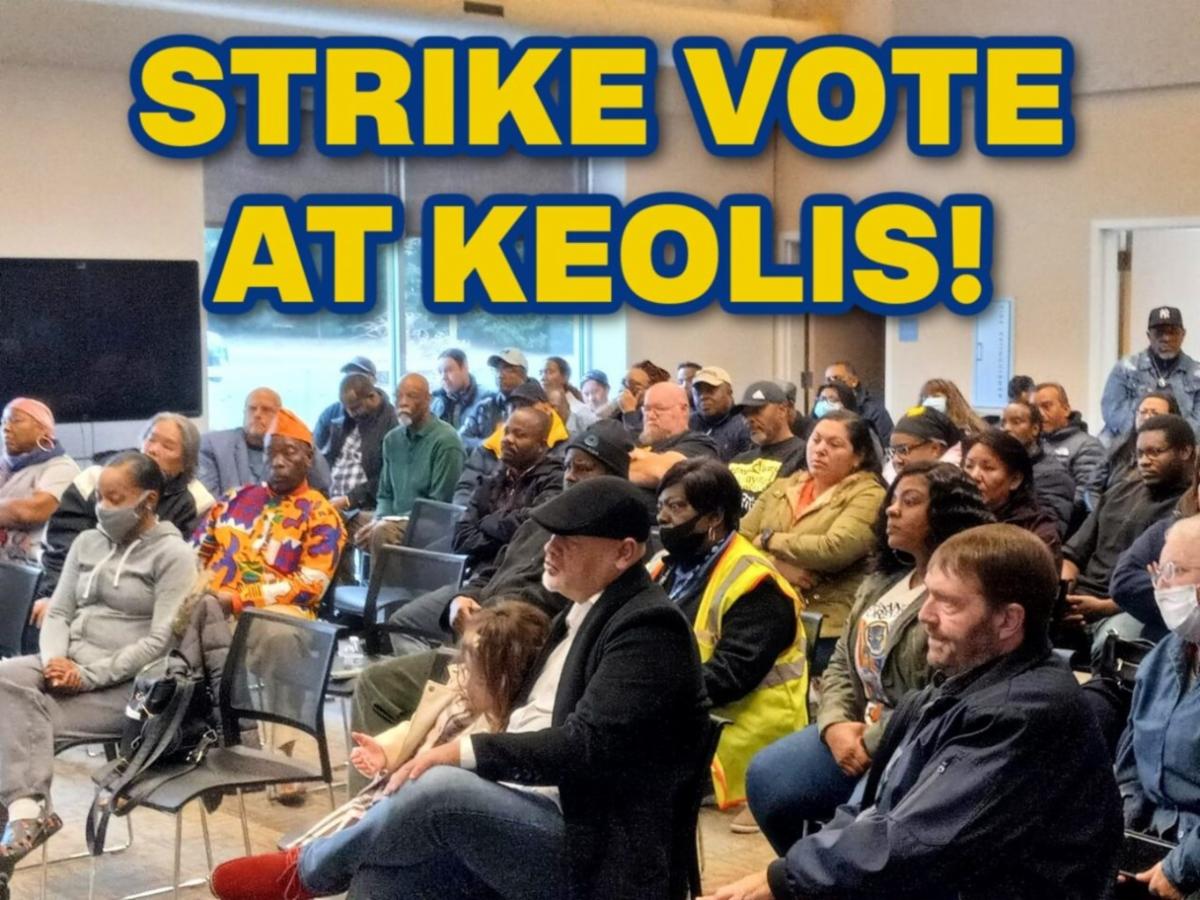
(WASHINGTON) – Drivers at Keolis Transportation represented by Teamsters Local 639 have voted overwhelmingly to go on strike if necessary. The approximately 150 bus drivers provide transit and paratransit services for Prince William County in Virginia.
“The company is dragging its feet during negotiations and refusing to provide the members with the benefits and wage structure they deserve,” said Bill Davis, Local 639 Secretary-Treasurer. “Our members are the only source of transportation for commuters to the DC region and the most vulnerable citizens of the communities they serve. The drivers have been patient but persistent in their demand for a fair and equitable contract, but the company is not listening to them.”
The workers have been in negotiations since September of last year. Keolis has a consistent record of mistreating its workforce – last year, Teamsters Local 533 members in Reno, Nev. had to go on strike three times to get the contract that they deserved. Members of the Amalgamated Transit Union Local 689 in Loudoun County, Va. are currently on strike at Keolis, primarily because of similar issues that the Teamsters are having with the company.
|
|
(Editor's Note: As reported on this issue in previous weeks, even if the legislation were to become law, it would most likely be voided by a federal judge, as has happened in numerous other states. However, collective pressure from many states adopting similar laws could lead to a breakthrough and ideally one day, federal legislation that would penalize rail carriers for blocked crossings, a law that theoretically would not be superseded by the "interstate commerce clause.") |
|
Iowa Bill Seeks to Limit Length of Freight Trains |
|
A bill in the Iowa Legislature is seeking to restrict the length of freight trains operating in the state.
The legislation was introduced in the Iowa House of Representatives on Thursday and passed a three-member subcommittee on Friday. The bill would prevent railroad companies from running trains that exceed 8,500 feet in length, or about 1.6 miles. If signed into law, the rule could cost companies between $500 and $5,000 per violation.
The issue of longer trains has become divisive in recent years, with precision scheduled railroading, a method to streamline operations adopted by the Class I railroads, considered as encouraging increased train lengths as a way to improve productivity. But railroad unions and some local communities generally have been against longer trains.
Unions argue longer trains can congest the rail network because not all of the U.S. network’s infrastructure can support them. Communities have suggested longer trains can block grade crossings for longer periods of time, thus threatening emergency responders’ ability to respond to calls quickly.
Trains with “excessive lengths” have not been tested enough to ensure the infrastructure can support the tonnage and length requirements, according to Chris Smith, who is lobbying in favor of the bill on behalf of the transportation division of the International Association of Sheet Metal, Air, Rail and Transportation Workers (SMART-TD). There is also no training for locomotive conductors and engineers on how to properly handle these trains, Smith said.
“But mainly it’s the block crossings that are the biggest concern to the public, for the fire department, the EMS, medical [departments] and [to the] everyday lives of citizens,” Smith told FreightWaves.
|
|
(Editor's Note: Unfortunately, the North American freight industry has made clear its disinterest in electrification. Meantime the rest of the world appears to be forging ahead. One more reason the rail infrastructure needs to be taken into public ownership.) |
|
WEBINAR 2/17/23 Zero Emissions Rail Propulsion - Electrification, Batteries or Hydrogen? |
|
Trains have always offered greater energy efficiency than air or highway travel. New technologies, however, offer the possibility of even greater efficiency, and with net-zero carbon emissions. The three main new options are powering trains with hydrogen fuel cells, batteries, or electrified lines. We’ll hear from experts at Deutsche Bahn about these technologies, and which work best in different contexts.
Speaker Bios:
Jorge Rios, Vice President, Deutsche Bahn E.C.O. North America, Project Director CHSRA Early Train Operator. Mr. Rios is an Electronic Engineer, Master in project management and is certified by the Project Management Institute (PMP). He started his career as a Signaling and Train Control Engineer. During his 27 years of experience Mr. Rios has directed railways and mobility projects in the Middle East, Asia, Latin America, Germany and USA. He has been working for technology, operating, maintenance and rail Infrastructure development companies such as Deutsche Bahn, Bombardier, Sytecsa, Siemens, NEC and IBM. Currently Mr. Rios is Vice President of DB Engineering Consulting and Operations North America and was appointed as the Project Director of the CHSRA Early Train Operator in 2017.
Mohamed Hegazi, PhD, Senior Consultant, Deutsche Bahn E.C.O. North America, Center for Net Zero Transformation Rail and Transit. Mohamed Hegazi is a Senior Consultant at the Center for Net Zero Transformation in Rail and Transit with DB E.C.O. North America Inc. Dr. Hegazi holds a PhD in civil engineering and 8 years of academic research experience focusing on the use of hydrogen for locomotive propulsion. Dr. Hegazi and researchers at the University of British Columbia are currently working on the retrofit of a switcher locomotive to operate using hydrogen in close collaboration with Natural Resources Canada. He is also involved in developing codes and standards for hydrogen powered locomotives.
|
|
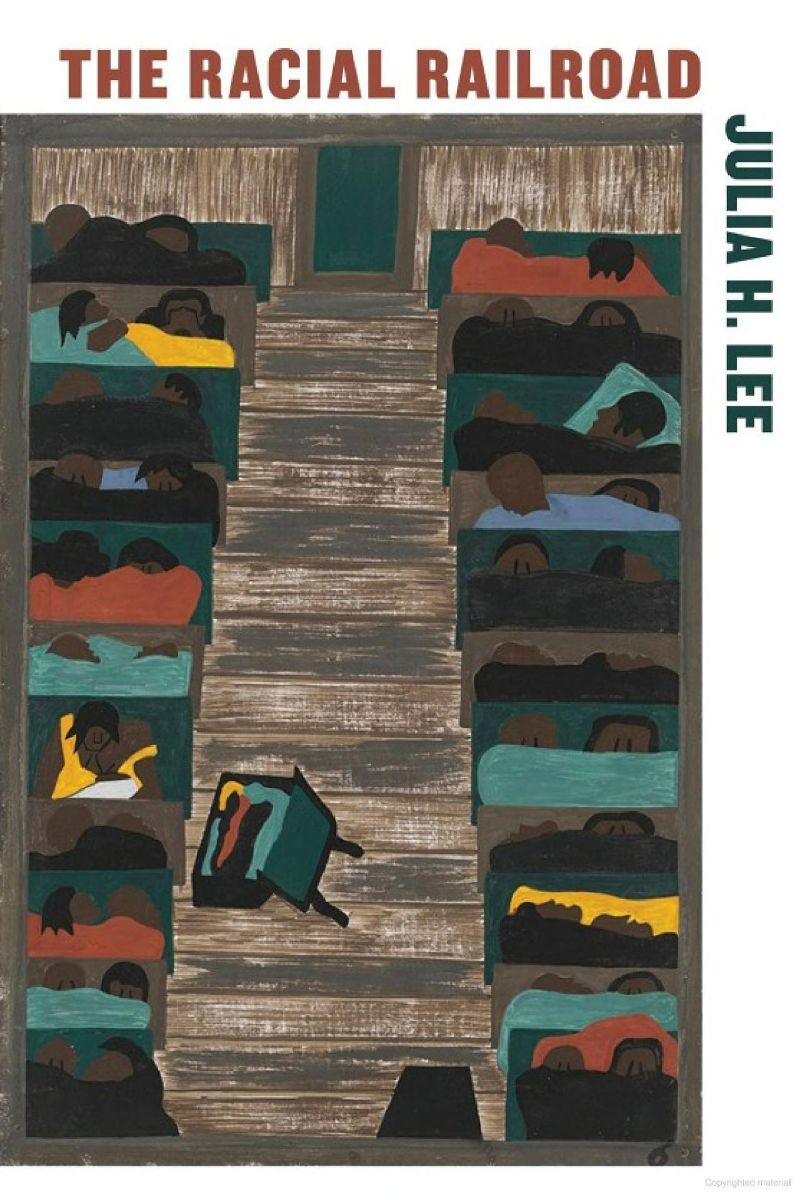
(Editor's Note: February is Black History Month. What better time for railroad workers of all races to read our history, and come to better understand the role that racism historically has played in keeping railroad workers divided and weak. There are lots of books out there on the subject, including this new one by Julia H. Lee.) |
|
WEBINAR: The Racial Railroad - Tuesday 2/21/23 |
|
Author Julia H. Lee discusses her new book, The Racial Railroad, which examines the railroad as a site for creating racial identity in American culture for over 150 years. In countless works of literature, film, photography, music, and art, the train has reflected and shaped how Americans think about race. From the Chinese construction of the First Transcontinental Railroad, to depictions of Native Americans and the railroad in advertising and landscape paintings, to African American experiences of the underground railroad and Jim Crow segregation, to news stories about Latin American migrants riding "La Bestia" to the US border, the train has been an exemplary space through which we can explore and conceive of the meaning of race in the United States.
Julia H. Lee is Professor and Chair of the Department of Asian American Studies at the University of California at Irvine.
|
|
(Editor's Note: Our good friends at Labor Notes not only put on a great national conference every two years (that BTW, hosts the RWU Biennial Convention), but they sponsor face-to-face "Troublemakers Schools" as well as online workshops throughout the year.)
|
|
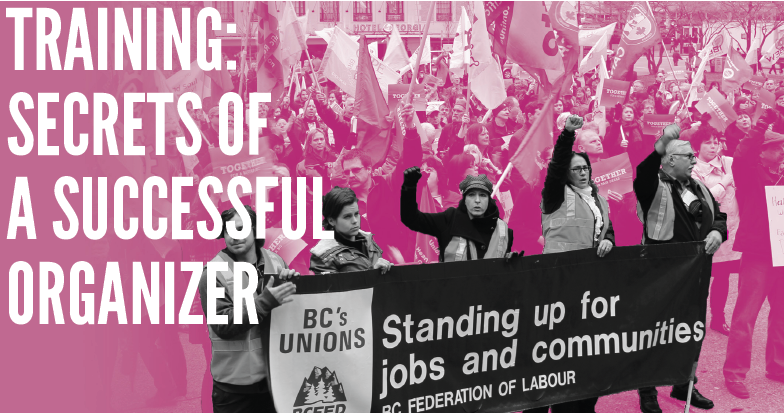
WORKSHOP - Secrets of a Successful Organizer: February Training Series - 9th/16th/23rd at Noon CT |
|
Want to bring some energy to your union and turn the tables on management? Want to get together with other workers to learn how to build stronger unions?
Make a commitment build more power at work, and join our organizing series to talk about how to rekindle the flame of rank-and-file militancy. You can register here!
Our Secrets of a Successful Organizer training series has three parts:
- Beating Apathy
- Assembling Your Dream Team
- Turning an Issue into a Campaign
|
|
(Editor's Note: Even small town and college papers are getting into the act. Here the Daily Egyptian interviews RWU Member and new part-time Grant Writer Tabitha Tripp.)
|
|
Labor and the Lifeblood of America |
|
Steady, rhythmic thumping fills the air. It shakes the ground and resonates like a heartbeat that grows louder until its all-consuming thrumming crescendos to a climax as the train passes by and fading back into the backdrop of our everyday life.
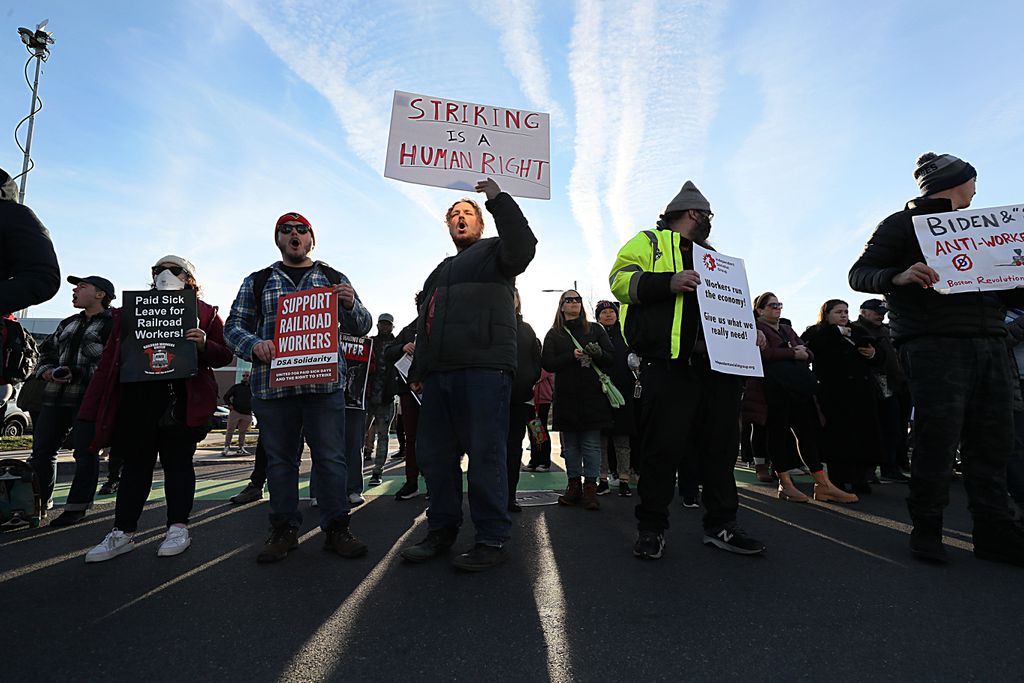
On December 2, President Joe Biden signed a bill instating a resolution which forced the rail unions who had been negotiating for a list of demands including an increase in allotted sick days and pay increases, averting a potential strike but removing the agency from the workers to negotiate on their terms before the busy holiday shopping season.
Transporting valuable resources across the length and breadth of its larger body, America’s railways act, in many ways, like the blood flowing through the veins of a living organism. The wellbeing of the country is dependent on the free and constant transport of goods along its railways and through its ports, but what if America suffers a heart attack?
These arteries are reliant on a round-the-clock staff of professionals to maintain the tracks and machines that keep America running. However these workers have historically been treated less than favorably in the past by institutions; attempts to organize large scale efforts to ensure safe working conditions and adequate pay have been cracked down on at times by employers and other times through governmental channels to prevent them from using the ultimate tool available to workers, the organized strike.
Tabitha Tripp is the wife of a railroad worker and an active member of Railroad Workers United (RWU), a multi-union organization which helps to facilitate organizing rail workers across the country.
“Being a part of RWU, I got to hear from other crafts and the things they were going through,” she said. “They were literally calling into the meetings from their job because they don’t get days off. They are literally on call 365 and 24/7.”
Tripp said one of the major issues with the railroad industry, namely the unforgiving nature of their scheduling, makes it difficult to maintain a healthy personal life and leaves the industry vulnerable to shocks like sickness affecting the workforce.
|
|
(Editor's Note: Once again, despite moving fewer carloads and providing lousy service, the revenue and profits are up at CP.) |
|
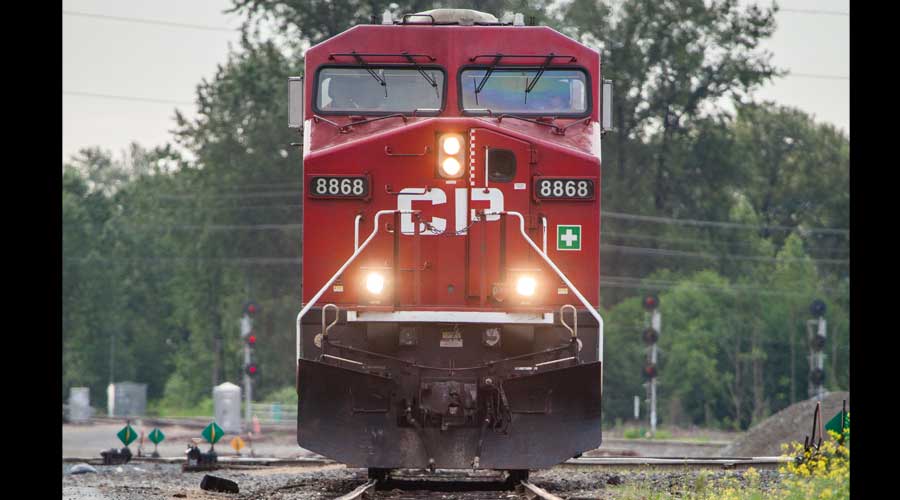
CP Reports Revenue Increases in Q4, Full-Year 2022 |
|
CP yesterday reported fourth-quarter 2022 revenue rose 21% to CA$2.46 billion from CA$2.04 billion in Q4 2021.
The Class I posted Q4 2022 operating income of CA$989 million, up from CA$832 million; diluted earnings per share (EPS) of $1.36, up from 74 cents; and core adjusted diluted EPS of $1.14, up from 96 cents in Q4 2021.
CP reported volume as measured in revenue-ton miles rose 8% during the quarter. The Class I posted an adjusted operating ratio (OR) of 59.8% in Q4 2022 compared to 59.2% in Q4 2021. The adjusted OR was 59.1%, up 160 basis points from a year earlier.
For full-year 2022, revenue climbed 10% to CA$8.8 billion from CA$8 billion in 2021; operating income rose to CA$3.3 billion from CA$3.2 billion; diluted EPS decreased to $3.77 from $4.18; and the core adjusted diluted EPS was flat compared to $3.77 in 2021. CP's OR for the full year was 62.2%, up from 59.9% in 2021.
|
|
(Editor's Note: Perhaps in the next round of bargaining, US rail unions might consider making common cause with educators and their unions in this country. Making such common cause seems to be pretty effective in the UK.) |
|
Britain Hit by Biggest Day of Strikes in a Decade as Pay Disputes Escalate |
|
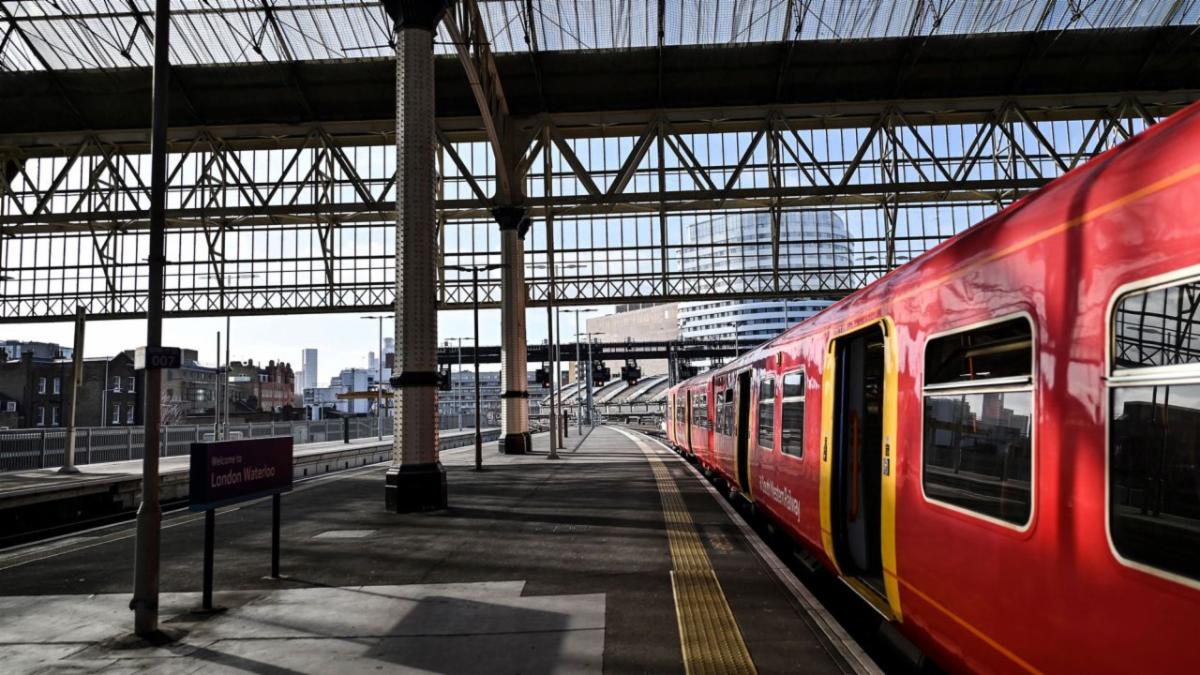
As many as half a million workers are striking across Britain on Wednesday, closing schools, canceling university lectures and bringing most of the rail network to a standstill in what unions say is the biggest single day of walkouts in more than a decade.
Teachers, university staff, train drivers and civil servants — including staff checking passports at airports — are striking in large numbers over pay and working conditions as living standards continue to plunge after years of below-inflation raises.
At the same time, the Trades Union Congress, which represents 48 unions, is holding over 75 rallies across the United Kingdom to protest a government bill that it argues is an “attack” on the right to strike. The bill would require basic service levels to be maintained in the fire, ambulance and rail sectors in the event of walkouts.
Escalating strike action comes just weeks after the government tried to resolve pay disputes to bring an end to the worst wave of industrial unrest the country has seen in decades. Many public sector workers have been offered raises of 4% or 5% for the current financial year, with the annual rate of inflation running at 10.5....
... And only around 30% of train services are expected to run on Wednesday, according to Britain’s railway company Rail Delivery Group, which warned in a statement on its website that the disruption could drag on into the rest of the week because many trains won’t be in the right depots.
|
|
|
|
|
|
|