News and information to help journalists serve the public and stay safe.
|
|
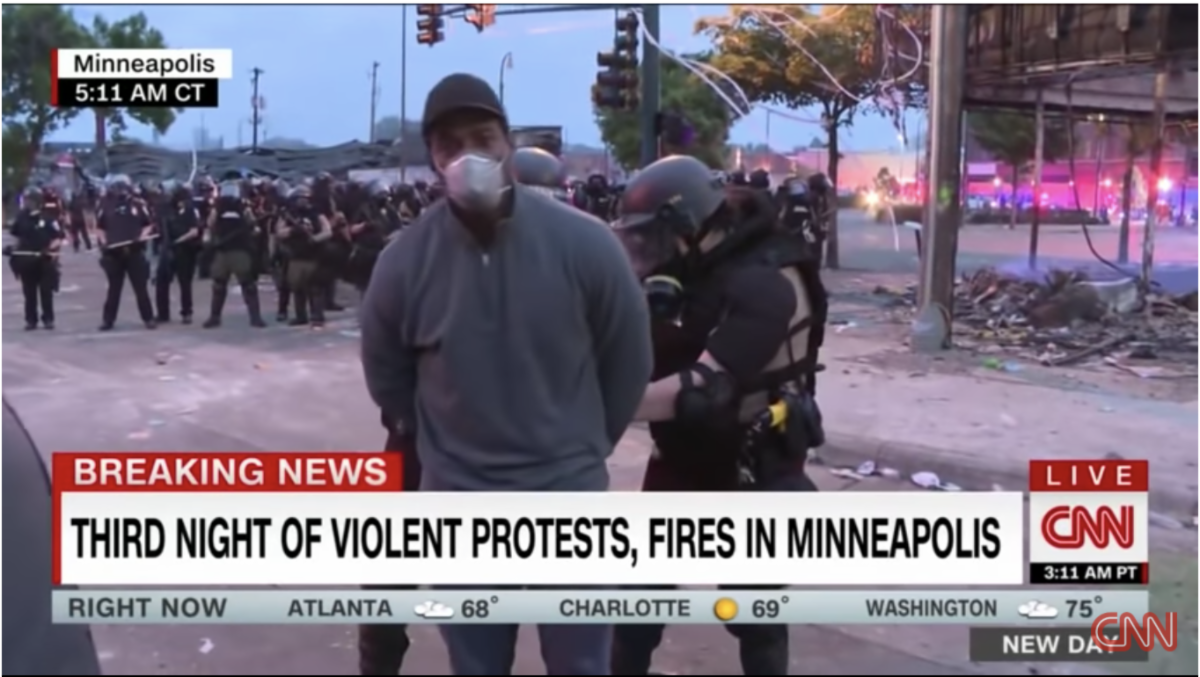
The CNN team was apprehended live on camera as the reporter, Omar Jimenez, repeatedly asked on air where officers wanted the crew to move. The journalists were released about an hour later.
Gov. Tim Walz took responsibility for the arrest and apologized. In a tweet,
CNN said it accepted the apology
, adding: “As journalists, the First Amendment gives us not only the right but also the responsibility to shine light in darkness and hold those in power to account.”
- The media has a right to cover protests from any location the public is normally allowed.
- Leave the media alone and focus on protesters and those committing criminal acts.
- When in doubt, “Let the media film.”
|
|
The killing of George Floyd by a Minneapolis police officer, the protests, police response and ensuing destruction in the city, all raise fundamental questions about justice and race in the U.S.
They also provoke a discussion about how journalists cover such events — from the images they show and words they choose to the
treatment they experience
from authorities in a dynamic environment. Why is a
black reporter arrested
while a nearby white reporter is not?
The images of protestors wearing masks on the street underscore another horrid reality — the uprising in Minneapolis is occurring during a pandemic that has taken a vast and disproportionate toll on black Americans.
“The flames will die down, buildings will be repaired, but the bias and police brutality that apparently led to Mr. Floyd's death is what needs our collective journalistic attention,” Reynolds said in an email.
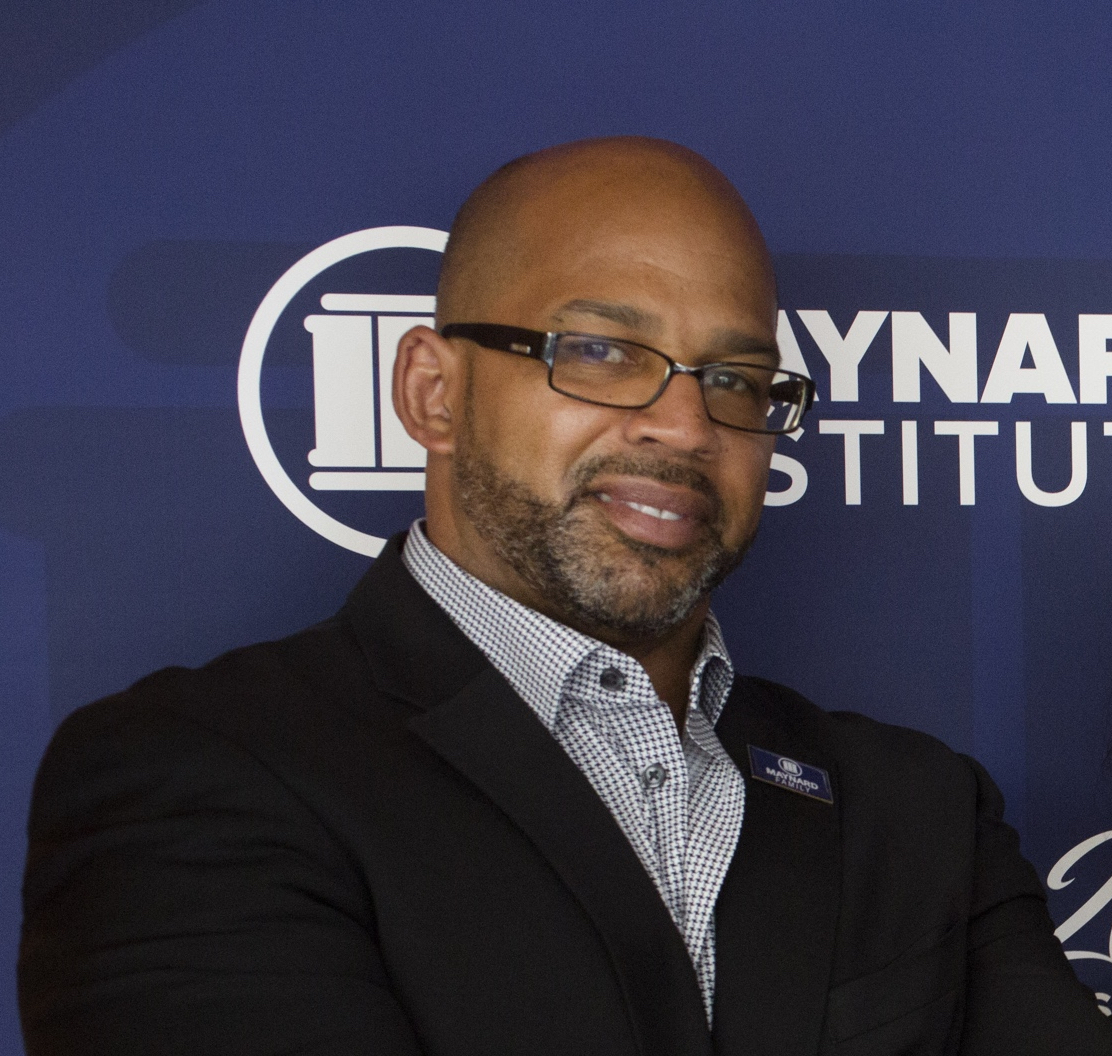
We reached out to Reynolds, whose Institute focuses on how the news media can accurately portray all communities, for his reaction to the coverage in Minneapolis.
As news organizations cover the killing of George Floyd and the aftermath of his death, what context do you think is important to include in such coverage?
Reynolds
: I find it compelling how different protests are covered. In Minneapolis there was a protest regarding sheltering-in-place where the police apparently viewed the protesters as just engaging in their civil rights. There weren't tear gas or rubber bullets fired at the protesters. Nor were there such actions at the Michigan statehouse when white men armed with long guns aggressively took over the capitol. What would have happened if an armed group of black men, peacefully, but aggressively, took over the statehouse in protest of this slaying? I can only imagine how quickly SWAT teams would have been called.
Journalists would do well to consider who is valued and to approach coverage not from the conflict, but the context. This story should be covered through a lens of institutional racism and white supremacy. It is indisputable that in this country the lives of black women and men are not valued in the same way as those of white women and men. We should cover the killing with that in mind and not hover over the ancillary issues of: how many people showed up, how many fire units responded, how many protesters were arrested, etc. I do think a deep assessment of how the police policed the protest is vital, because in my experience, their actions often lead to escalation and then the narrative shifts.
That said, I haven’t seen a police precinct burned in any protest I have ever covered, so I can understand why journalists would cover that. Last night was very dramatic. However, it doesn't supersede the larger issues that underpin how this situation escalated. The flames will die down, buildings will be repaired, but the bias and police brutality that apparently led to Mr. Floyd's death is what needs our collective journalistic attention.
|
|
|
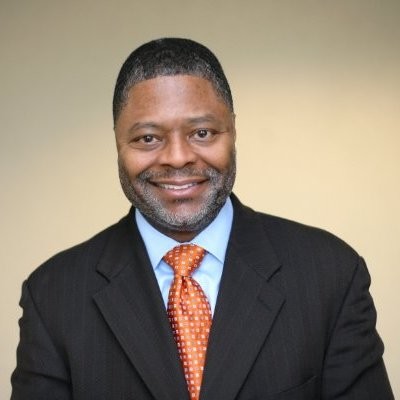
MPR President Duchesne Drew (pictured) shared how the public radio organization is supporting its staff and working to accurately depict what is taking place.
In light of the developing news and events in Minneapolis, what guidance are newsroom leaders giving reporters working in the field right now?
Drew
: The health and safety of all of our staff is our top priority. For those journalists who are out in the field, we are taking extra precautions. We’ve asked our journalists to work in pairs for additional safety, and to always do what feels right and safe to them, and to leave a situation if it feels unsafe. We trust their judgment.
Language plays such a large role in how the public perceives a story. What are reporters and newsroom leaders weighing when deciding how they describe scenes and situations? (For example, use of the word protest or riot, in coverage.)
Drew
: Our newsroom leaders are trying to focus on actions, such as “people are protesting peacefully, some people are setting fire to buildings, some people are rioting.” Being specific is best. We are reporting what we know and what we can confirm with our own eyes or through direct witnesses. We are very aware that we can’t put labels on large groups and are trying to be as specific, factual and precise as we can.
How is MPR addressing the physical and mental health needs of journalists right now, particularly journalists of color?
Drew
: These events can be traumatic and triggering, so we are taking care to keep checking in with our teammates and encouraging leaders to ask their colleagues who report to them how they’re doing. Our executive leaders have stressed that all employees know about the resources available to them, including our Employee Assistance Program and employee resource groups. Being there for each other is the most important thing we can do.
|
|
Bill Plante Chair in Leadership & Media Integrity, Loyola University Chicago
Freedom Forum Fellow in Women’s Leadership
As newsrooms cover two Black Americans,
George Floyd
and
Breonna Taylor
, their deaths and the aftermath, journalists are making critical decisions. As those stories develop, judgment calls happen in a moment. And as journalists choose words, images, interviewees, focus and context, we know this: a majority of the top managers in newsrooms are white.
You can read about journalism’s diversity issues
here
and
here
and
here
. Newsroom staffs are more white and more male than all U.S. workers. That’s hardly a secret to those on the job. They know this industry’s gaps and the longstanding conversations about how the lack of diverse voices affects the quality of news coverage.
People bring their life experiences to work with them. When those experiences differ around critical things — racial profiling, health disparities, employment, educational opportunities and discrimination — the people with the most power may see too much of the world through their eyes only. They may be oblivious to things that are obvious, often painfully obvious, to others - the “
fault lines
” so aptly described by late editor and publisher Robert C. Maynard.
Meanwhile, journalists of color are once again watching as all those important daily decisions are made. Will they have a voice? Will they once again have to go through the heavy lifting of trying to teach others who haven’t paid sufficient attention to historic patterns of discrimination? If they do, will they be respected, appreciated, challenged, or ignored?
Now add distance to the mix. Because many newsrooms are operating remotely, there’s a greater chance that someone could be left out of conversations and decisions, the kind that happen more easily when we can walk across a room and look colleagues in the eye.
Don’t let that happen.The best leaders understand that in this moment, when this country is struggling with a COVID-19 pandemic as well as the virus of racism, that
diverse voices in your newsroom must be directly involved in guiding the context and content of your journalism.
It’s a matter of urgency and accuracy.
|
|
|
This newsletter is written & edited by the National Press Club Journalism Institute staff: Beth Francesco, Holly Butcher Grant, Jim Kuhnhenn, and Julie Moos.
Send us your questions and suggestions
for topics to cover.
|
|
|
|
|
|
|