Manasie Akpaliapik -- Master of bone carving |
|
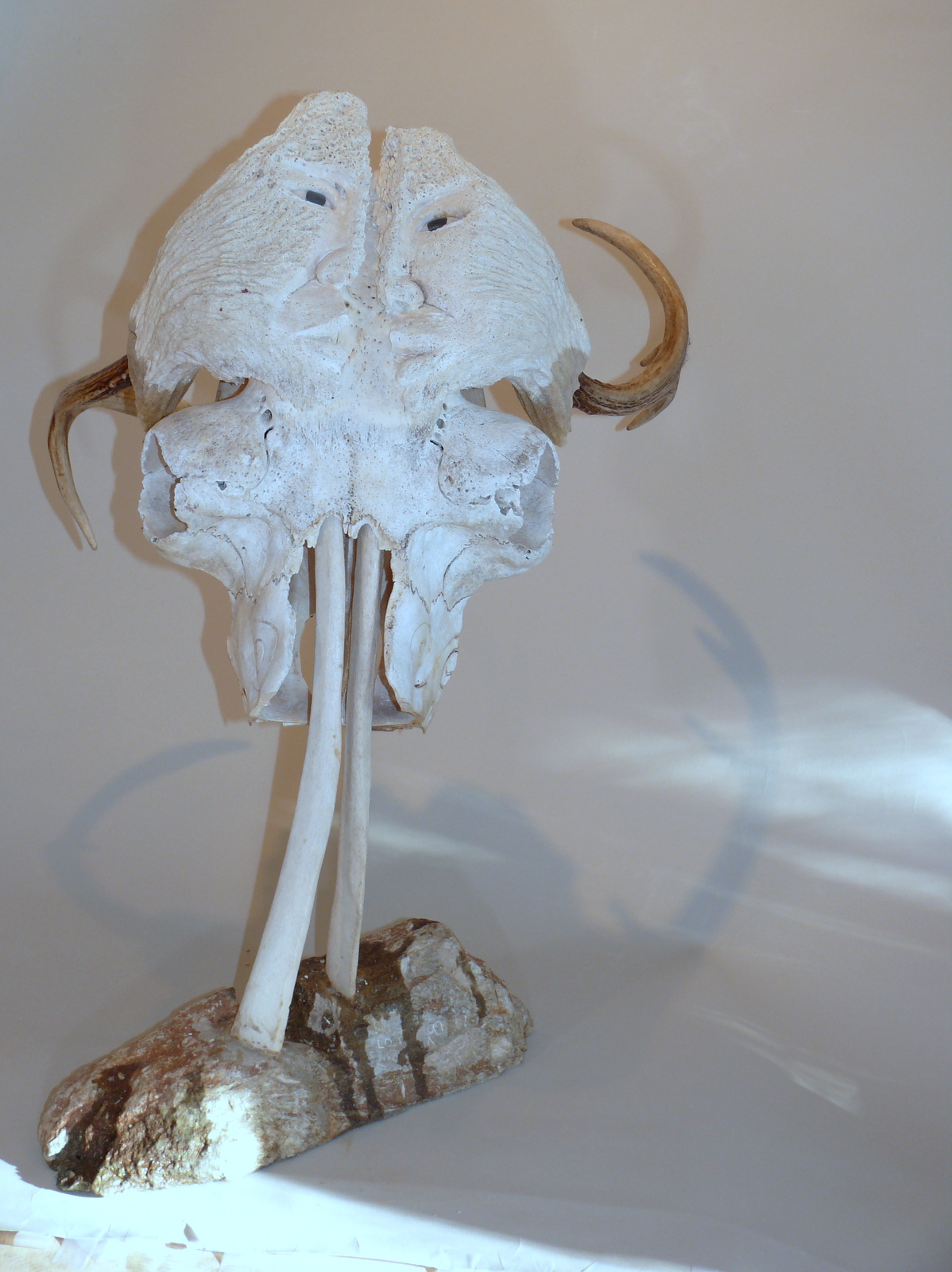
Manasie Akpaliapik (1955- ) is unquestionably the dean of active Inuit bone carvers. His whalebone sculptures are intricate and fluid, with transformations flowing from one creature to another seamlessly. We often speak of a sculptor as "seeing" the carving in their raw material. This is particularly true of artists who work in bone. Their ability to modify the shape of the raw material is very limited; faced with a piece of bone, they must decide how to bring it to life with minimal structural changes. The surface of bone must be shaved away gradually. The sculptor cannot employ chisels or saws. |
|
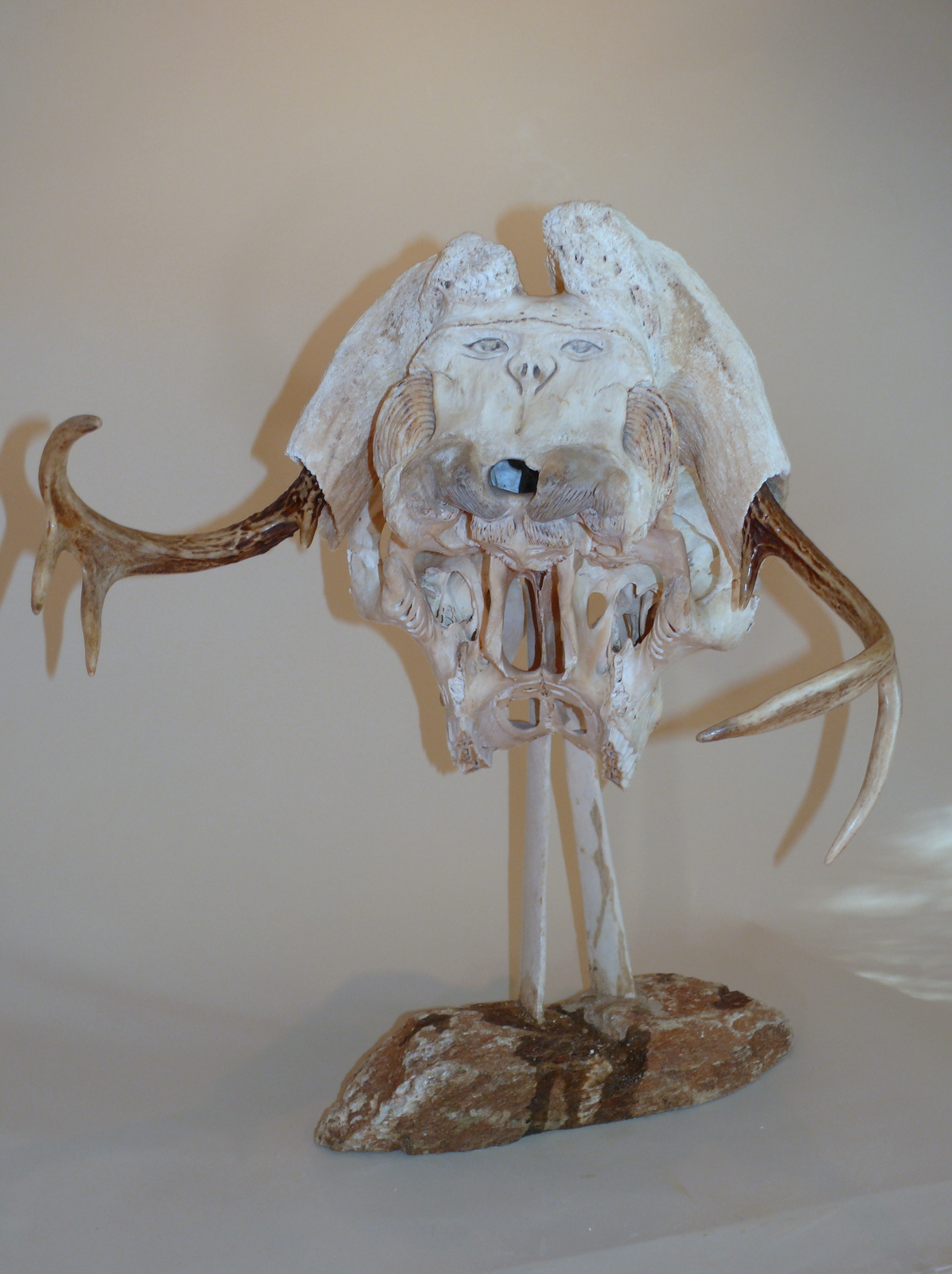
This is a unique sculpture by Manasie Akpaliapik. At first glance, one assumes that it is whalebone, but a close inspection reveals that Manasie has worked wonders with a caribou's skull. Manasie has positioned the viewer behind and below the front of the skull, which he has tilted almost to vertical. He has mounted the main part of the sculpture on two "legs" made of ribs, which are mounted in a stone base. The "arms" are, of course, antlers. |
|
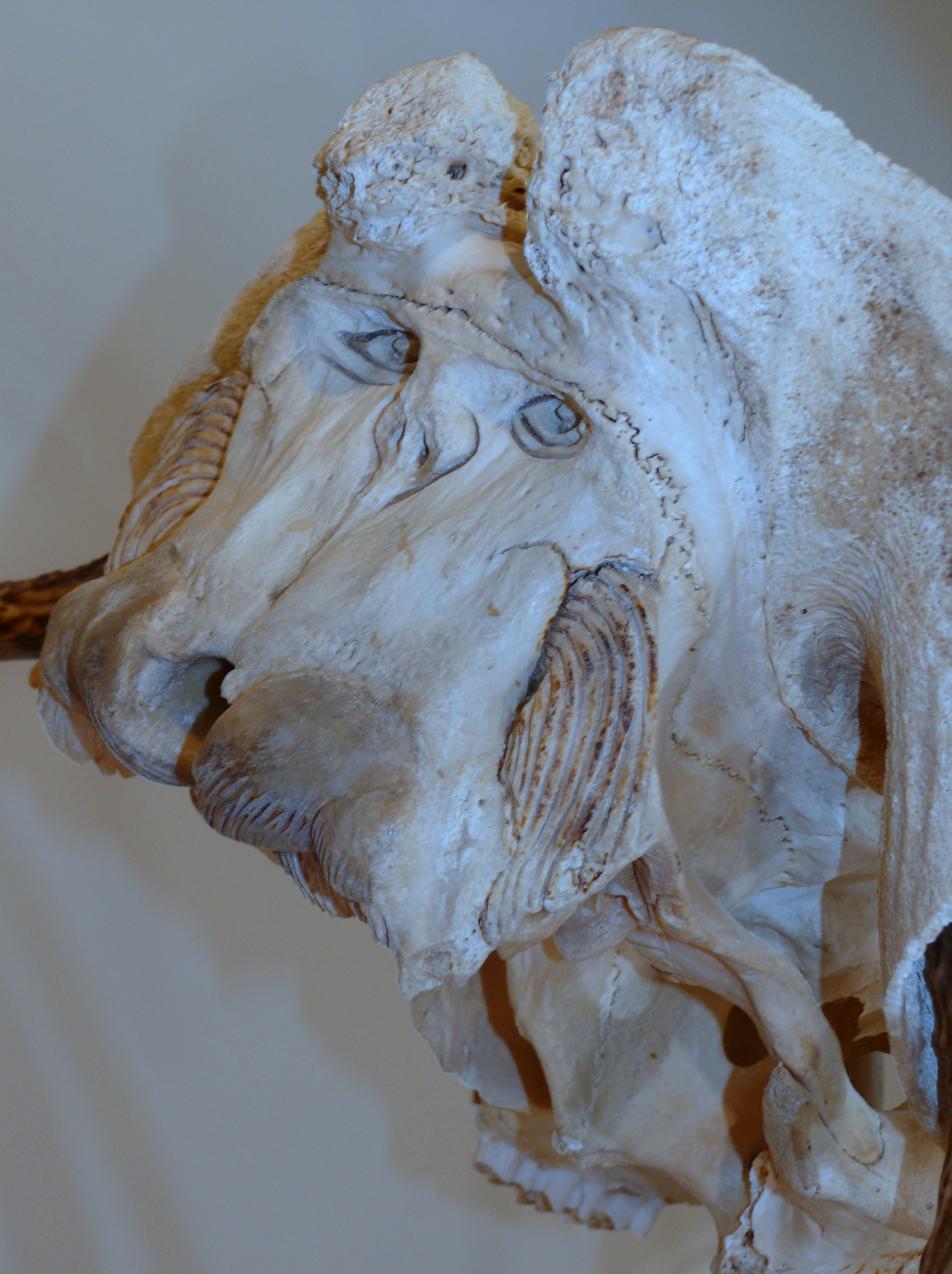
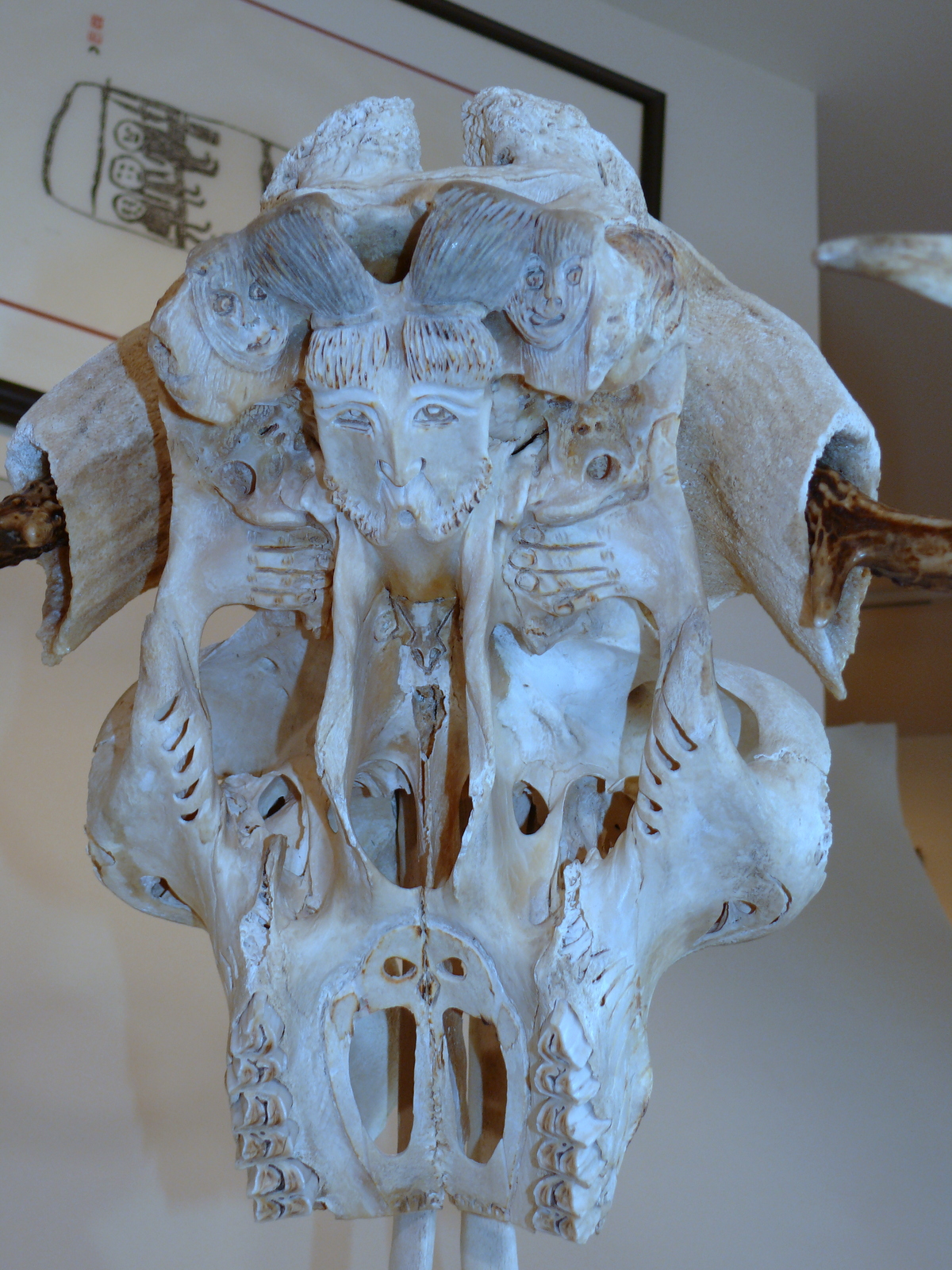
There is a large face (pictured above) on the top portion of the sculpture, with doleful eyes and mutton-chop sidewhiskers. The picture below shows the portion below the large face. You can clearly see the upper teeth at the bottom of the carving. |
|
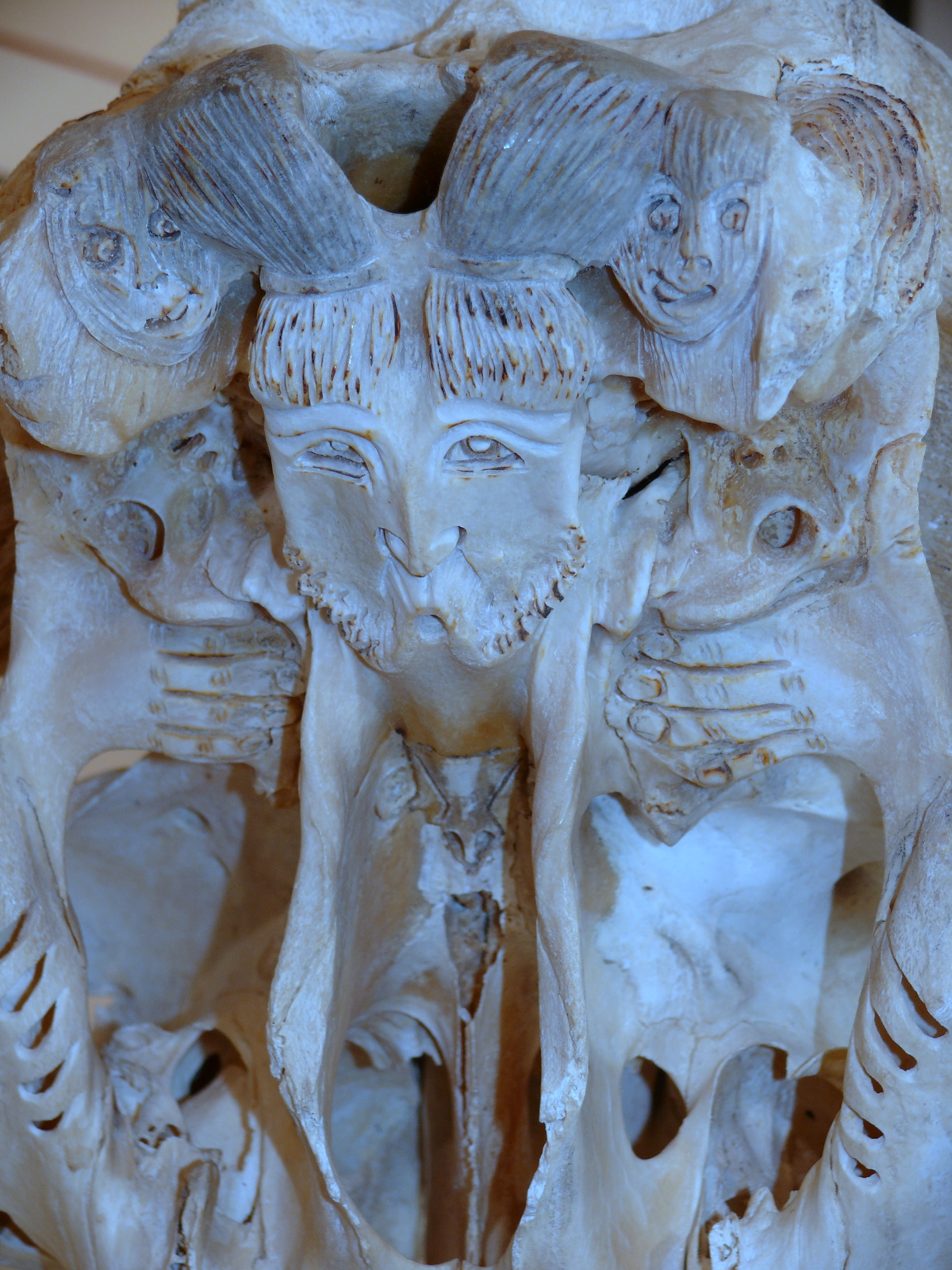
On this unpromising surface, Manasie has carved multiple whimsical faces, some visible only in profile. At the bottom, he has inscribed an owl (visible in the picture above). |
|
The other side of the sculpture has another remarkable face. |
|
This is a piece that epitomizes Manasie's skill and imagination, as well as the resourcefulness of Inuit artists in the face of scarce carving materials. |
|
Parr and Eleeshushe Parr see children playing with dogs very differently |
|
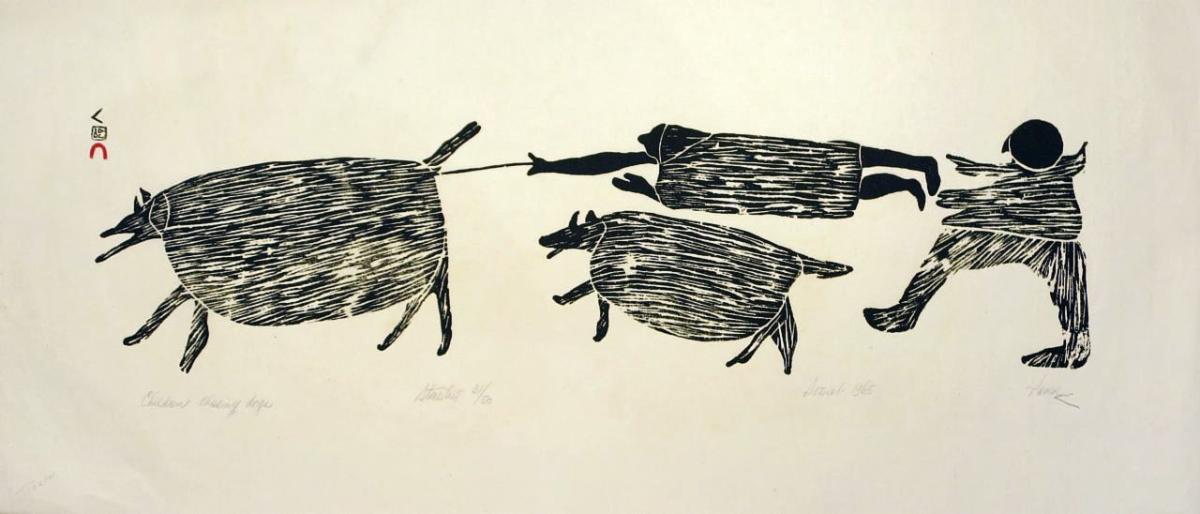
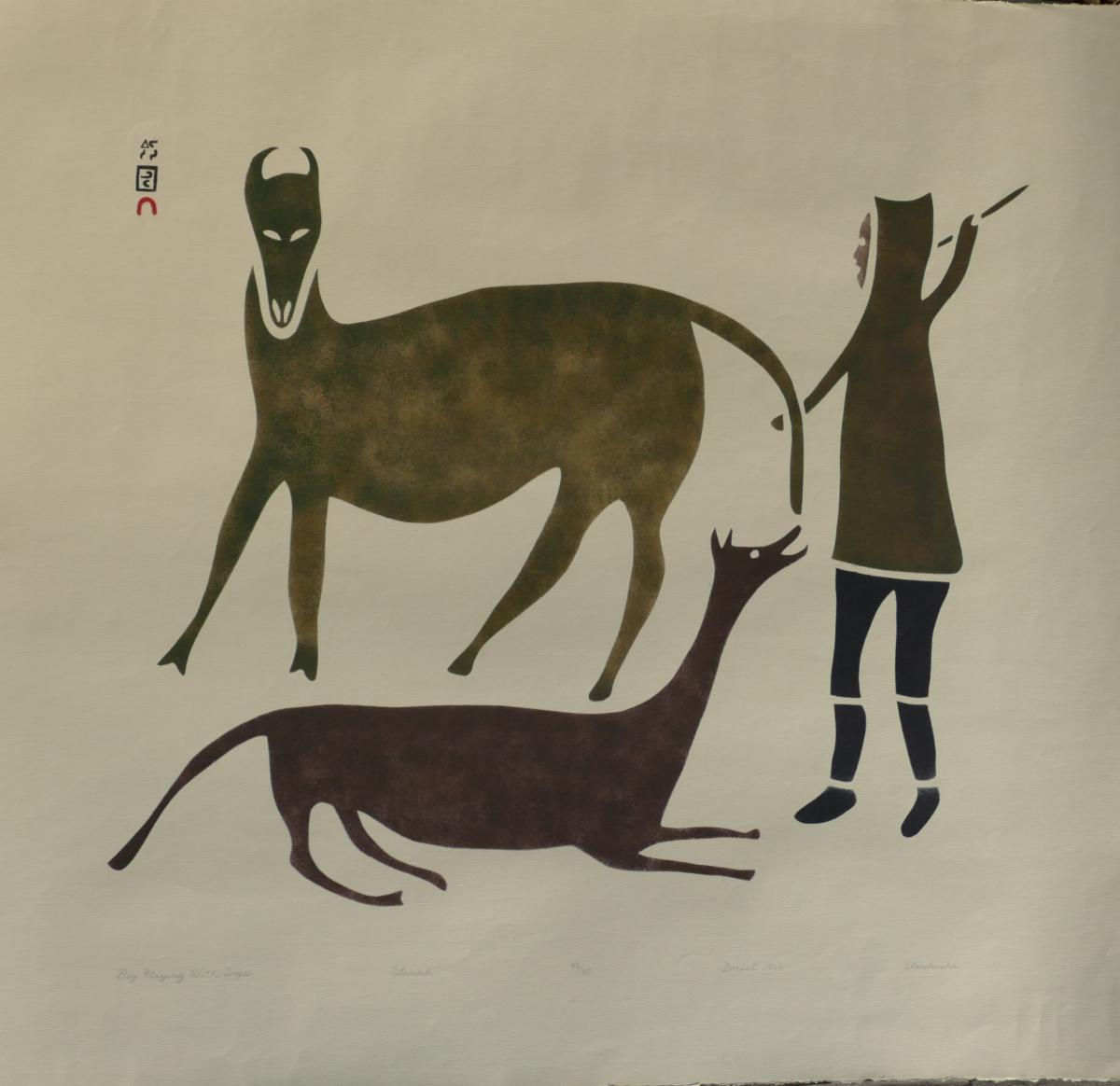
One of the joys of Inuit art is comparing different artists' treatment of the same subject. In A Thousand Clowns, Jason Robards' mantra was, "You can never have too many eagles." Inuit art collectors may apply the same principle to bears, sednas, walruses, or the other subjects that are common across the Arctic. Today, we offer two prints by a married couple, Parr and Eleeshushe Parr, that address the same subject -- children at play with dogs. This pair of images embodies the diversity of early Inuit prints.
|
|
Parr's 1965 stonecut, "Children Chasing Dogs" is a light-hearted change from the hunting scenes that he frequently drew. The heavily textured black-and-white image suggests that the dogs are going to win this contest. |
|
A year later, Parr's wife, Eleeshushe Parr, created "Boy playing with dogs." It is as unlike her husband's stonecut as it could be. Eleeshushe's print is a stencil, with subtle mottling of the colors. The boy is holding a toy harpoon or arrow, pretending to hunt the dogs. Notwithstanding the hunting theme, the image is more serene and static than Parr's stonecut. Unlike the dogs in Parr's print, who are clearly running away from the children, the dogs in Eleeshushe's print are calm; one is even approaching the boy.
|
|
In case you missed it -- Inuit art in the NY Times
|
|
In keeping with our self-description as a virtual gallery run by collectors for collectors, we offer a limited number of pieces. Every piece is one that we would be happy to have in our personal collection, and the description of each piece explains why.
We are happy to assist you with inquiries, with searches for particular pieces or artists, with organizing your collections and with buying or selling at auction. Our Inuit artist search tool is available on our website, and we would be delighted to help you use it. If you prefer to puzzle things out for yourself, Deciphering Inuktitut Signatures will help you to identify artists.
We are always pleased to answer questions or just chat. You can contact us by email or by phone at (908) 487-5757.
Our very best wishes to you all.
Ann and Michael Lesk
|
|
Alaska on Madison | (908) 487-5757 | alaskaonmadison@gmail.com | www,alaskaonmadison.com |
|
|
|
|
|
|