|
U.S. Small Business Administration's Proposed Rule Change
The U.S. Small Business Administration's proposed overhaul of federal small-business size standards could significantly expand the number of firms classified as “small,” allowing substantially larger companies to compete for programs and contracting opportunities intended to support small businesses.
The proposal would reduce the number of NAICS classifications by 66%, from nearly 1,000 to 338, broadening industry categories and making it more difficult for companies to be considered dominant within their sector. As a result, many larger firms could become eligible for small-business programs and procurement preferences.
This raises concerns about increased competition for true small businesses and the potential dilution of federal small-business contracting goals. For example, the revenue threshold for Custom Computer Programming Services would increase from $34 million to $531 million, enabling firms with hundreds of millions in revenue to compete directly with much smaller businesses for the same opportunities.
According to SBA estimates, more than 114,000 additional firms would qualify as small under the proposed standards. These companies already hold more than 37,000 federal contracts worth over $71 billion, demonstrating their ability to compete successfully in the federal marketplace.
The impact extends beyond government contracting. SBA lending programs, HUBZone initiatives, Veteran-Owned Small Business programs, and other assistance programs also rely on these size standards, meaning the changes could affect eligibility across a broad range of business support programs.
As the federal government moves towards implementing these rules, small businesses and interested parties can weigh in via public comment and/or reach out to their elected officials.
| |
Ohio TechCred Application Window Closes Today!
Ohio's TechCred program is now open, giving employers the opportunity to offset the cost of upskilling their employees through industry-recognized, technology-focused credentials.
The Ohio Department of Development recently updated the program’s credential eligibility, employer requirements and approved training opportunities. Before applying, review the new guidelines by watching our webinar featuring Shannon Vanderpool, Senior Business Incentives Administrator with the Ohio Department of Development, or reading our blog post, which outlines approved credentials, application requirements, and other program updates.
| | |
Help improve what’s known about your businesses
Each year, the Federal Reserve asks for-profit small business (500 employees or less) owners and financial decision makers to share their successes, challenges, and outlook in an effort to better understand the experience and challenges being faced by these businesses. What have been your recent experiences in pursuing financing? What are your expectations for profitability, hiring, and more over the next 12 months?
Your answers to questions like these contribute to data that directly informs the Fed, federal government agencies, and policy makers in decisions that impact your business. All responses are confidential. The survey is open through Friday, November 13.
| | House Bill 756: Expand R&D Tax Credit to Apply to Income Tax | | |
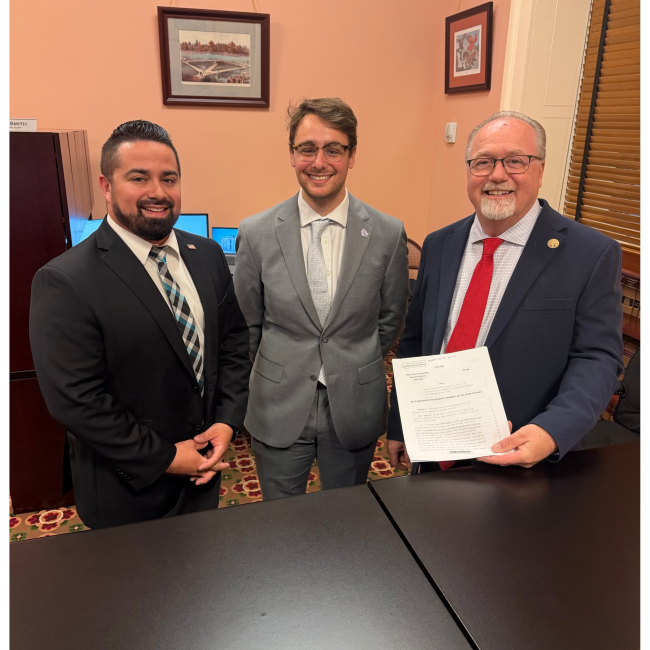
The ACAA has been actively engaged in efforts to strengthen Ohio’s Research and Development (R&D) Tax Credit. As a result, State Rep. Jack Daniels and Rep. Jim Thomas introduced House Bill 756, which would expand and enhance Ohio’s R&D tax credit program. Among its key provisions, the bill would expand the credit to apply to the state income tax in addition to the Commercial Activity Tax (CAT), maintain the 7% credit on qualified expenses above a three-year average, and allow unused credits to be carried forward for up to seven years.
This simple yet impactful policy change would make the credit accessible to more businesses in response to recent changes to the CAT threshold in last year’s State Operating Budget, which left most companies in Ohio without a CAT liability to leverage the credit against.
This bill would make the credit useable for over 90% of Ohio businesses, including startups and flow-through entities, and strengthen Ohio’s ability to attract and retain innovation-driven companies.
Earlier this year, members of the ACAA testified in support of HB 756 during its second hearing in the House Ways and Means Committee, reinforcing the role R&D investment plays in driving jobs, industry growth, and long-term economic competitiveness in regions like Greater Akron.
The ACAA continues to work with policymakers and stakeholders to build support for these important reforms and advance Ohio’s position as a leader in innovation and economic development.
| | House Bill 1026: Increase and Expand the R&D Tax Credit | | |
On October 14, Rep. Jack Daniels introduced House Bill 1026, legislation that would build on the progress of HB 756, and significantly strengthen Ohio’s R&D tax credit program by:
- Increasing the R&D tax credit to 14% in excess of the three-year annual average (up from 7%)
- Extending the credit carryforward period to 20 years (up from 7 years)
- Making R&D tax credits transferable, allowing eligible credits to be bought and sold
These changes align Ohio’s R&D tax credit program with the federal R&D tax credit program. Adding in transferability creates liquidity, allowing businesses that earn credits to realize their value even if they don’t immediately use them. Other states, including Pennsylvania, have demonstrated how transferable credits can foster robust marketplaces that connect buyers and sellers while driving additional investment into innovative businesses. Through H.B. 1026, Ohio has an opportunity to create an ecosystem that helps entrepreneurs access the capital they need to grow, regain interest from companies of all sizes, and become more competitive with other states.
If enacted, these enhancements would position Ohio’s R&D tax credit among the most attractive programs in the country. ACAA staff will continue working with legislators and gubernatorial candidates to build support for the proposal and advocate for its inclusion in the upcoming State Operating Budget.
| | More than 150 business leaders, elected officials, candidates, economic development professionals, and community stakeholders gathered at House Three Thirty for the ACAA's Annual Candidates and Elected Officials Reception. The evening provided an opportunity for attendees to connect with local candidates and elected officials, fostering collaboration and dialogue about opportunities and challenges across the Akron-Canton region. | | |
Powering Ohio's Future Puts Data Centers in Focus
Ohio’s ability to lead in artificial intelligence and other next-generation technologies will depend on coordinated policies, infrastructure investment, workforce development, and thoughtful planning that supports sustainable, long-term growth.
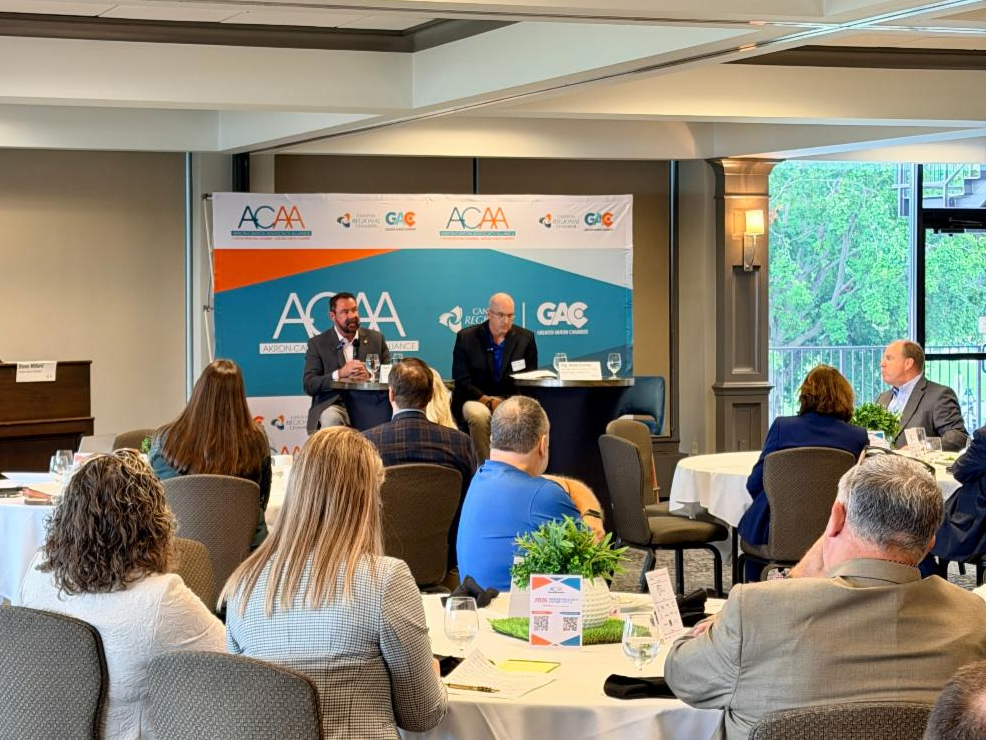
In a discussion hosted by the ACAA, panelists Rachel Lindesmith, Economic Development Director at FirstEnergy; Mike Cunnington, External Affairs Manager at Enbridge Gas Ohio; and Chelsea Kulhanek, Director of Land Acquisition at DAMAC Digital, emphasized that attracting data center investment requires communities to align site selection, energy generation and transmission, workforce readiness, infrastructure, sustainability, and economic impact.
State Senator Brian Chavez and State Representative Adam Holmes, co-chairs of the Joint Data Center Committee, reinforced how public policy can shape that growth. House Bill 15, for example, created “Priority Investment Areas” to provide brownfield renovation grants for projects in existing industrial areas with potential grid access, while its “behind-the-meter” provisions encourage developers to build where dense utility networks are already in place.
The discussion highlighted the economic benefits of data centers, the need for expanded energy infrastructure, and the importance of developing a skilled workforce to support Ohio’s continued growth as a hub for innovation, investment, and economic development.
| | |
Voter Election Guide
The Akron-Canton Advocacy Alliance is committed to providing pertinent information on candidates, ballot issues, and legislation that impacts your business. As such, the online Voter Election Guide serves as a one-stop resource for clear, nonpartisan information on key races and issues on the November 3 ballot.
This year’s ballot includes candidates for U.S. Senate, Ohio’s Congressional seats, Ohio Governor and Lieutenant Governor, Attorney General, Secretary of State, Auditor, Treasurer, and seats on the Ohio Supreme Court (as well as a number of Ohio House and Senate seats and local offices). The guide will feature candidate overviews, links to campaign websites, recorded conversations with candidates, and direct access to county board of elections for up-to-date local voting information.
With a full slate of candidates and issues on the ballot, make sure your voter registration is up to date.
| |  | |
About Issue 3
Issue 3 is a proposed constitutional amendment that would establish a voter ID requirement in Ohio. If approved, it would change the state’s voting requirements, making it important for voters to understand what the amendment would mean in practice. The guide breaks down what a “yes” or “no” vote means and outlines the potential changes that would take effect if approved.
| | General Election: Tuesday, November 3, 2026 | | |
Important Deadlines
-
Early in-person voting: now through November 1
-
Absentee voting by mail: now through November 2
Absentee ballots must be received on election day by your board of elections by 7:30 PM
For more information, or to check your voter registration status, click here.
| | The Akron-Canton Advocacy Alliance is a collaboration of the Greater Akron Chamber and the Canton Regional Chamber of Commerce to represent the needs of our 4,500 members and engage with elected officials and policymakers for the benefit of the Akron-Canton region. | | Thank You to Our Sponsors! | | | | |