|
American College of Vedic Astrology
The ACVA Newsletter 2024-12 (December 2024)
|
|
|
Note from the President of ACVA
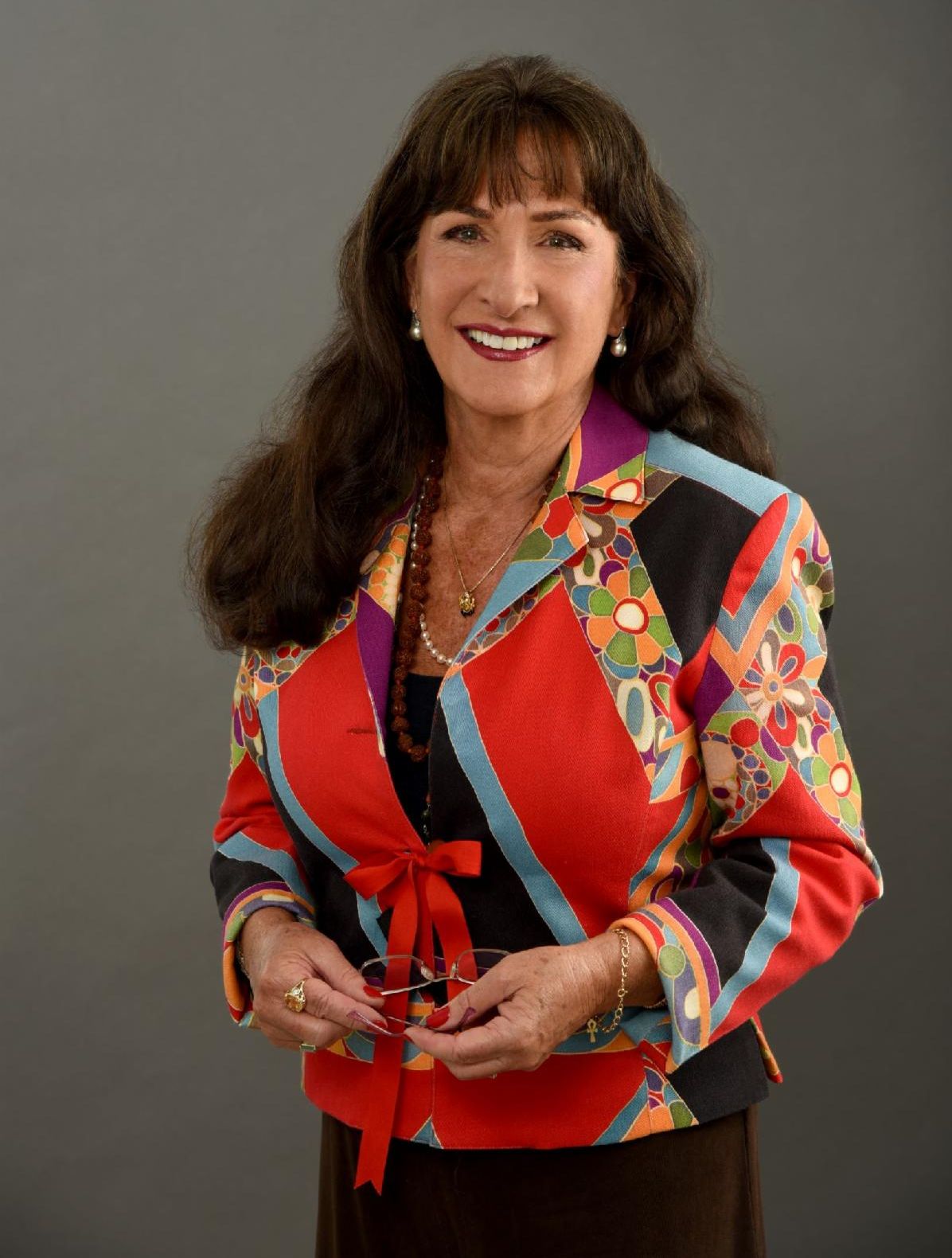
By Professor Charlotte Benson (Jyoti Devi) President, ACVA
December 2024
Dear Friends of ACVA –
Happy holidays to all who celebrate them at year’s end. Hope all is well with you and your families, and that you are managing to deal with your local weather – no matter what that looks like at the moment. I happen to be writing to you from the warm and sunny desert of Phoenix, Arizona.
All is well here at the college. We are celebrating our 25th Anniversary of ACVA online! As of 11/22/1999 ACVA has been growing and sending well-qualified students out into the world to practice Jyotish. ACVA has endured, and matured, into a world-class Institution. Well done!
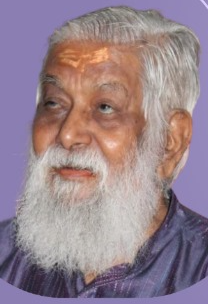
Our most recent graduates received their diplomas, virtually, at our annual Graduation and Awards Ceremony on December 14, 2024. Two special awards were presented: the Jyotish Navaratna for 2024 to Mr. Marc Boney, and the ACVA Lifetime Achievement Award, the ACVA Vibhusan title, to Sri K.N. Rao.
Speaking on Zoom, Dr. David Frawley (Vamadeva Shastri), founding president of American Council of Vedic Astrology (then ACVA - the original parent organization of current ACVA), joined us for a typically fascinating address. We were honored with his company, speaking so eloquently after his recent return from India. Vaughn Paul Manley offered his charming words of wisdom. Christina Collins, among the founders of ACVA, shared heart-felt words of affection for her special friend and teacher, Sri Rao. Former CEO of ACVA, Mrs. Shoba Mohan, shared words about a mutual family connection with the Rao family. And Dr. Dennis Harness, our dear president emeritus, offered his loving and respectful pranams to Sri Rao, too. Dennis also reminded us of the profound and lasting positive effect on ACVA’s online curriculum, contributed by the late Dr. William Levacy.
Alumni and Friend of ACVA, Mr. Marc Boney offered a thoughtful and moving commencement address, offering more clear and profound advice, flowing through him from his guru, Raoji. What a magnificent parampara – K.N. Rao and Marc Boney, his devoted student – sharing a screen together! It was beautiful. It’s uplifting to witness and document this rare kind of respect and grace.
Click here for more ...
| |
Professor Charlotte Benson (Jyoti Devi)
President, American College of Vedic Astrology
| |
|
ACVA Faculty Announcement
By Professor Juliana Swanson
ACVA Provost and Dean of Academics
ACVA is pleased to announce the appointment of Venkatesh Narasiah is our newest member of the tutorial team. Venkatesh (Venky) received his Jyotish Prabhakara (JP) on 9 June 2023 after passing his examinations with distinction.
| |
|
Your Inner Sun Will Brighten Your Winter Solstice
Reflections on the Winter Solstice, the Holy Season, and the Astrological Sun
By Dr. Karina Weil, D.M.
ACVA Instructor
The Wheel of Samsara has turned once more, and it's Thanksgiving again. Yet, almost simultaneously, as the familiar tune hispers in my mind, "What have you done?” I find myself pondering, "What have I learned?" The Holy season, synonymous with joyous celebrations, also invites us – even in the best of circumstances – to pause and reflect on our journey. Perhaps it's the slower pace of life, the greyer skies, or the inevitable drop in serotonin, but the reality is that, as the year comes to an end, we start reflecting on our past journeys, our current situations, our future paths, and reminding ourselves of what truly counts to most to us.
If you're inclined to argue that it's merely the predictable end-of-year blues, consider this: while it's true that serotonin levels tend to drop during this time due to a lack of sunlight, leading to some moodiness, I believe this period offers us the precious opportunity to delve into deeper insights that can foster a more optimistic outlook for the future.
Let’s consider the external world: Just a few days before Christmas, the northern hemisphere enters its annual period of diminished light. This phase, known as the Winter Solstice or hibernal Solstice, is recognized as the darkest day of the year because the Sun is positioned in the extreme south relative to those of us in Earth’s northern hemisphere, resulting in the least exposure to sunlight. Nonetheless, this darkness is not absolute. Most importantly, it’s not internal, but it holds a certain significance. This darkness is not meant to be negative; rather, it can serve a purpose. Many have observed that these celestial changes influence nature, leading to a withdrawal into peaceful stillness, into repose, and providing us with a moment to pause and listen as nature seems to stop and reflect. Embracing this time of natural quiet can inspire us to engage more deeply with our thoughts and feelings, fostering personal growth and understanding as we move forward into the new year.
Click here for more ...
| |
|
The Observatory December 2024 Solstice Edition
By Dr. Lynn Bootes, MD
ACVA Dean of Students and Registrar
registrar@acvaonline.org
We begin the season with a very irritable Mars in retrograde motion. (Please refer to previous articles, as much has been written.) Mars retrograde began December 7 and won’t end until February 24, 2025. The period is long because Mars is moving slowly in the months before and after the retrograde, starting October 2024 in Gemini, then in Cancer for December and most of January 2025, then back into Gemini on January 22, and finally direct on February 25. Since Mars won’t leave Cancer until early June, we continue to have an argumentative Mars when in Gemini, and a wounded Mars when in its debilitation sign of Cancer. Most of us have no control on world affairs, but we can do our part to control our own tempers and address with compassion the irritations around us.
Venus in Capricorn and Jupiter in Taurus are in Parivartana Yoga (mutual reception) December 21-28, a great combination for social and practical matters, promoting prosperity. Make the most of it.
Jupiter in Taurus and Saturn in Aquarius occupy the fixed signs, and Saturn dominates. This is a season in which people are seeking stability, but great changes are ahead as Jupiter and Saturn move into Gemini and Pisces, respectively, in the Spring, when change will be the game.
The Full Moon days this season are unusual in that they all fall on the last degree of a rashi or zodiac sign. Those planning events may wish to make careful use of a panchanga – you may not get the best results on the Full Moon date.
Click here for more ...
| |
|
The Mathematics of Yogas: Budhaditya
By Alan Annand
ACVA Editor-in-Chief of Publications
Budhaditya Yoga, deemed the signature of an intellect capable of analysis, communication and discernment, is frequently found, but perhaps less frequently than you might think, depending on the definition used.
Some people assume that Budhaditya yoga is formed simply when the Sun and Mercury are in the same sign. But since Mercury is an “inferior” planet whose orbit lies within that of Earth, it never appears more than 28 degrees from the Sun. As a consequence, it’s typically in the same sign as the Sun roughly half the time. And if that were the only definition, 50% of the population would have a Budhaditya yoga.
But a more rigorous definition of Budhaditya yoga demands, in addition to the Sun/Mercury pair being in the same sign, one of the following three secondary conditions:
-
The Sun/Mercury pair must occupy or aspect the 1st or 5th house in order to establish a meaningful connection with the individual or his/her mind. Our logic: the lagna represents the Self, while the 5th house is the domain of the buddhi, the intellect. Therefore, in order to complete this particular condition, the Sun/Mercury pair may occupy or aspect the 1st or 5th house from one of four different houses – the 1st, 5th, 7th or 11th. Four out of 12 houses thus qualify, ie, 1/3 or 33% of the time this condition will be fulfilled by the Sun/Mercury pair in the requisite houses.
- As an alternative to condition #1 providing the necessary connection to the Self or its intellect, we may also consider the Sun when it rules the 1st or 5th house. If the ascendant is Leo (Sun-ruled) then the Sun/Mercury pair can occupy any house. If the ascendant is Aries, the 5th house (Leo) is ruled by the Sun, and again the Sun/Mercury pair may occupy any house. This secondary condition will be fulfilled by only two ascendants out of 12, ie, 1/6 or 16.7% of the time.
| |
|
Press Release
December 8, 2024
Contact: info@acvaonline.org
ACVA Establishes Shri K. N. Rao Challenge Scholarship in Celebration of his Jyotish Vibhushan Award
The American College of Vedic Astrology™ (ACVA) is proud to announce the establishment of the Shri K. N. Rao Challenge Scholarship, created to honor the unparalleled contributions of Mr. K. N. Rao to the global Vedic astrology community. This scholarship celebrates Mr. Rao’s receipt of the prestigious Jyotish Vibhushan Lifetime Achievement Award, recognizing his extraordinary dedication and service to the field of Vedic astrology over a lifetime.
This perpetual scholarship, awarded on a competitive basis of academic merit and financial need, will support one student at a time in pursuing the Jyotisha Ratna (Essentials of Jyotish) (Level 1) and Jyotisha Prabhakara (Advanced Jyotish) (Level 2) certifications offered by ACVA. These comprehensive programs provide a solid foundation and advanced training in Vedic astrology, empowering students to continue the tradition of Jyotisha in its purest and most effective form.
The scholarship is officially titled:
“Shri K. N. Rao Challenge Scholarship Awarded by the American College of Vedic Astrology for Pursuing Vedic Astrology Certifications at ACVA”.
Click here for more ...
| |
|
It is due to the generosity of our patrons that ACVA can continue to offer its current special tuition rates. Thank you.
ACVA is a 501-C3 not-for-profit educational institution that provides a very valuable service to learners of Vedic astrology.
It is due to the generosity of our volunteers and patrons that ACVA can continue to thrive. If you choose to press the "donate" button, your donation will be tax-deductible.
To donate, Visit our Website!!
https://acvaonline.org/donate/
In gratitude,
The Leadership Team
| |
American College of Vedic Astrology | |
|
ACVA Leadership Team
-
Prof. Charlotte Benson (Jyoti Devi) - President, ACVA’s External Relations Leader
-
Dr. Sisira K. Amarasinghe, Ph.D. – ACVA Vice President, Executive Director of Corporate Strategy and Technology
-
Prof. Juliana Swanson - ACVA Provost and Dean of Academics
-
Dr. Lynn Bootes, M.D.- Registrar, and Dean of Students
-
Julene Louis – Curriculum Leader
-
Arjun Kodikannath – ACVA Corporate Communications Officer
-
Alan Annand – ACVA Editor-in-Chief of Publications
ACVA Staff
-
Dr. Arjuna de Silva, MBBS (ACVA LMS & IT Operations Manager)
-
Sudath Mudalige (IT Administrator)
- Susheel Erramilli (Social Media and Digital Marketing Coordinator)
To contact any one of us
| |
American College of Vedic Astrology Inc, 2675 W. S.R. 89A #190, Sedona, AZ 86336 | | | | |