The Social Power of Slang: How Teens Communicate and Connect | Paddi LeShane, Co-Founder & CEO | | | | |
As summer winds down and students head back to school, many parents and grandparents may have gotten a crash course in a “new language” while spending time with the teens in their family or community. The age-old use of slang isn’t just about words—it’s about belonging, creativity, and sometimes, a little mischief.
Adults and brands face a delicate dance when trying to connect with teens. According to a recent Social Media Newsletter survey of 252 U.S. teens, slang plays a bigger role than you might think—and understanding it offers surprising (and funny) takeaways for parents, educators, and marketers.
| | |
Slang has always been social currency for teens. I still lean on my old favorite—“cool beans”—when something really hits my fancy. For teens, slang is a way to communicate one-on-one, define who’s in their circle, and decide who’s just an observer. It’s playful, boundary-pushing, and often deliberately confusing to adults—62% of teens say they use slang around family just to mess with them!
It’s less about literal meaning and more about vibe—over half of teens surveyed by TeenVoice, a for-profit subsidiary of national nonprofit American Student Assistance, confess to using terms they don’t fully understand.
According to the survey, the biggest sources are: TikTok (49%), school (45%), friends/siblings (41%), plus Instagram, YouTube, and music. Girls lean more heavily on social media for slang; boys are more likely to invent their own. Peer pressure and repetition are the real engines that make slang stick. What makes a term catch on? Humor (38%), popularity among friends (30%), and a sense of authenticity (30%).
The survey revealed generational slang differences:
Gen Z (15–19): Bet – OK, agreed; Tea – Gossip; Ate – Did something flawlessly; Slay – Nailed it/looked great; I’m dead – That’s hilarious.
Gen Alpha (13–14): Yap – Talks too much; Rizz – Charisma, especially in flirting; Gyatt – Reaction to someone’s appearance; Aura – Someone’s coolness or vibe; Sus – Suspicious. Other notables: BFFR, NPC, Sigma, Ohio, Say Less.
Far from being “just trendy,” slang helps teens develop important life skills:
-
Social Intelligence & Belonging – Reading the room, knowing when slang is appropriate, building group identity.
-
Exclusion Awareness – Understanding that not everyone gets it, and how that shapes relationships.
-
Communication and Creativity – Playing with words, using metaphor, and inventing new expressions.
-
Critical Thinking – Deciding which slang to adopt, which to drop, and when.
-
Confidence & Risk-taking – Experimenting with identity, testing humor, and bouncing back from social missteps.
Most teens (62%) find it embarrassing when adults use slang. Only 14% say the adults in their lives don’t try at all. Brands get similar pushback—slang that feels forced is often labeled “try-hard” or “cringe.” Even teens use slang selectively, avoiding it in professional, academic, or formal settings. Some once-hot words—sigma, rizzler, Ohio, skibidi—are already fading.
Adults shouldn’t force slang into conversations just to connect with teens. Brands should test with their target audience first—run it by younger team members or influencers. Let audiences use slang naturally in user-generated content rather than forcing it into every caption. Use it sparingly, blend it with your authentic voice, and above all—make sure the timing feels right.
Slang can be a powerful tool, but only when used with precision, authenticity, a bit of humor and a good dose of self-awareness.
| | Meet the Media: Q&A with Helen Bennett of The Hartford Courant | | Dan Tapper, Senior Director | | |
Helen Bennett is a veteran journalist who has enjoyed a prominent media career in Connecticut. She is the Executive Editor of The Hartford Courant, and recently agreed to take part in our monthly “Meet the Media” segment.
You are a veteran Connecticut journalist. How has news reporting in Connecticut changed over the years?
While the most important element of reporting remains being a “watchdog” for democracy, I think the biggest change is the ability of journalists and editors to recognize what is important to readers. This means understanding communities with greater clarity and offering people a voice even more than before. It also means learning more about what people care about and responding to it. It seemed as though in the past, news organizations thought they knew best. We learned to trust readers a lot more!
| | | |
What is your vision for The Hartford Courant? Over the next few years – what role do you see it playing in the Connecticut media landscape?
The Hartford Courant is and will be an organization that covers significant stories in Connecticut. That means state government, as well as the important issues people care about. This has wide-ranging possibilities, but is something looked at daily: What matters to people in Connecticut?
In an era of deep fakes and AI-generated news of questionable accuracy, how does this make news gathering and reporting even more challenging?
This is an evolving question for everyone in society and all businesses. We do not use AI for news gathering or reporting.
What are you most pleased about in your time at The Hartford Courant?
The Hartford Courant has a dedicated and talented staff, a delight with whom to work. But probably the best part is getting to know more people in Connecticut and working to meet their needs. People in Connecticut are wonderful.
Finally, what are the kinds of stories you most like to see in The Hartford Courant? What should public relations professionals know as they pitch stories for your newspaper?
The most important stories are those that make an impact on readers’ lives. This could be anything from a new law to acts of corruption, to a housing development, a medical breakthrough, or a restaurant. People in public relations should think about this, too: who does it impact and how? Telling us an organization gave away a lot of money is not interesting if we do not know the real impact it will make.
| | |
Keeping good order when the hearing comes to order:
Tips for preparing for a local public hearing on your economic development project.
| | Brian Flaherty, Executive Vice President | | | | |
When a client is set to present a local economic development project for permit approval, the public meeting isn’t just a formality—it’s often where perceptions are shaped, allies are made, and opposition can raise their concerns. Having a strategic plan is the difference between a confident, persuasive appearance and a missed opportunity.
When we’re engaged with a client in preparation for such a hearing, it involves helping them hone the narrative that best describes their vision and plans, and defining the positive impact they will have on the places where they hope to be. Often, that means transforming the complex facts and figures from their architects, engineers, and scientists into a compellingly descriptive storyline.
| | |
Invariably, our clients will need to appear before inland/wetland and planning/zoning commissions, which have distinct roles, from gauging any impact on land and water to judging whether a development will meet style, size, traffic, and other requirements.
Here are six strategic tips to remember the next time you have to step up and present to a local commission or board of decision makers.
1. Information is king!
We always tell clients to know who they are dealing with going into a hearing. Know the names, the titles, and how they prefer to be addressed. Getting these wrong can trip you up before you can put your best foot forward.
2. Ask Robert! Learn the process and the rules for how the panel operates.
Find out how the hearing will be conducted, and what the rules are for when and how to speak. Often, Roberts' Rules of Order are the basis for these rules, and there are correct and incorrect ways to address the members.
3. Advocate for yourself with clarity, control, and care.
You are here to tell your story clearly and confidently to the commission members, residents who will be your neighbors, and likely a reporter who may be in the audience or watching remotely. As always, preparation is key.
4. Don’t fake an answer. Ever.
‘Tis easier to defer and request the opportunity to provide information later than to wing it and risk it blowing up on you.
5. Understand that panel members live here and will view your project through their own lens, and their people are watching.
Land use hearings, which often don’t begin until the evening, are often long, the agendas have many items, and could stretch over multiple nights. We always advise clients that each member will view your project through their lens—not yours. Some may be helpful, skeptical, or provocative, but they are all volunteers who are as much in the spotlight in front of their constituents as you are. Keep your cool, keep an eye on the clock, don’t get frustrated, and don’t spike the ball if you’re winning.
6. Prepare for Tough Questions. Close with Purpose.
Be sure to engage positively with bridge statements (“That’s an important concern, and here’s how we’re addressing it…”) and fact-based responses. End with a clear ask: approval of the permit, next steps, and a reminder of the project’s alignment with the community’s future. Leave the decision-makers with a positive, forward-looking impression.
Public meetings are a chance to connect—not just to defend. With preparation, clarity, and a focus on shared goals, your client can turn a permit hearing into a persuasive moment that moves the project forward.
| |
In the News: Paddi LeShane on Fox 61
Our CEO, Paddi LeShane, sat alongside Steve McLoughlin of Rebel Interactive Group to discuss being an entrepreneur and innovator on Fox 61. The segment was part of a promotion for the upcoming Shaping CT’s Future: Entrepreneurship & Leadership Conference (August 20). Paddi spoke with Fox 61 reporter Erica Arias about how Sullivan & LeShane came about and what advice she has to other female entrepreneurs.
Watch the video:
| | Case In Point: Breaking New Ground in Banking with Dutch Point | | Randi Sussman, Public Relations Associate | | |
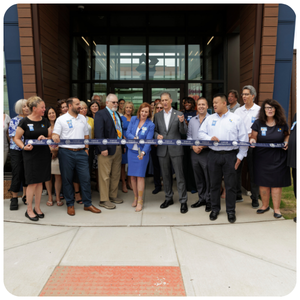
In early November 2024, Dutch Point Credit Union broke ground on a new, state-of-the-art branch just three miles from its existing Wethersfield location. Under sunny skies, board members, staff and local officials gathered to mark a significant milestone in Dutch Point’s continued growth and commitment to serving its members.
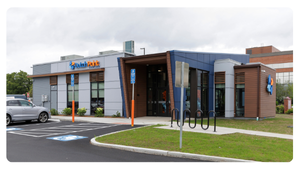
Designed with the future in mind, the new branch at Goff Brook Shops includes innovative banking features such as an Express Banking Hub and interactive teller machine (ITM) technology, offering members’ enhanced convenience and a streamlined banking experience. The bright and inviting location was envisioned as more than just a branch—it’s a hub for financial wellness and community connection.
| | | Sullivan & LeShane Public Relations (SLPR) was there with our client, Dutch Point, from day one. Before shovels hit the ground, SLPR developed a media strategy to help Dutch Point build awareness and excitement around the expansion. We secured prominent coverage in The Hartford Courant, working with Dutch Point to position them as a forward-thinking financial institution investing in its members’ future. | | | | |
This July, nearly eight months later, Dutch Point opened its doors to the community. Once again, SLPR coordinated media outreach leading up to the ribbon cutting, resulting in coverage by WTIC 1800 AM, WFSB and a follow-up piece in The Hartford Courant.
With the new branch now officially open, Dutch Point is transforming its former Wethersfield location into its corporate headquarters. In its 65th year of business, its future is extremely bright.
SLPR is pleased to have supported Dutch Point throughout the entire process—from pre-construction announcements and media engagement to ribbon-cutting day and beyond. This collaboration is just another example of our ability to guide clients through milestone moments with strategic communications planning, strong media relationships and community engagement expertise.
| | |
Sullivan & LeShane Public Relations, Inc. | (860) 560-0001 | www.ctpr.com | | | | | |