|
OPC Highlights Regulatory Challenges and Opportunities at Affordability Hearing
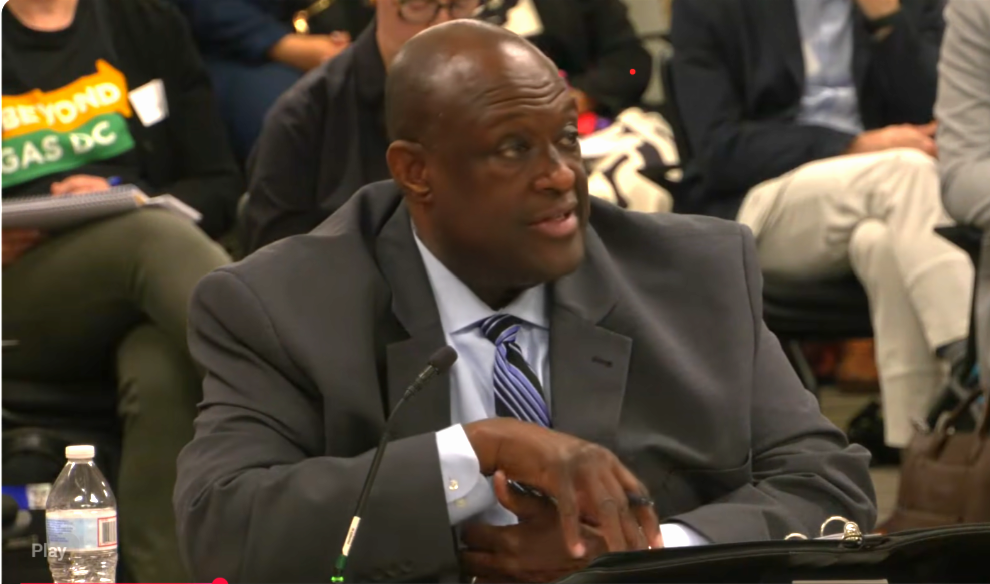
On June 3, Laurence Daniels, OPC Director of Litigation Services, testified before the DC Public Service Commission's legislative-style informational hearing on affordability issues. OPC has been pressing the PSC to give more attention to affordability issues and in November filed a petition seeking a formal proceeding.
Presenting OPC's position, Attorney Daniels proposed solutions to address affordability. He also countered the narrative that pushing back against rapidly escalating rates is a vote against economic progress. See his statement at 26:35 here.
“Economic growth, technological advancement, innovation, artificial intelligence or modern infrastructure that produces unsustainable utility bills, massive arrearages, and ultimately service disconnections for residential consumers is not responsible. Every month, rising utility costs contribute to an increase in the number of customers in arrears and receiving electricity service disconnection notices. Behind every customer unable to pay for this essential service is a family struggling to survive,” stated Daniels.
Daniels noted that modern demand for energy services and the infrastructure challenges they pose have outgrown the traditional regulatory structure's ability to manage them. He presented the Commission with a series of measures it can take now to help mitigate the growing economic threat to consumers.
First, transmission cost allocation rules need to be adjusted to charge large customers (such as data centers) proportionally for the true cost of transmission upgrades required to serve them.
Secondly, the regional transmission organization (PJM) needs a rigorous process for determining whether proposed and extremely costly large customer load development is legitimate and likely to actually develop before the investments are made.
Third, renewable energy interconnection reforms are essential. For too long delays and obstacles have frustrated and prevented residential, institutional and even commercial customers from taking advantage of solar and other clean energy options.
And fourth, affordability must become a central consideration of the wholesale energy market. Decisions cannot be made solely on the basis of “does it work” without also determining if the costs to achieve service are reasonable.
“All stakeholders — regulators, utilities, regional market operators, policymakers, and developers — must recognize that protecting residential consumers is not an obstacle to progress nor a factor to be minimized. It is a necessary exercise for responsible progress” stated Daniels.
|