Coronaviruse-Themed Phishing Threats
The COVID-19 outbreak has changed the way we live our normal lives. One thing that hasn't changed is the bad actors out there. They will do whatever they can to get access to your network and gather whatever information they can from you, but now they have a topic that you are sure to be interested in - leading to easily targeted phishing attacks.
What are Phishing Attacks?
Tech Talk News has previously covered phishing attacks but, in short, they are fake emails that attempt to trick users into clicking on their links or attachments. This can either download malware onto the system or take the user to fake websites that appear to be a site that they really are not. By having a user attempt to login to their account for whatever site they are pretending to be, the bad actor can receive the user's login credentials.
What Does This Have To Do With COVID-19?
The Coronavirus is everywhere. It is in the news. It is shaping how we live each day. Surely, everyone has some vested interest in it. Whether that be further information on shutdowns, infection counts, CDC recommendations, etc. There is also an overload of information about the virus available now. Everyone seems to be sending emails about it and so much information can be difficult to sift through.
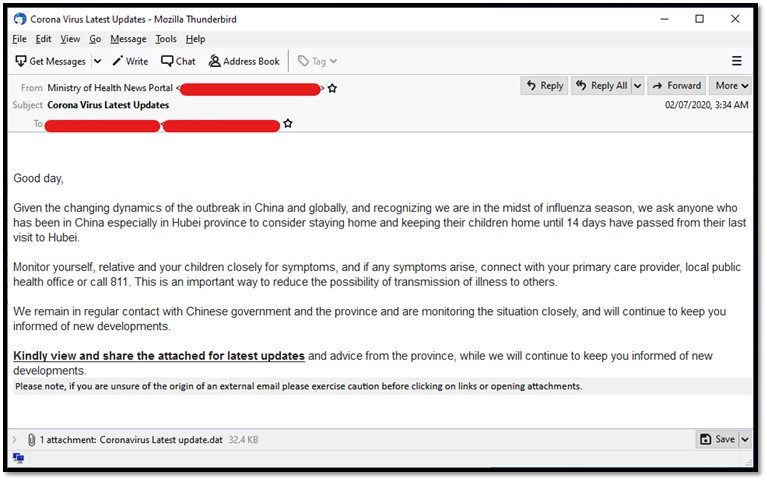
Due to this, bad actors have begun sending their own "updates" and "information" on the disease. They are banking on the fact that you have an interest in what is going on and are looking to learn about the new updates, hoping that this will lead you to click on their links and attachments. Emails can look like the below, but come in many variations.