Get Involved With VEG
Home | Subscribe To Our Newsletter
 
 
NEWSLETTER 236
 
VIRTUAL EVENTS GROUP
 

Labor economists with Project Liberty note that most of the jobs in America today didn’t exist back in 1940.


Virtual Events Group is keeping busy with some exciting projects this summer
 
 
Events During Wartime


Friend of VEG and speaker business strategist Sonya Denyse offers a harsh rethink for the events business. In the top-level summary of her report, she points out that two major things are reshaping the speaker industry (hers) and, by extension, reshaping the entire events industry. 


First, the war in Iran has shut down one of the fastest-growing event markets in the World (Dubai). Second, U.S. inbound tourism is declining for the ninth straight month, compounded by a partial government shutdown. 


This, she cautions, is not a temporary inconvenience. It is not a cycle, but a structural shift. We’re seeing postponements, cancellations, and a shift towards more welcoming geographic areas. Over one hundred events have already been cancelled across the GCC (Gulf Cooperation Council). Airport closures and TSA lines have upended travel plans. 


What to Expect?

Expect event planners to consider moves to safer environs, which will be a field day for Europe. Expect to pay for heightened security and increased insurance at events. Expect those costs to migrate to sponsors and attendees. Expect your attendance numbers and sponsorship dollars to track downward. And perhaps the boldest prediction? Expect to see more hybrid events — smaller physical gatherings with web conferencing or other digital experiences playing an increasingly prominent role. 


Letter from Taiwan


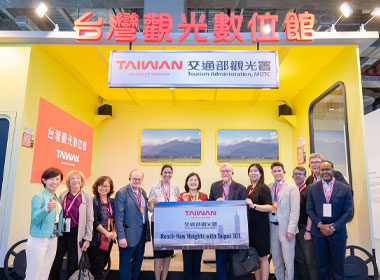
I visited Taiwan last month as an Intelligent Community Forum (ICF) VIP delegate. ICF designates cities worldwide as “smart” based on a carefully created rubric of measurement. I was invited to observe how technology, in particular AI and robotics, can improve the quality of life in Taiwan’s cities. 


I spent two days at the Smart Cities Conference and Expo in Taipei, and two days in the countryside, exploring how tech is shaping regenerative businesses, agriculture, manufacturing, kids' education, and health.


Here are a few of my observations:

  • AI is very real and implemented from the smallest village to the biggest city. At the Education Center in Yunlin, AI was being introduced to 5-year-olds in the form of personalized robot teachers. Unlike Europe or the US, Taiwan has made its peace with the fact that in learning AI, the good will outweigh the negatives.
  • The Taiwanese pride themselves on their tech. As you know, if it's got a chip in it, it's likely to have been touched by Taiwan. But they also create plenty of interesting technologies. Two examples are painted solar panels and the work of Academia Sinica, a think tank, working on alternative power generation.
  • The commitment to Net Zero was being realized on the show floor. Unlike the US, where many of our net-zero initiatives have been undone by the current administration, the Taiwanese have laid out specific metrics and are meeting them. The Formosa factory plant we visited even built its own composting facility to create fertilizer that’s distributed locally.
  • Generosity and friendship are the human components of a technological world. Every person we met wanted us to appreciate their country’s people as much as its tech. A visit to an American business or factory would not have emphasized the personal connection nearly as much.
  • It’s encouraging to see how much the Taiwan government subsidizes research and business efforts. Under the Taiwan AI Action Plan 2.0, the government allocated NT$15.748 billion in technology spending for fiscal 2025. A broader AI Nation initiative promises an even larger investment, with funds coming from public science investments, construction investments, and the National Development Fund. These public/private partnerships will yield a healthy ROI. America, we should take note.
  • Taiwan is rapidly embracing new tech. Products typically take 4 years or so to move from proof-of-concept to practical use. As someone who tracks cutting-edge products for a living, it was nice to see The Smart Cities and Next Zero Expo focused on implementation. Many of the working robots we saw were “off the shelf” versions, but applied to real-world settings like hospital intake, driverless vehicles and firefighting.


While these robots at the Smart Cities Expo in Taiwan are not “new” they are being used daily as assistants in a hospital setting.
 
 
Each student in Yunlin’s Smart Education Center gets personalized instruction in addition to having teacher/student interactions.


Who’s Training LLMs


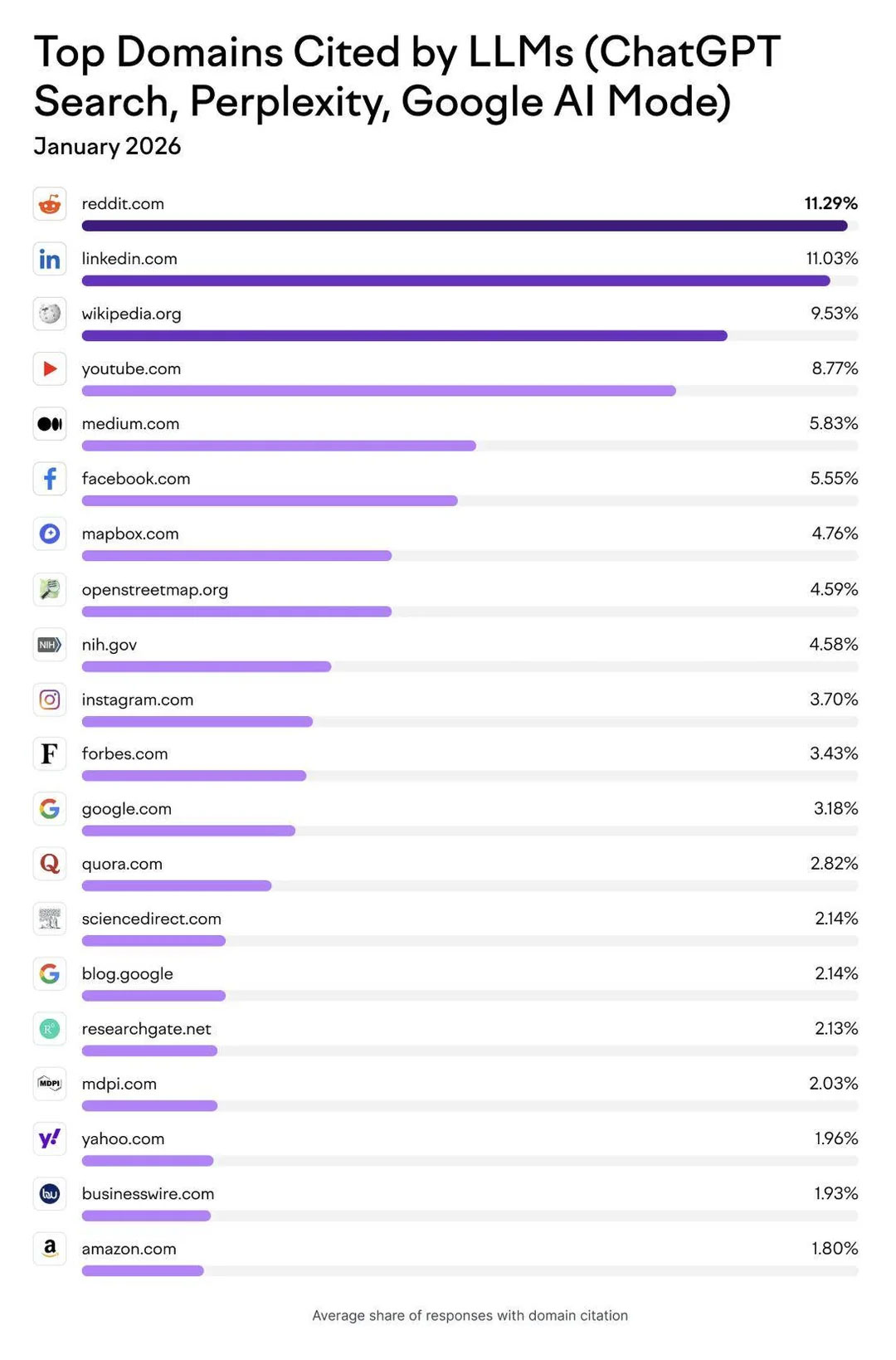
LLMs are trained on content that already exists on the web. The two top sources for many LLMs are Reddit and LinkedIn. And we all know that no one on LinkedIn or Reddit ever said something ill-informed, right? Wrong. 


Wikipedia, on the other hand, which comes in third, has stated that it will not accept submissions generated by AI’s and its entries are all vetted by a human board of editors. (Wikipedia editors can use LLMs for basic copy editing of their own writing, and they can use LLMs to assist with translation. In both cases, the editor must verify the output for accuracy.)


This is all a little unnerving. So, the LLMs ingest bad information, what you get out is more bad information. 


When I prompted each of the LLMs in question to ask if they really trained on conversations from Reddit and LinkedIn they answered, “Sure, but lots of other places, too.” 


Scuttlebutt


The New Shiny Shiny
James and Katheryn Murdoch (yes, those Murdochs) are preparing to launch a new festival in addition to their current Art Basel Fairs. The Futurific Institute, scheduled to go live in 2028 in the Swiss Rhineland, promises to combine art, culture, and tech to create a new kind of ideas festival. Move over, Davos.


Sora’s Demise: Open AI’s Albatross
For a brief moment, we could all use OpenAI’s Sora to type in a text prompt that would let us create a video of anything we could imagine. In late March, Sora announced it would shut down momentarily. And shut down despite reported talks with Disney, which said it would invest $1 billion in OpenAI and license characters to it. (The deal has not gone forward.) 


Will other generative AI video makers close down as well?  Doubtful, but they are going to need to figure out how to monetize better. Sora was costing OpenAI a bloody fortune to generate some really silly and often troublesome videos. IP violations and legal liabilities abounded. Deepfakes were all too likely. It became a non-revenue-generating liability. Especially with rumors of OpenAI looking at an IPO offering. 


I wrote Adi Sideman, founder of Popcorn, an agentic solution that culls from multiple sources to create its video, to ask him about Sora’s demise. “I  always thought that Sora as a consumer product was a happy mistake. It went viral, but was never intended to be a business, and the proof is that it did not last as a consumer business (the economics were never there).


Social Media: Guilty As Charged. 
By now, we’re well aware that it takes legislators and regulators a lot longer to “decide what to make of new technology” than it takes to launch the new technology onto an unsuspecting public. But Meta and YouTube were just fined six million dollars (3 million compensatory, 3 million punitive) for negligent design of their services, resulting in mental health issues in minors. 


The ruling validates long-standing concerns that social media platforms are deliberately designed and marketed to be addictive, especially to kids and teens. This leads to the question of whether social media harm should be compared to that of cigarettes and alcohol. 


While the penalties incurred by the companies amount to chump change ($3 million in damages), the verdict unleashes a Pandora’s box of potential lawsuits with “social media” to blame. Is this an isolated case? Or can we expect a flurry of cases pointing to social media’s damage?


Sign up to get us in your inbox.
 
Get the
Most Recent News
 
SUBSCRIBE
 
 
LINKS
 
Home
Platforms
Tools
Productions
Events


Contact Us
 

Robin Raskin | Founder
917.215.3160 | robin@virtualeventsgroup.org

Gigi Raskin | Sales/Marketing

917.608.7542 | gigi@virtualeventsgroup.org