Your Monthly News & Updates |
|
|
Thanks for Supporting the State Hospital Plan! |
|
On June 21 we took a giant step forward as voters overwhelmingly approved the plan for the former state hospital. Trinity Financial will buy and develop part of the property. They’ll take advantage of federal and state tax credits to restore the historic buildings and develop up to 334 housing units, which under the law must be rentals for at least five years before they can be sold as condos.
Public access to the open space will remain.
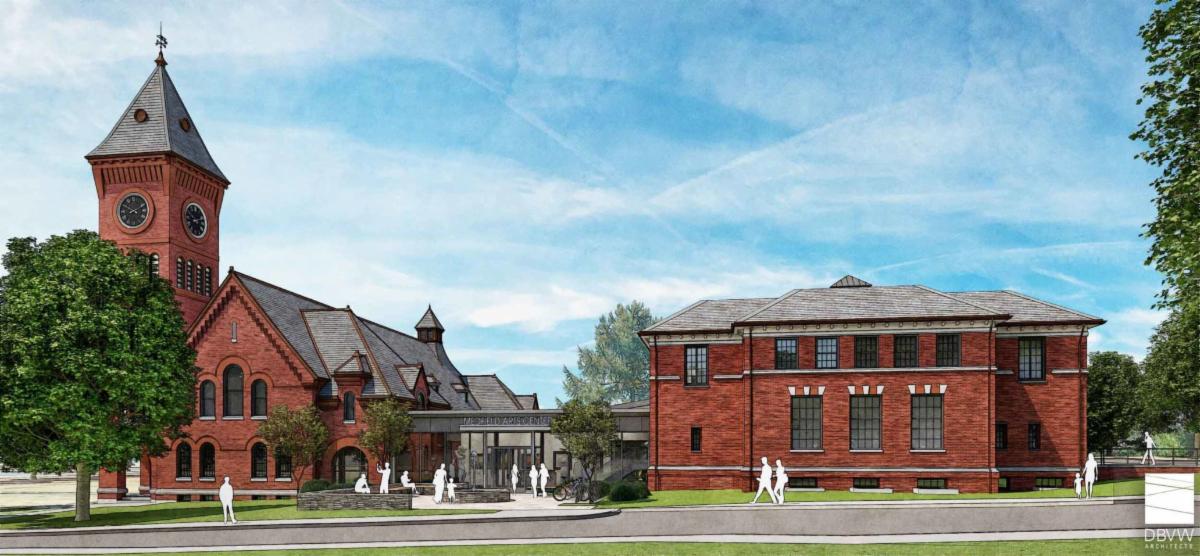
Throughout out the planning process, Medfield residents repeatedly said they wanted the buildings to be restored, they wanted open public access to the campus…and they wanted a space for the arts, which they are getting with the Bellforge Art Center, which has a 99-yer lease on two key buildings. |
|
Bellforge’s bold vision for the arts recasts the core buildings and grounds of the former Medfield State Hospital into a vibrant public place pulsing with intergenerational activity and creative energy. (Courtesy Bellforge Arts Center) |
|
There were 726 voters at the town meeting. A couple of people objected on the grounds there might have been a better deal available elsewhere. But Todd Trehubenko, head of the Medfield State Hospital Development Committee said the committee had worked very hard at it but was unable to cajole other potential competing developers into submitting bids, in part because of Trinity’s excellent reputation. Trinity has a long record of success in developing projects involving historic restoration. Ultimately there was but a small handful of “no” votes.
Abby Goldenfarb, the Trinity vice president who will be leading the project team, estimated the construction will be complete by 2026.
Here is a link to a short summary of Trinity’s development proposal for the former Medfield State Hospital.
|
|
Goodbye Old Logos, Hello New! |
|
by Jo Ellen Heck
Big news! Today, after ten years, we’re releasing a refreshed brand identity, which includes the Medfield Historical Society and Portal logos.
Our previous logos were introduced in 2012 when we moved away from using the Peak House as the symbol of the historical society. We loved our previous historical society logo, but frankly, it was beginning to look a little washed out and it wasn’t in sync with current trends. And our Portal logo didn’t really reflect the historical society brand.
We wanted our logos to reflect a more modern look and contemporary feel, while remaining true to our roots, and to capture our mission to preserve, promote and share Medfield’s rich history.
So we put together a small team consisting of myself, Wendy Wirsig, Diane Borrelli and David Temple to come up with something that appeared crisp, approachable, smart, friendly and connected.
Our design goal was to bring some energy and excitement to the historical society logo, to reflect our goal of bringing Medfield history alive. We’ve retained the logo’s core element of a Palladian window, which signifies not only the historical society building but a window into history, and the blue of our previous logo. But the blue is stronger, and we’ve introduced the red and gold from our color palette to bring more life to the logo, along with a newer updated font.
|
|
We refreshed the Portal logo as well, replacing the gold “O” with the top of a simplified Palladian window for greater brand recognition and echoing the “window into the past” element of the historical society logo. |
|
You’ll see the new historical society logo on our website, which was revamped in 2020. The site delivers rich new content in a modern, clean, and organized layout to provide visitors with easy access to information on our events, historic properties, online collections, genealogical and family research and articles from the Portal.
Just a few months ago we added a whole new sub-site on Vine Lake Cemetery that provides links to cemetery tours, a cemetery map, a cemetery timeline and history, and information on gravestone symbolism, burial records and unmarked graves. Check it out if you haven't already! |
|
The window icon from the logo is now on our Facebook page so we’re easier to recognize.
Over the coming months, we'll update our printed materials and signage with the new historical society logo and branding.
We hope you like our new look!
|
|
A Peek Inside Medfield's Newest Historic House |
|
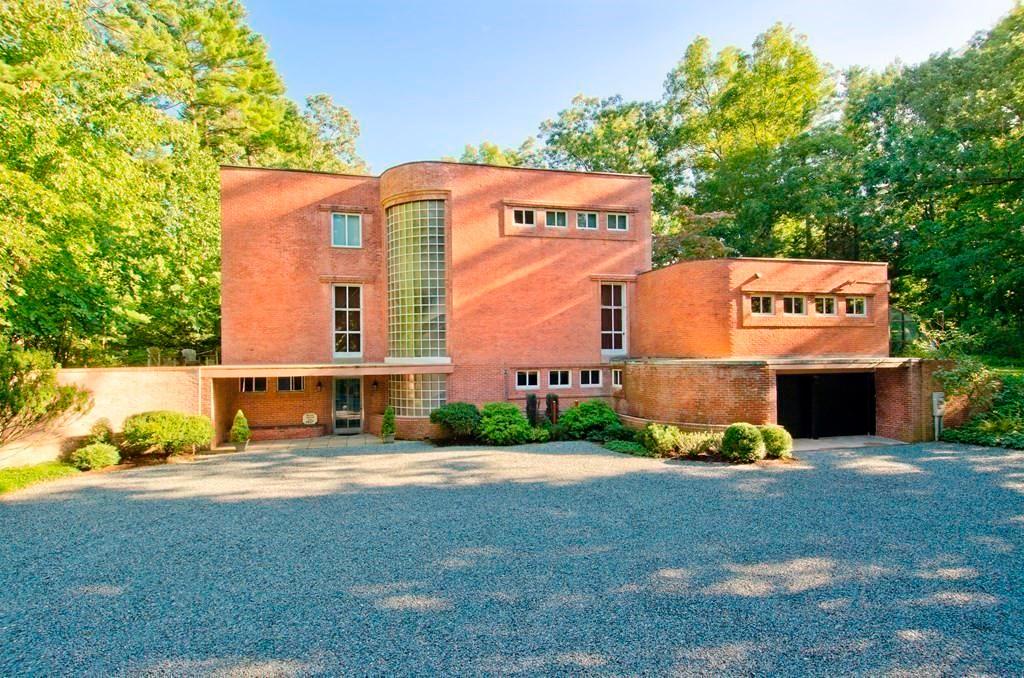
Nathaniel Saltonstall (1903-1968) designed his modernistic house at 70 Main Street in the late 1930s, clearly showing the Bauhaus influence. He also designed houses once at 6, 10, and 16 Millbrook Road, Medfield, as well as many modernistic cottages on Cape Cod. He was a graduate of Harvard and MIT and a cousin of the late longtime U.S. Senator Leverett Saltonstall of Dover.
This unusual and magnificent house has occasionally been on tours. As of this writing, it is for sale, and the house appears to have been carefully updated. Here’s a link, with a tour.
|
|
Significant architectural gem at 70 Main Street built in Bauhaus Style by famed architect Nathaniel Saltonstall for himself in 1937. |
|
Wilson Awarded First Medfield Historical Society Scholarship in Memory of Adam Opiela |
|
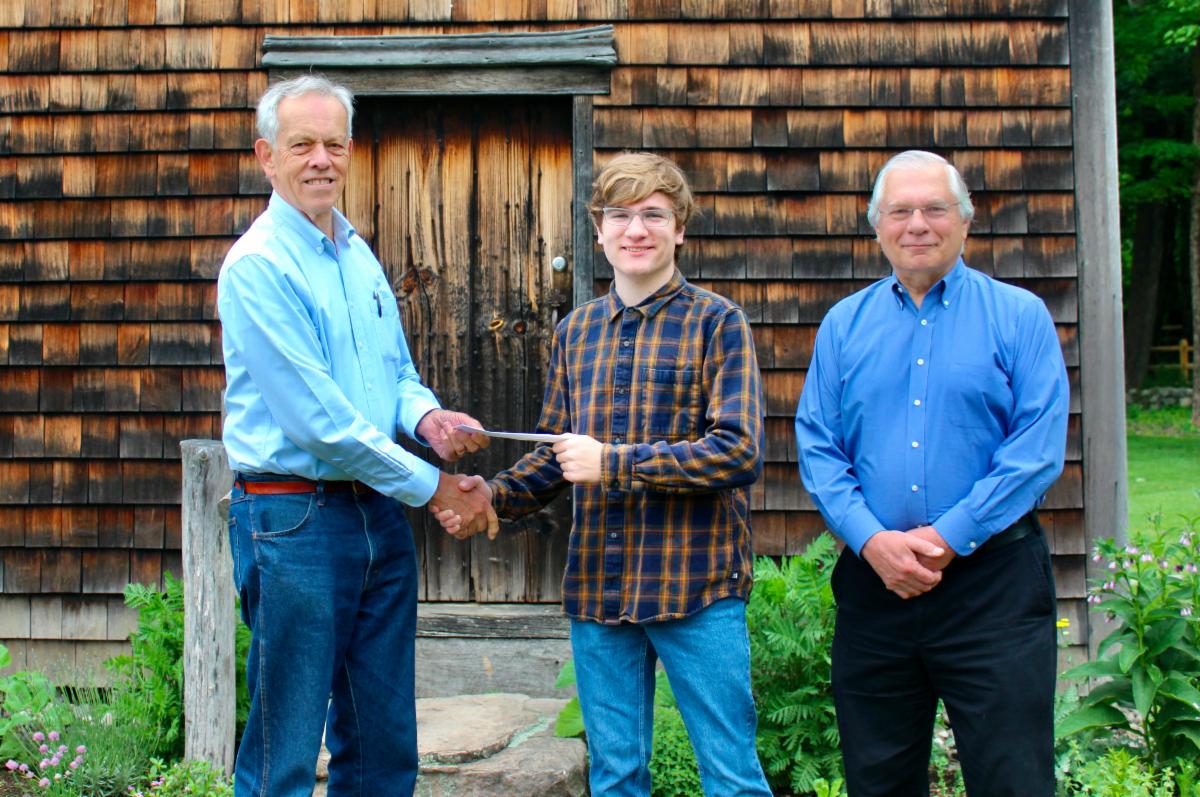
Noah Wilson was awarded the first Medfield Historical Society Scholarship in Memory of Adam Opiela at this year’s Medfield High School Senior Recognition Night on June 2. The award is given to a student who demonstrates distinction in the study of, interest in, and passion for the subject of history. Adam was the first winner of the Historical Society award given to a graduating senior in 2009. He majored in history at Trinity College and earned a Masters degree in Education from the University of Texas. He was teaching middle school social studies in the Austin, Texas school district when he was diagnosed with colon cancer in 2021.
Noah will be attending Oberlin College in Ohio and plans to major in history or political science. He was chosen for the scholarship by history faculty at Medfield High School. Noah exhibited an extraordinary curiosity and passion for the study of history in his courses. One of his teachers offered the following high praise, “Noah improved my own understanding of history with his contributions in class.”
The Medfield Historical Society works to preserve and share Medfield’s history. Its library and archives, museum, and programs and exhibitions are designed to inspire in all Medfield residents a sense of excitement for local history, pride of citizenship, and stewardship of Medfield’s historical legacy.
|
|
Pictured left to right: David Temple, Historical Society President, Noah Wilson, and Joe Opiela, Adam’s father. (Photo by Katherine Opiela) |
|
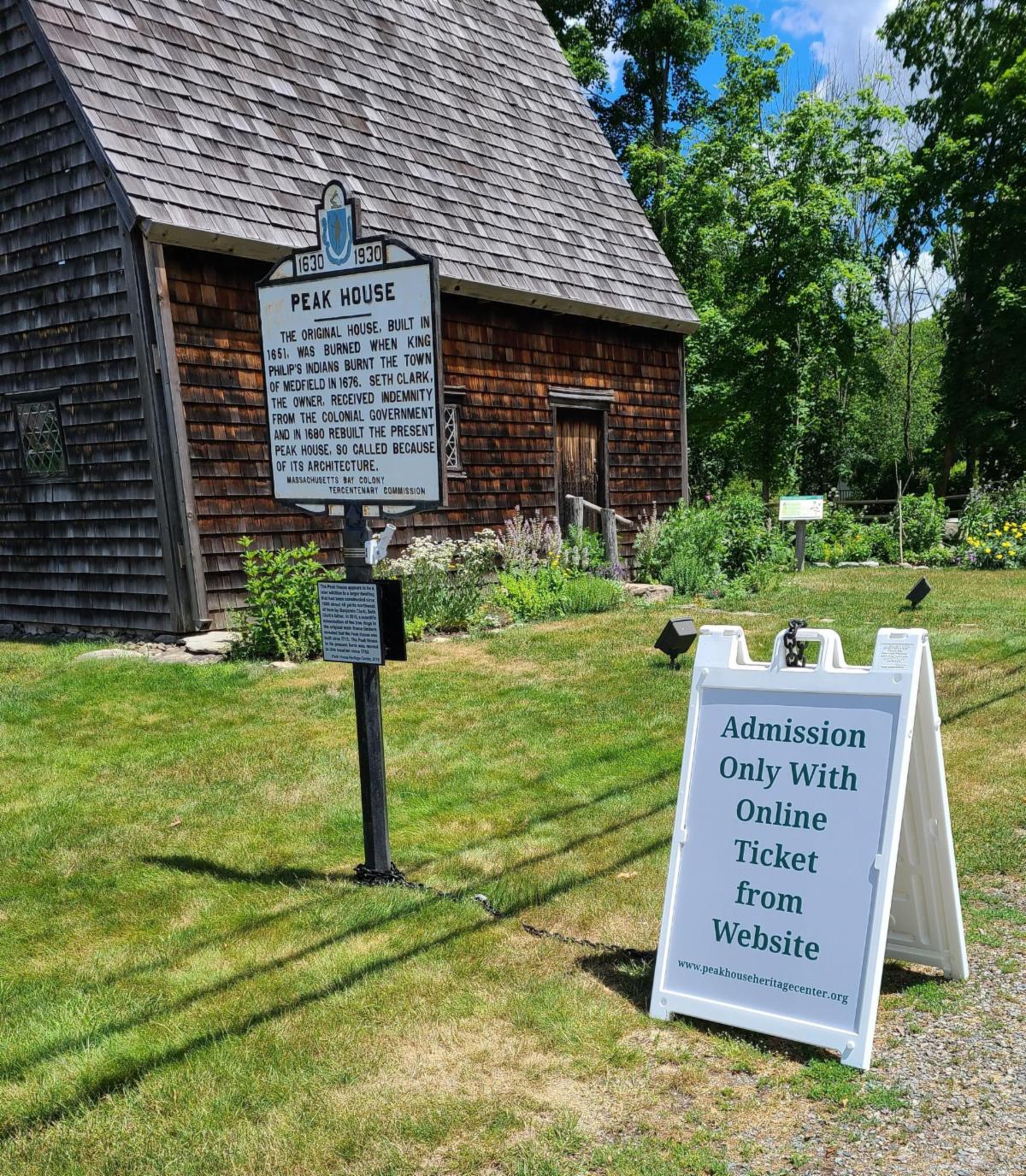
Announcing the Peak House 2022 Visitor Season
The Peak House Heritage Center recently announced their 2022 visitor season. The Peak House will be open for tours on the second and fourth Saturdays of July, August, September, and October.
Paid admission is by tickets available only through their website. You first choose a date for your visit and then select a time slot from the six available on those Saturdays.
Covid-related restrictions limit six (6) visitors at a time for a suggested visit duration of thirty (30) minutes. You are welcome to tour the outdoor gardens for as long as you wish.
|
|
Genealogy and Family Search |
|
Hunting for Partridge and Hogg Ancestors |
|
By Amy E. Hogg
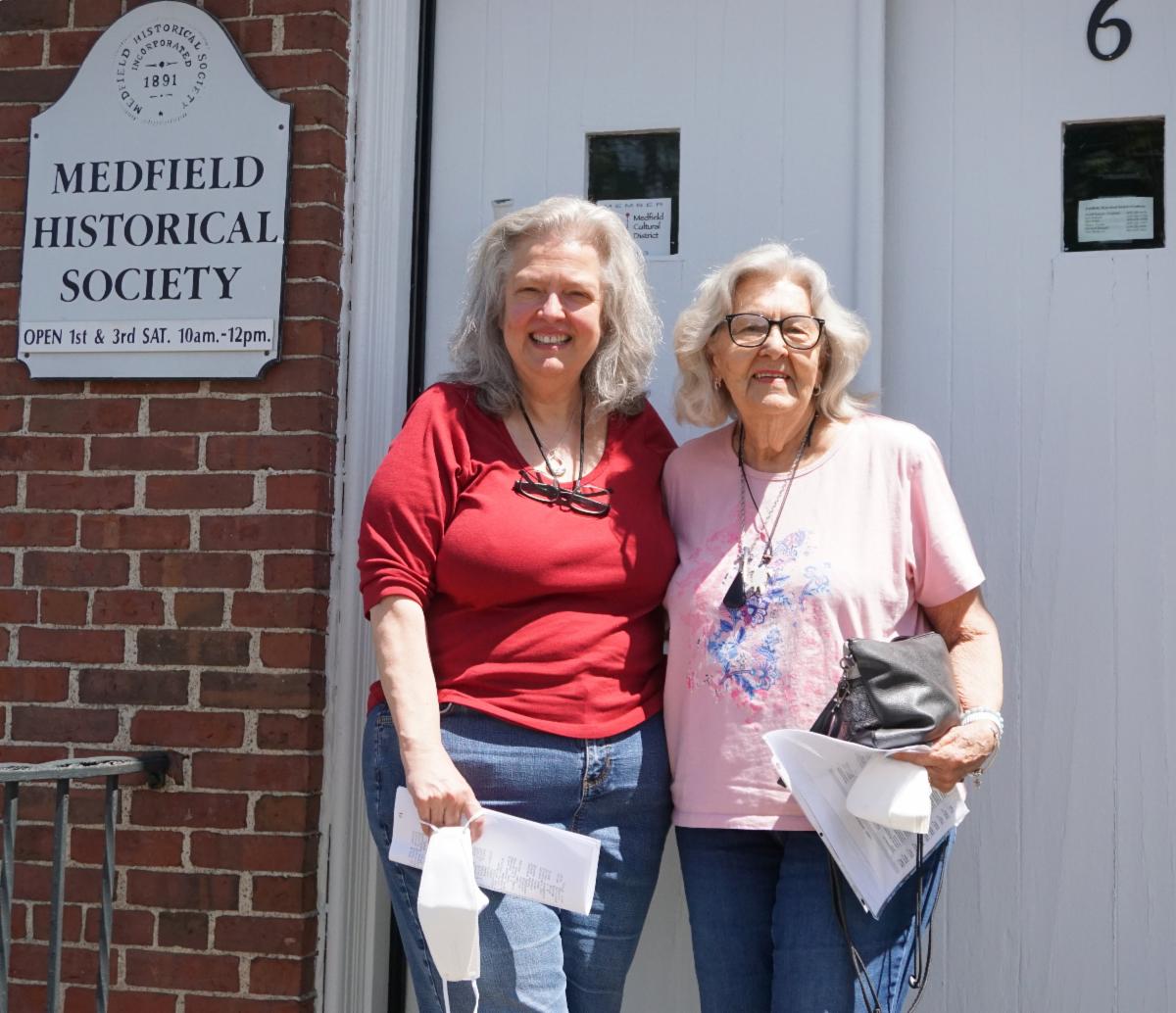
Editor’s note: William Partridge (1622-92) came from Dedham to Medfield about 1650 and was granted six acres of land on North Street between Pine and School Streets. His son William (1669-1750) lived on Green Street, near a street laid out in the 20th century called Partridge Road. Most of the Partridge descendants moved west in the first half of the 18th century, to Millis, Medway, and Franklin. About 372 years later, two Partridge descendants – Amy Hogg and her mother Bette – visited the Medfield Historical Society to do some genealogical research. Below is Amy’s report on their findings.
|
|
My mother and I live in Guelph, Ontario. We recently completed our fourth trip to New England exploring American roots that until 10 years ago we didn’t even know existed. We now know we have 48 surnames of ancestors who came to America during The Great Migration (1620 - 1640)! As in previously trips, we wanted to visit several cemeteries of some of these American ancestors we had identified in our research, find some answered to our research questions, and just enjoy a bit of a vacation after this long pandemic.
One of my mom’s many genealogy goals for this road trip was to track down the possibility of whether a woman by the name of Jane Hogg could possibly be her 9th great-grandmother. Hogg is a bit of an unusual name, and we thought it would be ironic if Mom was a Hogg before she ever married a Hogg! This Jane Hogg reportedly married a man with the last name Partridge in England, and we had found some leads on Ancestry that their children came to America in the 1600s and helped settle Medfield, MA. Could one of Jane Hogg's son, William Partridge, possibly be our ancestor William Partridge of Hadley? Or could this William Partridge be related in some way to our Partridge ancestors who settled in Duxbury? Or, just as importantly, could we rule him out as being our William Partridge?
|
|
People and Places of the Past |
|
The Palumbo Family of Medfield |
|
By Tim Flaherty
Welcome to Frairy Street, running from North Street, past Baker’s (Meetinghouse) Pond, underneath a small railroad bridge, through the first Italian-American neighborhood in the town of Medfield, and ending at Dale Street.
Walking there a century ago you might well have seen men from the old country gathered on their front doorsteps speaking Italian with their voices and excitedly waving their hands and arms in the air and they reminisced about life in the old country.
Continuing down the street after 1933 your next stop may have been the Rossi family’s Frances Cafe. At the Frances you’d see patrons sitting in large comfortable booths, enjoying spaghetti and meatballs, veal and chicken parm, or any other food smothered in chops with different pastas.
While continuing down throughout this neighborhood you’ll quickly notice that this street is home to many Italian families like the Palumbos and the Iafollas, as well as the Procaccini and DiMezza families and a few other townspeople, like the Belmonts, of different nationalities.
|
|
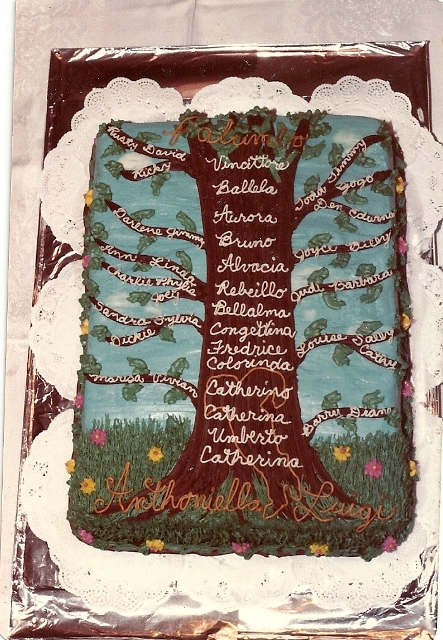
Luigi and Antoinette's 50th anniversary cake with the family tree. |
|
If one got to know these people as friends it was certain that they’d enthusiastically remind the many that their countrymen produced pizza, Michelangelo, Tony Soprano, and great Italian pastry tradition – sometimes purchased locally or sent in from the North End of Boston.
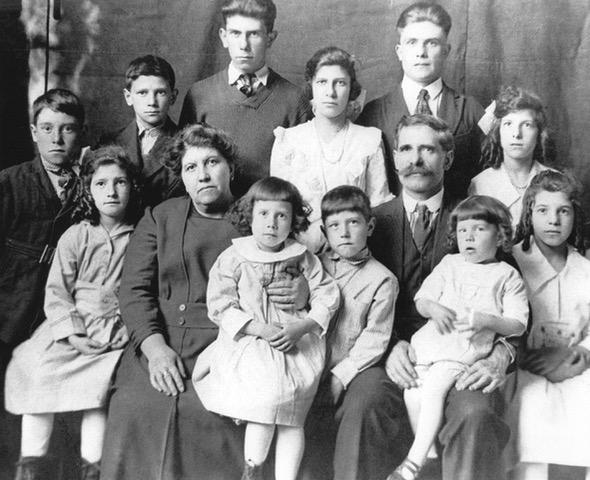
The Palumbo family had a joyfulness along with a certain stature and a cast of many industrious characters, beginning with Luigi and Antoinette Palumbo, who landed at Ellis Island at the turn of the 20th century with their two oldest sons, Robert and William. (Two daughters had been buried in Italy.) The small family found their way to Medfield, settled at 59 Frairy Street, and produced ten more little Palumbos. Patriarch Luigi was a shoemaker by profession and set up a shop where Larkin’s Liquor Store is today. Antoinette was an endearing homemaker who ran the household with 10 children.
|
|
Palumbo family photo taken in the 1920s. From left to right are Rebel, Alvie, Fred, Antoinette, Bill, Aurora ("Dee," Tim's mother), Dolly, Bruno, Bob, Luigi, Vin, Connie, and Balame. |
|
Uncle Bob Palumbo changed his last name to Palson in part because of anti-Italian (and general anti-immigrant*) sentiment that grew from the sensational trial of Sacco and Vanzetti, two Italian men falsely accused of murder in the 1920s. Uncle Bob was a graduate of Harvard University and taught classes at Boston Trade High School. He was a brilliant man who was a devoted husband to wife Polly Iafolla and benevolent father to their son, Barry and daughter, Diane.
|
|
|
|
Medfield Historical Society
info@medfieldhistoricalsociety.org
|
|
|
|
|
|
|