News and information to help journalists serve the public and stay safe.
|
|
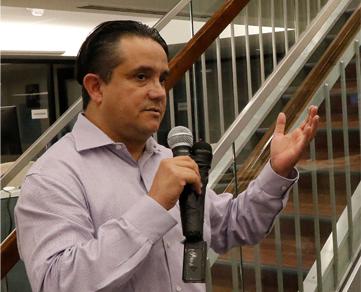
Alfredo Carbajal is editor of The Dallas Morning News Spanish-language newspap
er, Al Día
|
|
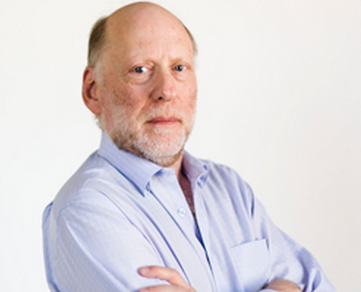
Todd Gitlin is a Columbia University professor and author
|
|
Newsrooms have become part of the story. As protests over the death of George Floyd, police violence and racism draw national attention to issues of social justice, journalism is confronting its own blind spots.
The tremors of change already have manifested themselves. An op-ed cost
James Bennet
his job as the editorial page editor of the New York Times. An insensitive headline forced the departure of the executive editor of the Philadelphia Inquirer,
Stan Wischnowski
. The news staff of the Pittsburgh Post-Gazette fought back over a
management decision
to pull a Black reporter from covering protests.
Arizona State University
rescinded its selection of a new journalism school dean amid questions about the appointee’s relations with students of color.
“It’s a reckoning moment for us,” said
Alfredo Carbajal
, editor of The Dallas Morning News Spanish-language newspaper,
Al Día
, and former president of the American Society of Newspaper Editors.
The main value to pursue in journalism is “comprehensiveness of reporting and the ability to connect dots,” said
Todd Gitlin
, Columbia University professor and author of 16 books, including
“The Whole World Is Watching: Mass Media in the Making and Unmaking of the New Left.”
Journalists who are women, people of color, gay or representative of other underrepresented groups “are on the face of it more able to come to these reports deeply and comprehensively. Diversity is a means to that end.”
We reached out to Carbajal and Gitlin to put this wave of journalism changes in historic perspective and to understand what’s next.
“Police attacks on journalists are of course horribly common in recent days. We saw a more concentrated, systematic assault on journalists at the hands of the Chicago police in August 1968, of course, and there have been other precedents,” Gitlin said. “But the current wave of press-bashing is, to my memory, without precedent. So far as I know, journalists have not been cowed. More power to them.”
And how do we address journalism’s blind spots? “In a way, it is a reckoning moment for our society and also for our news media industry and newsrooms and the relationship that we have with journalism schools,” said Carbajal. “The same way that they teach students how to write, how to interview, how to process data, how to do ethics — cultural sensitivity should be on the curriculum. And if it is not in some places, it should be now. It should be made core as well, for all people, of all backgrounds.”
|
|
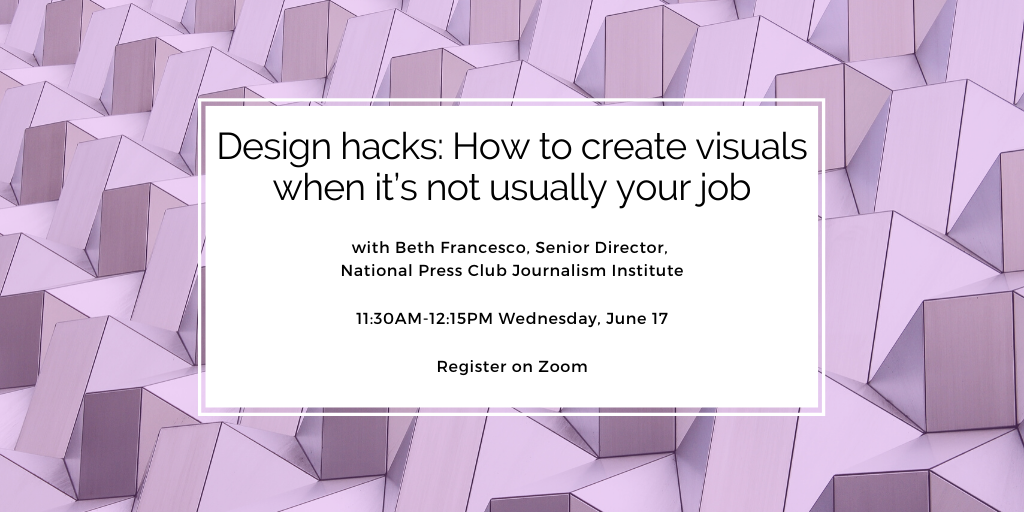
In our scroll and skim culture, dynamic visuals can make the difference in whether a reader engages with a story. But not every story can attract a graphic design professional’s time in the newsroom, especially in the continuing pandemic news cycle. If you’re a reporter, editor, social media manager now handling (or who wants to handle) quick-turn graphics, get a head start with our hacks for designing visuals when it’s not usually part of your job.
Beth Francesco
, the National Press Club Journalism Institute’s senior director, will share best practices, tools you have you have at your disposal from home, and exercises for creating visuals regardless of your hands-on design experience.
Registration is open
.
|
|
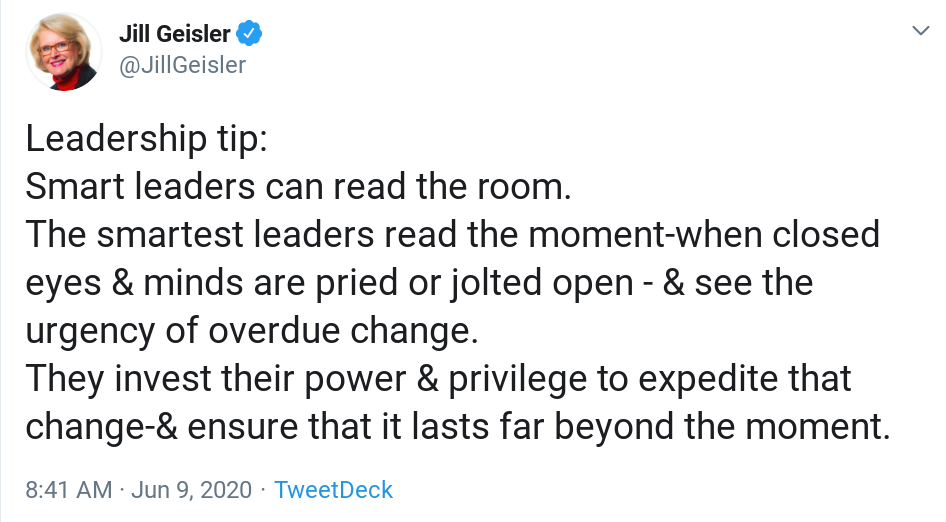
Advice from
Jill Geisler
, Bill Plante Chair in Leadership & Media Integrity, Loyola University Chicago, Freedom Forum Fellow in Women’s Leadership
|
|
|
Here are additional ways to get involved with volunteering, social distancing style:
- Lend your social media expertise. The American Cancer Society is seeking volunteers to share information on cancer advocacy, online petitions, and fundraising needs. AlternaCare Foundation is also looking for digital-savvy help to craft messages and create an editorial calendar.
- Plan virtual events for a cause. I’RAISE Girls & Boys International needs volunteers to help organize online Black Lives Matter events.
- Be a “hero” to children with chronic illnesses. Sign up with CoachArt to share your writing, art, music or athletic talents with families affected by chronic illness.
- Create “hygiene kits” for the homeless. The Salvation Army is asking for assistance gathering hygienic supplies for the homeless. Contact your local volunteer department for details.
- Become a virtual tutor. UPchieve connects low-income high school students to virtual volunteers across the U.S.
Also, visit
catchafire.org
for more virtual volunteering ideas. And before getting started, be sure to check with your newsroom manager to ensure there is no conflict of interest.
|
|
This newsletter is written & edited by the National Press Club Journalism Institute staff: Beth Francesco, Holly Butcher Grant, Jim Kuhnhenn, and Julie Moos.
Send us your questions and suggestions
for topics to cover.
|
|
|
|
|
|
|