October 2026

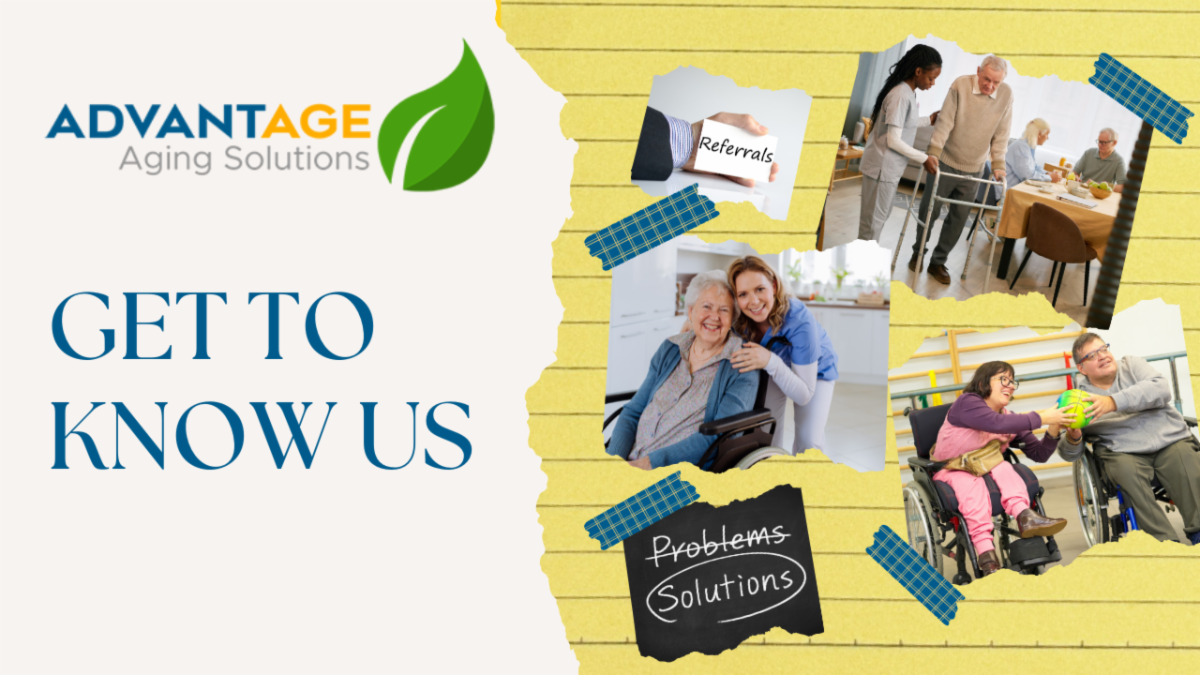
Getting to Know Your Local Area Agency on Aging

We are Advantage Aging Solutions


WHO WE ARE:

Advantage Aging Solutions was created by the federal Older Americans Act (OAA) of 1965 and we are one of 11 Area Agencies on Aging (AAA) in Florida. All of the AAAs in Florida are also Aging and Disability Resource Centers (ADRC) (established in Florida Statute Chapter 430).


Designated by the Department of Elder Affairs (DOEA), each AAA in Florida is a local, private nonprofit organization that serves a distinct region. Advantage Aging Solutions serves 14 North Florida counties that include: Bay, Calhoun, Franklin, Gadsden, Gulf, Holmes, Jackson, Jefferson, Leon, Liberty, Madison, Taylor, Wakulla and Washington.


WHY WE ARE IMPORTANT:

We serve clients who are adults 60 years and older, persons 18 years and older who have disabilities and caregivers of both populations.


  • We are the starting point for information about programs and services for older adults, persons with disabilities and their caregivers.


  • We are here when there is an emergency or disaster, helping with preparations and aftermath response. This includes hurricanes, tornadoes, pandemics, flooding, etc.


  • As the local leader for all issues affecting our aging population, we partner with others in our communities to respond quickly and appropriately. This includes on-site assistance at Disaster Recovery Centers, partnering with Emergency Operations Centers, delivering meals, water and supplies to seniors and more.


  •  We leverage local resources and relationships with our community partners to meet, and often exceed, what is needed so the greatest number of clients and caregivers can be served.


  • We bring dignity, empowerment and independence to the older adults and those with developmental disabilities in our communities by responding promptly to local constituents’ requests for assistance.


WHAT WE DO:

  • Operate the local Elder Helpline with certified, trained professionals who provide vital information and resources to older adults, persons with disabilities and their caregivers so they can live and age with independence and dignity.


  • Screen and provide application assistance for elders 65+ and adults with disabilities who are 18+ for the Statewide Medicaid Managed Care Long-Term Care Program (SMMLTCP).


  • Screen and assess people for various government funded programs for which they may be eligible, often connecting them to crucial resources and assistance they were not aware existed.


  • Manage the Assessed and Prioritized Consumer List for DOEA programs, ensuring those most frail and in need receive services as funding is made available.


  • Assist clients through the complicated process of obtaining all available benefits.


If these services sound like they could benefit you or someone you know, call your local

Elder Helpline at 866-467-4624.


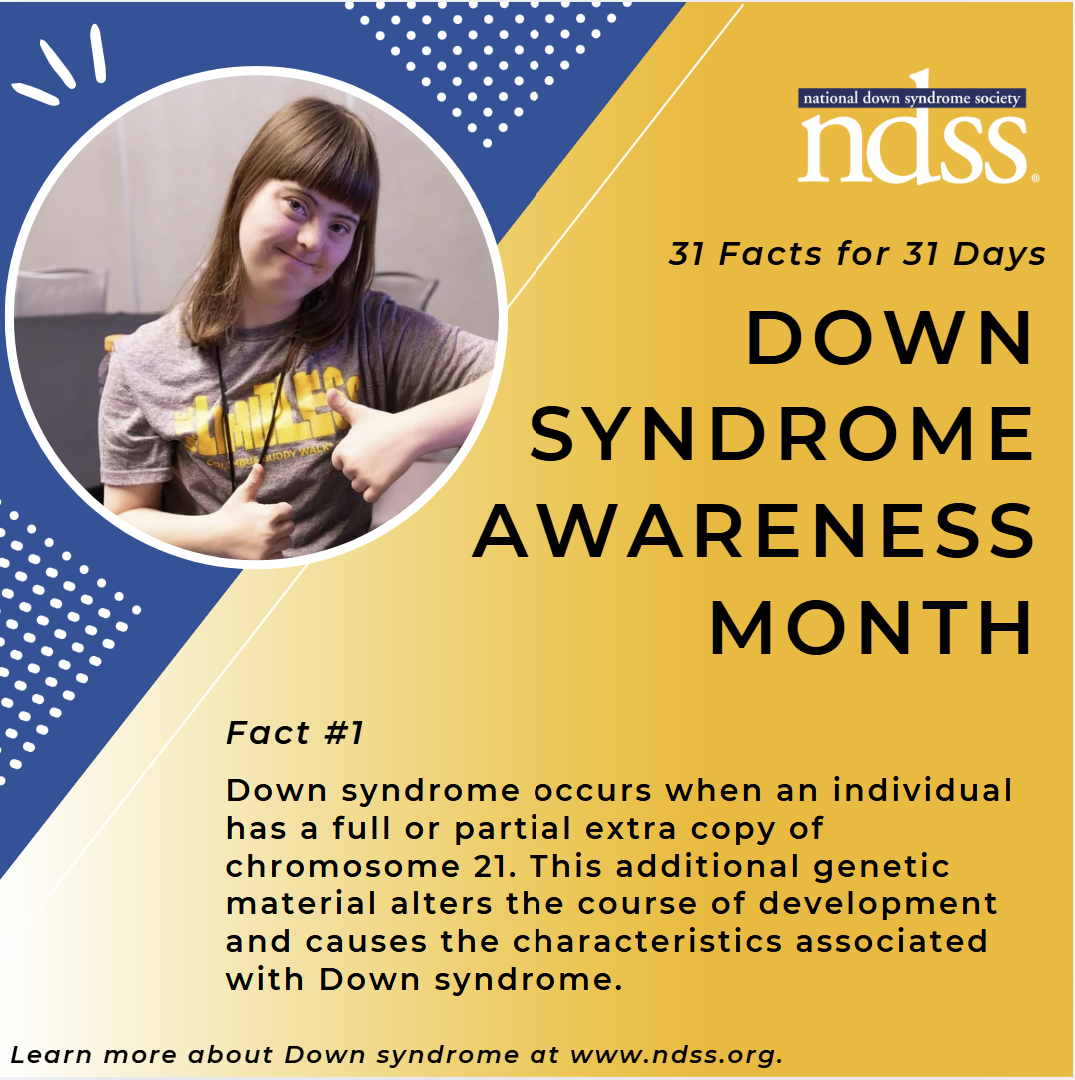
October is Down Syndrome Awareness Month

Celebrate the many abilities of our loved ones with Down syndrome


Join us in supporting the Down syndrome community during this special month. In the 1980s, NDSS participated in the efforts to have October proclaimed, “Down Syndrome Awareness Month,” or “DSAM,” and this designation continues today.


It’s a month to raise awareness and celebrate the many abilities of our loved ones with Down syndrome. DSAM seeks to break down barriers and focus on promoting advocacy for people with Down Syndrome. NDSS celebrates October in a different way each year and we invite you to get involved and spread the word. Use #DownSyndromeAwarenessMonth to post on social media, and don’t forget to tag NDSS so we can share your post! 


About Down Syndrome

In every cell in the human body there is a nucleus, where genetic material is stored in genes. Genes carry the codes responsible for all of our inherited traits and are grouped along rod-like structures called chromosomes. Typically, the nucleus of each cell contains 23 pairs of chromosomes, half of which are inherited from each parent. Down syndrome occurs when an individual has a full or partial extra copy of chromosome 21.


This additional genetic material alters the course of development and causes the characteristics associated with Down syndrome. A few of the common physical traits of Down syndrome are low muscle tone, small stature, an upward slant to the eyes, and a single deep crease across the center of the palm. Individuals with Down syndrome possess varying degrees of cognitive delays, from very mild to severe. Most individuals with Down syndrome have cognitive delays that are mild to moderate. Although each person with Down syndrome is a unique individual and may possess these characteristics to different degrees, or not at all.


Aging successfully can be accompanied by challenges and obstacles for which adults with Down syndrome and their families and caregivers may feel inadequately prepared. Learning more about aging and the common concerns that may arise in later life can help individuals feel ready for what lies ahead. The NDSS has published a guidebook that aims to provide education and practical guidance for individuals with Down syndrome to more confidently prepare for a healthy adulthood into old age. You can view the entire guidebook by clicking the button below.


In recent decades, adults with Down syndrome are living into their 50s, 60s, and beyond, reaching new and exciting milestones in older age. Adults with Down syndrome experience a phenomenon of “accelerated aging,” meaning that certain conditions and physical features of aging arise at an earlier age than would typically be seen in the general population.


Generally, the effects of accelerated aging can be seen medically, physically, and functionally in individuals with Down syndrome. To family members and caregivers this might be observed as a general “slowing down” as individuals grow older. In addition, it is common for features of aging such as cataracts, hearing loss, or arthritis to develop earlier than what would be expected for their chronological age.


Complicating this picture is the fact that “normal aging” in adults with Down syndrome is not something that is neatly and predictably defined. Like all adults, they feel and express the effects of aging differently, so there is no exact timeline that can forecast these changes. In contrast, it is not typical, normal, or expected to experience a sudden, dramatic, or rapid decline with age.


These scenarios should always prompt further investigation and evaluation to uncover a root cause of these changes. In general, it is important to watch for any early changes or differences in individuals with Down syndrome as they grow older and to seek further help as needed.

It is important to recognize the special differences that people with Down syndrome will face as they age. This month, and beyond, let’s celebrate all the differences that make people with developmental disabilities truly amazing and continue to provide assistance as they age in place!

To learn more about aging and Down syndrome, read through the entire guidebook below:


To dive into more resources about aging adults with Down syndrome visit the National Down syndrome Society webpage below:

Resources: https://ndss.org/down-syndrome-awareness-month

https://ndss.org/resources?audience=All&topical=All&lifespan=44&language=1

https://ndss.org/media/281?token=YlAfpFaxa1rt5cwPlsaLKPEDNsrkNkiqDxTvVjJ4I8g

Evidenced Based Programming for Seniors

Partnering with Big Bend Area Health Education Center (AHEC)


Taking care of your health is our priority. The entire staff at Big Bend AHEC makes it their mission to serve you while striving to eliminate the barriers that are built upon health issues. Advantage Aging Solutions provides funding to AHEC to promote and provide senior-friendly health and wellness programs.


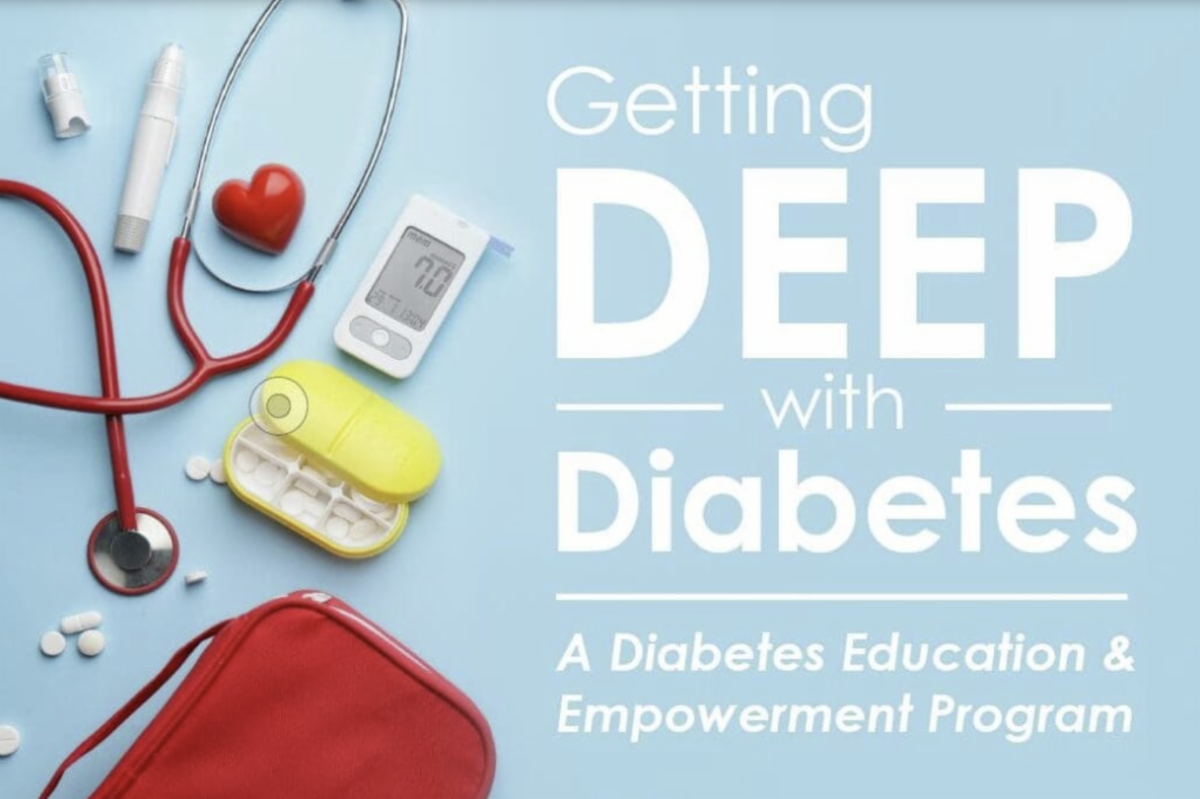
One of these programs is called DEEP (Diabetes Empowerment Education Program), which is a Medicare-approved, evidence-based diabetes self-management education (DSME) program for people with prediabetes or diabetes and their loved ones. All classes are FREE.


Increasing access to DEEP is essential to ensure that people with diabetes and prediabetes can acquire the knowledge and skills necessary to reduce complications resulting from diabetes, such as kidney failure, amputation, vision loss, heart failure, and stroke.


Big Bend AHEC offers six weekly workshops for DEEP, which are delivered by a certified DEEP peer educator. They work with the participants and partners to determine the best day for each six-week class. Each workshop lasts two hours. Morning and evening weekday classes are available.


Classes are available in person or by video call using the Zoom platform. Participants using the Zoom platform can use a smartphone, tablet, or computer to access the class for no additional cost.


Past students have seen the following improved outcomes with DEEP:

  • lower A1c levels and systolic blood pressure
  • diabetes knowledge
  • more physical activity
  • following a healthy eating plan
  • better foot care
  • glucose self-monitoring
  • medication adherence
  • perceived confidence in self-care


Stay tuned form more information on the other Health and Wellness programs that are offered!


If you are interested in participating in the DEEP Program or want more information, please contact Stephanie Howard at showard@bigbendahec.org.


Resources: https://bigbendahec.org/deep/

https://bigbendahec.org/

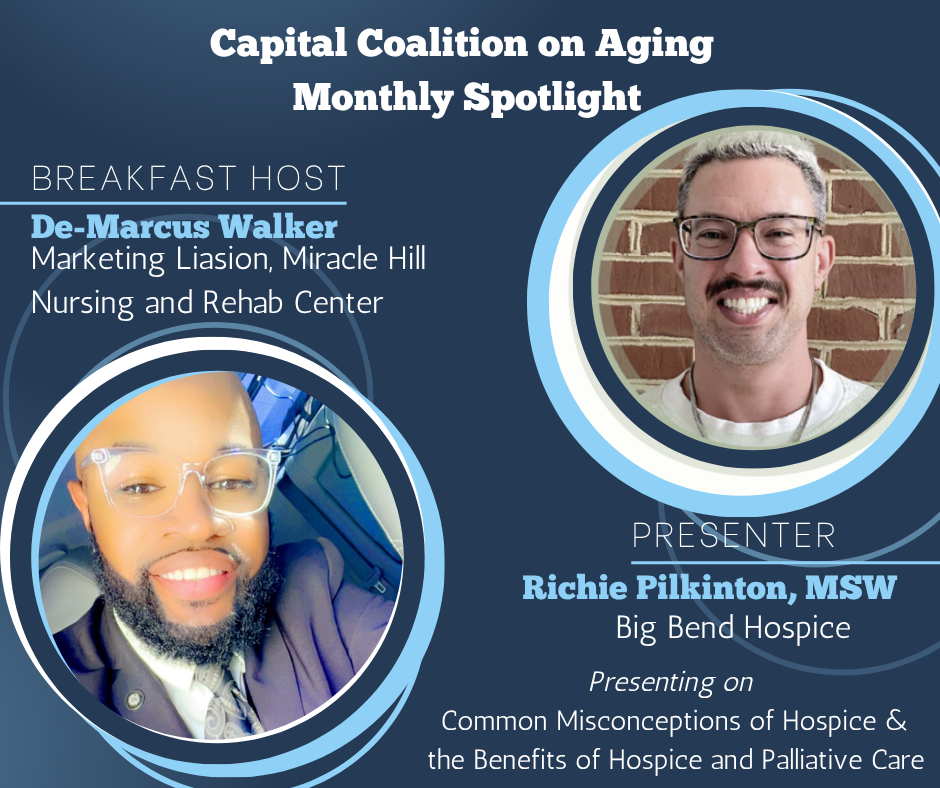
Capital Coalition on Aging 

Meeting Reminder

Join us for our Capital Coalition on Aging (CCOA) meeting, held montly at the Tallahassee Senior Center.

​

We are slowly growing, thanks to you! Please keep sharing this event!


We hope to build back up our attendance to 50-60 each month - a goal we can only accomplish together by sharing the invitation to aging professionals we know that are not current members and reminding our colleagues who are on our member list.​ Don’t forget to bring your business cards and any information about your organization that you would like to hand out.

​

Come for breakfast and stay for the presentation and networking! 

We look forward to seeing you all there!​


This month's meeting is October 21, 2026 at 8:30am


X Share This Email
LinkedIn Share This Email