The Arc of NJ Appoints Céline Fortin as New Executive Director
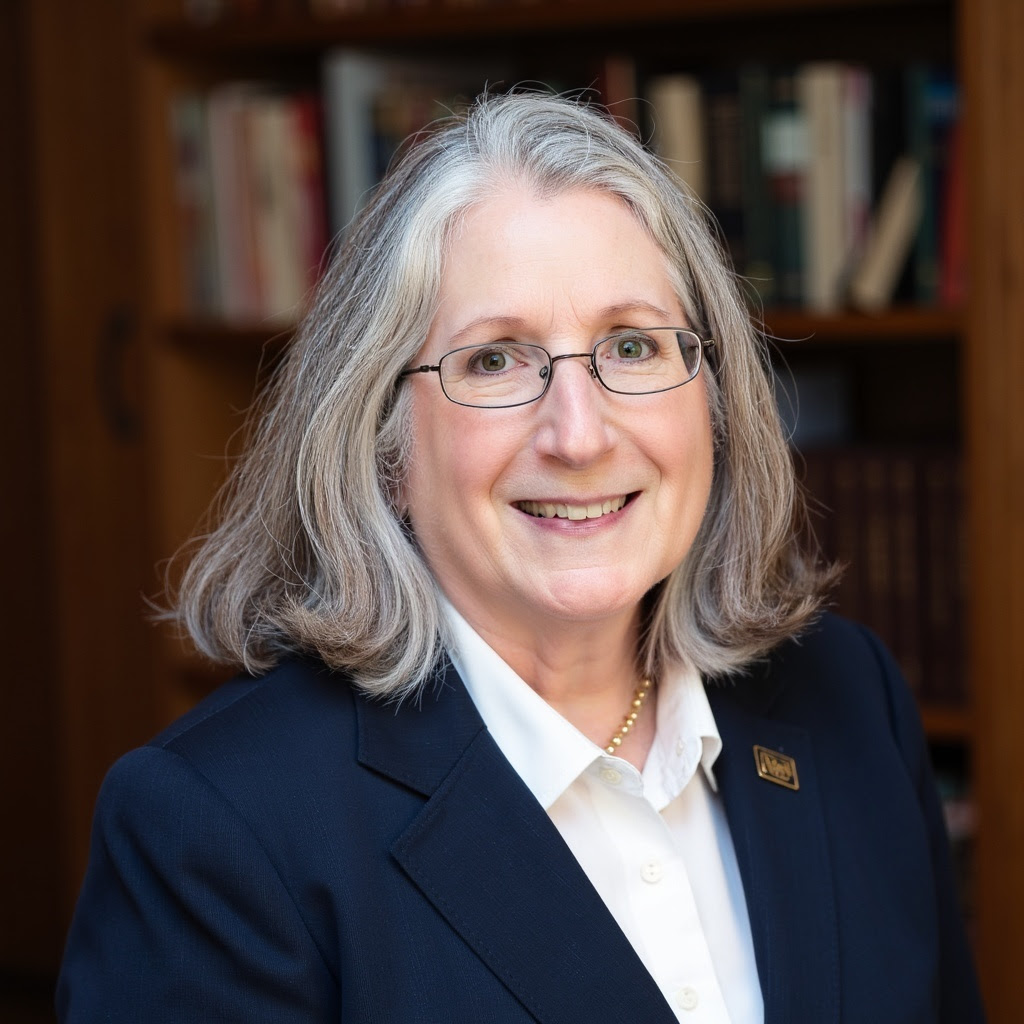
The Arc of New Jersey, the state's leading organization advocating for and serving children and adults with intellectual and developmental disabilities (IDD) and their families, announced that Céline R. Fortin, MSW, LSW and Associate Executive Director, has been elevated to the role of Executive Director effective October 1st. Fortin has been with The Arc of New Jersey for more than 30 years and takes the reins of the organization from previous Executive Director, Tom Baffuto, who retired earlier this year. To read more, click here.
For additional news stories see below:
| |
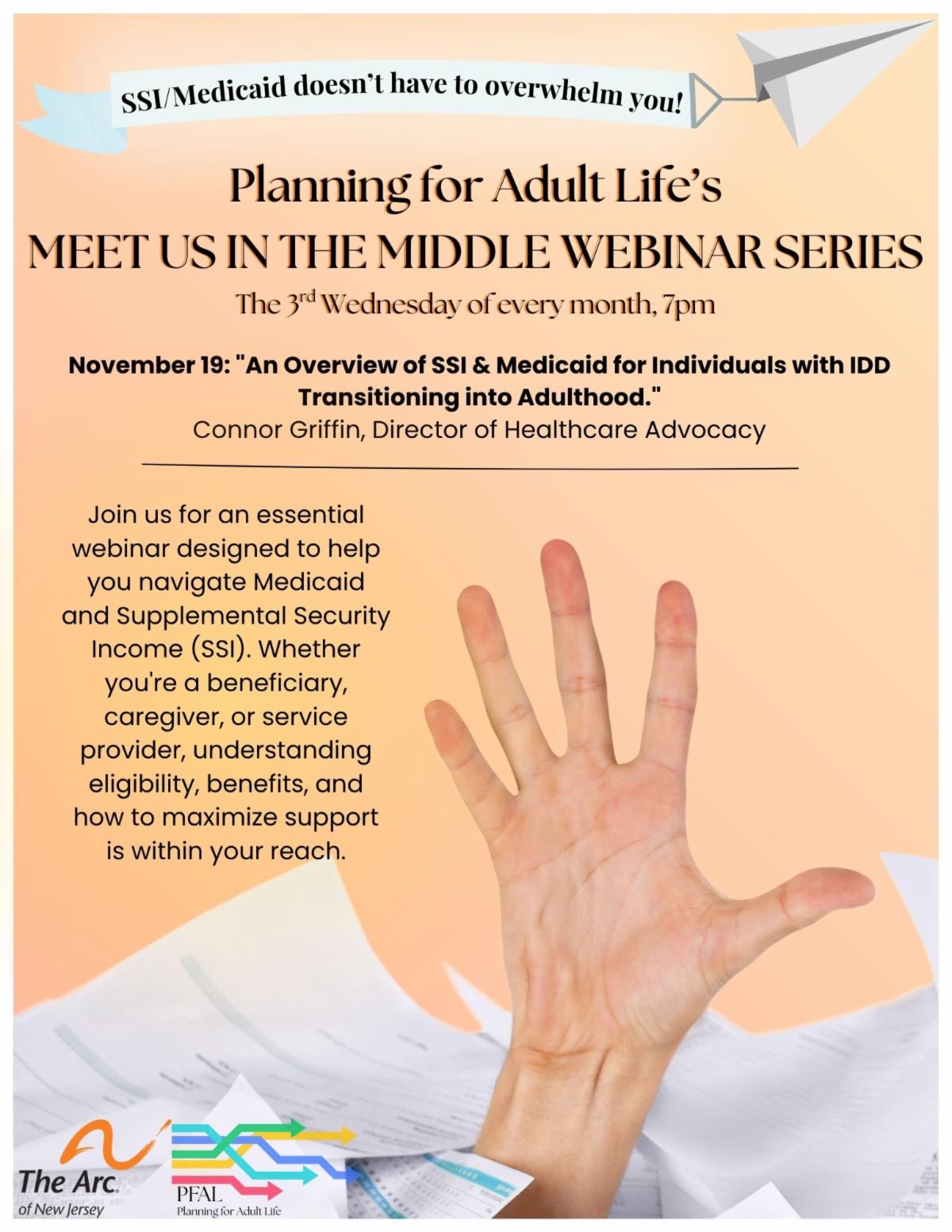
Upcoming Webinar with Planning for Adult Life (PFAL):
"An Overview of SSI & Medicaid for Individuals with IDD Transitioning into Adulthood," with Connor Griffin, Director of The Arc of NJ's Healthcare Advocacy."
November 19th at 7:00pm
Join us for an essential webinar designed to help you navigate Medicaid and Supplemental Security Income (SSI). Whether you're a beneficiary, caregiver, or service provider, understanding eligibility, benefits, and how to maximize support is within your reach.
| |
Pediatrics Group Declines To Recommend Drug For Autism Touted By Trump Administration
New professional guidance to the nation’s pediatricians advises against using a drug in children with autism that many families are clamoring for after it was hyped by federal officials.
The American Academy of Pediatrics said late last week that it does not recommend routine use of leucovorin in kids who are on the spectrum because there is limited evidence to support the practice.
In September, Trump administration officials touted leucovorin as a possible treatment during a press conference about autism. The Food and Drug Administration said it would work to approve the decades-old drug for cerebral folate deficiency, a neurological condition associated with autism features.
Read the Disability Scoop article.
| |
Hurdles to Healthcare Series from NorthJersey.com
A new NorthJersey.com investigative series shows how, despite decades of disability rights laws, barriers to care remain widespread for people with disabilities.
| |
5 Key Facts about Medicaid for Individuals with Intellectual and Developmental Disabilities (IDD)
President Trump signed into law a budget reconciliation package that made major reductions in federal health care spending to offset part of the costs of extending expiring tax cuts. The Congressional Budget Office’s (CBO) latest cost estimate shows that the reconciliation package would reduce federal Medicaid spending over a decade by an estimated $911 billion and increase the number of uninsured people by 10 million, with three quarters of the change stemming from cuts to Medicaid. These reductions could have implications for people with intellectual and developmental disabilities (IDD) as people with IDD disproportionately rely on Medicaid.
To read the full KFF article, click here.
| |
Social Security Announces 2.8% Benefit Increase for 2026
The Social Security Administration (SSA) announced that Social Security benefits, including Old-Age, Survivors, and Disability Insurance (OASDI), and Supplemental Security Income (SSI) payments for 75 million Americans will increase 2.8 percent in 2026. On average, Social Security retirement benefits will increase by about $56 per month starting in January.
Over the last decade the cost-of-living adjustment (COLA) increase has averaged about 3.1 percent. The COLA was 2.5 percent in 2025.
Nearly 71 million Social Security beneficiaries will see a 2.8 percent COLA beginning in January 2026. Increased payments to nearly 7.5 million people receiving SSI will begin on December 31, 2025. (Note: Some people receive both Social Security benefits and SSI).
Click here to read the full press release.
| |  |
Many Medicare Advantage and Medicaid Managed Care Plans Have Limited Behavioral Health Provider Networks and Inactive Providers
Companies running private Medicare and Medicaid insurance plans inaccurately list many mental health professionals as being available to treat the plans’ members, a new federal watchdog report says.
The investigators allege that some insurers set up “ghost networks” of psychologists, psychiatrists, and other mental health professionals who purportedly have agreed to treat patients covered by the publicly financed Medicare and Medicaid plans. In fact, many of those professionals do not have contracts with the plans, do not work at the locations listed, or are retired, the investigators said.
Click here to read the report from the Office of Inspector General for the Department of Health and Human Services, which oversees Medicare and Medicaid.
| | |
NJ START Program Launch
START - Systemic, Therapeutic, Assessment, Resources, & Treatment - Services NJ is a proactive, consultative program aimed to mitigate psychiatric emergency and inpatient hospitalization for people who are at-risk. Using a systemic approach, START Services NJ engages with community partners and other stakeholders to provide linkages in the community, psychoeducation, and other trainings to enhance the quality of life for the people and their systems of care.
Crisis Prevention and Response
Providing crisis prevention and response for people (ages 21 and older) with intellectual/developmental disabilities who present with complex behavioral and mental health needs in specific New Jersey counties.
Services Include: Crisis mitigation techniques, Crisis response systems support, Clinical consultation, Education and training, Psychoeducation and Therapeutic coaching—in-home support services.
Click here to learn more about START.
| |
New Initiative Aims To Bring Doctors Up To Speed On Down Syndrome
Few people with Down syndrome have access to doctors specializing in the chromosomal disorder, but a new effort is underway to ensure that physicians nationwide know how to care for this population.
An initiative launching this week offers a free two-hour training course for health care professionals on treating adults with Down syndrome. The online course qualifies for continuing medical education credits, which doctors often need to maintain their licenses.
The training program is part of a broader information hub called CARE Down Syndrome developed by the National Down Syndrome Society, which features resources on everything from women’s health and weight management to Alzheimer’s disease as they relate to individuals with Down syndrome.
Read more here.
| | | |
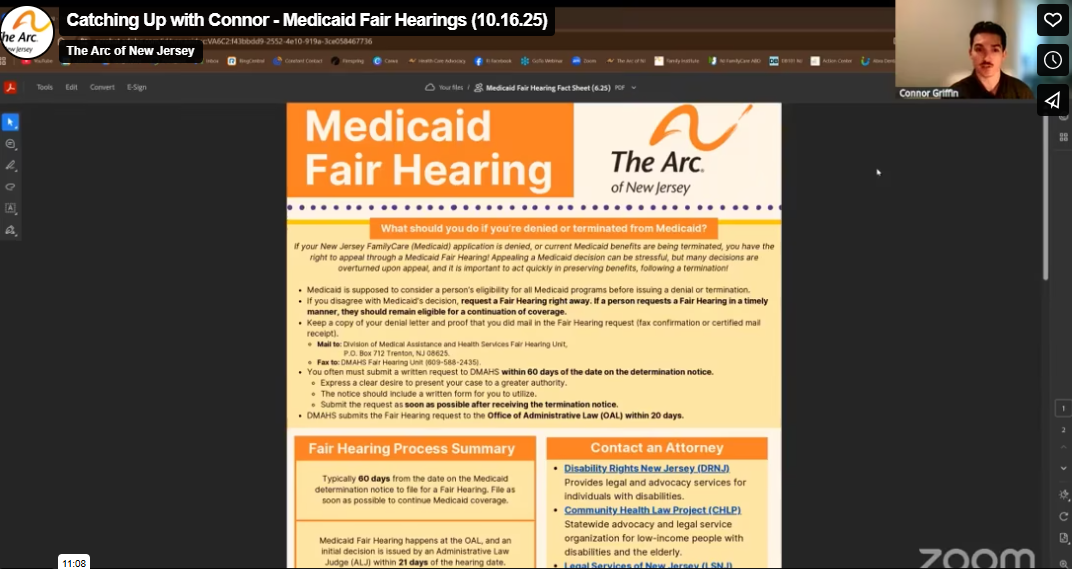
Tune into Catching Up with Connor!
Live on Facebook every other Thursday at 2:30pm, this series features 10-15 minute educational presentations on specific health care issues, news, and key topics for individuals with IDD and their families.
No registration is required, but please leave a like and comment what topics you would like to see!
| | | |
Virtual Office Hours
The Health Care Advocacy Program offers virtual office hours on Mondays from 1:00pm to 3:00pm.
| |
Meet with the Director of Health Care Advocacy to discuss healthcare questions or concerns, for example, regarding Medicaid, Medicare, or Social Security, as they affect your family member or loved one with IDD.
Appointment slots are offered on a first-come, first-served basis and may be limited to 20 minutes, as needed, to accommodate more people.
| | You are encouraged to share this information with others who may also be interested. However, if you are forwarding this email, please delete the "unsubscribe" link at the bottom of this page. If you do not remove the "unsubscribe" option and a person who receives your forwarded email clicks "unsubscribe," it would result in your name being removed from our distribution list. | | | | |