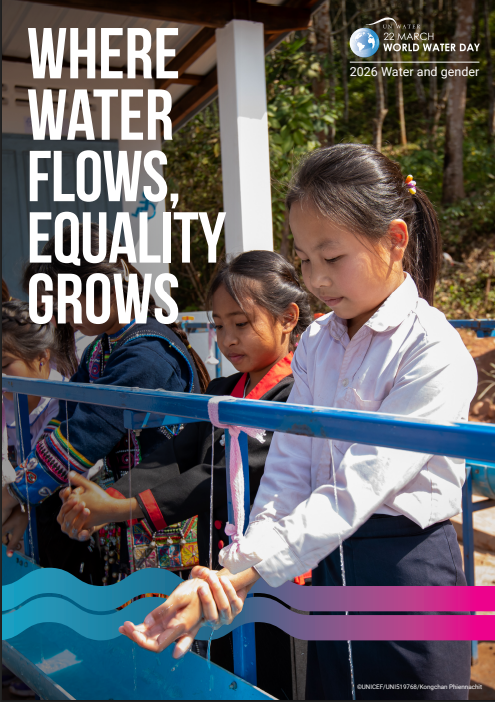
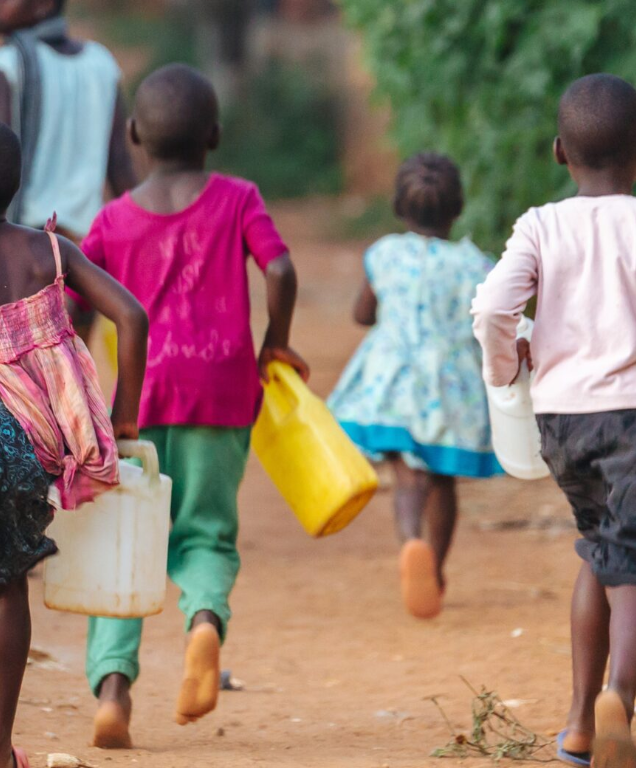
World Water Day celebrates water and raises awareness of the many people around the world who live without access to clean drinking water. The theme of World Water Day 2026 " Water and Gender ", highlights how deeply connected water issues are to sanitation and gender equality. Climate change intensifies water scarcity, droughts, floods, and extreme weather events, placing an even greater burden on women and girls who are often responsible for securing water for their households. As climate impacts grow, addressing water and gender inequality becomes essential to building resilience and adapting to a changing climate.


This year’s campaign called “Where Water Flows, Equality Grows” emphasizes how a lack of access to safe water and sanitation disproportionately affects women and girls, and how empowering them in water related decision-making helps build more equitable, sustainable communities. The campaign calls for transformative, rights-based approaches that recognize women’s and girls’ voices, leadership, and opportunities in water policy, planning and governance.


March 22 is World Water Day, a time to celebrate water and raise awareness about the global water crisis. You and your students can make a difference by changing how you use, consume and manage water. Be the change you want to see in the world; water affects everyone, so we all need to take action.


Grades K-3

We are Water Protectors

Water is the first medicine. It affects and connects us all. When a black snake threatens to destroy the Earth and poison her people's water, one young water protector takes a stand to defend Earth's most sacred resource. Inspired by the many indigenous-led movements across North America, this bold and lyrical picture book issues an urgent rallying cry to safeguard the Earth's water from harm and corruption. 


Activities


Grades 3-6

Clean Water for All

The resource activities aim to increase students understanding of the various causes of water pollution and to raise awareness of the global inequality of access to safe water around the world. The lesson helps students understand why clean water matters, what water pollution is, and how to access safe water varies around the world. It connects learning to SDG 6 ensuring clean water and sanitation for all people.


Activities

Grades 6-8

Water and Sanitation for All: Bringing the Issue Home

The lessons in this resource are designed to raise awareness of the problems facing children with inadequate access to clean water or sanitation facilities. Students explore the “big picture” of water and sanitation and begin to see how vital water and sanitation is to life, health, education, and well-being. They become familiar with why it is so important to have clean water and sanitation facilities and discuss some of the consequences of their absence. Students are presented with examples of how to take action within their community and brainstorm action ideas.


Activities

  • Take the Clean Water Challenge by using different materials to attempt to clean the sample water
  • Have students create a media campaign to raise awareness about the importance of water conservation and the impact that human activity has on natural resources
  • Connect virtually with a Northern Community under a boiling water advisory and have the students ask a member of the community questions regarding their water quality and issues.
  • Learn more about Indigenous women who are water protectors in their community with the learning package Water Is Life

Grades 9-12

The Climate in Our Hands - Ocean and Cryosphere

This resource empowers teachers to bring the critical science of climate change, focusing on oceans and cryosphere, into their classrooms through interactive and multidisciplinary activities. By exploring the profound relationship between the ocean, cryospher and climate, students are equipped with the knowledge and tools to understand the impacts of climate change and the actions needed to address it.


Activities

  • Learn about the cryosphere and how it is being impacted by climate change
  • 8-4-1, One for All representing eight different water users, students must safely carry one water container “downstream” and must navigate through four simulated water management challenges to reach the next community of water users on the same river
  • Thinking about Water and Climate Change has students discover the relationship between climate change and the health of water
  • Beat the Flood explores how STEM skills can be used to help communities be better prepared for flooding. Students design a model of a home able to withstand the effects of flooding
  • Access Exploring Our Growing Need for Water to learn more about water sustainability issues we are facing around the world

About Learning Inside Out


Above you will find a selection of activities, broken down by various grade levels. These guides will be released biweekly and archived on our Learning Inside Out page, so you can always access the full catalogue.


Some of the activities have been modified from resources on our R4R database, simplified and adapted for both outdoor learning in the school yard or at-home as needed. The activity descriptions above should contain all the information and links that you need!


We want this guide to work for you, so your feedback is invaluable to us.

Use the feedback button at the bottom of this Guide, or email us at info@LSF-LST.ca.


Follow us on social media for continued weekly highlights & other exciting opportunities through the school year!

Facebook  Twitter  Instagram  Linkedin  

Please share widely with any parents and teachers in your life!

Learning for a Sustainable Future (LSF) is a Canadian charity with over 25 years of experience working within the education system. Our Resources for Rethinking (R4R) database is an award-winning collection of resources that are peer-reviewed by certified teachers and connected to curriculum in all provinces and territories. R4R is recommended on many Ministry of Education websites.