Continuing to Fight for Students with Disabilities | |
|
Federal law guarantees public education to students with disabilities until their 22nd birthday under the Individuals with Disabilities in Education Act (IDEA). Until recently, however, Pennsylvania Department of Education (PDE) maintained a policy of terminating special education eligibility at the end of the school year in which students turned 21, depriving students of up to a year of critical services.
In 2023, in response to a class action suit filed by the Public Interest Law Center and Berney & Sang, PDE revised its policy to reflect the fact that districts are federally required to educate students with disabilities until their 22nd birthdays. Unfortunately, some school districts have continued to take the position that they are entitled to terminate students’ services at the end of the school year in which they turn 21.
In order to protect students’ rights under the IDEA, we filed a new lawsuit on behalf of four students whose school districts are attempting to prematurely end their education. The Plaintiffs in this case, students with disabilities by and through their parents, seek a federal court order making clear that these districts, like all districts in the Commonwealth, are required to continue educating Plaintiffs and students like them until their 22nd birthday. Courts across the country have struck down attempts by districts to prematurely age out students, and we are confident that our clients’ rights are protected by the IDEA in this case as well.
| |
PA Schools Work Press Conference | |
|
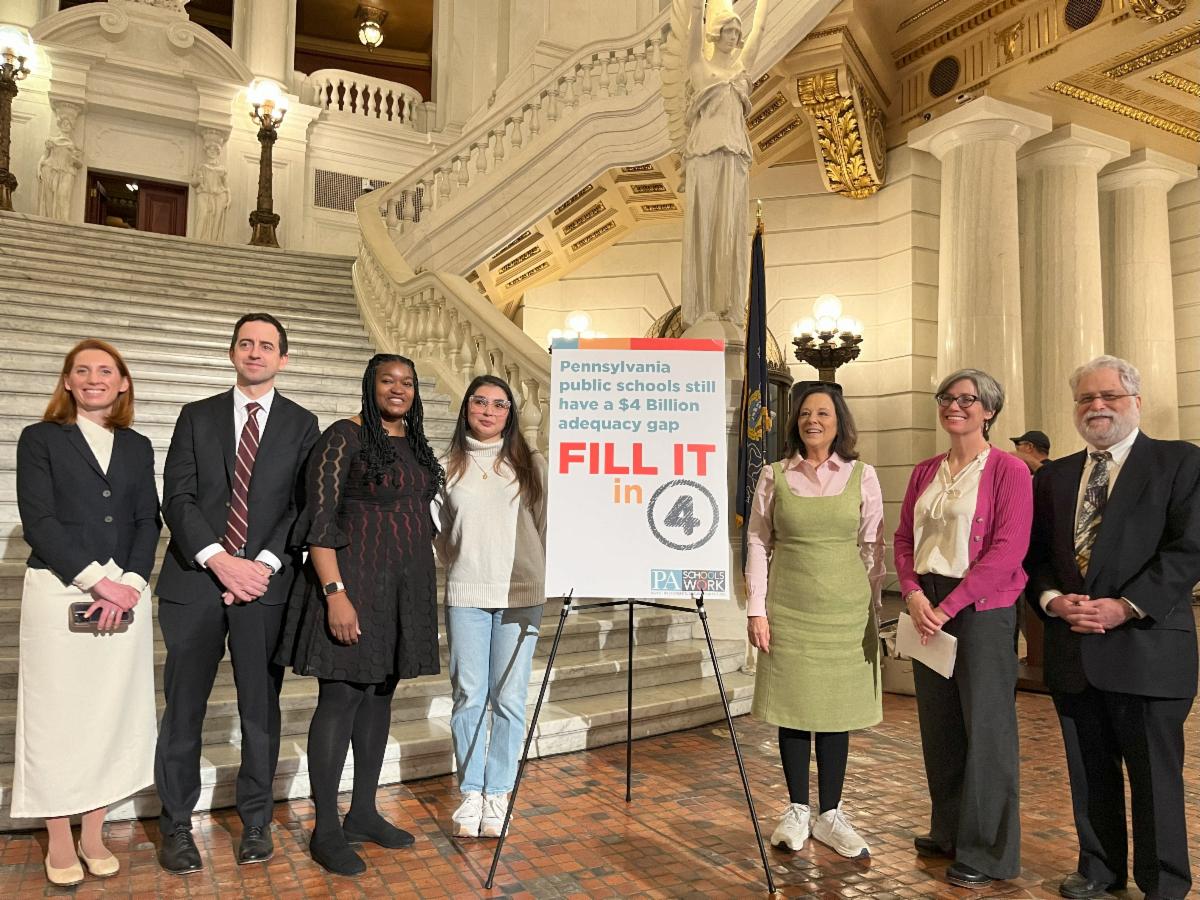
On January 14, members of the PA Schools Work campaign gathered in Harrisburg to promote the coalition’s “Fill It In Four” proposal. Speakers called for a $4 billion investment in public education over the next four years to address last year’s landmark school funding legislation.
“The Fill It In Four plan isn’t just about numbers – it’s about providing real, tangible support that teachers like me need to help our students succeed,” said Afia Lewis, a 6th grade teacher at Bell Avenue Elementary School in the William Penn School District.
“Think for a minute about what it looks like when children go to kindergarten on the first day of school,” said Dan Urevick-Ackelsberg, senior attorney at the Public Interest Law Center. “Those anxious, happy little faces, the backpacks that are too large for them, looking out at the possibility of what lies ahead. The children who were in kindergarten when this case was filed are in 10th grade now. They have been in those underfunded schools the entire time. We need to get this done now. We need to fill it in four.”
The event was held ahead of Governor Shapiro’s Budget Address on February 4.
See coverage on The Keystone, 90.5 WESA, and ABC 27.
| |
Kensington "Wellness" Court | |
|
Last December, the Parker Administration revealed their intentions to establish what they call a “wellness court” in Kensington – though the reality of their plan begs a different title. One day a week, police will “sweep” the streets of Kensington with the goal of arresting the people there on summary offenses, including disorderly conduct, obstructing the highway, public intoxication, and failure to disperse. Those arrested will be taken to Municipal Court, where they will have to choose to face a same-day trial for their alleged conduct or to enter a treatment program for up to 90 days.
The plan is flawed. Besides the logistical challenges it would raise, it would also disproportionately impact Black and Brown Philadelphians, who are arrested for low-level offenses at a much higher rate than their white neighbors, and it would precipitate severe drug withdrawal for people awaiting sentencing without proper medical resources
We, along with our allies in the civil rights law sector, have raised our concerns about the constitutionality of this plan to Mayor Parker. Read the letter here.
| |
|
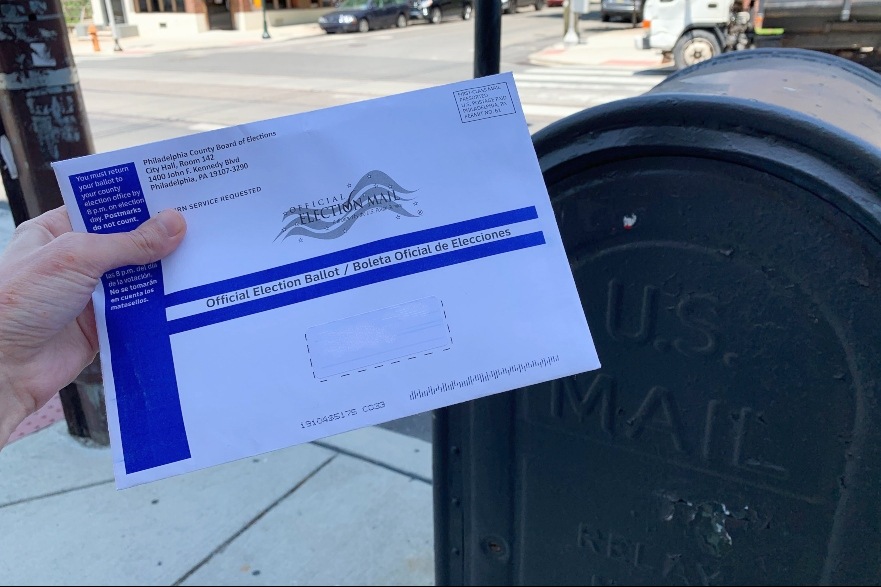
In Baxter v. Philadelphia County Board of Elections, our clients mistakenly omitted the date when filling out their mail ballot return envelopes during the September 2024 special election. We prevailed on their behalf in the Philadelphia Court of Common Pleas and on appeal in the Commonwealth Court. Both courts held that under the Pennsylvania Constitution’s Free and Equal Elections Clause, a mail ballot cannot be disqualified merely because the voter failed to date or wrote an incorrect date on the declaration envelope. On January 17, the Pennsylvania Supreme Court agreed to hear an appeal.
We welcome the opportunity to at last obtain a merits decision from the Pennsylvania Supreme Court on this issue. Repeated nonprecedential lower-court decisions about this constitutional issue have left uncertainty about the dating requirement; a decision from the Pennsylvania Supreme Court will set a statewide precedent that will impact thousands of mail voters in each election.
| |
After five years at the Law Center, staff attorney Sarah Kang is beginning a new chapter as a staff member at Penn Law School. Sarah consistently brought passion and precision to her work with clients, and she will no doubt shine in her next role. We’ll miss having her in the office, and we wish her the best of luck! | |
|
The Law Center is hiring a full-time attorney to work on our major initiatives across multiple project areas, including housing and environmental justice. Reporting to the Legal Director, the attorney will be responsible for all aspects of litigation, including identifying high impact cases, developing legal theories, and conducting factual investigation, research, discovery, trial, appeals, and enforcement. They are expected to stay informed about the challenges facing the diverse communities in which we work and to identify high-impact litigation solutions where appropriate.
Candidates should have at least seven years of experience.
Find the full listing here: https://pubintlaw.org/wp-content/uploads/2025/01/2025-Attorney-Posting.pdf
| |
The official registration and financial information of the Public Interest Law Center may be obtained from the Pennsylvania Department of State by calling toll-free, within Pennsylvania, 1-800-732-0999. Registration does not imply endorsement. | | | | |