| |
|
| |
The only thing that is constant is change.
—Heraclitus |
|
|
| |
|
|
| |
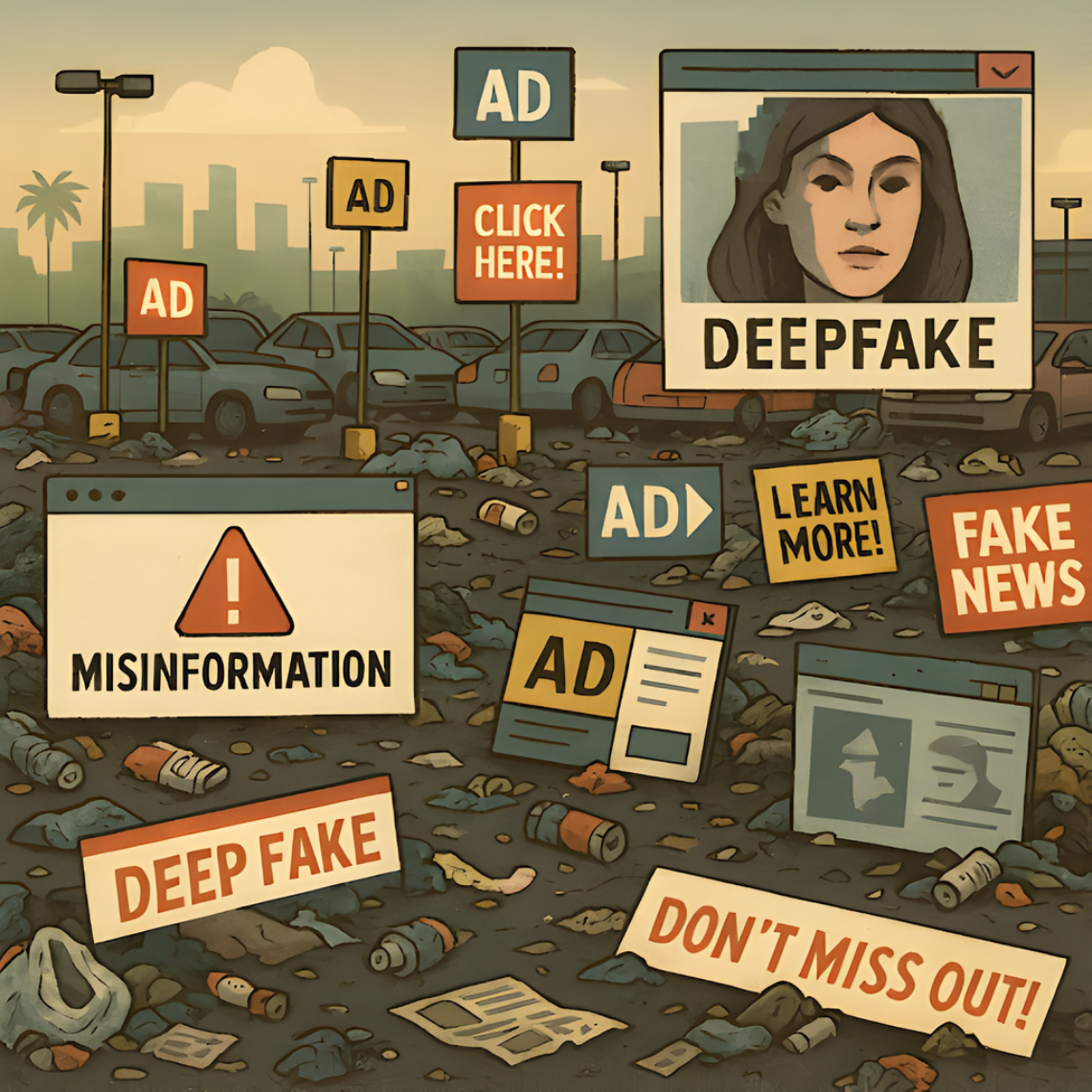
| When Joni Mitchell wrote “They take paradise and put up a parking lot,” she was talking about the physical world. But it's an apt analogy to what happened to the Web and what can happen to the world of AI. Image credit: AI-Generated Image by Robin Raskin using Copilot |
| |
|
| |
| The It’s a New Year Issue |
| |
|
| The AI-ification of Everything |
|
| |
That limbo week between Christmas and New Year may be an artificial construct, but it’s needed now more than ever. Time slows. We take stock of where we’ve been and where we’re headed. Emails and texts trickle off to manageable levels. Social media takes a more reflective tone. We get a moment to breathe and think about how next year might play out.
So let’s reflect. More than 40 years ago, when I was editor at PC Magazine, the commercial Internet was still unborn. In the Before-Internet-Times, our magazine’s social network and bulletin board were housed on CompuServe. By the early 90s, HTML, the language that allowed Internet information to be represented as webpages, was leading the pack. It offered a
standard way of unifying information on various walled-garden services like Prodigy and CompuServe. I remember sitting down with other editors saying, “This HTML/Internet thing is happening, and fast. What are we going to do? How are we going to keep up?”
Today, a mature Internet has provided a blueprint for what can go wrong or right if we’re not intentional and if we don’t incentivize the outcomes we’d like to see. The vision of a connected repository of the world’s knowledge is still alive, but it’s buried beneath tons of garbage. And much of that garbage is the product of commercialization. “They take
paradise and put up a parking lot” is songwriter Joni Mitchell’s refrain that referred to the rise of brick and mortar, but it easily translates to today’s web. |
| |
|
|
| The pace of the Internet’s growth seems glacial compared to the pace of AI infiltration. And this high-speed dash to AI-ify everything is already exposing some disturbing trends. AI is already displacing the traditional workforce, with entry-level white-collar jobs taking the hardest hit. AI slop, a mediocre regurgitation of what large language models have been
fed, makes for uninspired content with a hefty drain on our power grid. Deep fakes, hallucination, chatbots that encourage our worst impulses, be it suicide or violence, are all a part of a day with AI. And the road to monetizing AI will surely help bury the information we might find useful. |
| |
|
| |
Repeating History
In our rush to monetize the Internet, we broke much of the magic. We stand to repeat history. AI can excel at wondrous things. It can diagnose complex diseases, help us run everything from factories to cities more efficiently, and help the agrarian economy grow more produce in an environmentally conscious way. And yes, it can even take the tedious chores of our
lives—researching a travel trip, searching for colleges, planning a meal—and whittle them into minutes.
Designing intentional systems that reward the best outcomes requires careful thought. Before designing any AI system we need to ask what we value. We need to build good, careful judgment into these systems. Tough order when the folks building the systems may have no judgment or values, right?
In 2026, the conversation will go right over the many people's heads and focus on Agentic AI. Mobs of AI agents will converse amongst themselves. They’ll have the capacity to act, use other tools, call on other programs and complete many tasks independently of humans. |
| |
|
| |
To be Considered
Are humans really going to coexist with AI as they build the code that drives the economy, shoot feature films and perform medical diagnoses? Or are we just stringing ourselves along? What’s Plan B? Should we consider an AI displacement insurance policy for when we’re no longer required? A Universal Basic Income so humans have
something to spend while AI’s toil away? A fair wage for any human contribution laid waste to the AI scrapers? Disruption happens, but let’s plan for it to minimize the upset.
Tech never changed human nature. It just amplified the good and the bad. It’s the 1990s all over again, only with even higher stakes as we transform the entire 1st-world economy. Let’s not blow it. One unique human trait is our ability to play the long game. Let’s use it. |
| |
|
| |
| Me and My Meta Ray-Bans, Living Large |
|
| |
|
| |
 |
| AI-Generated Image by Robin Raskin using Copilot |
| |
| |
In the spirit of indulgence, I bought myself some Meta Ray-Bans over the holiday. (Years ago, I also bought the original Google Glass, so I should have known better.) My Meta’s are way more affordable, and it’s been a blast to test drive them this past week. One thing is certain. It’s the beginning of the hands-free/no-screen revolution.
The glasses are surprisingly comfortable, and I had no problem connecting them to apps like Spotify, Amazon Music, and Audible for my listening needs. But the glasses go far beyond basic playback, which I could do with earbuds. |
| |
|
|
|
|
| |
|
| |
Here are a few specifics on things I’ve learned to do with my Ray-Bans:
- They are good for querying just about anything—art, architecture, history, restaurants —though they can’t browse specific websites. They can, for example, tell me where the Delta club is at the airport.
- They can translate short phrases into other languages. However, they aren’t a full two-way translation service, such as what you can do with Google Translate and a phone.
- They can record short dictation that I can retrieve later (not newsletter length) and set up simple reminders that only remind me if I’m wearing my glasses.
- I love them for listening to podcasts when I’m running my errands. But I haven’t figured out how to pause and restart them. And while I’m listening using Ray-Bans, I’m less isolated sonically from my surroundings than if I were wearing earbuds.
- The glasses can capture pretty good photos and videos either with a button press or by saying the wake-up words “Hey Meta.” But because I’m a short little fella and they’re on my nose, I’m often taking a picture of people’s throats. And because of the delay when snapping photos, I’m often using AI to sharpen the blur. I totally missed New Year’s Eve by trying to
capture the party with my glasses; there’s no way to preview what you captured without using your phone. All in all, it’s a tier below my cell phone’s camera, despite the fact that the resolution is great.
- They can read my calendar entries, but only the top line detail, not the extensive notes I’ve added. And they won’t make a calendar entry.
- Where things get funky is with useful things I’d like to do. My Ray-Bans don’t know how to create a shopping list or to-do lists; I need that.
- They can read and send texts, but not emails.
- When the streets of NYC get too noisy, my Metas wig out a bit, with the volume getting louder and softer for no apparent reason.
Let’s end by saying I’m cheap. I didn’t buy Version 2.0 (lighter and larger battery) and I didn’t buy the latest with the super-cool wrist bracelets that let you use your fingers as an input device. Still, in the chilly NYC winters, it’s pretty cool to be wearing my Meta’s hands-free. And the price is right. |
| |
|
| |
Wearables: Turn Insight to Action at this year’s CES
Wearable devices such as watches and rings have become commonplace. They’re good at taking measurements and spitting back metrics, not so good at offering prescriptive insights and actions. But that’s about to change. And the changes are taking all sorts of interesting form factors. Action trumps insight.
A few examples:
- Elemind is a hardware headband that can actually put you to sleep. It analyzes your brain waves and creates a customized pink noise signal that tricks your brain into sleep.
- Quellios uses a simple scan of your finger captured by your smartphone and then translates the scan into biological signals that science has linked to inflammation.
- Project LUCI is an AI pin with memory storage and quick processing that records videos of your day. But it will also organize and highlight important moments you might want to revisit. The company hopes that developers will embrace its foundation to build new uses.
There’s No Swiss Army Knife When It Comes to Chatbots
Hate to burst bubbles, but ChatGPT is not AI nirvana. The AI chatbot you’ll want is the one that looks and thinks like you for the task at hand. My software engineer cousin loves Claude because he codes. I like Perplexity for researching because it offers citations on everything, but I turn to MS Copilot for images like the ones in this newsletter because it’s so damn simple to prompt. However, if you’re great at prompts, Gemini is much better at detailed, stunning illustrations. And ChatGPT has become the kind of workaday default I leave running for quick answers. Geoffery Fowler, technology columnist at The Washington Post, staged a Chatbot FightClub (with judges), asking the major AI’s to create everything from breakup letters to offering medical advice. Read his insights here. |
| |
|
| |
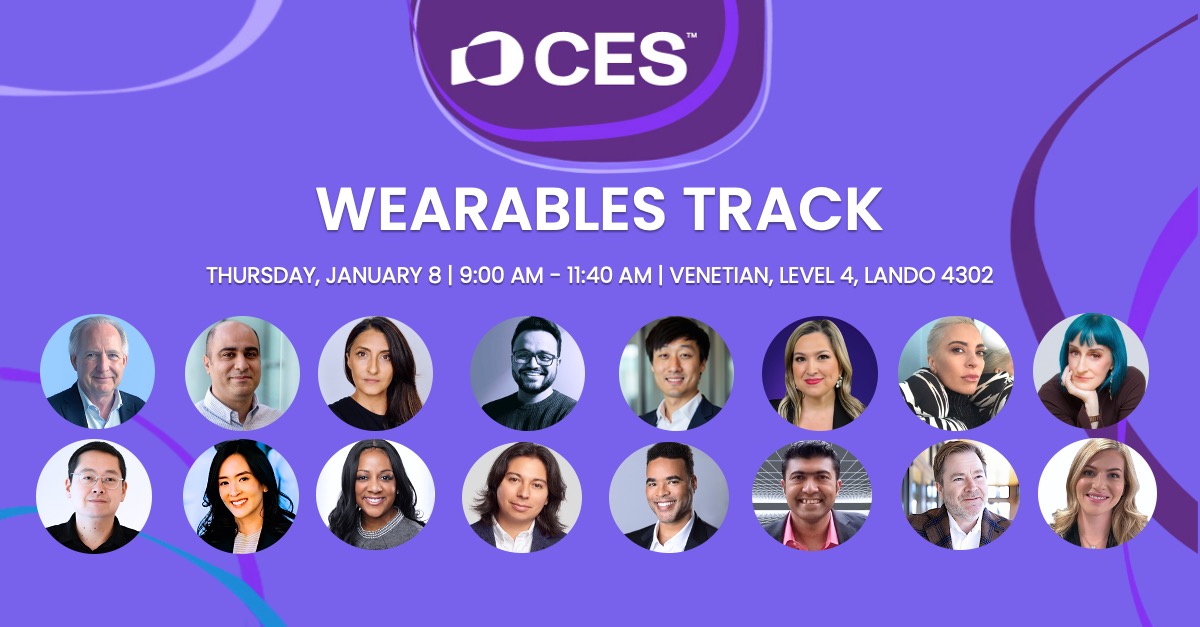
| If you’re wandering the halls of CES this week, you should stop in and say hi to us at the Creator Stage that we produce in Central Hall. If the conference tracks are your thing, see what we’re up to on the Retail Track (Venetian), the Wearables Track (Venetian) and Startup Finance Track. (Eureka Park). |
| |
|
| |
Here’s to 2026, where one thing’s for sure.
Change will be constant. |
|
| |
|
| |
 |
| |
| Sign up to get us in your inbox. |
| |
|
|
|
| |
|
|
| |
|
|
|
|
|