|
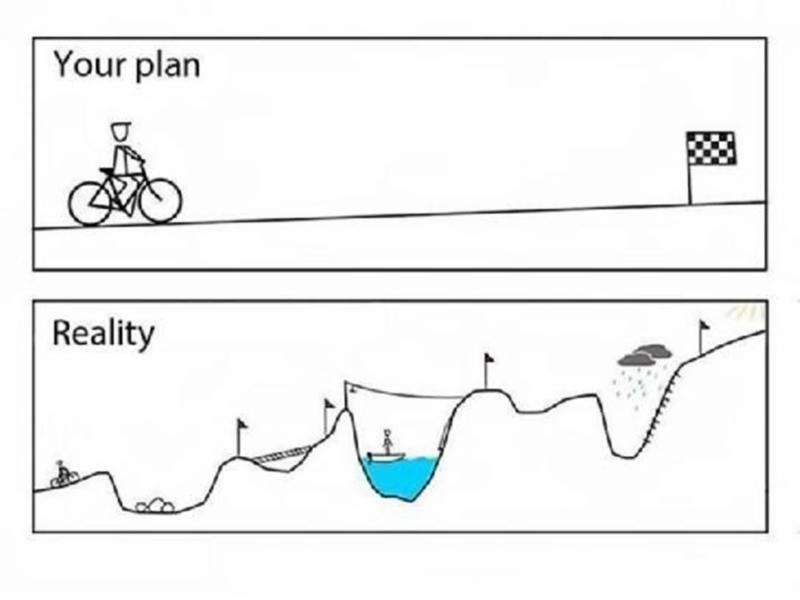
Most of us will agree with Robert Burns who famously wrote, "The best laid plans o' mice and men gang aft agley."
If we have never witnessed men and women (and mice) scurrying to figure out how to get their plans back on track after they have run off the rails, then we have lived a sheltered life - or aren't paying attention.
Be Ready for Holes in the Road
-
Anticipate - anticipate - anticipate. To expect that things will go like clockwork places way too much trust in the elements of pretty much everything we try to accomplish. A little thought and preparation up front can help us respond to problems that rear their ugly heads. They will still be problems, but we have removed the element of surprise.
-
Remember Murphy's Law. Murphy's Law says that anything that can go wrong will do just that. Some people claim that Murphy was an optimist. It really isn't that extreme, but it is not a bad rule to keep in mind.
-
Plan for specific contingencies. If you can envision problems and obstacles, a good next step is to develop a plan to deal with them, e.g., what if it rains for your outdoor event, what if your sales prospect objects to your price, what if a key employee is sick at the absolute worst time, etc. The problem may not arise, but you will ready.
-
Remember the people component. A smart planner will always count on people to do things for their own reasons, not ours. We might hope that we have employees, vendors and even customers who will do more than we want, sooner than it is needed and without being asked. A good plan will anticipate that it will be less than we want, not on time and will require constant reminders. Build it into your expectations.
-
Add time to the timeline. If the work plan (without any hiccups) calls for a certain completion schedule, the wise planner will add a cushion, knowing that one or more elements will take longer, not work as anticipated or a valued participant might completely drop the ball. Extra time will provide breathing room to regroup and recover.
-
Welcome problems. In the final analysis, we should welcome the problems that come up. Often, they help us identify flaws in our initial plan, highlight inconsistencies in our approach or lead us to a better alternative.
Planning to Build KASH
At the end of the day (metaphorically or in reality), when we build a plan that anticipates the elements that will go wrong, we are usually much more successful. In addition, our KASH (knowledge, attitude, skills and habits) is that much stronger for the next time.
|