November/December 2025

Foraminotomy Surgery Now Available for Horses at UC Davis

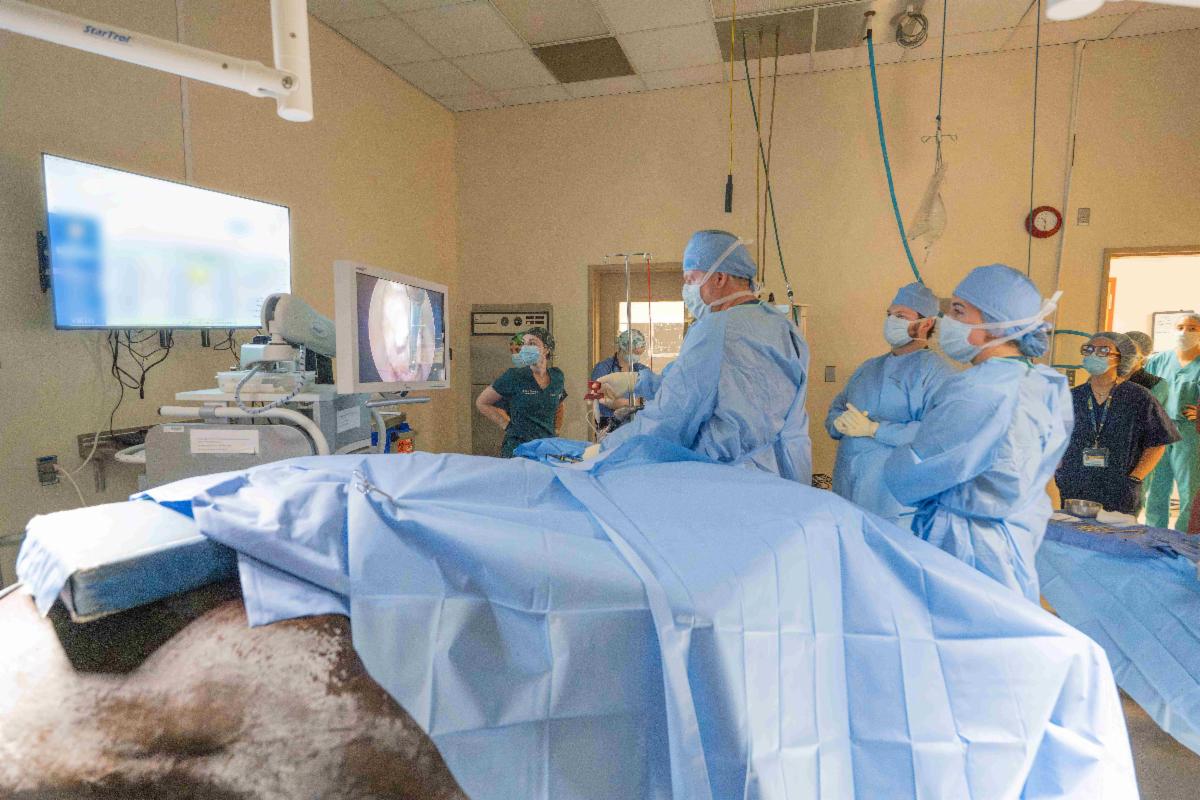
An extremely specialized equine surgery performed by only about a dozen veterinarians nationwide is now available at UC Davis. Thanks to the addition of Dr. Carter Judy to the faculty, as well as a dedicated large bore equine CT scanner, the Large Animal Hospital now offers foraminotomy surgery for horses with cervical foraminal stenosis—a narrowing of an intervertebral opening where the limb nerve root exits the spinal column. Diagnosing the condition—which generally occurs near the base of the neck where cervical and thoracic vertebrae meet—requires the new large bore equine CT scanner, which was recently installed in the new All Species Imaging Center. Drs. Scott Katzman and Heidi Reesink completed foraminotomy training this year, allowing more appointment opportunities for this unique surgery.

Injured Roping Horse Returns to Competition After Extensive Hospitalization and Rehabilitation

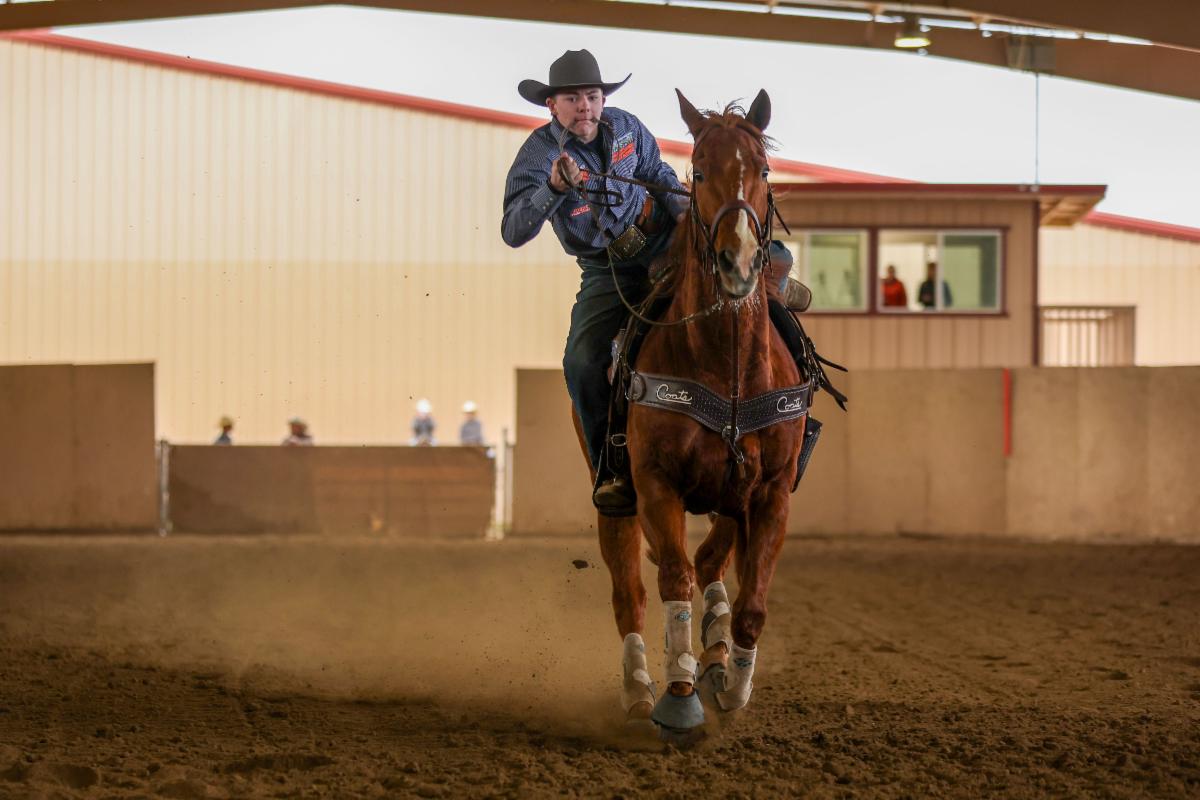
Following an unwitnessed fall during turnout, competitive roping horse Ricky, a then 13-year-old American Quarter Horse gelding, was found with “road rash” on his head and injuries to both front knees, with his right front leg taking the brunt of the fall. Radiographs showed no bony injuries and the presence of mild gas in the soft tissues around the right carpal joints. Further testing confirmed that the wound communicated with the middle carpal joint. Surgeons performed a standing procedure on Ricky to lavage the joint, debride and clean the wound, and then suture the wound closed to seal the puncture to the carpal joint. He was hospitalized for 19 days. After extensive rehabilitation, Ricky returned to training five months later. He recently competed in the 2025 American Cowboy Team Roping Association National Finals.

Dr. Nicola Pusterla Wins National Equine Research Award

Dr. Nicola Pusterla, professor of equine medicine and dentistry, was awarded the 2025 Advancement in Equine Research Award presented by Boehringer Ingelheim, a biopharmaceutical company active in both human and animal health. The award was given during the 71st annual American Association of Equine Practitioners Convention held last week in Denver. Recipients of the award are chosen based on their research proposals which focused on this year’s subject matter of equine infectious disease.

Equine Reproduction Specialists Urge

Late Gestation Ultrasound Exams

With foaling season right around the corner, specialists in the UC Davis Equine Reproduction Service are urging their clients to schedule ultrasounds late in their mares’ pregnancies. Once a mare is confirmed pregnant early in gestation, she is often rechecked shortly afterward to confirm embryo or fetal viability. “In many cases, no further examinations are performed until foaling,” said Dr. Catherine Renaudin, chief of service. “However, additional ultrasound examinations later in pregnancy are strongly recommended to improve pregnancy outcomes and reduce the risk of complications for both mare and foal.” A brief, non-invasive transrectal ultrasound can provide valuable information.

Intensive Care Available for Foals

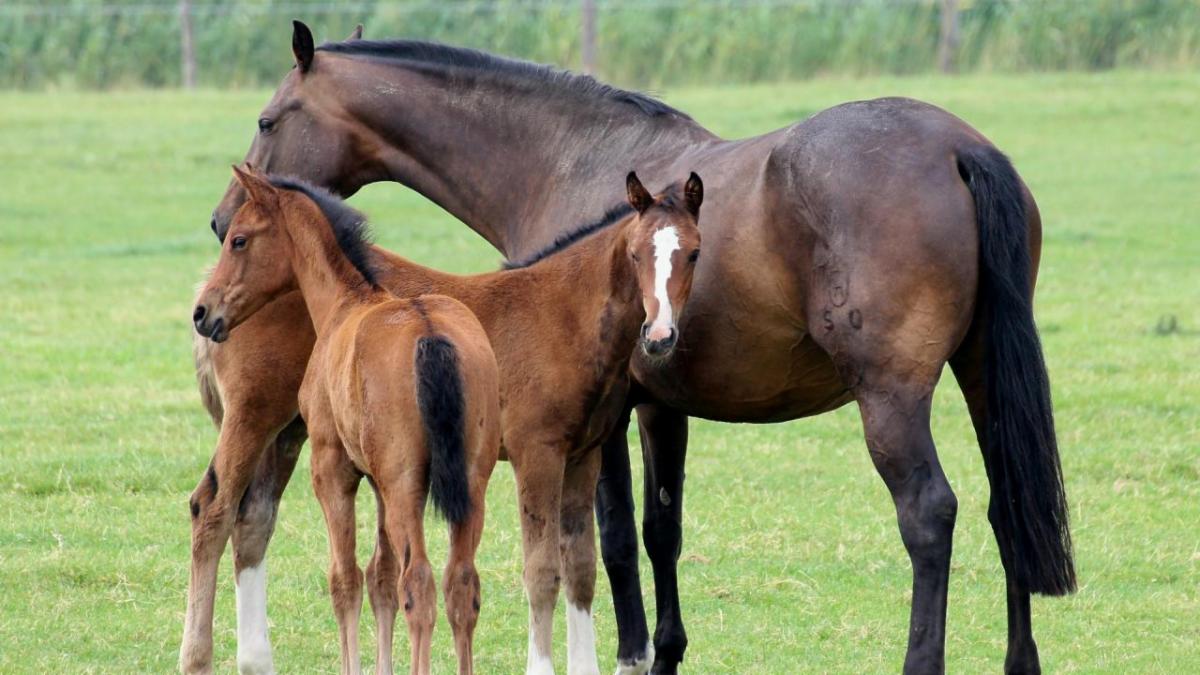
Should any complications arise during the upcoming foaling season, the Lucy G. Whittier Neonatal Intensive Care Unit (NICU) at the Large Animal Hospital can assist. Our highly trained team, led by board-certified critical care and internal medicine specialists and specialty-trained clinicians, can handle the most complicated cases, providing 24/7 coverage. The NICU is equipped with customized stalls to support sick foals, allowing intensive management under the watchful eye of the mare in an adjoining stall. Sick newborns are very critical and if not treated early, can have severe complications and high mortality. So, please don’t hesitate to contact us right away if you encounter any problems with foaling.

Stay Up to Date on the Latest Equine/Livestock-Related

Health Concerns

EHV-1 Outbreak

There is an on-going outbreak of EHV-1 originating at the WPRA World Finals and Elite Barrel Race event, held November 5-9 in Waco, Texas. EHM cases have been confirmed in Texas, Oklahoma, Louisiana, Colorado, South Dakota, Arizona, Washington, and New Mexico. More information: CDFA EHV Updates and EDCC EHM Outbreak

Vesicular Stomatitis

Vesicular Stomatitis has been confirmed in horses in four counties in southeast Arizona, and there are currently two quarantined premises. There are no cases in California at this time. More information: USDA VS Information 

New World Screwworm

New World Screwworm has been detected in cattle in northern Mexico (Nuevo Leòn). The southern U.S. border remains closed to cattle, bison, and horse imports. No screwworm has been detected in the U.S. CDFA continues active surveillance in Southern California through fly trapping. More information: USDA APHIS Screwworm 

Highly Pathogenic Avian Influenza (HPAI) H5N1

There are currently 13 dairy cattle herds under quarantine in California, six of which are quarantines of previously infected herds. There have been recent detections of HPAI in two commercial flocks and one backyard poultry flocks in Sonoma County, as well as a backyard flock in El Dorado County. More information: CDFA HPAI Information or USDA H5N1 Updates

Horse Report

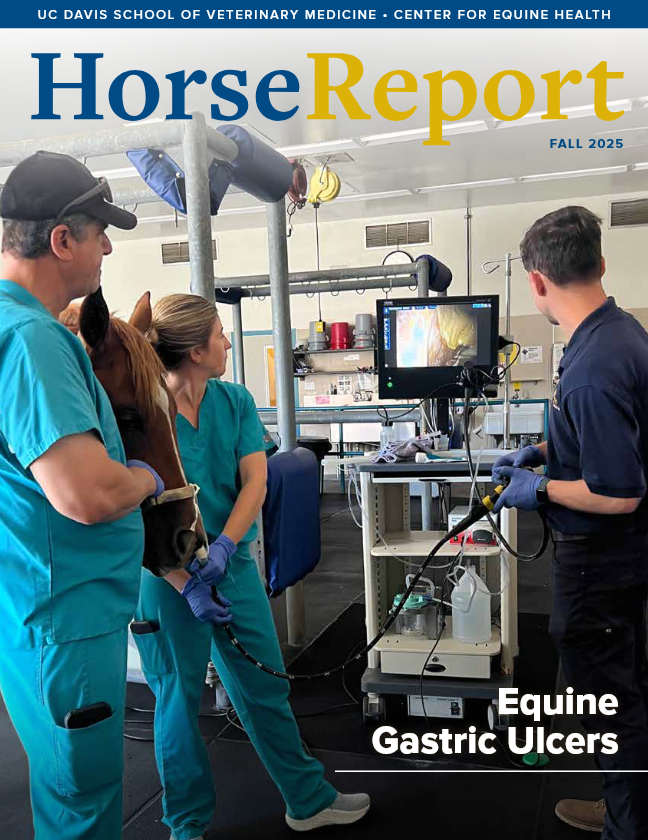
The Fall 2025 issue of the Horse Report is available. The award-winning newsletter from the UC Davis Center for Equine Health (CEH) is published quarterly with the most current information on a variety of equine health issues.


This latest issues contains articles on:

  • Director's Message from Dr. Carrie Finno
  • 2025 California Thoroughbred Foundation Louis R. Rowan Fellowship Awarded to Dr. Camilo Jaramillo-Morales
  • Understanding Equine Gastric Ulcers
  • When Carter Stopped Eating
  • Beyond the Magic Bullet
  • 10 Things You Might Not Know About Equine Gastric Ulcers
  • Support For The CEH Teaching Herd Horses


Read them all and subscribe to the Horse Report to receive this news every quarter.

Synergy

Read Additional News from the School of Veterinary Medicine


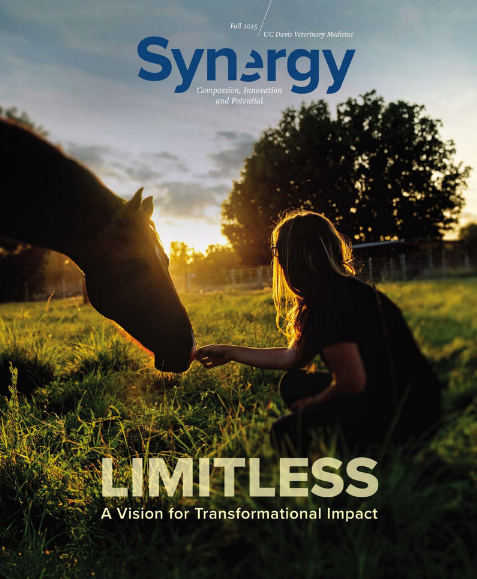
Discover Synergy, the School of Veterinary Medicine's biannual magazine highlighting the latest clinical advances, research updates, and other school news. The latest issue focuses on the critical role of fundamental research.

Reach the Large Animal Hospital:

530-752-0290 (clients)

530-752-4050 (referring veterinarians)

Follow the Large Animal Hospital on Facebook

Follow the Large Animal Hospital on Instagram

Facebook  Instagram  LinkedIn  TikTok  YouTube