|
Regular Users Can Tolerate Previously ‘Unsurvivable’ Amounts of Fentanyl
Habitual users of fentanyl have developed such a strong tolerance to the drug that standard doses of medications to manage withdrawal and initiate recovery are no longer working for many patients, a team of researchers in Los Angeles has found. Their study, published in the journal Drug and Alcohol Dependence, presents a picture of the dangerous volatility of the city’s street supply and the capacity of users to tolerate ever greater amounts of pure fentanyl, which is at least 50 times more potent than heroin. The researchers analyzed more than 500 samples of illicit fentanyl and surveyed users between September 2023 and January 2026 at sites for Drug Checking Los Angeles, a service that lets people have their drugs tested for adulterants. They interviewed 47 participants about their drug consumption habits and found they typically used a gram of product a day, or 125 milligrams of pure fentanyl. Read more here.
Related: Younger Teens May Be Unaware of the Dangers of Fentanyl, Survey Says
Estonia Won the War on Fentanyl. What Came Next Was Even Worse.
DOH Public Health Alert - N-propionitrile brorphine
| |
Attorney General James Sues Trump Administration to Protect Medicaid Coverage for Vulnerable New Yorkers
New York Attorney General Letitia James and a coalition of 18 other attorneys general and the governors of Kentucky and Pennsylvania won their case challenging the Trump administration’s illegal conditions on billions of dollars in funding that community organizations across the country rely on to provide housing and services for families experiencing homelessness. In November 2025, Attorney General James led the coalition in suing the Trump administration to protect more than $3 billion in Continuum of Care (CoC) funds that were jeopardized by illegal new conditions imposed by the Department of Housing and Urban Development (HUD). These funds support vital resources for those most at risk of homelessness, such as veterans, those with disabilities, and transgender individuals. The U.S. District Court for the District of Rhode Island granted critical parts of the coalition’s motion for summary judgment, ruling that HUD’s conditions restricting CoC funding are unlawful and cannot be implemented. Read more here.
| |
Governor Hochul Announces $45.9 Million Funding Available to Develop Additional Supportive Housing Units Statewide
Governor Kathy Hochul recently announced the availability of $45.9 million through the Empire State Supportive Housing Initiative or ‘ESSHI,’ which funds supportive services to help provide stable housing for New Yorkers experiencing homelessness. Funding is available to support hundreds of additional units that serve adults experiencing homelessness, survivors of domestic and gender-based violence, veterans and chronically homeless families, and individuals living with a mental illness or substance use disorder. ESSHI provides operating funding for supportive service providers serving homeless veterans and their families; survivors of domestic and gender-based violence; older adults who are disabled or frail; young adults with a history of incarceration, homelessness, or foster care; chronically homeless individuals and families; individuals with intellectual or developmental disabilities; individuals reentering the community from prison; and those living with HIV or AIDS, serious mental illness or substance use disorders. Read more here.
| |
Innovative Ulster County Program Nets State Mental Health Recognition
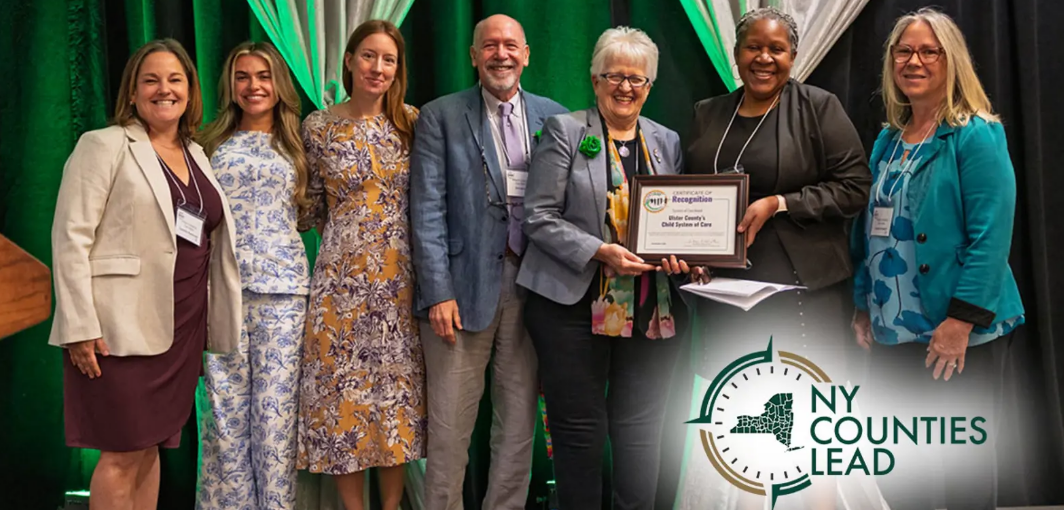
Connecting children dealing with emotional and behavioral needs to services that would benefit them is one of the primary objectives of Ulster County's Child System of Care Committee. The program, which works closely with schools throughout Ulster County, is now being championed by the state Office of Mental Health. The agency presented it with a "What's Great in Our State" System of Care Award at events held during Mental Health Awareness Month, celebrated in May. The system of care approach in Ulster County includes a range of stakeholders from county government and local schools. It has been built brick by brick over the years, continuing through state funding losses, and is now supported fully by the county government, officials noted in a recent interview. "It's really taken off with our schools," stressed Tara McDonald, the Commissioner of the Ulster County Department of Mental Health. The state award, McDonald observed, is a positive development on all fronts, especially if it results in more local entities seeking to join the system of care. "There are still people not at our table we would like to see at our table," she pointed out. Read more here.
| |
988’s LGBTQ+ Hotline to Relaunch this Year. But the Group that Helped Start it Might Be Excluded
The Trump administration is moving to restart the specialized LGBTQ+ option for youth who contact the 988 crisis intervention hotline, but the group that helped pioneer the idea is being shut out. The Trevor Project, the leading nonprofit for suicide prevention in LGBTQ+ young people, may not be allowed to offer the service it had helped develop for the 988 Lifeline just a few years ago. The 988 hotline, which has been dubbed the 911 for mental health emergencies, is credited with reducing teen and young adult suicide deaths. It offers specialized options for certain groups, such as veterans and Spanish speakers, but in July the Trump administration stopped offering the “press 3” option for LGBTQ+ youth with a month’s notice. The administration said it ended the service because the funding ran out. It is now working to bring it back by the end of the year because Congress directed officials to allocate $33 million toward LGBTQ+-specific interventions for youth. However, The Trevor Project might not be allowed to offer the services it developed and specializes in. Read more here.
| |
New York Moves to Renew Medicaid Social Services Pilot as Feds Rein in Spending
New York is seeking to extend a multibillion-dollar Medicaid pilot that pays for groceries, rent and transportation, even as the Trump administration moves to rein in social-services spending. State health officials are planning to submit an application to the federal government by the end of September to renew the state’s New York Health Equity Reform program, which provides enhanced social service benefits to Medicaid enrollees, Amir Bassiri, state Medicaid director, said Wednesday during a meeting of the Public Health and Health Planning Council. New York received federal approval for its current program, which expires in March 2027, under a Section 1115 demonstration waiver, which allows states to pilot new approaches to their Medicaid programs. The state has been racing to implement its large-scale pilot since it was approved more than two years ago. Though New York applied for a five-year project, it was granted a three-year runway that has forced it to quickly establish data collection systems, screen members for eligibility and deliver social services. Read more here.
| |
How State Medicaid Uncertainties Are Reshaping the SUD Treatment Environment
While addiction treatment providers have been laser-focused on federal policy shifts, the real battlefront has moved to the state level, where unpredictable reimbursement rates and looming coverage disruptions now threaten stability. Medicaid is the largest payer of substance use disorder (SUD) care in the U.S. and many providers have been on edge since the One Big Beautiful Bill Act (OBBBA) passed, waiting to see what exactly would take hold in 2027. Now, six months out from the implementation of the bill’s provisions, for the most part, state Medicaid rates are steady or are seeing a modest increase. The more palpable threat industry professionals see at the moment is the potential loss of patient coverage due to paperwork issues and administrative gaps. These pressures are changing the way providers strategize, prep and engage with patients in addiction care. In some cases, providers are also thinking about hiring additional staff, like care navigators and case managers, to help maintain eligibility. Read more here.
| |
Behavioral Health Workforce Repository: Resources from NASHP Policy Academy
The behavioral health workforce is facing a severe shortage. States are implementing novel approaches to address the issue by building on existing partnerships, expanding scopes of practice, joining licensure compacts, incorporating technological solutions, and developing unique education and training opportunities. The behavioral health workforce shortage can be addressed through a wide variety of state agencies and mechanisms, and NASHP has developed a repository of curated, limited set of resources. Specifically, this repository focuses on policy and program options that arose from NASHP’s work with five states during a Behavioral Health Workforce Policy Academy. The repository is organized around four key state policy approaches explored through the Policy Academy: building career pathways, right-sizing scopes of practice, improving behavioral health through data-driven approaches, and modernizing regulatory infrastructure. Subtopics include community college partnerships and pilots, microcredentials, loan repayment, associate-level behavioral health professional billing policies, new provider types, streamlining behavioral health licensure with technology, statewide behavioral health workforce strategic plans, telesupervision, and teleconsultation.
Related: Lessons from 5 States On Building a Stronger Behavioral Health Workforce
Leveraging Emergency Relief Funding for Behavioral Health Workforce Development: Policy Lessons From Nebraska’s Experience
NOSORH Rural Health University: Workforce+
| |
Using Braiding and Blending to Adapt to Administration Social Welfare Policy Changes
Most community-based organizations (CBOs) delivering social care, health care, and other services are facing considerable challenges due to recent federal spending curbs and new work reporting requirements in such programs as Medicaid and the Supplemental Nutrition Assistance Program (SNAP). In the face of this severe funding instability and uncertainty, many must make severe cuts and try to restructure services to comply. Faced with this new reality, CBOs could adapt more successfully if they could make more flexible use of funds from public and private programs while remaining faithful to the objectives of each program. For complex community challenges such as care for older people, tackling homelessness, or assuring the healthy growth of children, granting greater authority to organizations to braid or blend funds from different programs would enable CBOs to use reduced funding streams more creatively to mitigate the impact of deep cutbacks. Read more here.
| |
For Many Americans, Depression Is Familiar. Here’s What We Know.
Depression is staggeringly common in the United States, with more than one in four adults reporting having been diagnosed with the condition in their lifetimes. In a given year, more than 8 percent of U.S. adults might report a major depressive episode. And there are more than 500,000 hospitalizations for a depressive disorder each year. Representative Thomas Kean Jr., a Republican from New Jersey, announced on Tuesday that he had joined the ranks of those who had been hospitalized for depression. Mr. Kean, 57, said that over the past few months he had come to understand “how long depression had been affecting my life.” During a speech on the House floor in Washington, he provided no details of his treatment. Some people develop depression for the first time in middle age or older, but the usual age of onset is younger, said Dr. Mark Rapaport, the president of the American Psychiatric Association. Read more here.
| |
Opioid Settlement Money Pays for Services To Battle Addiction in Rural Kentucky
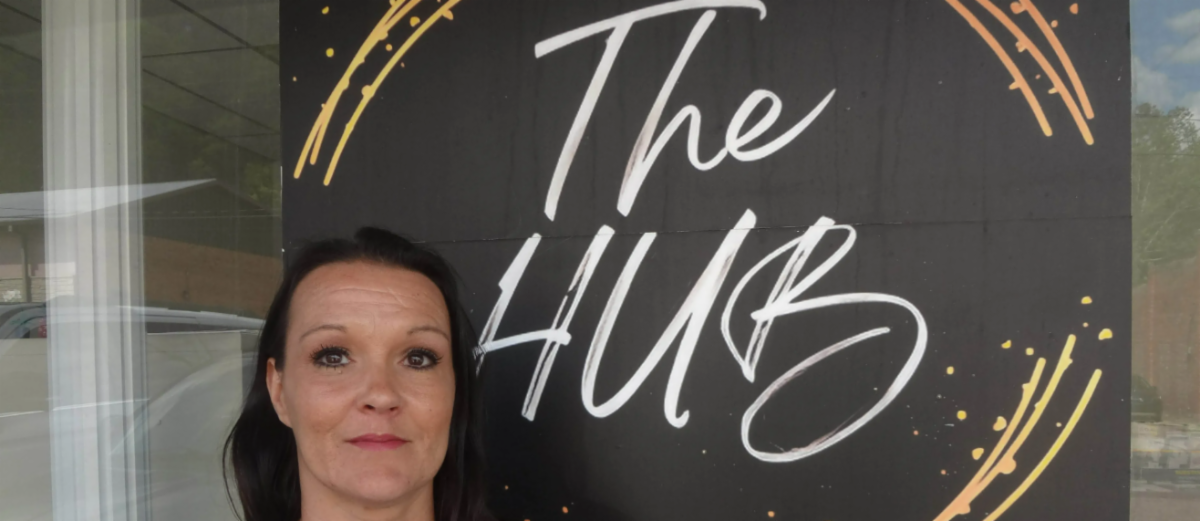
WHITESBURG, Ky. — Drugs and the consequences of addiction are woven into the fabric of Jamie Madden’s life. Her earliest memory is of standing on the passenger seat of her dad’s car as a toddler, wearing a peach-colored blouse, while he drove from their Kentucky home to Florida to pick up drugs. On a stop for a burger, she met Ronald McDonald. “I grew up with the impression that that’s how you paid your bills,” Madden said. “That’s how your kids got things.” By 16, she was addicted to pain pills. By 30, crystal meth. She lost custody of two children and gave up two more for adoption at birth. She served time in the county jail and state prison. Pregnant again at 40, Madden resolved to stop using. It was then that she learned of The Hub in Whitesburg, a town of 1,575 residents, her hometown. Over the past two years, the state of Kentucky has sent hundreds of thousands of opioid settlement dollars to the rural eastern region of the state to help minimize the ramifications of drug misuse. The Hub, a program that oversees a network of community centers offering a range of services from recovery peer support to canned food to sterile syringes, is part of that effort. Read more here.
| | |
When Prevention Is Everyone's Job: The Role of DCSs in Threat Assessment and Management
The Summer 2026 issue of NYSAC News includes an article which explores the growing role of Directors of Community Services in Threat Assessment and Management (TAM) teams. Drawing on examples from counties across New York, the article highlights how multidisciplinary partnerships are helping identify risks early, coordinate behavioral health supports, and strengthen community safety through prevention-focused approaches.
| |
UPCOMING EVENTS & TRAININGS
Change Management Is a Leadership Skill: Are You Pushing Staff Through Change or Pulling Them?
July 9, 1 - 2 pm, National Council for Mental Wellbeing
Recognizing and Responding to Gambling Disorder
July 14, 10 - 11:30 am, CEATTC
Driving Impact Through Data: Key Performance Metrics in CoCM
July 15, 1 - 2 pm, CoE-IHS
Leveraging Program Outcomes to Drive Policy Change
July 15, 1 - 2 pm, Social Current
Multidisciplinary Approach to Assessing Opioid Withdrawal
July 15, 5 - 6:30 pm, PCSS MOUD/SAMHSA
Operationalizing Interdisciplinary Practice to Treat Opioid and Stimulant Use Disorder In Behavioral Health & Primary Care
July 16, 1 - 2 pm, National Council for Mental Wellbeing
Community Adapted Cognitive Behavioral Therapy (CBT) for H/L with Co-occurring Disorders
July 16, 1 - 2:30 pm, SAMHSA Hispanic/Latino Behavioral Health Center of Excellence
Becoming a MHFA Instructor
July 16, 2 - 3 pm, National Council for Mental Wellbeing
Ready-to-Use Resources: Workforce Stability: Staff Transition and Succession Planning Strategies
July 16, 2 - 3 pm, NASCW
Using PSYCKES for CCBHCs
July 16, 2 - 3 pm, OMH
Aligning Health and Safety: State Innovations in Crisis Response
July 16, 2 - 3:30 pm, CSG Justice Center
Evidence Guided Psychiatric Medication De-Prescribing Support
July 16, 3 - 4:30 pm, SAMHSA
Effectiveness of Telehealth Services to Treat Opioid Use Disorder in Primary Care Settings
July 21, 12 - 1:30 pm, MPATTC
Integrated Care in Rural Communities: Partnerships with Hospitals & Community Based Behavioral Health Providers
July 21, 1 - 2:30 pm, CoE-IHS
The Role of Accreditation in Elevating Minority-Led Social Service Agencies
July 22, 12 - 1:30 pm, NAADAC
Sustainable Financing of Evidence-Based Mental Health Practices: Tools for a Future-Proof Approach
July 22, 1 - 2 pm, SAMHSA
Understanding the Importance of Care Coordination for Individuals with Serious Emotional Disturbance or Serious Mental Illness who are Homeless
July 22, 2:30 - 3:30 pm, NASMHPD
Malicious False Reporting (New training!)
July 23, 11 am - 12 pm, NYS Justice Center
Co-Occurring Substance Use Disorders and Eating Disorders
July 23, 1 - 2:30 pm, MPATTC
Building a Healthy Workplace Culture: Psychological Safety, Accountability, and Support
July 23, 1 - 1:45 pm, Social Current
Supporting Your Team in the Collaborative Care Model: Lessons from the Field
July 23, 2 - 3 pm, National Council for Mental Wellbeing
Applying the Risk-Need-Responsivity Framework to the Intersection of Housing and Reentry
July 23, 2 - 3:30 pm, SAMHSA's GAINS Center
Monitoring, Evaluation, Accountability & Learning: Leveraging Data to Enhance Tobacco Control and Recovery Initiatives
July 23, 2:30 - 3:30 pm, National Council for Mental Wellbeing
Scaling IDD Services Without Scaling Burden
July 28, 1 - 1:45 pm, National Council for Mental Wellbeing
Evidence to Consider when Advising Patients on Buprenorphine Treatment Duration for Opioid Use Disorder (webinar)
July 29, 2 - 3:30 pm, NWATTC
Expanding Access to Care in Rural Communities: Strategies to Better Serve People with Complex Health and Social Needs
July 29, 3 - 4 pm, Center for Health Care Strategies
From Turnover to Stability: Smarter Hiring, Better Retention
July 30, 12 - 12:45 pm, National Council for Mental Wellbeing
From Workforce Gaps to Workforce Growth
August 4, 12:30 - 1:15 pm,
5th Annual School Mental Health Summer Academy
August 11 - 12, 9 am - 12:30 pm, SMHRTC
Clinical Strategies to Reduce HIV Acquisition and Promote Recovery among People with Stimulant Use Disorder
August 12, 1 - 2:30 pm, MPATTC
Anticipating Policy Change
August 13, 1 - 2 pm, Social Current
Centralizing Training for Scalable Compliance
August 13, 2 - 2:45 pm, National Council for Mental Wellbeing
From Paperwork Burden to Collaborative Care
August 14, 2 - 2:45 pm, National Council for Mental Wellbeing
Creating a Trauma-Informed, Recovery-Oriented System of Care Series
August 19, 12 - 1 pm, National Council for Mental Wellbeing
Building Integrated Care Teams for Co Occurring Behavioral Health and Substance Use Conditions
August 25, 4 - 5:30 pm, MPATTC
Using PSYCKES for ACT Teams
August 26, 10 - 11:30 am, OMH
From Hire to Licensed: Accelerating Your Workforce Pipeline
August 27, 3 - 3:45 pm, National Council for Mental Wellbeing
Elevating Peers and Community Health Workers within Integrated Care Teams
September 10, 1 - 2 pm, National Council for Mental Wellbeing
Using PSYCKES for FQHCs
September 15, 1 - 2 pm, OMH
Chasing Other Dragons – Atypical Intoxicants
September 16, 12 - 1:30 pm, NAADAC
Creating a Trauma-Informed, Recovery-Oriented System of Care Series
September 24, 3 - 4 pm, National Council for Mental Wellbeing
SAVE THE DATE - The 2026 New York State Suicide Prevention Conference
September 29 - 30, Ithaca, NY
Transforming Documentation: From Pitfalls to Best Practices
September 30, 12 - 1:30 pm, NAADAC
| |
CLMHD CALENDAR
JULY
LGU Clinic Operators Call
July 14: 10 - 11 am
Membership Call
July 15: 9 - 10:30 am
Children & Families Committee Meeting
July 21: 12 - 1:30 pm
August
Quarterly LGU Billing Staff Call
August 4: 11 am - 12 pm
Executive Committee Meeting
August 5: 8 - 9 am
LGU Clinic Operators Call
August 11:10 - 11 am
Addiction Services & Recovery Committee Meeting
August 13: 11 am - 12 pm
Mental Health Committee Meeting
August 13: 3 - 4 pm
Children & Families Committee Meeting
August 18: 12 - 1:30 pm
Membership Call
August 19: 9 - 10:30 am
Developmental Disabilities Committee Meeting
August 20: 1 - 2 pm
CLMHD Offices Closed - Juneteenth
June 19
| |