|
Graphic by Orly Dimont ('23)
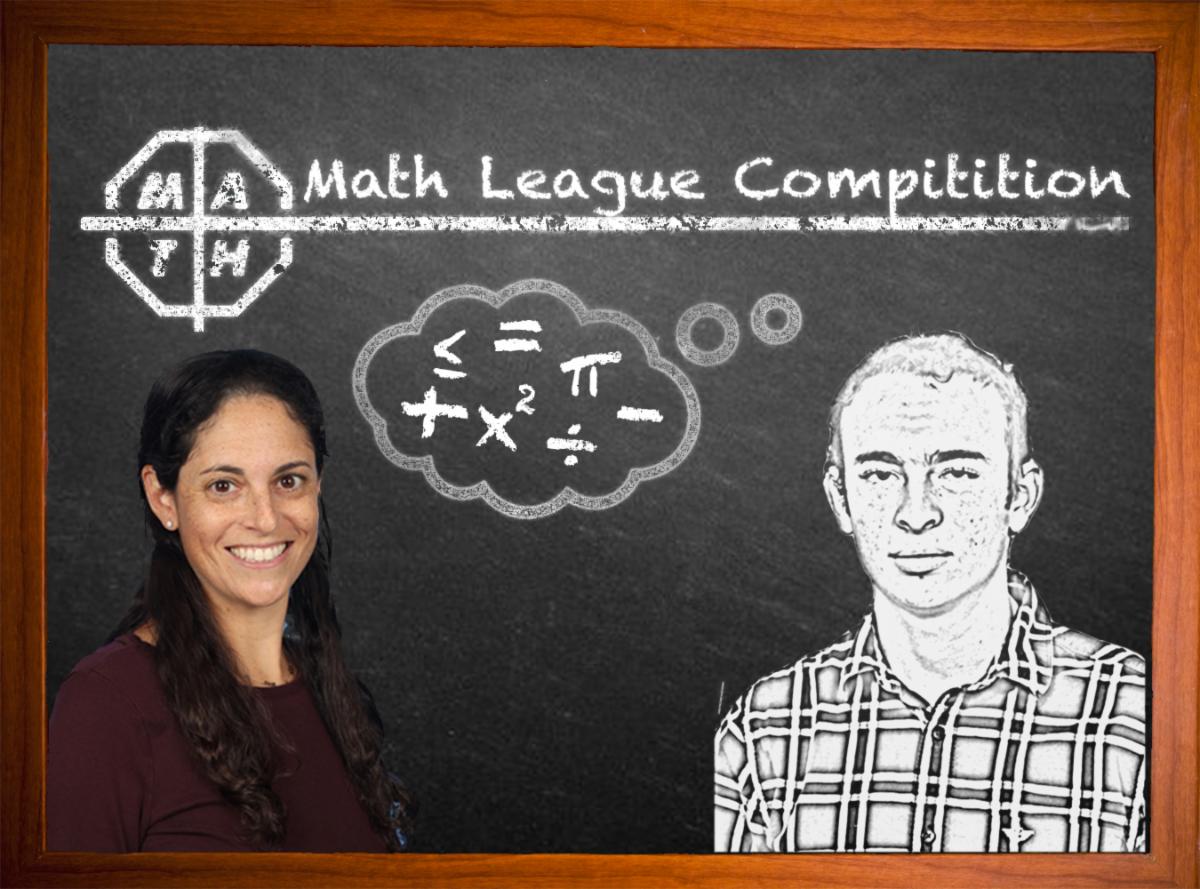
This past Monday morning, the mathematicians of Katz Yeshiva High School had the opportunity to participate in a math league contest hosted by our beloved Mrs. Epstein. The participants were asked a total of six questions ranging from basic to sophisticated. Aaron Newman (‘24), Aaron Kornbluth (‘23), and Amir Rindsberg (‘24) shared with us their relationship with math and the skills they have retained from the subject.
Gabriella: Thank you Amir, Aaron, and Aaron for joining me and answering some questions about math. How should a student aspiring to be a part of the math league prepare for this type of contest?
Aaron Newman: In order to prepare for this type of competition, a student should pay attention in class most of all, and also be interested in the lesson. I have found that when we have more curiosity about something that we have passion for, we work harder to excel in it and want to succeed more.
Amir Rindsberg: The best way to study for anything is to practice similar questions. For this competition the previous competition questions can be found online. Doing general math puzzles is also helpful for these sorts of creative questions.
G: How do you study for a math test? Any tips you would like to share with me?
Aaron Newman: I study for math tests by first reviewing my notes and what we did in class and then I do practice problems. One specific study habit that I have that really helps is to review all the problems I got incorrect on the homework or during class.
Aaron Kornbluth: I have found the most successful way to study for math tests is by doing practice problems. I consult my notes when I am struggling with something, but to be sure I understand it well I have to repeat the formula twice.
G: What is the best piece of advice you have ever received about math?
Aaron Newman: I think the best advice I have ever received about math is putting it into a real-life scenario. When learning about derivatives my math teacher introduced them by giving us one real-life related math problem. She taught us a problem about the speed of a car that we knew how to solve and the other was the one about derivatives (I don't want to bore you with the specifics). A great way to do this is with word problems.
Aaron Kornbluth: There are only two pieces of advice I would give to someone: First if you need help with something ask Aaron Newman. Second, find a friend to compete with (for me it's Zachy Dennis). It will help motivate you.
Amir Rindsberg: Don't be afraid to get the wrong answer.
G: What do you like to do for fun? Is it math related?
Aaron Kornbluth: Where should I start? Things I do for fun include golf, ping pong, wakeboarding, and most importantly, bothering Rabbi Wolk. I also enjoy doing calculus problems, just not so much in my free time.
Amir Rindsberg: I like reading books and playing games. I enjoy video games during the week and board games on Shabbat.
G: Thank you again for taking some time out of your day to answer. I’m sure our fellow peers will definitely use your tips.
Rabbi Levitt made an appearance in the competition and impressed the crowd with his math skills! He shared a bit about his experiences as well.
G: Thank so much for taking the time to answer these questions.
Rabbi Levitt: Sure!
G: Are you a fan of math competitions?
Rabbi Levitt: Yes! Math competitions enable students to think about concepts and ideas they likely already know in new and innovative ways.
G: Why is it important to see your students succeed in math?
Rabbi Levitt: Analytical thinking and problem solving using tools are a big part of what success looks like in the twenty-first century. Mathematics is not arithmetic computation. Being able to take principles learned and apply them to new situations gives students a mindset that can make them excellent entrepreneurs, doctors, teachers, and halachists.
G: How do you use math in your daily life?
Rabbi Levitt: As I explained to one geometry student a few years ago, it is about being able to take from the math arena to other areas of life. She wanted to become a physical therapist and had no interest in geometric proofs. Well, the patient and the current condition is like the diagram and the givens. Good health is like the proof line. The PT techniques available to her are like the theorems and concepts of the geometry course. Getting from the diagram to the proof line involves a sensible or logical progression through the steps of the proof, using the theorems in a coherent order. So too in PT: the therapist has to be able to figure out how to use her recommended exercises, stretches, and other tools to get the patient from here to there with a plan that works.
G: Thank you! This was a valuable learning experience.
Interview by Gabriella Asher ('25)
|