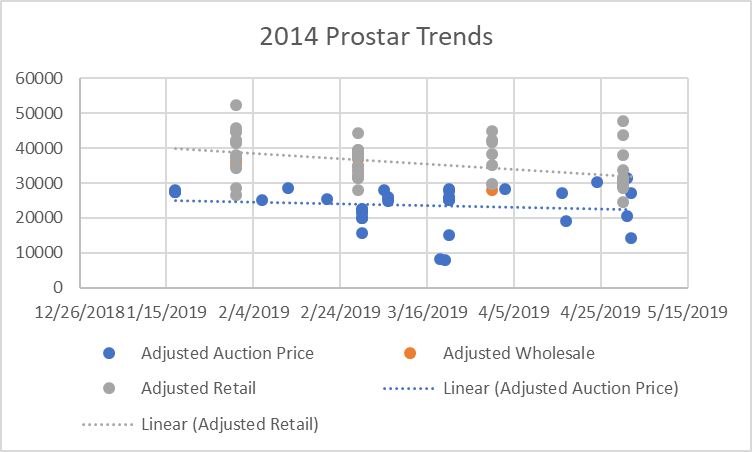
For the last year or so, life in the used truck game has been forgiving. An inventory crunch last summer caused a spike in prices that covered several sins, allowing Used Truck Managers to become lax on the basics of the business. One area we would encourage you to bring back into focus is the foundational piece of a successful used truck operation:
Asset Management
. Over the next few weeks we’ll walk you through the fundamentals of asset management, and how to use this important idea to drive
PROFIT
to your bottom line.
Oftentimes, our conversations around asset management are focused around the “drop dead” date (the date that we need to “flush” a truck and take a loss before we move on). We will cover aging policies during a future newsletter, but aging policy is actually only a small piece of your asset management story. In practice, asset management starts the second you decide to bid on a truck. We should have an idea of where this truck is going to go before we even put an offer, and adjust our investment accordingly. That’s not to say our auction/wholesale/retail decision is going to be set in stone, but there needs to be a plan and the investment level needs to be blended accordingly.
Let’s take a look at an example of a package of 10 2014 ISX Powered 73" HR Sleeper tractors (600k+/-miles). The comps for that tractor are shown below. KEA Used Truck guidance says to start all of your bids at the auction price, so our bid for this truck starts at around $20,500. In most cases that’s not going to get the deal, so we need to decide how we’re going to move up from here. It looks like these trucks are retailing in the low $30’s, so let’s use $32,500 as an anticipated sales price. Working back from there, we’ll use an estimated standard reconditioning cost of $3,000 and the target retail margin of 10% (with a little extra thrown in to be safe). Thus, our maximum investment level is $26,000/ truck.
$32,500 (sales price) x 10% (target margin) = $3,250
$32,500 – $3,000 (recon) - $3,250 (desired gross profit) = $26,000