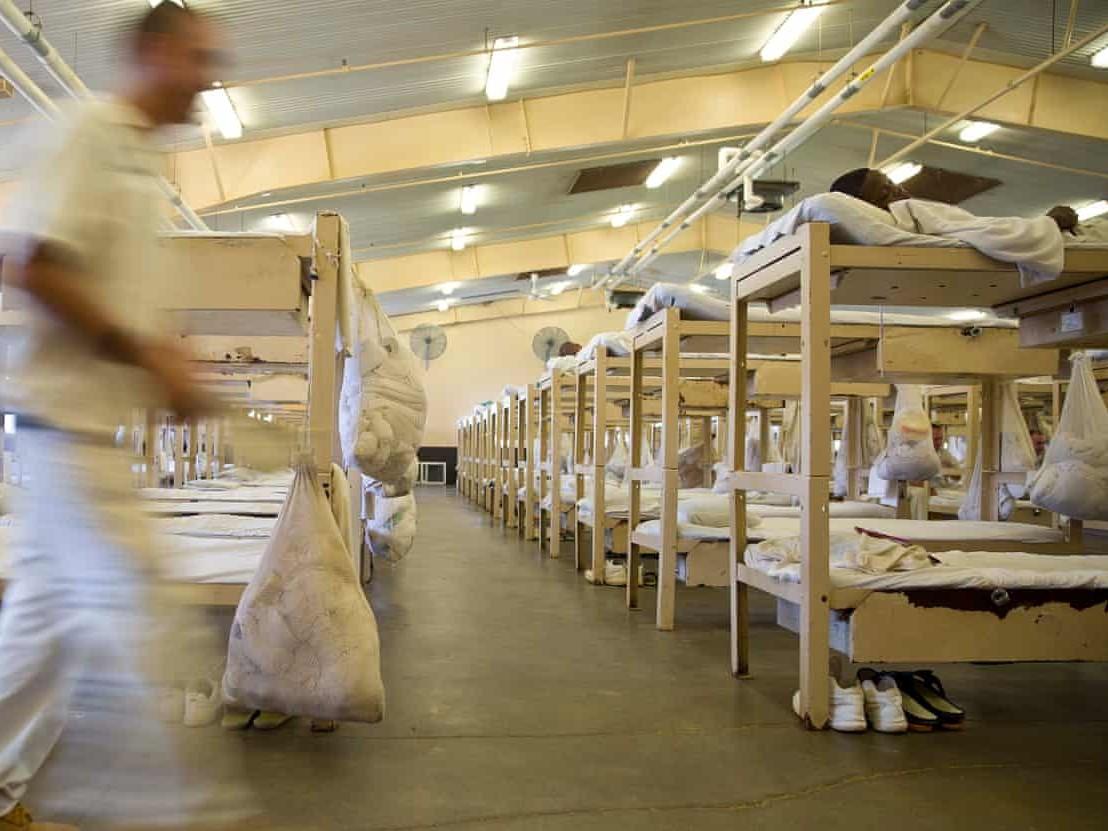
Welcome to the University of Oklahoma Carceral Studies Consortium Newsletter. The Carceral Studies Consortium strives to build a community for intellectual exploration that includes faculty, staff, graduate students, community members, practitioners, and organizers.
Carceral Studies is concerned with the independent function and nexus of the political and social systems that organize, shape, sustain, and entrench practices of punishment, surveillance, incarceration, and harm.
|
|
When children are reunited with their parents after a stint in foster care, the family is often relieved to be past the hardships of separation. An NPR investigation, though, uncovered the hidden costs of reunification: many states bill parents for the cost of foster care. Families that are separated are likely to deal with social inequities such as employment instability or single parenthood. Regardless, foster care fees are compound the strain on “the poorest families” with “debt following them for years.” According to retired Wright County, state commissioner Charlie Borrell, “the system of separating families followed by charging disadvantaged parents, sometimes with bills over a thousand per month of foster care, sets them up for failure.” The NPR report concludes: “billing parents for foster care undercuts the efforts of child welfare agencies to help parents and children reunite. The added debt extends the time children spend in foster care and then keeps families in the impoverished conditions that put children at risk for going into foster care in the first place.”
|
|
Medical experts and researchers can often offer valuable opinions in disputes arising from injury or death. However, a recent investigation by the New York Times has found that law enforcement agencies regularly recruit a “network” of the same medical officials for cases where individuals die when in police custody. The report gave examples such as Dr. Gary Vilke, who “has established himself as a leading expert witness by repeatedly asserting that police techniques such as facedown restraints, stun gun shocks and some neck holds did not kill people.” Some of the experts made the comparison of deaths in custody to the discovery of sudden infant death syndrome where the law enforcement agents could not be at fault for an “arrest related death syndrome.” The experts often stated that the methods of restraint were appropriate for nearly all circumstances and would place the responsibility for death on the victims for their health conditions or drug use. The investigation also found that this network of researchers is responsible for most publications on the effectiveness of these deadly techniques. At the same time, experts that disagreed were rarely recruited by law enforcement for such cases. This pattern both justifies the continued use of these techniques and sets a precedent for blaming victims for their own death. For example, a lawyer for a victim that died in custody stated that the purported experts believe that “no one can die this way, and then officers start to believe it.”
|
|
Project Makushaan, “feast food” in Cree, is an initiative that brings traditional meals to indigenous people incarcerated in Canada. Kenneth Matoush, Harriet Matoush, and Joseph Moar have donated traditional Cree meals for the past six years. The meals often include moose, caribou, roasted goose, rabbit, and beaver. The organizers note that “the Cree clients are happy once they eat the food, they are reminded of home and all the feasting that happens at different celebrations.” The traditional meal donations allow “[incarcerated indigenous people] to open up and share their stories. They often express how they feel about the food, and say, ‘It almost feels like a feast at home.’”
|
|
Rose Lincoln / Harvard Staff Photographer |
|
A recent paper titled Prosecutor Politics: The Impact of Election Cycles on Criminal Sentencing in the Era of Rising Incarceration examines the relationship of incarceration admission rates and total months sentenced during the election years of district attorneys. Chika Okafor, the author of the paper, used data on the political careers of district attorneys across the U.S. between 1986 and 2006 to find that prosecutors pursue longer sentences at higher rates during election years. These effects were larger when the prosecutor races were closer between the candidates when the elections were in Republican-heavy counties, or generally in southern states. However, Okafor also identified that the pursuit for higher convictions and longer sentences waned as district attorneys spent more time in office. Additionally, Okafor believes that there is evidence that recent elections are leaning more towards progressive and reform-minded district attorneys, which may begin to reverse the longer trend.
|
|
Please share recent research you would like to see featured, including your own!
Send it to carceralstudies@ou.edu
|
|
ABSTRACT: Importance - Black youth in the US experience disproportionate contact with police even when accounting for criminal or delinquent behavior, which some experts say is fueled by racism and discrimination. While the literature supports the link between racism and adverse health outcomes, less is known about the impact of policing on the well-being of Black youth. Objective - To systematically review the literature describing the association between police exposure and health outcomes for Black youth 26 years and younger. Evidence Review - A search of PubMed, Embase, Criminal Justice Abstracts, PsycInfo, and Web of Science was conducted. Eligible studies included original peer-reviewed research published from 1980 to December 2020, with a participant population of Black youth, a focus on police exposure, and health as the outcome. Additional articles were identified by hand-searching reference lists of included studies. Data extraction was performed, followed by critical appraisal of all included studies using a convergent segregated approach in which quantitative and qualitative studies were synthesized separately followed by an overarching synthesis across methods. Findings - A total of 16 quantitative studies including 19 493 participants were included in the review and demonstrated an association between police exposure and adverse mental health, sexual risk behaviors, and substance use. A total of 13 qualitative studies including 461 participants were included in the review, which corroborated and contextualized the quantitative evidence and provided additional health outcomes, such as fear for life or hopelessness. Conclusions and Relevance - Evidence shows that police exposures are associated with adverse health outcomes for Black youth. Clinicians, scientists, public health practitioners, and policy makers can partner with local governments to enact reforms that mitigate the health impact of policing on youth.
|
|
SUMMARY: This paper explores an area in strong need of further recognition and inquiry: higher education for formerly incarcerated individuals in the community. Each year, more than 600,000 individuals are released from state and federal prisons and return to the community. Despite that, and the significant benefits to receiving a college education, most programming and research (where it has been implemented) has been concentrated on correctional education. As a result, formerly incarcerated individuals are largely not recognized as a student group in need of support, programming, and research in the field of higher education. This paper is an attempt to synthesize existing literature around higher education for formerly incarcerated individuals, and to describe current support mechanisms for this group as a base for continued work.
|
|
ABSTRACT: Background - Intestinal parasitic infections are closely associated with low household income, poor personal and environmental sanitation, and overcrowding, limited access to clean water, tropical climate and low altitude. Street dwellers and prisoners are forced to live in deprived situations characterized by inadequate facilities. Therefore, this study aimed to estimate the pooled prevalence and associated factors of intestinal parasitic infections among street dwellers and prison inmates. Method - Study searches were carried out in Electronic data bases such as PubMed/Medline, HINARI, EMBASE, Science Direct, Scopus, Google Scholar and Cochrane Library. Studies published only in English and have high quality Newcastle Ottawa Scale (NOS) scores were included for analysis using Stata version 14 software. Random-effects meta-analysis model was used for analysis. Heterogeneity was assessed using the Cochrane’s Q test and I2 test statistics with its corresponding p-values. Moreover, subgroup, sensitivity analyses and publication bias were computed. Results - Seventeen eligible studies consist of 4,544 study participants were included. Majority of the study participants were males (83.5%) and the mean age of the study participants was 25.7 years old. The pooled prevalence of intestinal parasitic infections among street dwellers and prison inmates was 43.68% (95% CI 30.56, 56.79). Sub-group analysis showed that the overall pooled prevalence of intestinal parasitic infections among prison inmates and street dwellers was 30.12% (95%CI: 19.61, 40.62) and 68.39% (95%CI: 57.30, 79.49), respectively. There was statistically significant association between untrimmed fingernail and intestinal parasitic infections (AOR: 1.09 (95%CI: 0.53, 2.23). Conclusion - In this study, the pooled prevalence of intestinal parasitic infections among street dwellers and prison inmates was relatively high. Fingernail status had statistically significant association with intestinal parasitic infection. The prevention and control strategy of intestinal parasitic infection should also target socially deprived segment of the population such as street dwellers and prison inmates.
|
|
Harper, Annie, Callie Ginapp, Tommaso Bardelli, Alyssa Grimshaw, Marissa Justen, Alaa Mohamedali, Isaiah Thomas, and Lisa Puglisi. 2021. “Debt, Incarceration, and Re-Entry: A Scoping Review.” American Journal of Criminal Justice 46(2):250–78. |
|
ABSTRACT: People involved with the criminal justice system in the United States are disproportionately low-income and indebted. The experience of incarceration intensifies financial hardship, including through worsening debt. Little is known about how people who are incarcerated and their families are impacted by debt and how it affects their reentry experience. We conducted a scoping review to identify what is known about the debt burden on those who have been incarcerated and their families and how this impacts their lives. We searched 14 data bases from 1990 to 2019 for all original research addressing financial debt held by those incarcerated in the United States, and screened articles for relevance and extracted data from pertinent studies. These 31 studies selected for inclusion showed that this population is heavily burdened by debt that was accumulated in three general categories: debt directly from criminal justice involvement such as LFOs, preexisting debt that compounded during incarceration, and debts accrued during reentry for everyday survival. Debt was generally shown to have a negative effect on financial well-being, reentry, family structure, and mental health. Debts from LFOs and child support is very common among the justice-involved population and are largely unpayable. Other forms of debt likely to burden this population remain largely understudied. Extensive reform is necessary to lessen the burden of debt on the criminal justice population in order to improve reentry outcomes and quality of life.
|
|
Updates, Events & Opportunities |
|
OU Libraries and Carceral Studies Consortium Assemble “Racial Capitalism” Library Guide
In a collaborative effort between OU Libraries and the Carceral Studies Consortium, a library guide on “Racial Capitalism” is now available for all students, staff, and faculty. Racial capitalism contends that racist oppression is central to how capitalism operates. Racial subjugation is not one specific manifestation of a larger capitalist system, but rather, capitalism itself is a racial system. The guide includes resources (written, audiovisual, and contacts) for information about the carceral state, crimmigration, and race and labor.
|
|
|
2021-2022 Carceral Studies Consortium Student Work Prize
The Carceral Studies Consortium is inviting original student essays or creative works developed as part of any course in any discipline during the 2021-2022 academic year that engages the topic of Carceral Studies, broadly conceived. Submissions are not limited to essays, but may be in any creative or scholarly format, including but not limited to art in any medium, story maps, and more.
|
|
|
ABOUT
The Consortium Newsletter will offer a roundup of a few selected articles that reflect today’s news, organizing, and thinking related to the carceral state. We understand that freedom work is built on education and engagement. Education requires an understanding of contemporary issues informed by their historical context. We hope that these curated articles will help you analyze the issues that we face and understand the community that we strive to construct.
Join the conversation!
We encourage feedback, suggestions, and article suggestions. Please reach out to carceralstudies@ou.edu with any ideas, thoughts, or recommendations.
If anyone you know is interested in receiving this newsletter and other information from the Carceral Studies Consortium, please forward them this email and they may click this link to subscribe.
|
|
Land Acknowledgment
The University of Oklahoma is on the traditional lands of the Caddo Nation and the Wichita & Affiliated Tribes. This land was also once part of the Muscogee Creek and Seminole nations. It also served as a hunting ground, trade exchange point, and migration route for the Apache, Cheyenne, Comanche, Kiowa, and Osage nations. Today, 39 federally-recognized Tribal nations dwell in what is now the State of Oklahoma as a result of settler colonial policies designed to confine and forcefully assimilate Indigenous peoples.
|
|
The University of Oklahoma is an equal opportunity institution. ou.edu/eoo |
|
|
|
|
|
|