|
Human nature craves certainty. We like to know what's coming next. We expect the people we love will stay, the job will continue and the path we’re on will keep moving forward.
And then something happens that we didn’t see coming.
A phone call changes everything.
A conversation shifts a relationship.
A decision gets made that you never saw coming.
Something falls apart that you thought was solid.
Sometimes, the hardest part isn’t even the event itself. It’s the disorientation that follows.
How did I end up here?
What did I miss?
Why is this happening?
What now?
Most of us don’t sit well in that space for long. We rush to explain it, fix it, reframe it, or push ourselves to “move on” before we’ve actually processed what changed. We want answers quickly because uncertainty feels uncomfortable, and we want the pain to mean something right away.
Not every curveball is meant to be immediately understood or solved.
Step 1: Stop Fighting Reality
One of the most exhausting things we do during difficult moments is fight reality.
We replay how things should have gone.
We mentally negotiate with the past.
We stay trapped in “if only.”
Acceptance does not mean we agree with what happened, pretend it’s okay, or give up. It’s the moment we stop fighting reality long enough to acknowledge:
This is where I am right now.
That shift matters because you cannot recalibrate from a reality you refuse to acknowledge. Read that one more time.
Step 2: Process Before Pivoting
When something unexpected happens, there is often pressure to “bounce back” quickly. We may dismiss it, minimize it or try to move past it too quickly.
What if we:
- allow disappointment without becoming consumed by it
- feel grief without building an identity around it
- give space to pause before making reactive decisions
- recognize that uncertainty is uncomfortable, not dangerous
There is wisdom in slowing down long enough to ask:
- What in fact happened here?
- What part is within my control?
- What assumptions just got challenged?
- What might this experience be asking me to reevaluate?
There is also wisdom in not staying too long. "Why is this happening?" is a natural question, but eventually it stops providing insight and starts creating rumination.
At some point a different question becomes more useful:
- What now needs my attention?
- What matters most moving forward?
You may not get clarity or closure right away. They often emerge after we've taken a few steps.
Step 3: Recalibrate
We tend to imagine growth as a clean, confident forward march. Most of the time, it looks nothing like that. It often looks more like changing expectations, grieving an old version of the future, letting go of timelines. Recalibration may call for simplifying, being more honest about what is and isn't working and yup - asking for help.
A Different Definition of Strength
Strength is not avoiding disruption.
It is learning how to respond when life becomes unpredictable.
It is staying open instead of becoming hardened.
It is adjusting without abandoning yourself.
It is learning to trust that even if the path changed, you are still capable of finding your footing again.
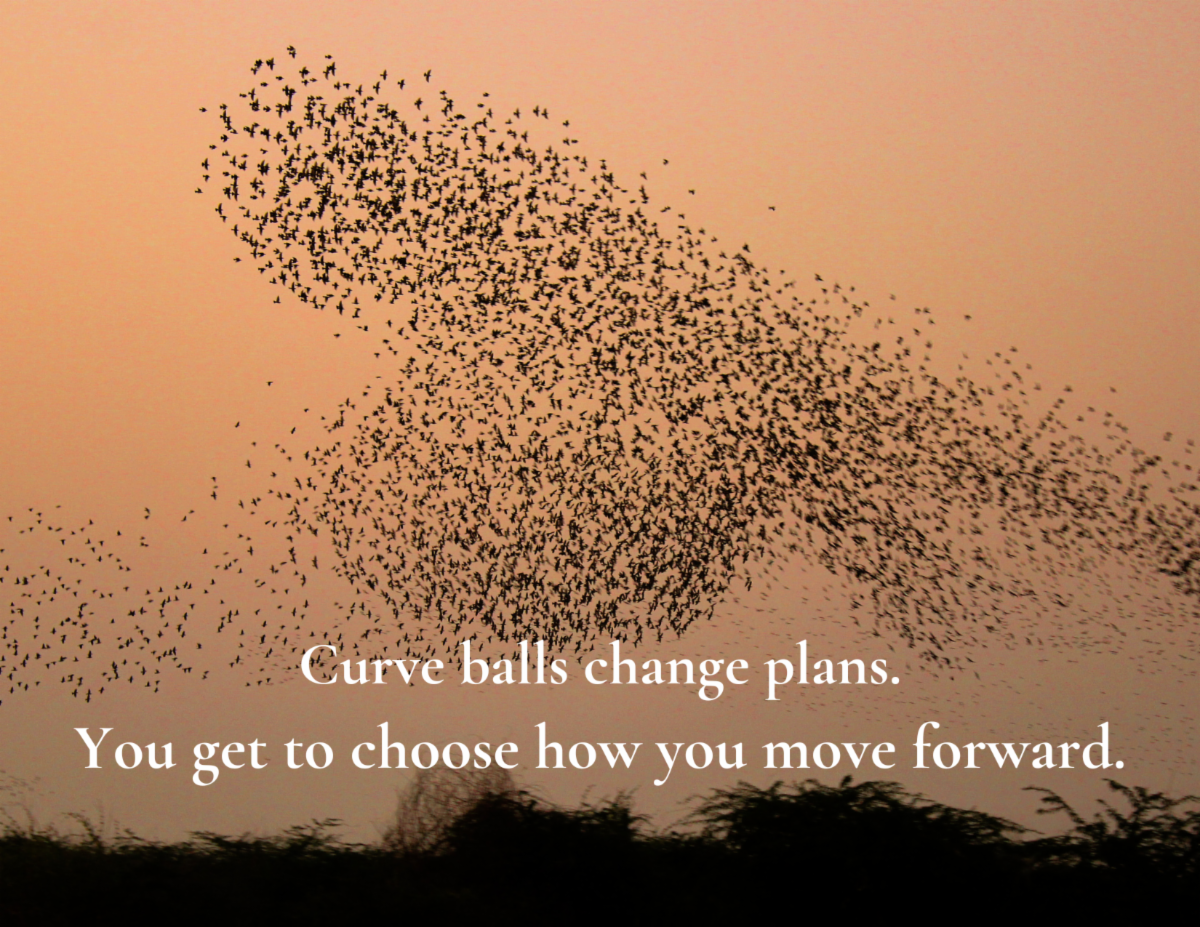
Sometimes the curveball changes your plans.
Sometimes it changes you.
And occasionally, much later, you realize it changed you in ways you never would have chosen, but deeply needed.
Maybe the goal is not to get back to who you were before.
Maybe the goal is to move forward with more clarity, flexibility, self-awareness, and trust in your ability to handle what comes next.
|