McDonald Observatory SkyTips


News from the Observatory and StarDate


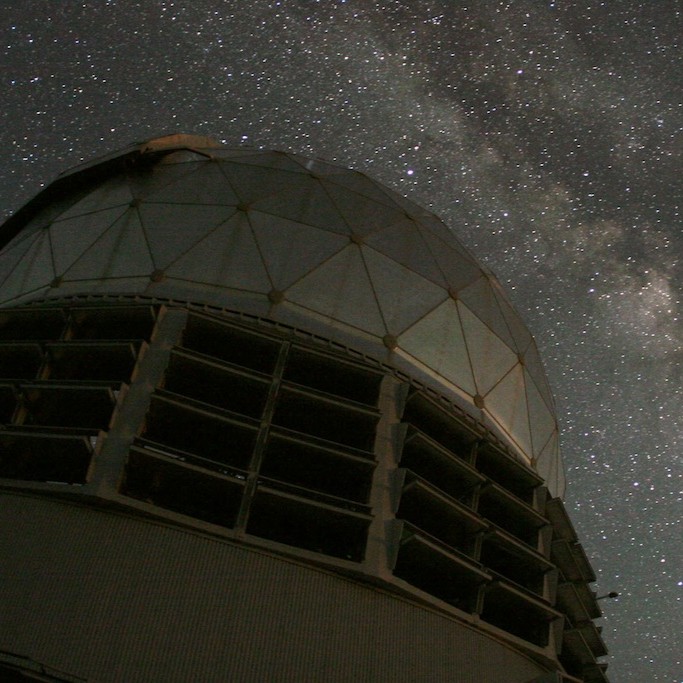
The Milky Way above the Hobby-Eberly Telescope. Image credit: Frank Cianciolo

Now on StarDate Radio


See what's on the air or get more information on the program.


November Skywatching


Taurus, the bull, is one of the highlights of autumn nights. Its brightest star, Aldebaran, rises about sunset in November and reaches its highest point in the sky near midnight. The Pleiades star cluster, which looks like a tiny dipper, rises to the upper left of Aldebaran. One of the bull's horns ends at the appropriately named star Elnath, the butting one.


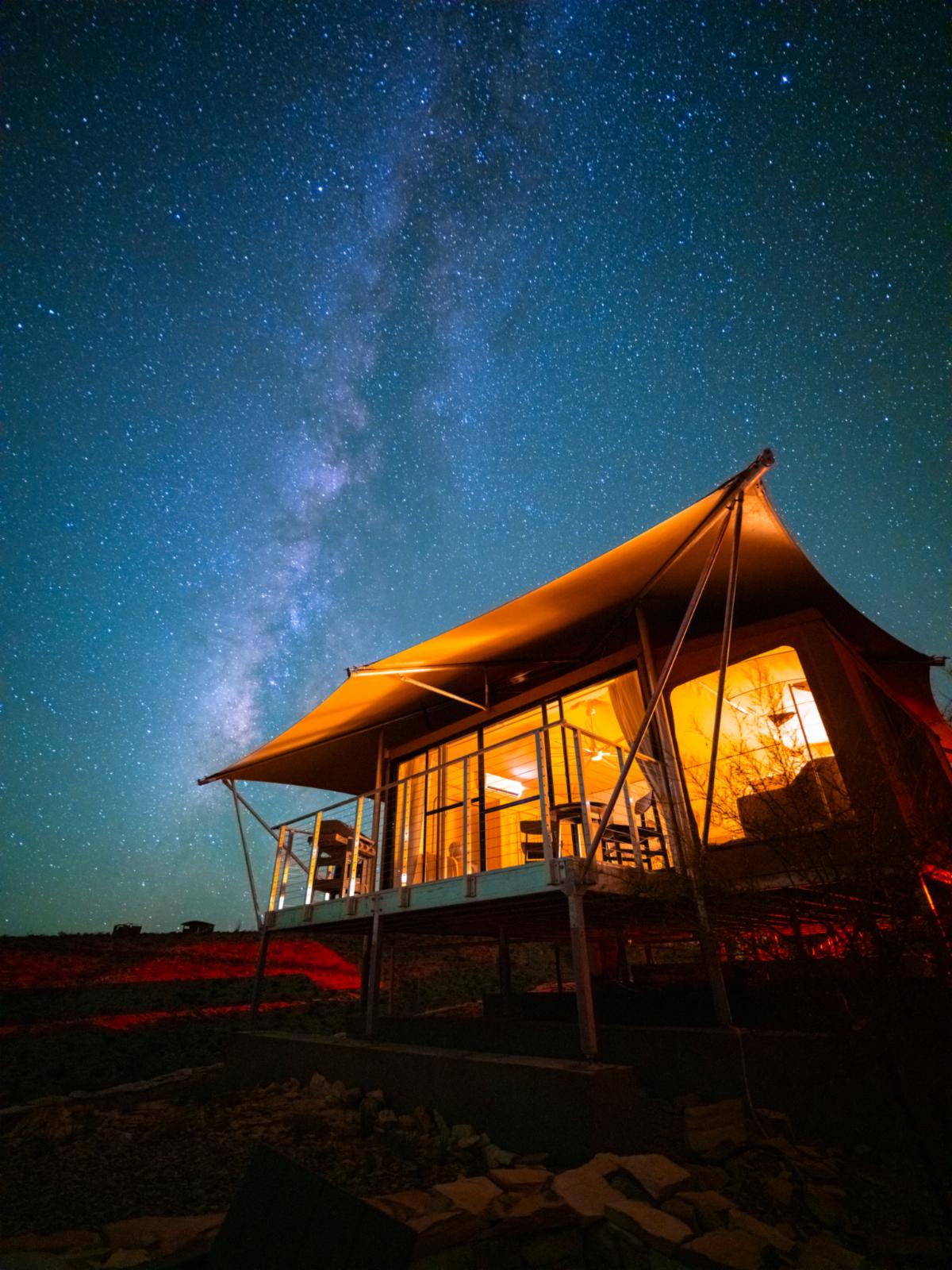
Camp Elena in Terlingua, TX. Image credit: Tony Maple

Five Area Businesses Join Effort to Preserve Our Night Sky


For many visitors to Far West Texas, the stars above are as much an attraction as the rugged landscape below. In an effort to preserve this natural resource, five businesses in the local hospitality industry are among the latest to adopt lighting that keeps the night sky dark.


Camp Elena, the Far Flung Outdoor Center, the HAB, and Stardust Big Bend – all in Terlingua – and Camp Davis in Fort Davis each worked with McDonald Observatory’s Dark Skies Initiative to verify and upgrade their outdoor fixtures to meet or exceed local ordinances designed to limit light pollution. See gorgeous photos of each on our website!


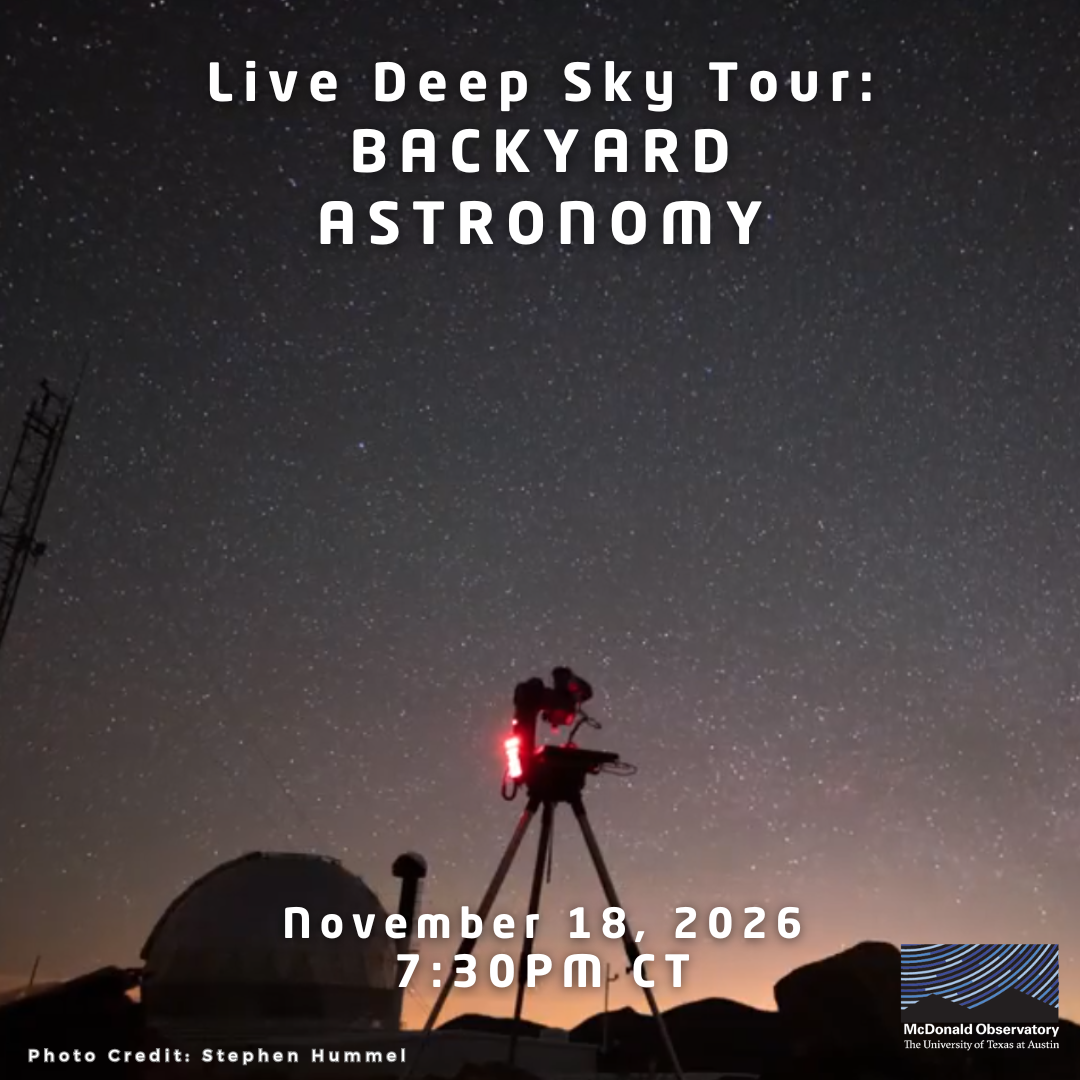
Livestream Nov 18: Backyard Astronomy


Do you want to get into astronomy but don’t have access to a giant research-grade telescope? No worries, you don’t need one! Join the McDonald Observatory as we show you how you can pursue astronomy from your own backyard!


We will talk about how to do different types of observing, using your eyes, binoculars, or telescopes; how to navigate the sky with constellations; and (if weather permits) see some live targets through a 16-inch telescope at our Visitors Center that can be seen through smaller telescopes and even binoculars!


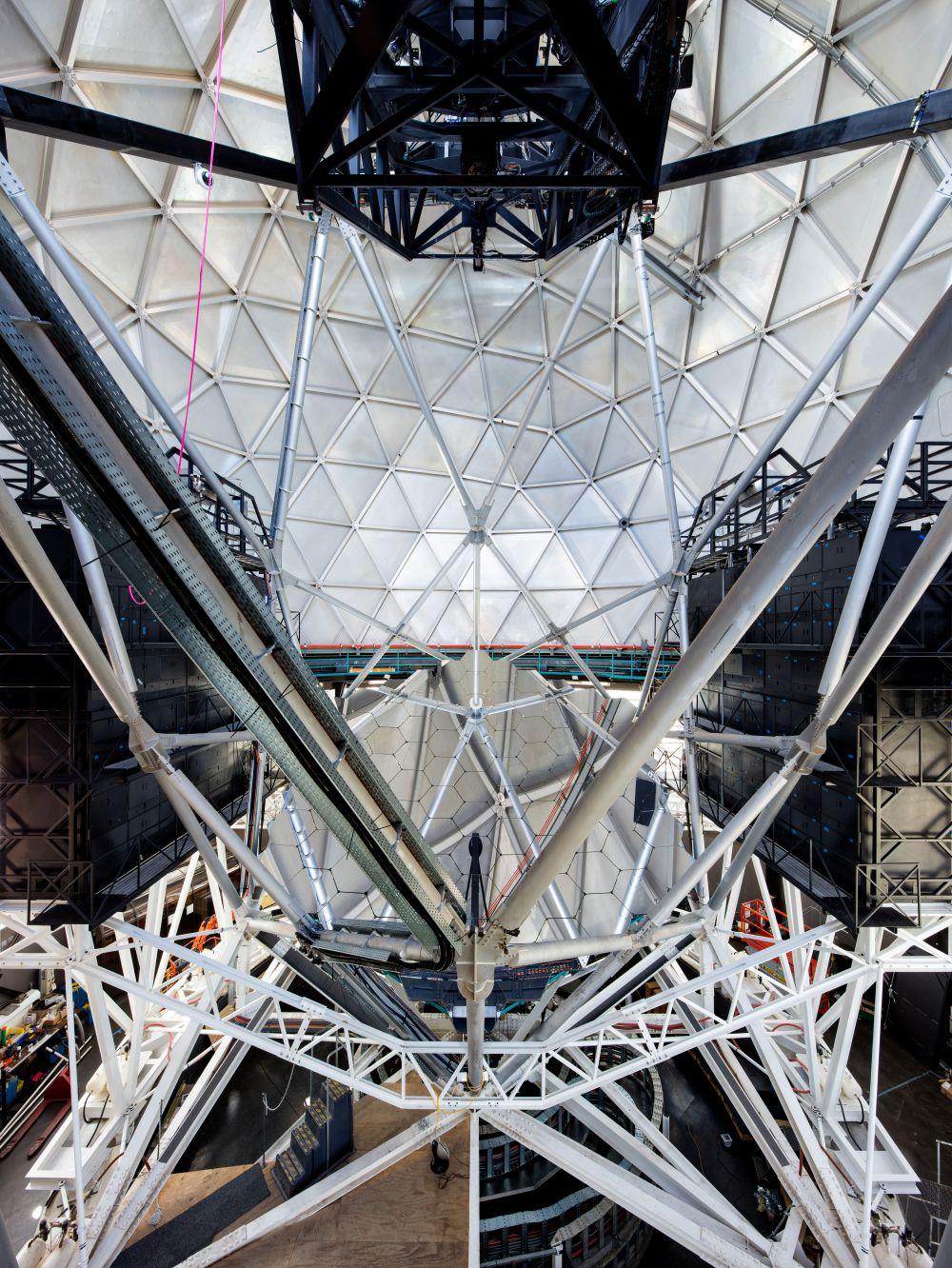
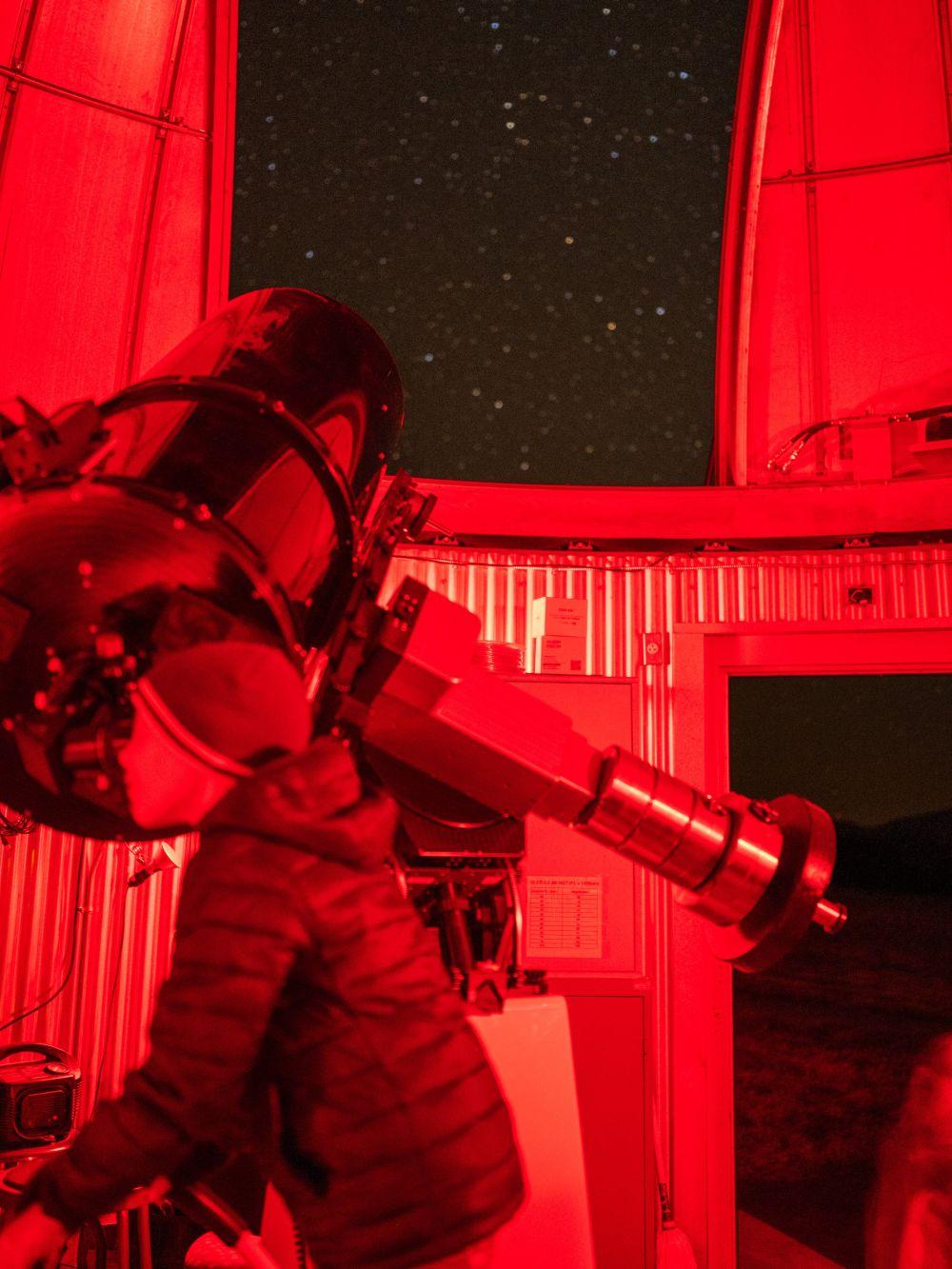
Interior of the Hobby-Eberly Telescope. Image credit: Ethan Tweedie Photography.

Nov 11: Astronomy Talk at the Texas Science & Natural History Museum in Austin


Enjoy a free public program with Laurel Weiss, a UT Austin doctoral candidate in astronomy. Learn how the Hobby-Eberly Telescope Dark Energy Experiment (HETDEX), which uses observations from McDonald Observatory, is helping astronomers investigate the nature of dark energy.


As part of her doctoral research, Weiss uses HETDEX data to study light from distant galaxies. She investigated unexpected patterns in the data and found that some galactic light was being removed during data processing and absorbed by gas and dust as it traveled to Earth. Her work helps astronomers more accurately map and understand the distant universe.


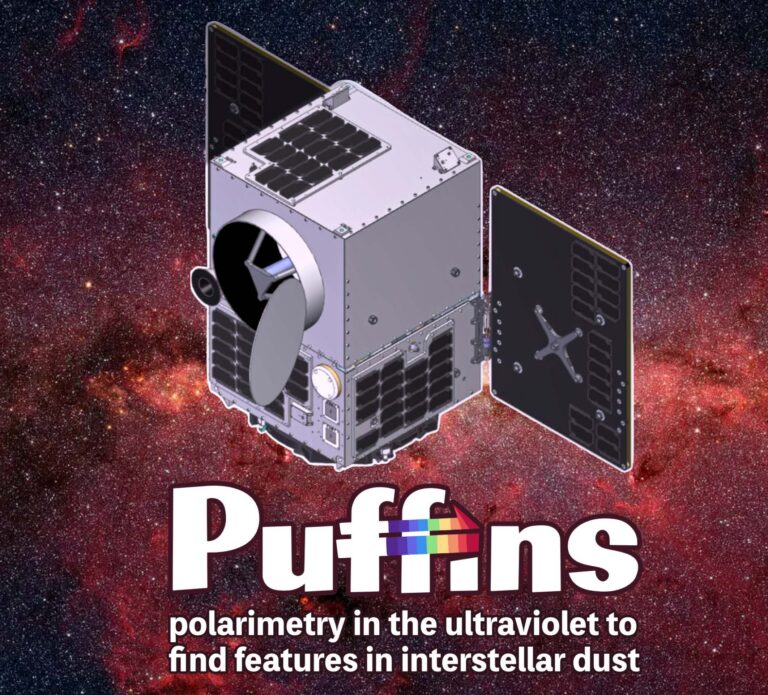
At the heart of the PUFFINS satellite is a specialized telescope just 10 inches across – the size of a large dinner plate – that captures ultraviolet light from distant stars. Image credit: SFL Missions Inc./PUFFINS Team.

McDonald Helps Lead NASA Mission to Study the Dust Between Stars


NASA is building a small space telescope specializing in detecting polarization in ultraviolet light from distant stars. From its vantage point in low-Earth orbit, the instrument – dubbed PUFFINS – will stare at a minimum of 70 stars to analyze how their light has been altered by interstellar dust on its journey to Earth.


“The science PUFFINS will do may seem a bit esoteric, but what we find will help us understand how our universe works,” explained B-G Andersson, science principal investigator for the mission and assistant director for research support at McDonald Observatory. 


Thanksgiving Week at McDonald Observatory


In observance of Thanksgiving Day, McDonald Observatory will be closed to the public on Thursday, Nov 26.


This holiday is a popular time to visit the Observatory. If your plans include stopping by for a Star Party, daytime tour, or other public program, we recommend buying tickets in advance. It is not uncommon for our programs to sell out during this holiday week!


Wherever you do celebrate Thanksgiving this year, we wish you clear skies and good cheer!

A young observer at a Star Party. Image credit: Nolan Zunk


💫🌟 On the Horizon 🌟💫


Nov 1: Daylight Saving Time ends at 2 a.m. local time, so we "fall back" by one hour.

Nov 7: Venus, the Morning Star, and the true star Spica are close above the Moon at first light.

Nov 9 (1:02 a.m.): New Moon.

Nov 16: The Leonid meteor shower peaks tonight, with little interference from the Moon.

Nov 19-20: Saturn stands to the lower left/closer to the lower right of the Moon at nightfall.

Nov 24 (8:53 a.m.): The full Moon of November (which will be a supermoon) is known as the Beaver Moon or Frost Moon.

Nov 27: StarDate holiday sale begins! Stay tuned for more details.


Skywatching news courtesy of StarDate's 2026 Sky Almanac.


Make a gift to support our education and outreach efforts.

Facebook  X  Instagram  Youtube  LinkedIn