|
Henrico Rec & Parks | (804) 501-PARK
| |
| |
Table of Contents:
- A Letter from Our History Team
- Brook Road Revisited
- Rescue Mission to Hampton
- Hamiltruth or Hamilfiction
- Valor and Sacrifice in the Great War
- From the Collection
- Henrico County & the 250th Commemoration
- Meet the Staff
- Down on the Farm
- Rec & Parks App
| | A Letter from Our History Team | | |
Happy fall to all our Henrico History fans!
It has been one whirlwind of a year in the world of Historic Programming and Preservation Services. We have been doing many new and exciting things, and partnering with different agencies, some new, and some longstanding, to bring experiences to the county.
In the spring newsletter, we highlighted the travelling exhibits that we had reserved from the Virginia Museum of History and Culture. They were Give Me Liberty: Virginia & The Forging of a Nation, Founding Frenemies: Hamilton and The Virginians, and Un/Bound: Free Black Virginians, 1619-1865. The response to each of the exhibits was phenomenal! Seeing the looks on the faces of our pickleball players after they came out of the gym and saw the exhibits for the first time were priceless. Each exhibit had a different focus, but all featured content from the 250th Commemoration of the Signing of the Declaration of Independence!
All year long, we have been continuing our partnership with the VA250 Commission. Back in 2022, the Henrico County Board of Supervisors passed a resolution to support the VA250 Commission through programs, events, and educational initiatives. We’ve been doing so, little by little. In 2023, we only held nine 250-themed programs but increased that to 19 programs in 2024. This year, we will be very close to 60 programs!!
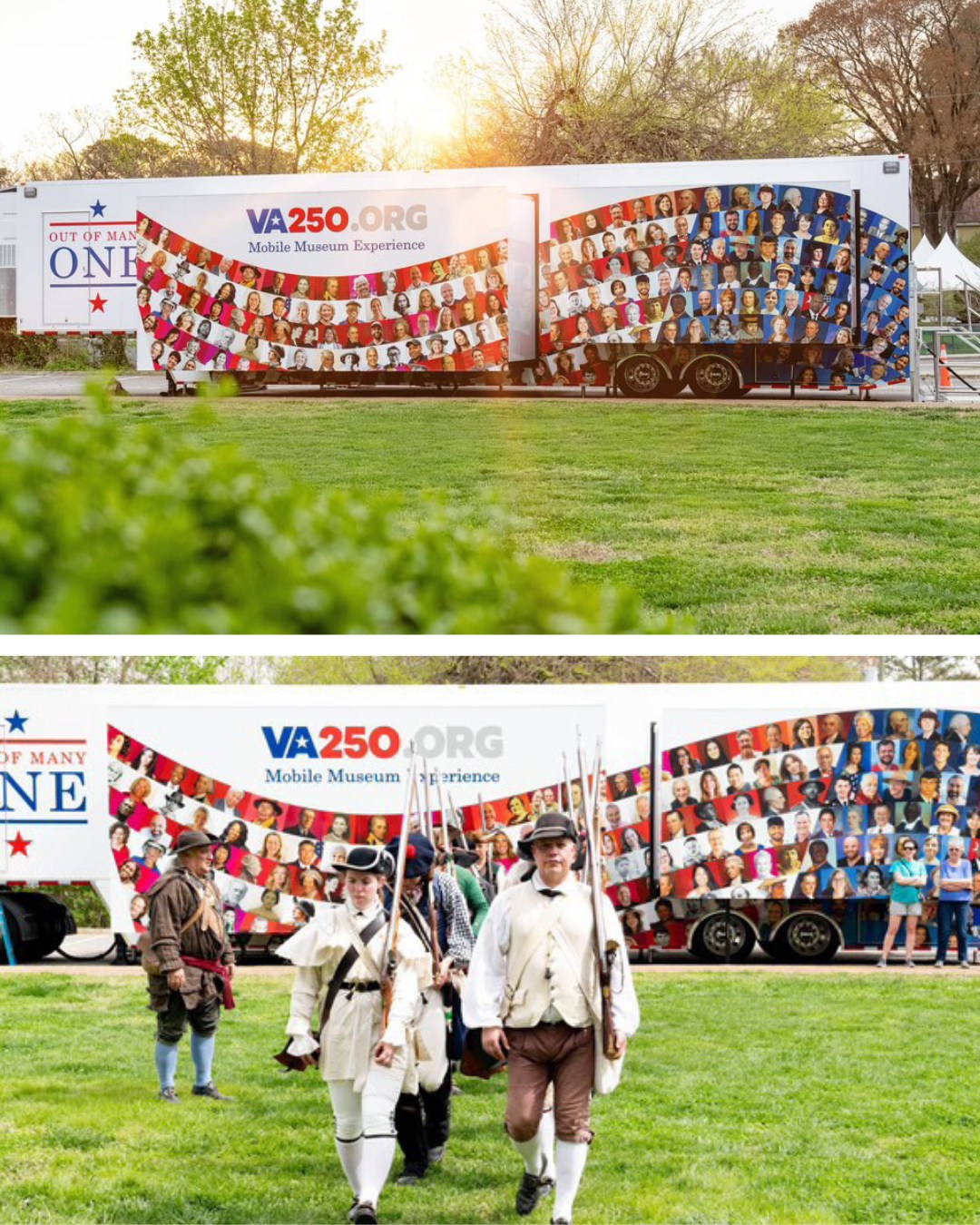
On June 21, our department hosted our 5th annual Juneteenth Celebration, which coincided with the 160th nationwide observance of Juneteenth. We were able to secure the VA250 Mobile Museum’s attendance for the event and our department’s Play All Day initiative. In August we were able to participate in governor Youngkin’s Commonwealth Day of Play , held at our department’s award winning, Taylor Farm Park.
Our history educators participated very heavily in the Civic Season this summer. The Civic Season is an initiative which was begun by Made By Us, a network of hundreds of museums nationwide (Colonial Williamsburg, Monticello, Lincoln Presidential Foundation, Atlanta History Center, National Archives Foundation, National Museum of American History, etc.) who attempt to provide access to history for younger generations who will guide civic engagement for the next generation. The Civic Season links the nation's oldest federal holiday (July 4) to its newest (Juneteenth), through the ideals which have brought America to life: freedom, equality, justice, and opportunity.
Made By Us simplified the civic season to those two weeks between the holidays due to attention spans and staffing capacities, but the recommendation is to engage during the summer months, as most localities do dismiss students for summer vacation. We've been targeting Civic Season programming for the past two years, and this year we targeted more programming for Civic Season as a buildup to America's 250th next year, bringing forward the spirit of citizenship which spurred the need for a revolution. Our team had so many great ideas for Civic Season programming; we had to expand to three months!!!
But I know you didn’t come here to hear me go on and on about the wonderful team we have, let them tell you themselves about the wonderful things they’ve done and are planning!
| | Brook Road Revisited, Part 1 | | |
We hope that you enjoyed our spring newsletter highlighting the community of Yellow Tavern. Brook Hill is another community along Brook Road (U.S. Route 1) steeped in early Henrico history. Let’s explore another section of this historic highway at Brook Road and Wilmer Avenue and some of the surrounding area. Some of the sites have more extensive history than we can touch on in this newsletter, and we invite you to explore their history further. In the next newsletter, we will explore the southern terminus of Brook road near the Henrico and Richmond City boundary.
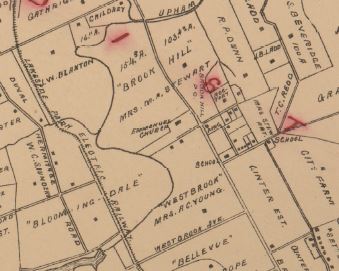
The community of Brook Hill dates to the eighteenth century. Thomas Williamson of Kent, England, laid claim to the land that would become the Brook Hill tract in 1714. His descendant, John Williamson, inherited the property and built a two-story, six-room frame house that formed the core of the current dwelling. A later descendant, Robert C. Williamson, facing financial challenges, mortgages his Brook Hill property. It was purchased in 1842 by John Stewart from his future father-in-law, as he had met and planned to marry Mary Amanda, the daughter of Lucy Parke and Robert C. Williamson. The name of Brook Hill appears for the first time in land records in 1854.
Immigrating to the United States in the 1830s from Rothesay, Scotland, two (of three) brothers John Stewart (1806 – 1885) and Daniel Stewart (1809 – 1889), settled in Richmond to join their uncle as tobacco merchants. John and Daniel later formed a partnership and invested in numerous enterprises, including the tobacco trade, railroads, turnpikes, and real estate.
| | |
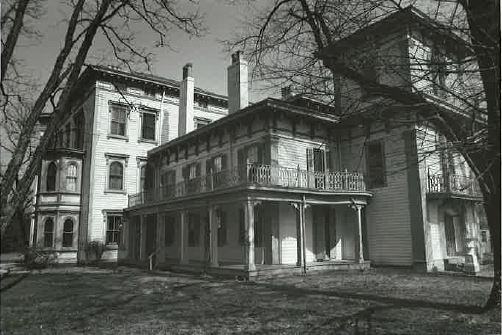
Settling into married life, John and Mary Amanda built dependencies for their estate to include a barn, storeroom/cellar, servants house, corn house and carriage house. Brook Hill was a working farm with livestock, various crops and fruit trees. By 1852, to accommodate their growing family, they enlarged the house embracing the architectural style of the time. The building was transformed into an Italianate Villa style with Greek and Gothic detailing. The design included a three-story central tower, Gothic ironwork, and a wide veranda that wrapped the house. According to Stewart’s account book, Robert Mills, the first native-born American architect provided the original plans for the addition. The house currently stands east of Brook Road across from Emmanuel Church.
| |
The Stewart family were instrumental in creating a community for their neighbors to include a church. In 1859, John and Daniel laid the foundation for the Emmanuel Episcopal Church at Brook Hill, donating the land and money. It was consecrated on July 6, 1860. The Times Dispatch reported “One of the handsomest church edifices in Virginia has just been completed on the Brooke Turnpike 4 miles from Richmond and also a beautiful rectory for the use of the clergyman, Rev. Richard Wilmer.” The first Rector of Emmanuel Church was Rev. Richard Hooker Wilmer, D.D., serving from 1859-1862. As a friend of John Stewart, he was asked to come to Richmond and help with the founding of the church and to lead the congregation with a promise of a rectory and payment of Mr. Wilmer’s entire salary. The present Wilmer Road dates to this early time.
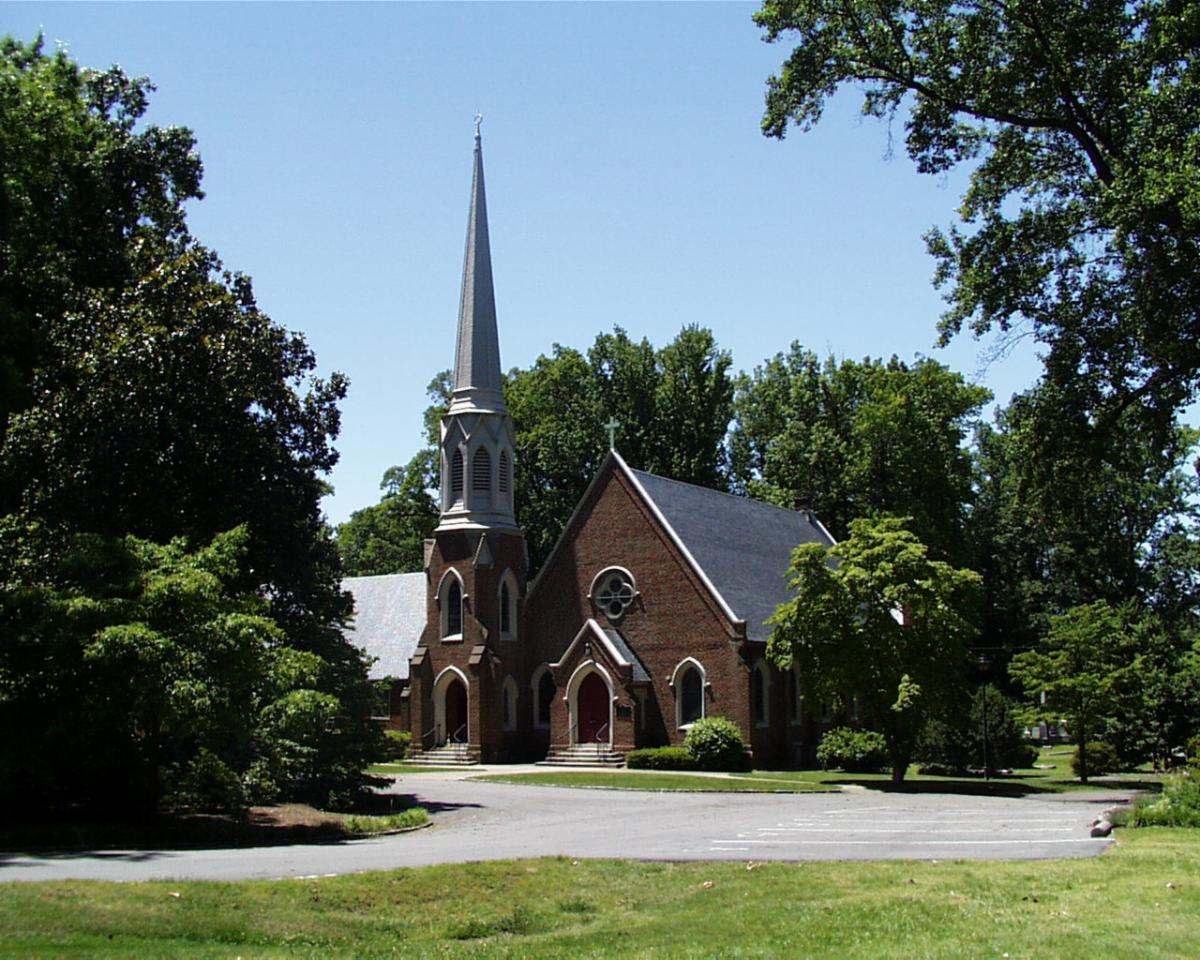
Emmanuel Church, at Wilmer and Brook Road, is a Gothic Revival building, the design was based on 13th and 14th century English parish churches. There is a collection of stained and painted windows, four of the memorial windows were purchased by the Stewart family. Much of the interior is original with unique reversable pews. The church cemetery contains a broad range of monuments, with notable burials including members of the Stewart, Bryan and Chamberlayne families. Other notable individuals buried there include Adele Goodman Clark, William Cabell Brown and Maude Trevvett.
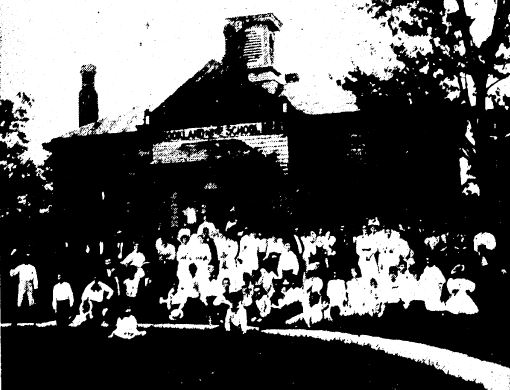
| | Education was important to the life of the Brook Hill community. In the 18th century, Robert Price owner of the Westbrook Plantation, sold one-half acre of land to a group of neighborhood men with the purpose of erecting a one story frame school. There is no record of how long Brook School was used as a school but by the late 1850s it was used as both a school and a church. Rev. Wilmer and his new congregation used the school on Sundays until the completion of Emmanuel Church. During the Civil War, the building was used as a hospital for wounded soldiers. Later, Lewis Ginter, owner of the Westbrook Estate, had the old school building demolished. A second school was referred to as early as 1895 as “Brookland District School No. 5”. This second school stood on the northeast corner of what is now Azalea Avenue and Brook Road the site of the present Arbys restaurant. In 1906, the second school was destroyed by fire. A 1947 RTD newspaper article shows a photograph of a frame building with an entryway built out from the front of the building, and a cupola atop the roof. The photo, ca. 1895, is of graduation exercises at year’s end. A junior primary and elementary school conducted at Emmanuel Episcopal Church was closed permanently in 1950. | |
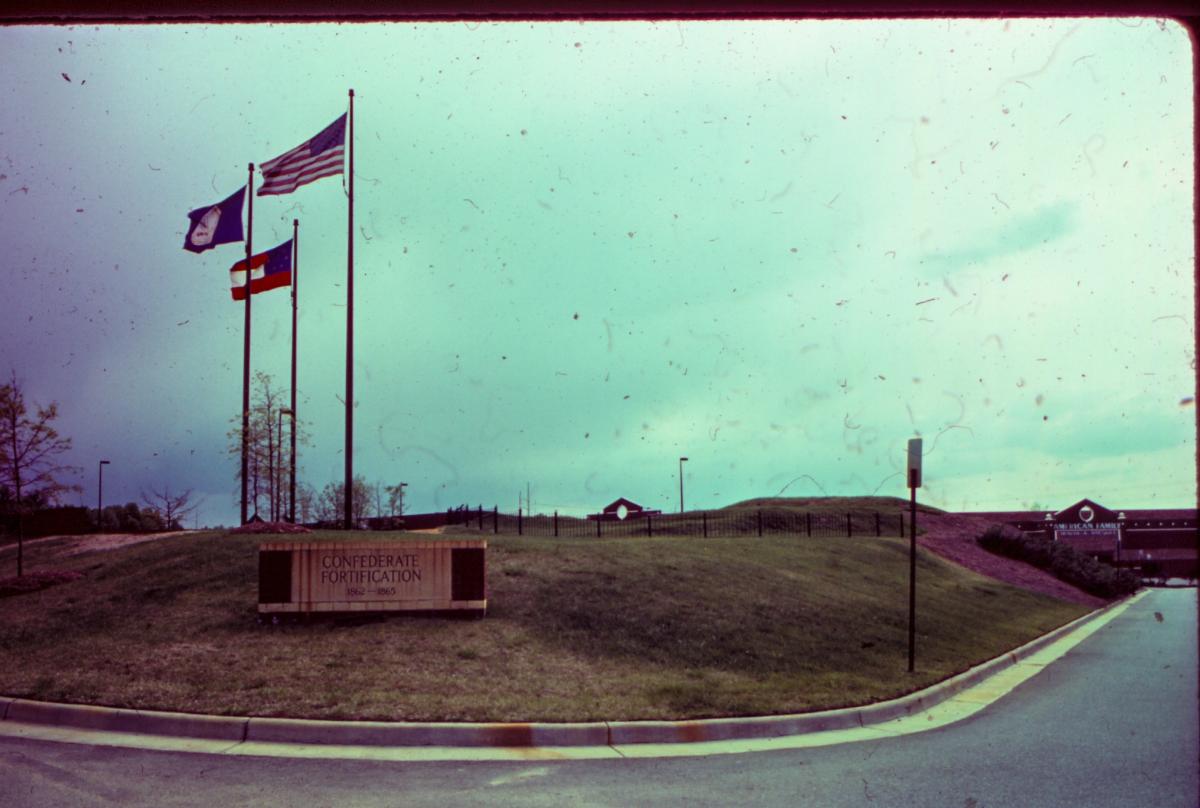
The Civil War impacted the Brook Hill community. The Confederate fortification at Brook Run Shopping center operated as an early warning system for troops protecting Richmond. It was occupied forcibly three times by Union cavalry during the Civil War. An initial raid in 1863 by General Stoneman’s troops proved of little consequence. In 1864, General Judson Kilpatrick with 3,500 cavalrymen seized this fort and shelled the Inner defense line in an assault on Richmond that failed. On May 11, 1864, 12,000 Federals commanded by General Philip Sheridan overpowered J.E.B. Stuart at the Battle of Yellow Tavern and advanced upon these works and overwhelmed the fiercely contested ground. Sheridan retired to the east the next day.
On June 12, 1862, J. E B. Stuart and 1,200 cavalrymen left their camps on the Mordecai and Young farms just south of these earthworks to undertake the famous scouting ride around the Union Army looking for weaknesses in their defenses. John Stewart, his wife and seven daughters stayed at Brookhill despite the skirmishes and battles, including the Battle of Yellow Tavern in May 1864. The cemetery at Emmanuel Church became the final resting place for many Confederate soldiers. The home at Brook Hill served as both a hospital and accommodations for Confederate Generals as the Lee’s and the Stewarts were close friends. The Rev. Cornelius Walker D.D. replaced Rev. Wilmer from 1862-1866. Walker’s diary provided many insights and accounts of the War around Brook Hill. On many occasions he consulted with Mr. Warren at Belmont and John Stewart regarding the news of the war.
| |
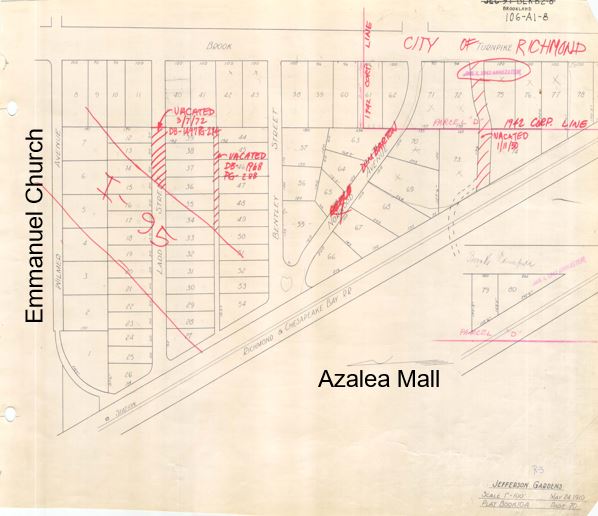
 | | Moving along Brook Road further south, adjoining the land of Emmanuel Church was property formerly owned by Lewis Ginter. In 1897, his Will left 163 acres, including “Westbrook” the home of Lewis Ginter, to his niece Minnie Young. The property was bounded on the south by Westbrook Avenue; on the north by the center of Upham Brook and the Emanuel Church lot; on the east by Brook Turnpike; and on the west by the Hermitage Road. Minus six acres for the Richmond and Chesapeake Railroad Trolley Line (land now owned by the Virginia Electric and Power Co.). When a portion of the property was transferred from Minnie Young to George Miller in 1910, Miller proposed a subdivision to be called “Jefferson Gardens”. The present Wilmer Avenue, named after Rev. Wilmer, once extended across Brook Road south of the church until it was intersected by Interstate 95. It formed the northern boundary for the “Jefferson Gardens” subdivision, also bounded on the west by the railroad and on the east by the Brook Road.
| | |
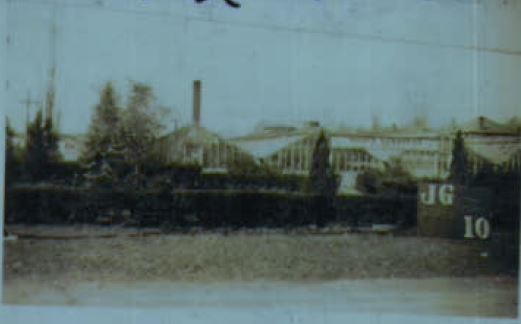
Advancing in his career, W. T. Hood acquired a stake in the business in partnership with Franklin Davis and his brother-in-law Samuel C. Kent. The business dissolved in 1890, and Mr. Hood formed the W. T. Hood & Co enterprise. The business passed to his son, Kent, becoming Old Dominion Nurseries, also known as Hood’s Nurseries. The nursery held a major part of the land in the North Richmond neighborhood. After the death of Kent Hood, much of his property was sold to development companies. The area north of Upham Creek and east of Chamberlayne became known as Chamberlayne Heights, and the area west of the avenue became Chamberlayne Farms. The Nursery business continued as Hood’s Nursery many more years.
A portion of Interstate 95 going through Richmond, built and opened in 1958, took an additional portion of the planned subdivision. The turnpike was built to alleviate traffic congestion on U. S. Route 1 and 301 in the Richmond-Petersburg Corridor following post-World War II growth.
This growth spawned a boarding house, tourist camp, modern hotel, Antiques shop, new mall, and a favorite local restaurant. Brook Road revisited part 2 will cover these topics in a future newsletter.
| | |
Sources:
Chamberlayne Baptist Church 50 years 1953-2003
Stephen E. Row and The Emmanuel History Church Committee, Emmanuel Church-Brook Hill 1860-1985 A Parish History p. 65
Maclaren Brydon, D.D. and Marion Stewart Peterkin, The Story of Emmanuel Church at Brook Hill 1860-1960 p.53
https://brook-hill.net/williamson
Henrico County Circuit Court Deeds: Deed Book 8 page 161 John Williamson to John Carter Williamson; Deed Book 43 page 105 Williamson to Chamberlayne trustees school house lot year 1840; Deed Book 2 page 365 Old School year 1787
Janet G. Murphy, Abstracts of the Fourth Annual Architectural History Symposium, 1996, The Styles of Virginia Architecture
Hugh Douglas Pitts, High Meadow Where Robert E Lee Drew His Sword, page 7-13
Richmond Times Dispatch 1939-05-21_44 “Plans Announced for Subdivision by Carneal Firm-Chamberlayne Heights flanked on two sides by the grounds of the Hood Nursery.”
Richmond Times Dispatch 1947-06-15 “Good Old Days of One-Room School”
| | Rescue Mission to Hampton | | |
“This portrait of a copy of the original. It was done in 1970, but the original is at Hampton University.” I’ve said this line dozens of times. I’ve heard this line thousands of times. Outside of providing the information, I hadn’t really thought beyond that line.
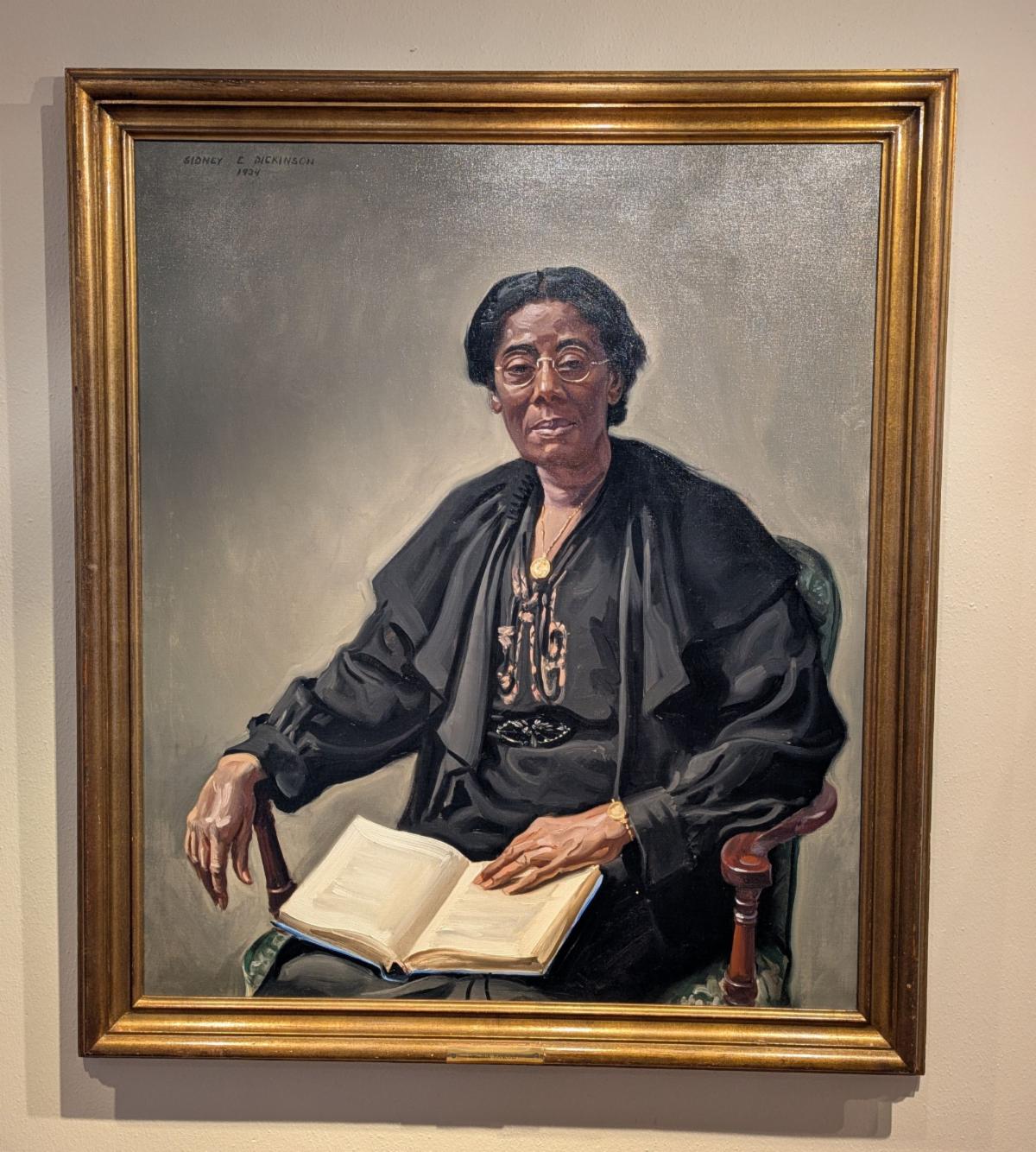
Hanging above the mantle in the Virginia Randolph Museum is a portrait of Ms. Virginia Estelle Randolph. It’s from 1970 and was done by W. Randolph Cheatham, but it was copied after the original from 1934 by Sidney Dickinson. Sidney Dickinson was a well-known portrait artist of the early 20th century, painting members of the Rockefeller family, New York Mayor Fiorello LaGuardia, and Alabama Governor Thomas Kilby amongst others. His most famous portrait has been in the news lately. In 1952, Dickinson was commissioned to portray Robert E. Lee in grey uniform with gold piping as a General of the Confederate Army for the United States Military Academy’s 150th anniversary. In 2021, this portrait was removed due to Lee’s involvement in the American Civil War but was recently reinstalled. So how did it come to be that such a prominent artist would come to paint Ms. Randolph, and why is the original at Hampton? Well, that’s a story for another time…
Recently, the Virginia Randolph Museum has undergone some changes, both inside and out. Outside, there has been an ongoing renovation project at the school. Henrico County Public Schools has been working towards upgrading the facilities for the students and preparing them for successful futures. With that have come new buildings, new open areas, and renovating many of the older structures. In the new year of 2026, the Virginia Randolph Museum will benefit from some of that work with a new dedicated parking area for the museum, open green spaces around the building, a new outdoor lighting package, and new security features. Inside, the museum is under the direction of a new curator, Frank J. Thornton, Jr. If that name sounds familiar, Mr. Thornton previously served on the Henrico County Board of Supervisors for 28 years, and in his retirement, wishes to continue Ms. Randolph’s legacy of education. Mr. Thornton also brought with him ideas of how to immerse the surrounding community in Ms. Randolph, and one of those ideas was to bring her home. If you are familiar with Ms. Randolph’s history, you know that she is physically interred outside of the museum, on the school grounds. So that’s not exactly what I mean. Mr. Thornton began a conversation with the curator of the Hampton University Museum about bringing Ms. Randolph’s portrait to Henrico County.
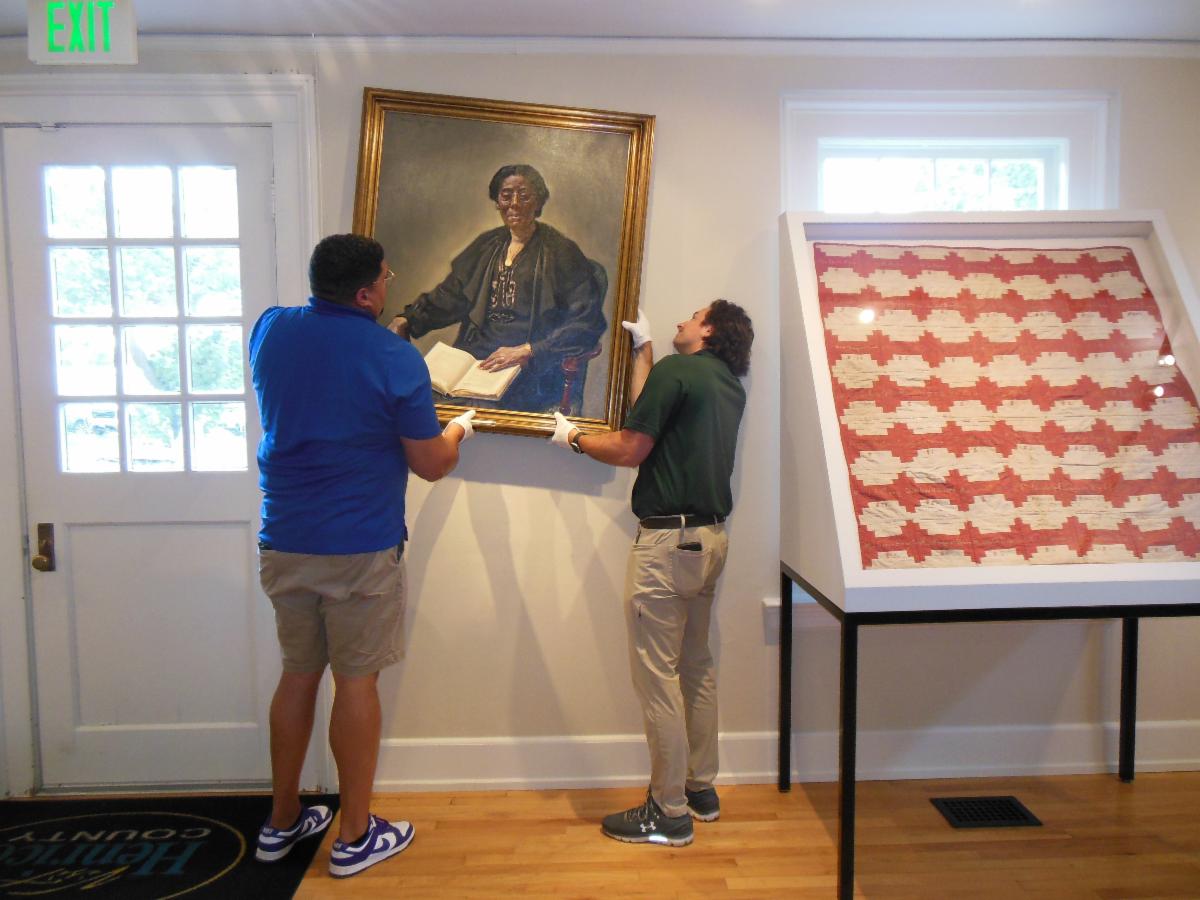
The Hampton University Museum was founded in 1868 and is the nation’s oldest African American Museum, and one of the oldest museums in the Commonwealth of Virginia. In their collection is Ms. Randolph’s original portrait, and we began the process of a loan agreement with Hampton for an exhibition at the Virginia Randolph Museum. After securing the paperwork with the museum, next was transporting the portrait to Glen Allen.
Dr. Rizzo and I signed out a county van and headed down I-64 E early on a Wednesday Morning. We set out early to avoid traffic. I live by the saying, “Always strive to be like I-64, always improving yourself.” There are large areas of interstate under construction. From New Kent to Newport News, there is an expansion project underway, and just past the exit to Hampton University is the construction of the new bridge tunnel to Norfolk. We made the trek, reflecting on other occurrences within our history section, even brainstorming program ideas. As we approached the exit, traffic backed up quite a bit, but we still managed to arrive 45 minutes earlier than our intended time. We decided to fill our waiting time with exploration. Very close to the entrance of Hampton University is Emancipation Oak. Under this tree, Mary Peake, a free African American, taught masses of enslaved refugees, beginning in 1861, to read although it had been illegal to do so in Virginia since 1831. This tree would also serve as the site of the first Southern reading of the Emancipation Proclamation in 1863. According to Hampton University’s website, “the Emancipation Oak still stands on the Hampton University campus as a lasting symbol of the promise of education for all, even in the face of adversity.” We visited the tree and took pictures, reflecting on what the area would have looked and sounded like prior to the construction of the interstate and the modernity of the surrounds.
After leaving the tree, we realized we still had about 30 minutes before the museum staff expected us, so we detoured to the Hampton National Cemetery, which lives in the heart of the campus. Just two blocks away from Emancipation Oak, is the cemetery with the remains of thousands of soldiers from the American Civil War through the present. Dr. Rizzo and I were very surprised by the sheer size of the cemetery, its proximity to the university’s buildings (the University’s football stadium is literally across the street), and the disconnection to the student body (I’ll touch on that a little later). Prior to our trip, I had done a little research on the cemetery. I must confess, I have been to Hampton University several times for football & basketball games, even graduations and battles of the bands, but I had NO CLUE there was a national cemetery in the middle of campus. In my research, I discovered that not one, but two of the USCT Medal of Honor recipients from the Battle of New Market Heights was buried in Hampton’s cemetery!! Charles Veale and Alfred B. Hilton are both interred in the cemetery, and here we are, Henrico County employees have come to Hampton for a completely different reason! There is no such thing as coincidences…
As we walked the cemetery, admiring the tombstones, and monuments, we were approached by an employee named Robert… who apparently was about to have our vehicle towed…but gave us more background on the cemetery, told us about many of the burials, superintendents of the cemetery, and the different observances throughout the year. Dr. Rizzo and I had questions!!! “Why are their Civil War veterans buried next to Gulf War veterans,” “how do you determine placement,” do you have a good connection with the school,” “who maintains the cemetery,” and “do you ever have people just come and sit and study?” Robert told us that when the cemetery was founded, there was no school, and no true plan. This cemetery wasn’t preplanned; it was created out of necessity. Deaths from the military hospital at Fort Monroe created a need for a cemetery. But even then, space was dictated by need. There are 272 Confederate burials in the cemetery (denoted by a Confederate cross on the headstone), but also German and Italian POWs from World War II. As the university grew around the cemetery, space came at a premium. So out of necessity of space, modern burials began to be placed next to historic burials. So, a Vietnam veteran, may be placed next to a Spanish American War veteran, or a Korean veteran could be next to an Operation Iraqi Freedom Veteran. The students do not seem to realize there is a cemetery on campus until they walk into the Superintendent’s office by mistake during the first week of classes, looking for another academic building, or when they park in the cemetery, hoping to get a parking space closer to classes (hence the about to get towed Robert mentioned to us earlier). We encouraged Robert to push for more opportunities like those to engage with the students, even creating opportunities with Hampton’s History Department to better immerse the students in what’s right there! By the time we finished our conversation with Robert, it was time to head to the museum.
I had hoped to take some time and explore the museum while the staff was getting the portrait ready for transport, but I was very surprised to find they were completely ready for us to receive the portrait! All the paperwork was signed, the portrait was sealed, and all that was left was for Dr. Rizzo and me to have it delivered to the Virginia Randolph Museum! We started the trip back to Henrico, and traffic seemed to flow faster back to Henrico than it did away.
Our arrival at the Virginia Randolph Museum was met by vehicles and workers supporting the ongoing construction, but that didn’t dim our spirits. We brought the portrait inside and began to unwrap our newly acquired present. As we peeled away the layers of bubble wrap, acid free paper, and museum boards, I realized what we had just done. We had returned Ms. Randolph’s portrait to the last building she had worked. Shortly before her retirement, Ms. Randolph had kept an office in the Home Economics Cottage, and her original portrait was returned and featured prominently in the museum named for her legacy…I get chills just thinking about it…
…the portrait is no longer just a copy of the original…it’s so much more. Even on that day we uttered the words… ‘welcome home Ms. Randolph, welcome home.”
| | Hamiltruth or Hamilfiction | | |
By Kara DiComo
I’ve been a big fan of the Broadway musical Hamilton for many years. There was a point in the not-so-distant past where I could have easily recited the over two and a half hours soundtrack by heart. So, I was excited to learn that the county would be hosting the Founding Frenemies traveling exhibition, on loan from the Virginia Museum of History and Culture, focusing on the real-life Alexander Hamilton and his relations to several prominent Virginians. I knew I wanted to put my past interest to work and compare the award-winning production to the real history.
The first order of business was to answer the question that would fuel this program -- What did Lin-Manuel Miranda get right about his titular figure, and what did he get wrong? In general, most details included in the musical are true. For example, Hamilton was born out of wedlock in the Caribbean, Hercules Mulligan was a tailor-spy during the revolutionary war, Hamilton and Burr both served as lawyers in defense during the first murder trial in the United States (People V. Levi Weeks, 1800), and during the presidential election of 1800, Jefferson and Burr tied for the presidency.
However, Miranda did take some very large liberties in the name of artistic storytelling. The largest of which being the removal of several of the Schuyler’s children, including three sons; making Angelica’s line in the musical, “my father has no sons” a direct contradiction to historic fact. Also, while Miranda chose to lean heavily on the romantic interest between Angelica and Alexander, by the time that the events of the song “Satisfied”, the real Angelica would have already married, having eloped without her family's approval, and moved with her husband to Europe. Additionally, despite what the musical states, dueling was illegal in New Jersey as well, but the punishment was less severe. Though interestingly enough there were rules, or “commandments”, to duels that come from the Irish Code Duello (though instead of 10 there are actually 25). Hamilton’s final act in the musical of shooting his pistol in the air during his duel with Burr actually goes against one of these rules: Rule 13 -- No dumb shooting or firing in the air admissible in any case.
All this information and more went into the creation of our Hamiltruths or Hamilfictions program. While Hamilton the musical may not be the most historically accurate work out there, I think everyone can appreciate how the musical brings history to a wider audience.
| | Valor & Sacrifice in the Great War Exhibit | | |
|
By Avery Small
Avery is a Henrico County resident currently enrolled as an undergraduate student at George Mason University. He interned with the history division of Henrico Recreation & Parks during the summer of 2025.
| | |
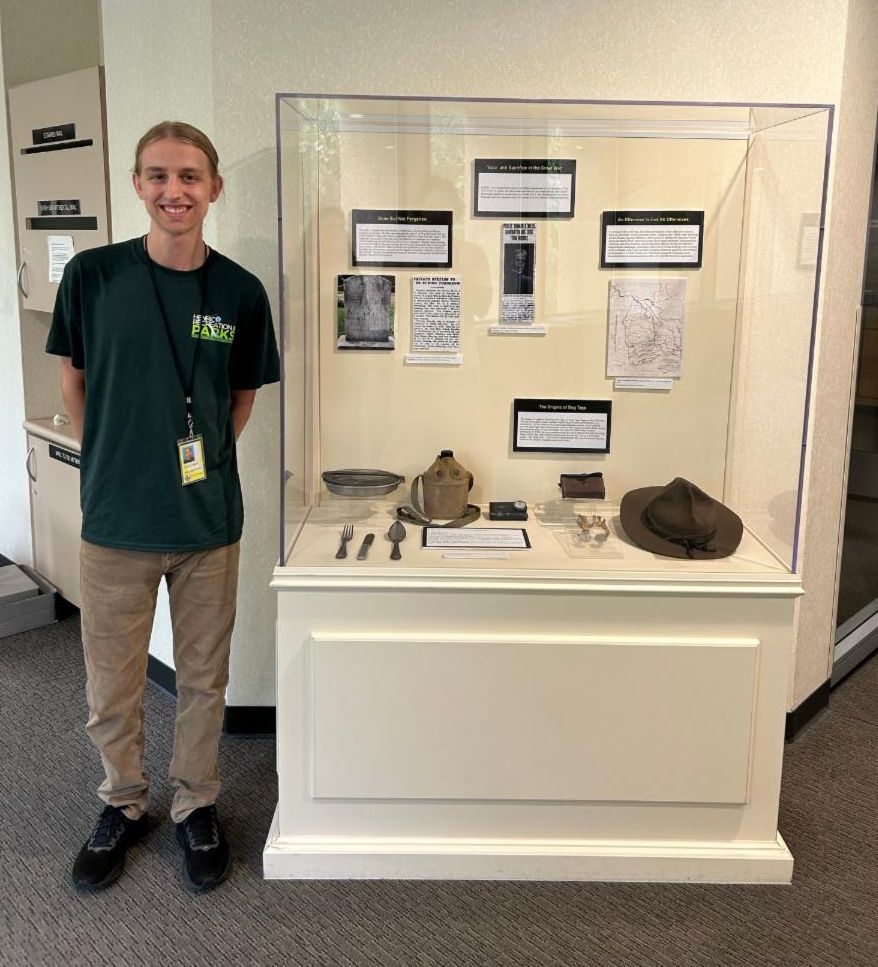
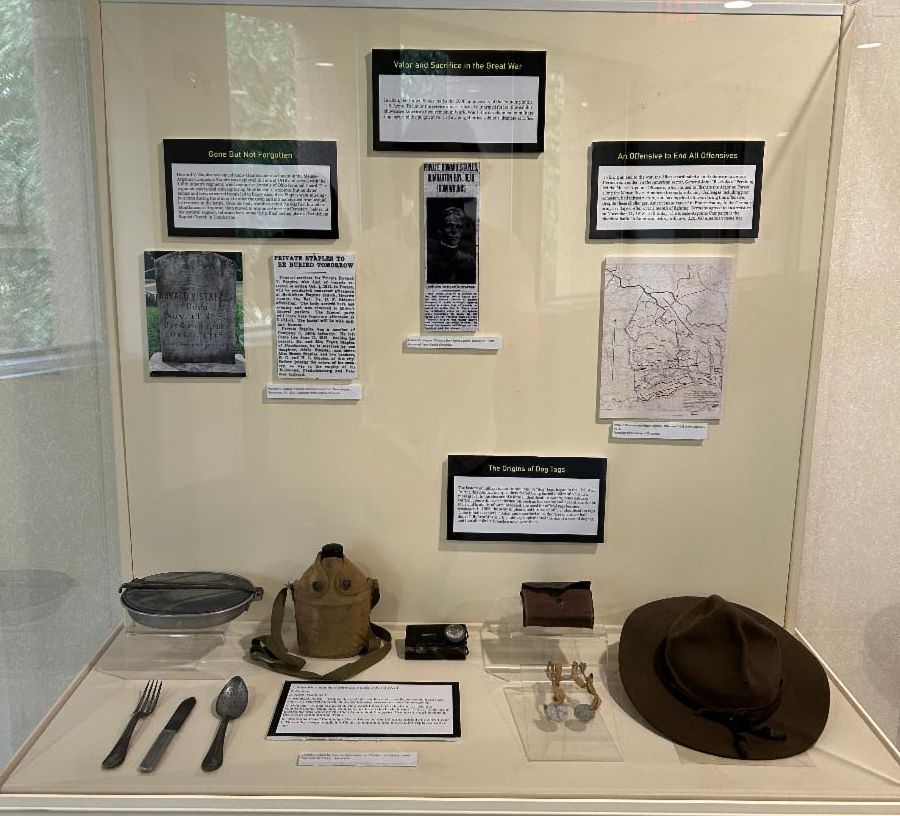
In starting my internship with Henrico back in May, I had little clue what I would be doing. As it was an internship, I assumed they would send me away to some dank office cube, where I would work on whatever mundane task they needed done. While there were times when that was the case, the reality was that I would be spending the bulk of my summer curating and researching an exhibit to display Henrico’s history.
At first, the task was a little daunting, I had freedom to choose what it was about and what I could display. The only guideline was that it somehow ties back to Henrico. To get started, I needed to find a topic. As I was unsure where to start, It was suggested that I focus on military history, being it is the 250th anniversary of the armed forces. Since most military artifacts in the Henrico County collection are from the early 20th century, World War I was an obvious choice. With a chosen topic, it was time to focus on the display.
Finding objects for display wasn’t a challenge. All of the items in collections had been filed into a database, so all I needed to do was pick things out that sounded neat. Once I found everything, the next step was to figure out if they fit, if they were relevant, and if they could go on display. A few examples of this are some of Sheppard Crump’s medals that looked cool to add on, but as the direction changed, so did their relevance to the exhibit. Another item is a World War I gas mask that unfortunately is in a condition too poor to have it on display. Lastly, uniforms are too big to display.
Once the items were chosen, the next step was to verify their relevance and understand how they were used. Some of it was obvious, like how the army flashlight was used to help soldiers see at night or that a medical pouch kept first aid. Other objects were much more difficult to pinpoint. The hat in particular was a challenge since the style of hat is not reserved just for the military. There’s no inscription on it that says “France, 1918” or something to that effect, so instead I had to cross-reference the hat on display with the hats seen in my research. Once everything was finalized, it was time to pick a theme.
Most of the World War I collection is from Sheppard Crump’s items, but as his story is well documented, I wanted to make an exhibit about someone or something else. At first, it was difficult because there isn’t coverage on other Henrico World War I veterans, so with Crump out of the picture, the topic lacked focus. When it seemed like World War I wasn’t a good topic, I tried to shift to the Mexican Border Conflict as it was the same time frame, but the small scale of the conflict meant there was even less of a connection. After abandoning that idea, we then thought of looking at gravesites of the people World War I veterans. This was when we found Howard V. Staples, a Dumbarton man who gave his life in the Meuse-Argonne Offensive.
Before looking into Staples’s story more, I first had to familiarize myself with the battle in which he took part. The Meuse-Argonne Offensive is well-documented battle in both a historical and a military analysis sense. The historical sources gave me information on general facts like how it was needed to break the stalemate in France and that the operation had three distinct phases. The military analysis side of research gave me information about how the officers coordinating the attack utilized outdated tactics, which neglected the use of new technologies like tanks and airplanes. With this, I could paint both a clear and detailed picture of the battle as well as try to understand better what happened to Howard V. Staples in France.
We know very little about Staples. All of the information on him was written after his death through his obituary or documentation about his burial. What we do know for certain was that he died in France and was buried three separate times. For his military service, we know he served in the 145th Infantry Regiment Company C, which consisted of mostly the Ohio National Guard. To fill in the gaps of information, I started looking closer at the sources on the Meuse-Argonne Campaign to see if I could find any connection between Staples and where he may have been in France. Through this, I discovered that the 145th Infantry regiment was a part of the 37th Division, which was tasked with taking Montfaucon d’Argonne. Given what is known about the defending Germans and the American 37th, Staples would have been going against an opponent who was both well-equipped and well trained, while his regiment was mostly inexperienced.
With the approach of the exhibit shifting toward a soldier who was killed in action, an aspect I wanted to focus on was dog tags and how we identify the dead. In World War I, dog tags were a relatively new thing, so I thought it was worth putting together something about them. Finding information about dog tags would not be easy as there is little focus or attention on them. What is written about them can either be contradictory or talks about the post-World War I implementations. An example of this is the origin of the name “dog tag,” of which there are three: first was the treatment of soldiers in the army, second was from a newspaper article, and third was from a Prussian general’s proposal in the 1860s. While it’s possible to have had multiple origins, each comes from a different source without any reference to any of the other theories.
Now that the research was done, it was time to compile it together into panels for the display. As I am accustomed to writing college papers that encourage detail, having to shift toward a more focused and summary approach was difficult. This meant that, for example, the Meuse-Argonne Offensive panel needed to be cut to just the broad strokes of the battle. Instead of discussing the many challenges, triumphs, and follies experienced by the Americans fighting in France, I touched on why the battle happened, listed some challenges, and discussed the results of the battle itself. Ultimately, much of what is written on the exhibit display is just a sample of what I found in research.
Curating this exhibit was a lot of work and was a great opportunity to understand the process that goes into it. The most important thing that I learned was how much you can get from very little information. The story of Howard V. Staples is told through his obituary and a few documents relating to his burial. With that little information, however, his story can be pieced together through further research filling in the gaps. Another important skill is how you write for the public. You can never be certain of the knowledge and interest of those who engage in the exhibit, so it’s important to make the topic interesting and the information approachable. Overall, this project improved my skills of communicating history to the public that I hope to use in whatever field I choose for my career.
| | |
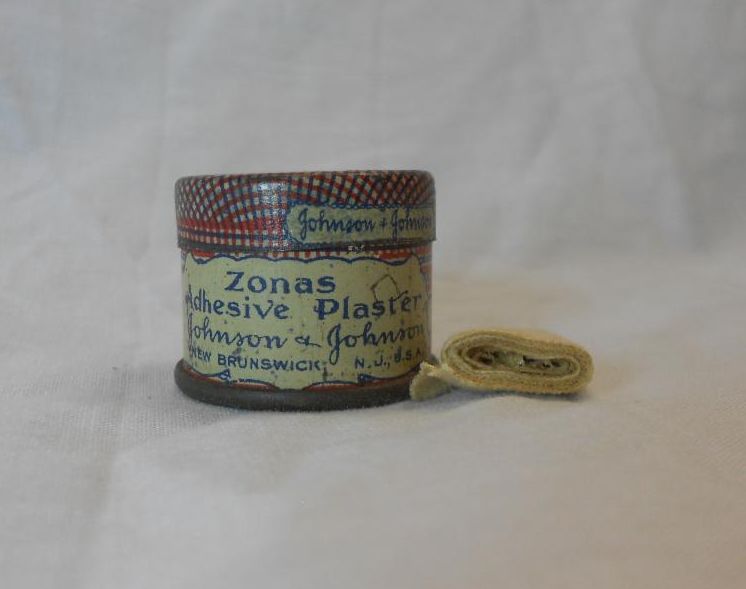
Johnson & Johnson Adhesive Plaster
Tin 1980.1.82
| | |
This red, white, and blue tin, measuring 0.75 in. height and 1 in. diameter, holds “Johnson & Johnson Adhesive Plaster,” a rubber based medical adhesive tape made with zinc oxide. It was advertised in a Johnson & Johnson first aid manual as “non-irritating and will keep in any climate.” It was able to be applied without the help of heat or moisture.
In a book published in 1905 called Adhesive Plaster in Modern Surgery: The Applications and Methods for using Adhesive Plaster in Medicine and Surgery, it states that the ZO adhesive plaster manufactured by Johnson & Johnson at that time represented “the greatest progressive step in the art of plaster-making that has been reached in centuries of pharmacy.” It continues to explain the process of making the adhesive plaster from India-rubber and the extra step taken by Johnson & Johnson to remove foreign substances that irritate the skin and detract from the effectiveness of the adhesive.
Not only was this tape used to close small wounds and hold dressings in place but also in repairing a variety of household objects. Later came duct tape, also manufactured by Johnson & Johnson, and eventually carried out a similar function. Illinois mom Vesta Stoudt, who had two sons serving in the U.S. Navy during World War II, worked at the Green River Ordinance Plant near Amboy. The ammunition boxes she packed and inspected were sealed with paper tape and then were dipped in wax to make them waterproof. The boxes were difficult to open under fire, as the paper tape was too thin and the pull tab often tore off.
Stoudt’s solution to the problem was waterproof cloth tape. She wrote to President Franklin D. Roosevelt on February 10, 1943, after her idea was not taken seriously by her supervisors. Roosevelt shared her letter with the War Production Board who let Stoudt know of their approval of her invention. The Industrial Tape Corporation, which was a Johnson & Johnson operating company, was asked to make the product as it “demonstrated expertise in producing adhesive tapes.” It is still used by soldiers today, but its use goes beyond the battlefield and into the home. Originally made with duck cotton cloth, polyethylene, and adhesive, the tape was first known as 'duck' tape. The name later evolved into 'duct' tape when it began being used for ductwork repairs in the 1950s.
| | On behalf of Henrico County's American Revolution 250th Commission, we invite you to take this journey with us. Discover new stories, get inspired by the county’s history, and help us preserve these important places! | | |
Traveling Exhibits
On display at various recreation sites. View schedule.
Un/Bound: Free Black Virginians, 1619-1865
October-November.
Explores the lives of free Black Virginians from the arrival of the first captive Africans in 1619 to the abolition of slavery in 1865. Through powerful objects and first-person accounts, visitors will discover how Virginia’s people of color achieved their freedom and persevered within a legal system that recognized them as free but not equal.
Determined: The 400-Year Struggle for Black Equality
February-March.
Traces four centuries of Black history in Virginia through stories of extraordinary individuals who struggled for equality and, in the process, profoundly shaped the nature of American society and the meaning of our collective ideals.
Their stories help us to understand the origins of today’s problems and to reckon with the painful legacies of slavery, segregation, and white supremacy. These determined individuals also inspire us to create a better future.
Upcoming Programs
Gingerbread for Liberty
Fri, Nov 21, 5-6:30pm. Belmont Rec Center.
All ages. Celebrate National Gingerbread Cookie Day by going back in time 250 years! Munch on some gingerbread cookies while listening to the children's book, Gingerbread for Liberty. Create gingerbread themed crafts and activities that will spice up your day with combining fun and and history! Information: den63@henrico.gov
Benedict Arnold: American Patriot, American Traitor
Sun, Jan 11, 2-3:30pm. Belmont Rec Center.
Ages 10+. Today, the name Benedict Arnold is synonymous with treason and is reviled throughout the United States. However, before he “turned” and took up arms against his countrymen, Major General Arnold was the most aggressive and successful officer in the Continental Army. Hear Benedict Arnold explain why he abandoned the American fight for independence and went over to the British side, and his destructive January 1781 raid against the important rebel supply depot of Richmond, Virginia. Information: den63@henrico.gov
Historians on Tap: Uncivil Wars
Jan 15, 6:30-8pm. Blue Bee Cider. #18078
Ages 16+. Local historians will dive into tales of eccentric characters and unusual events from the Civil War era, revealing the unexpected ways the era shaped our community. Information: riz002@henrico.gov
Spilling the Tea on Colonial Tea
Sun, Jan 25, 2-3:30pm. Belmont Rec Center. #17838
All ages. Why did the British and their colonies become tea drinkers? How was colonial tea service different from Victorian? Did anyone drink tea from the saucer? See the types of tea available to colonists, including substitutes used during the boycott. There will be a demonstration of how tea was prepared, including the common implements of the time. Information: den63@henrico.gov
View more programs
| | |
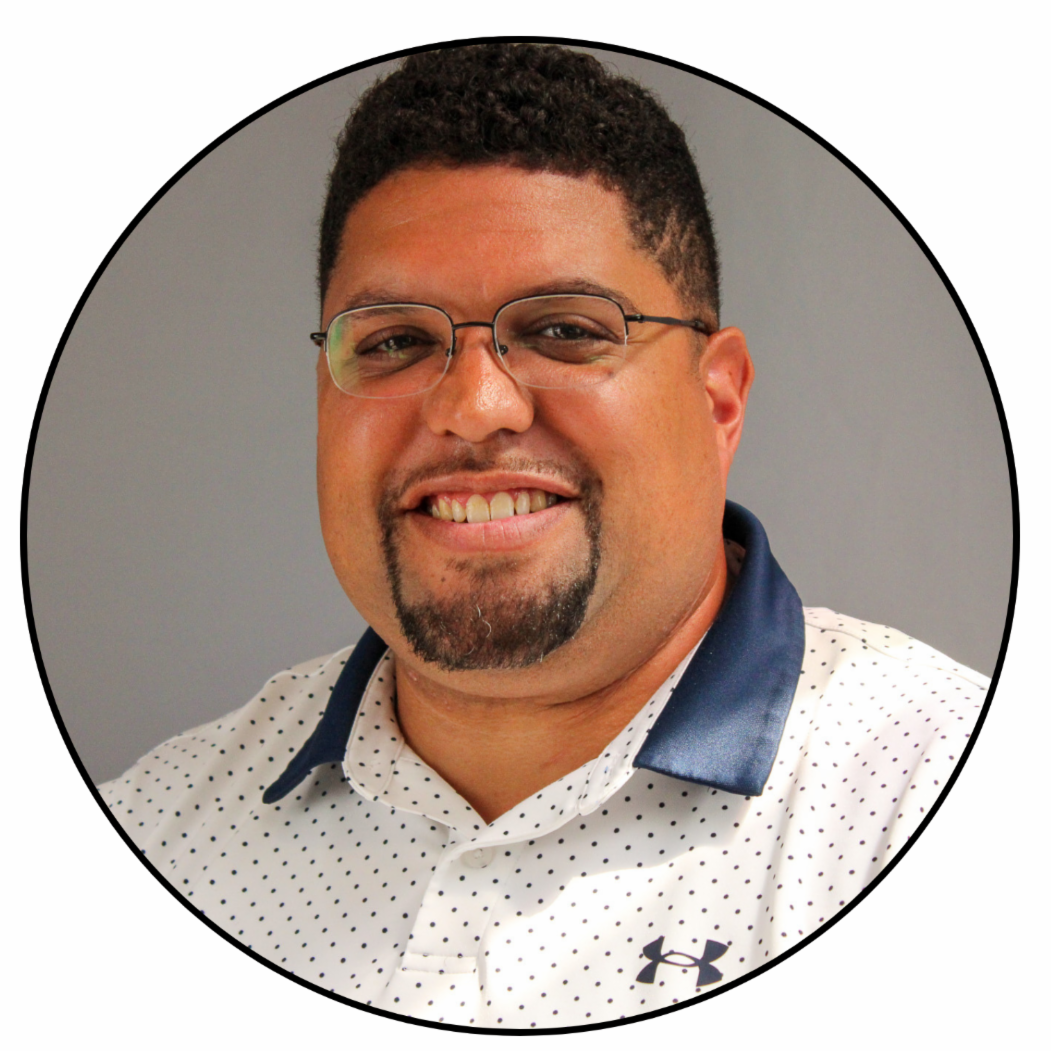
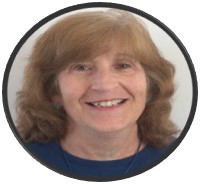
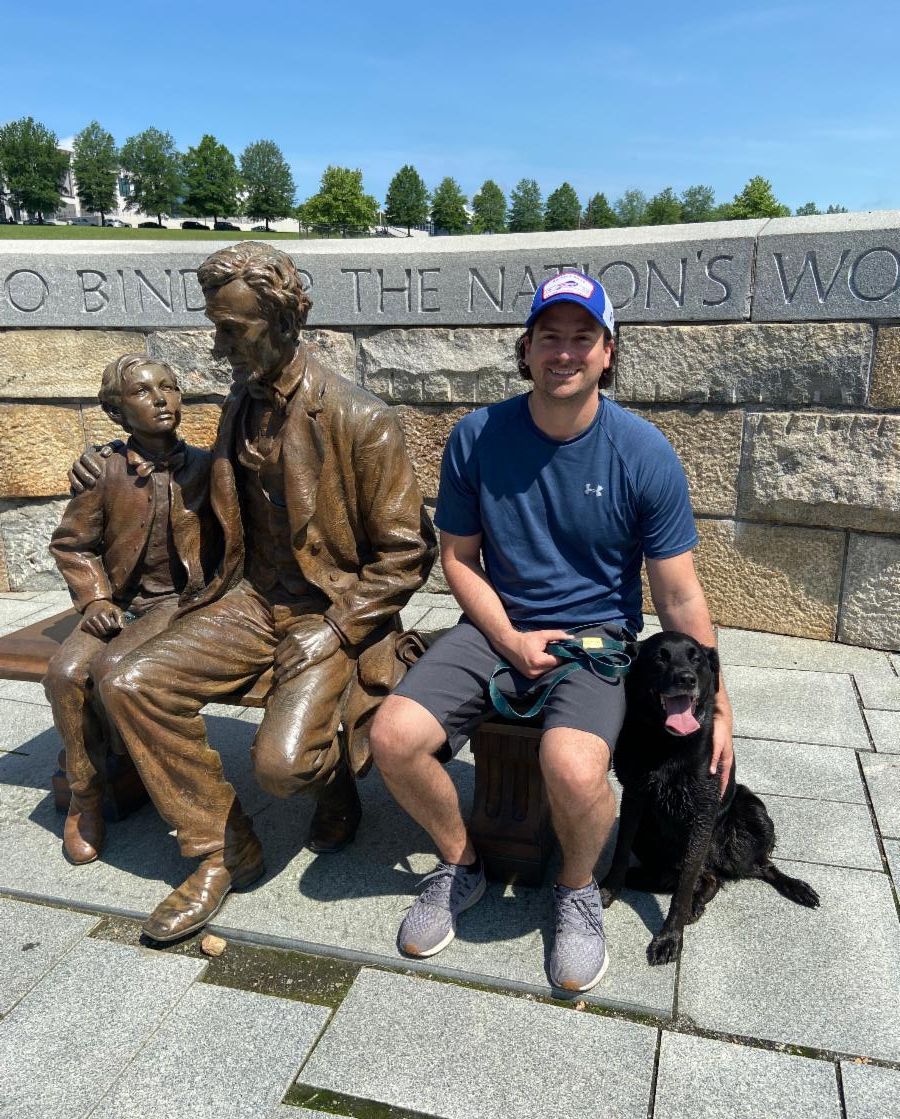
I'm excited to have joined the Henrico Recreation & Parks team as the new History Manager in Spring 2025. Originally from Buffalo, NY, my passion for studying the past began during a family trip to Gettysburg National Military Park. That experience started a lifelong interest in Civil War-era military and political history and a desire to make the past meaningful and accessible to others.
I earned my graduate degree from West Virginia University, where I focused on U.S. political history and historic site interpretation. During that time, I worked as a seasonal park ranger for the National Park Service across several Virginia sites, allowing me to combine academic study with hands-on public engagement. My first summer as a ranger was spent at Richmond National Battlefield Park. Engaging with visitors and walking the battlefield trails was an incredibly rewarding experience, deepening my appreciation for the battles that took place in eastern Henrico. Most recently, I’ve served as the executive director of small nonprofit museums here in Virginia. I’m looking forward to working with the Rec & Parks team on exhibits, tours, and programs that explore and share Henrico’s unique history.
Outside of work, I live in North Chesterfield with my wife, Sarah, our black lab, Little Bear, and four chickens. When I'm not working, you can usually find me golfing, going to concerts, hiking battlefields, or cheering on the Buffalo Bills.
| | |
Hello!
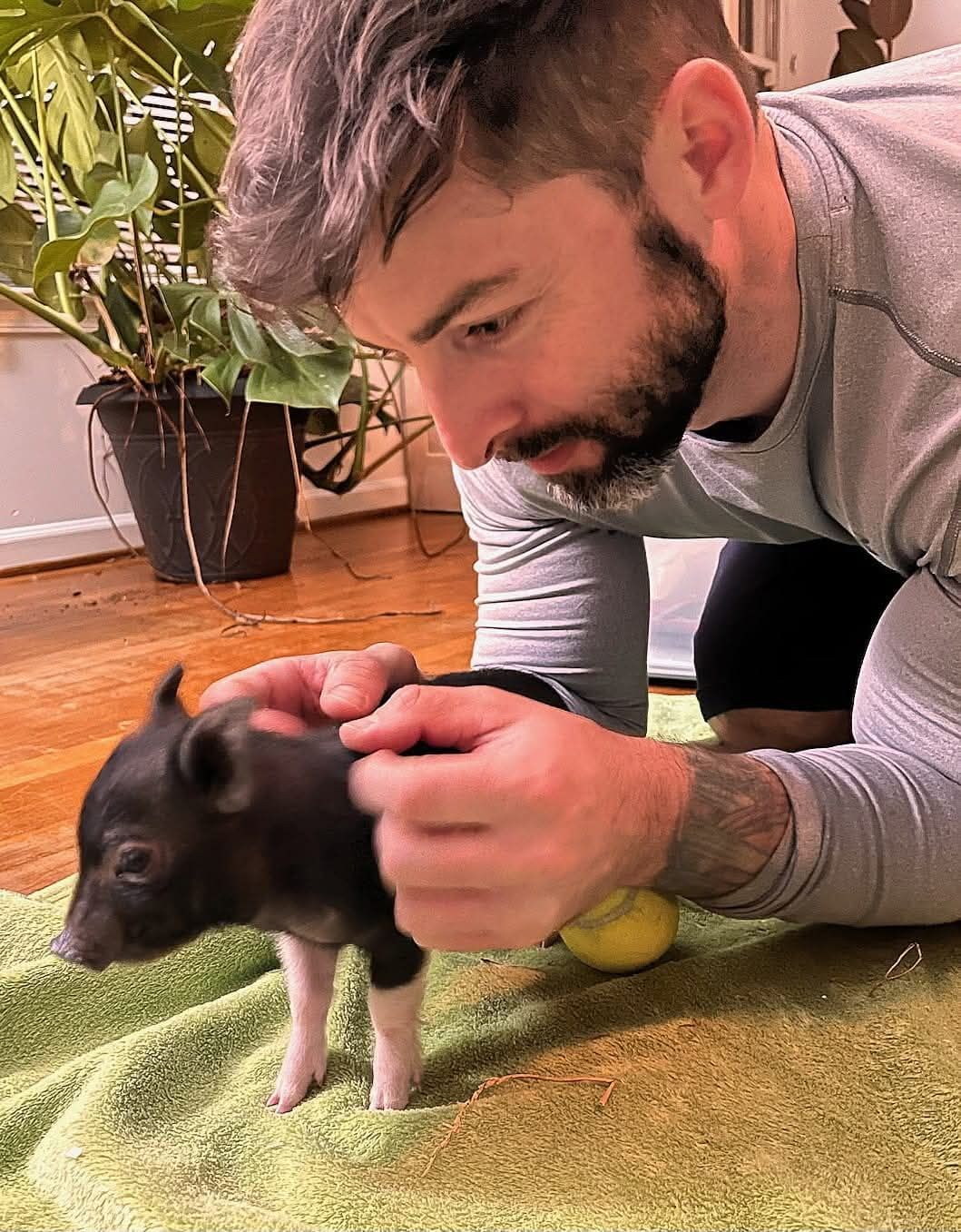
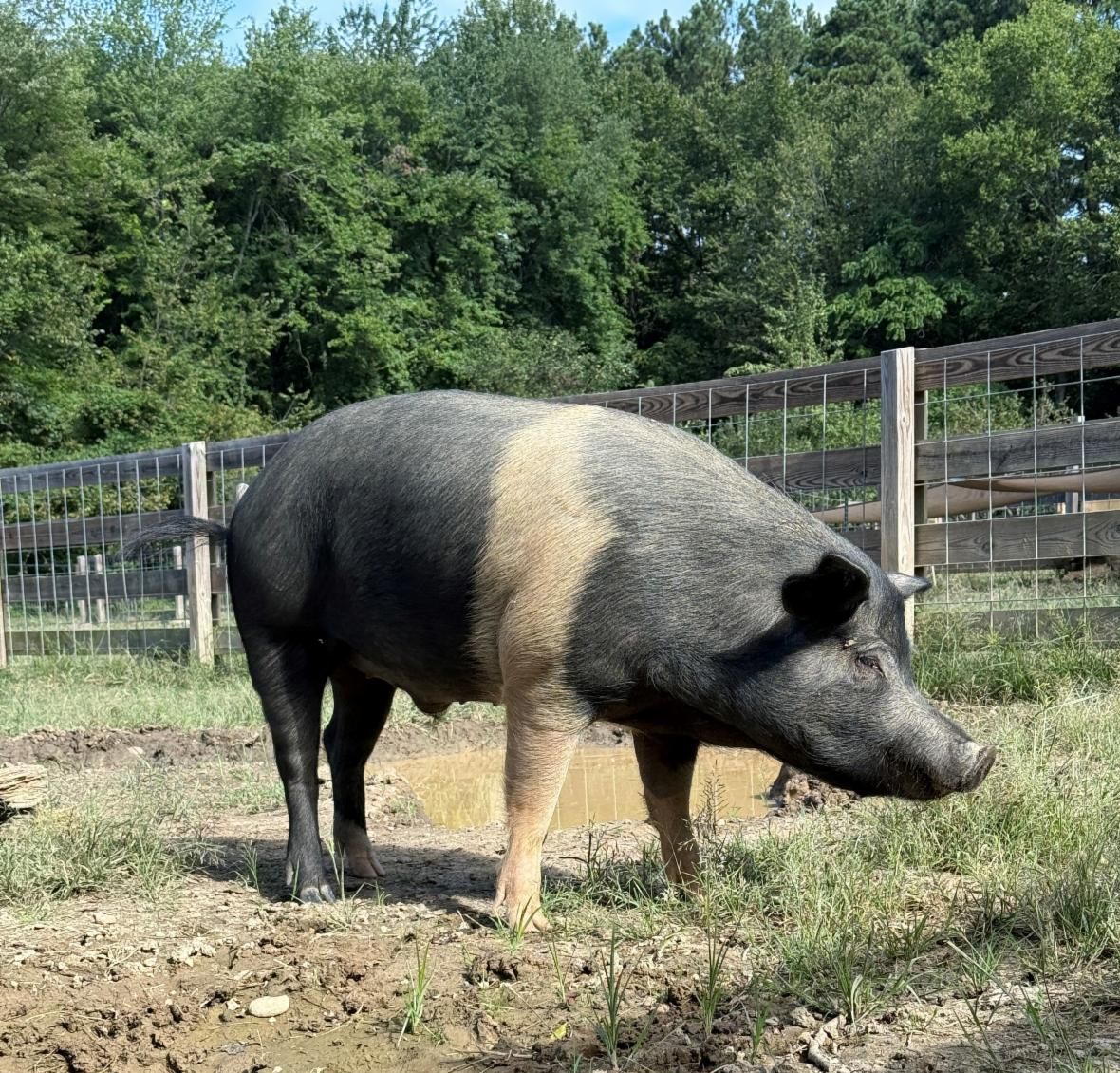
My name is Otis. I’m one of the Ossabaw Island hogs born here in November 2023. I started out as the runt of the litter. Jim Weinpress, the manager of zoology, had to take me home to provide me with extra care. I am now thriving with my brothers, Gertie-our mom, and Mildred, who is like an adopted grandma and the definitive boss of the herd.
I really like living at Meadow Farm because there is always something interesting going on. My favorite thing so far has been the Piggy Pizza Party. Guests got to make us delicious veggie pizzas that we got to chow down on. We were treated to music at the 4th of July and got to see a movie in August: National Treasure. I just love Nicholas Cage! I heard that Kara, one of our history recreation specialists, did a program on the history of tarot. I wonder if she would be willing to do a reading for us. I suspect we have fame and fortune in our futures!
The November Farm and Forest Friend Friday is all about us. Maybe we should just make November National Pig Month in our honor. I think that would help our friend Todd the Turkey feel better about Thanksgiving if we just shift the spotlight to us pigs. Speaking of Todd, I heard a rumor that something is in the works to officially spare him from the Thanksgiving table. We pigs are a smart bunch and we know that all the animals on the farm would never be eaten, but Todd is a bit nervous. At the puppet show on November 21, there may be a special guest to give Todd an official pardon.
There are a lot of great programs coming up for the winter too! I wish I had thumbs so I could do “Gourd-geous Crafts” with Amina on November 22. If there are leftover gourds, I volunteer to clean up.
Even though I’m a little afraid of storms, I’d like to take Mark’s “Thunderbolts of Truth: Richmond Planet Tour of Woodland Cemetery” on December 13. What’s that? Oh! Mark says the thunderbolts aren’t real. The Planet was an African American newspaper during segregation. This paper was “daring to hurl thunderbolts of truth into the ranks of the wicked”. I think that was very brave!
We pigs don’t wear clothes, but I’m interested in learning about “The History of Underwear” at Eastern Henrico on January 4. Pig hair has been used in a lot of things, but I don’t think it’s ever been used in hair jewelry, but I could find out at Katie’s “Locks and Love: Hair Jewelry” program at Dorey on February 22.
The history staff has a lot of great programs lined up for February’s Black History Month. You can learn about fashion in “Society’s Best Kept Secret: The Life of Designer Ann Lowe” at Deep Run Recreation, boxing in “The Wildcat: Sparring in the Jim Crow South” at Eastern Henrico Recreation, photography in “Life in Focus: Louis Draper and the Kamoinge Group: and in “From Silhouettes to Selfies: The Legacy of Black Portraiture” both at Meadow Farm, and much more! “From Silhouettes to Selfies” requires registration because you can start on a self-portrait after the lecture. There’s also going to be an exhibit, Determined: The 400-year Struggle for Black Equality, that will be going around to various centers from February 9-March 23. Now I just need to convince Emilee, our senior animal care specialist, to let me take a field trip to all these places!
| | |
I hope to see you at Meadow Farm soon!
Otis the Pig
(Translation courtesy of Kim Schmidtmann)
| |  | | |
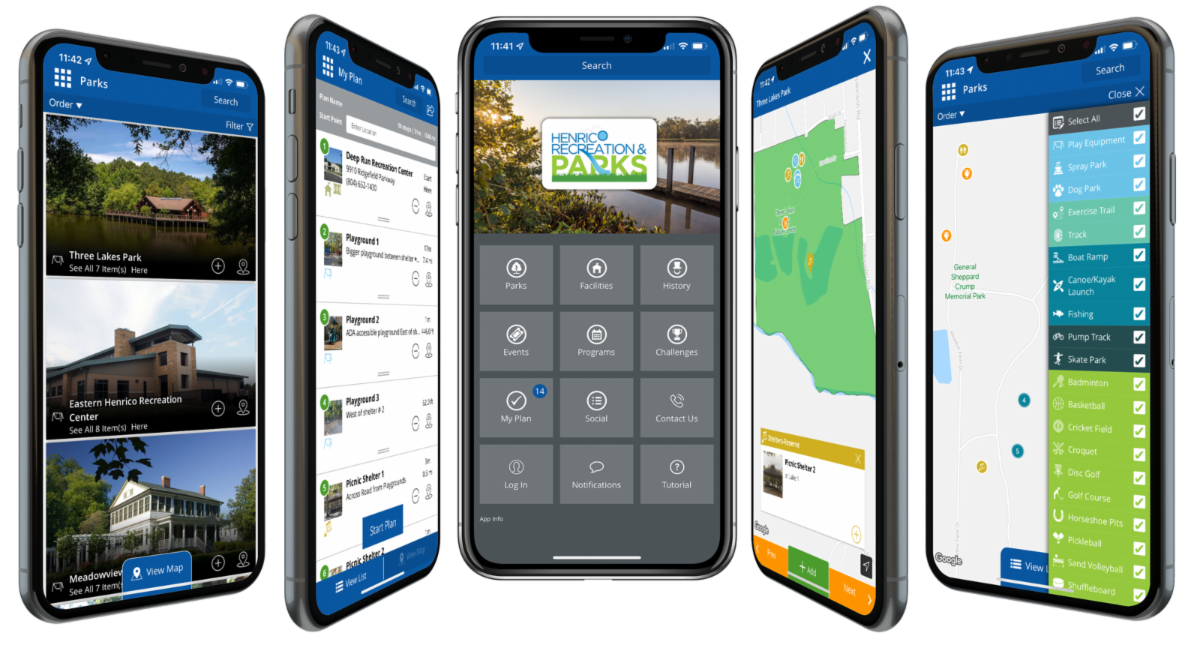
From parks and facilities to events and programs, this is your on-the-go guide to fun. The app also includes our historic sites, markers, and programs!
Features:
- Discover parks and facilities across Henrico County
- View amenities by map overlay or list
- Find playgrounds, shelters, trails, and more
- Filter and search by what’s important to you
- Learn about (and even register for) programs and events
- Earn badges as you take on exciting challenges
Download Today!
| | |
Henrico Rec & Parks | (804) 501-PARK
| |
| | | |