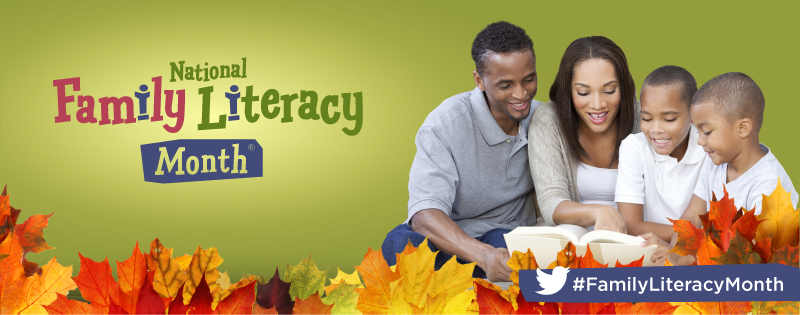
November is Family Literacy Month and the perfect time to start (or hopefully continue) a daily reading routine with your child. Snuggle close and look at the book together; act out the voices and the noises in the stories and ask older children to answer questions or retell the story. Laugh, make rhymes, retell memories of being read to by a caregiver in your life. Reading together will create memories—and impart benefits—that last a lifetime and it is never too soon to start.
For more than 30 years, Reach Out and Read has been giving young children a foundation for success by incorporating books into pediatric care and encouraging families to read aloud together. During well child visits, the doctor gives a new book, models reading and coaches the parent with tips on how to be more successful, if necessary. This Model-Observe-Coach interaction gives the pediatrician a unique opportunity to relate to the child and family, to observe developmental skills and look for any potential concerns or delays, including vision problems.
|
Coalition member Dr Barry Kran discusses in this Q and A recording, evaluation of patients suspected of having cortical visual impairment (CVI), diagnosis of CVI, and his approach to working with children, no matter their complexities. Read more…
|
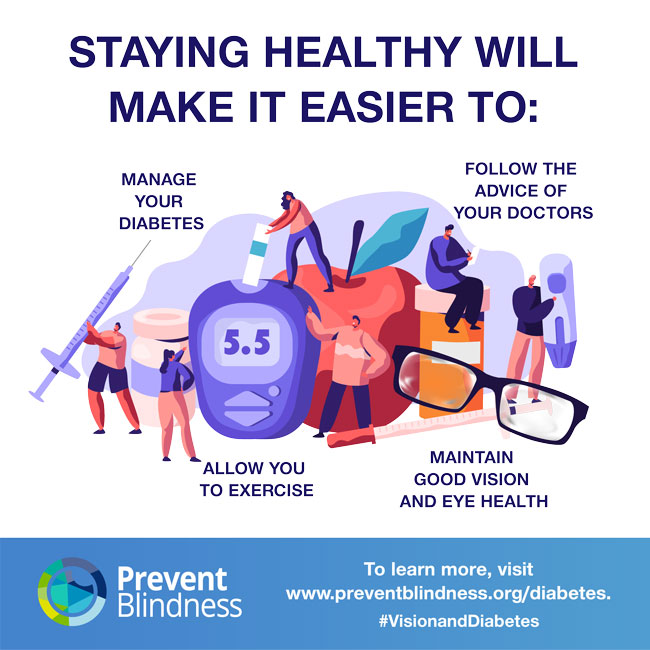
NOVEMBER IS DIABETES-RELATED EYE DISEASE MONTH |
Data from the Centers for Disease Control and Prevention (CDC) National Diabetes Statistics Report, 2020, shows that 34.2 million Americans have diabetes and 88 million American adults have prediabetes. Alarmingly, more people are developing type 1 and type 2 diabetes during youth, and racial and ethnic minorities continue to develop type 2 diabetes at higher rates. It is important that all people who have systemic diseases such as diabetes, including children, should have a comprehensive eye exam on a regular basis. The CDC also states that diabetes is the leading cause of new cases of blindness in adults.
The Diabetes and the Eyes Educational Toolkit from Prevent Blindness offers free educational materials on diabetes in English and Spanish. These educational resources are intended for healthcare professionals, community health educators, diabetes educators, and anyone in a caregiving or diabetes education role.
|
|
EYES AND EDUCATION
CVMA coalition members present to Gordon College Reading Specialists
|
Coalition member Kristen Kerber, OD, Assistant Professor at the New England College of Optometry, presented the topic of childhood vision as an invited speaker to Gordon College school teachers studying to become Reading Specialists.
During the webinar, "Eyes and Education", Dr Kerber outlined common childhood vision problems and the impact of untreated disorders on a child's ability to read. Other topics shared included signs and symptoms of vision problems in children that might be observed in the classroom with adjustments that can be made, and research showing improved school performance after a child receives vision treatment.
Along with CVMA Co-Chair, Paulette Tattersall, Director, Prevent Blindness Northeast Region, the group discussed check-points that can be put in place to support a child to maintain their best-corrected vision in the classroom. The webinar will also be shared with Gordon College students studying Early Childhood disciplines.
|
The Maternal Child Health Bureau (MCHB) seeks public comments and suggestions from a broad range of stakeholders to develop a vision for the future of maternal and child health.
Feedback is requested to inform both the:
-
MCHB Strategic Plan
- Blueprint for Change for Children and Youth with Special Health Care Needs
|
Mark your calendars for Tuesday, November 10, 2020, 3:00 p.m. – 4:00 p.m. EST.
The National Center for Children’s Vision and Eye Health at Prevent Blindness and the National Head Start Association will present a walk-through of the free educational resources in the Small Steps for Big Vision tool kit. The session will assist parents/guardians/caregivers and preschool staff to understand the importance of vision and eye health for children, and for themselves.
|
|