|
|
MISSION STEAM
The latest happenings from the Aldrin Family Foundation
|
|
|
|
There are two different perspectives that highlight the various directions an organization can take to share awareness of the space industry with educators and their students. The first perspective – “education for space” – is primarily used by companies, universities and government agencies to describe their outreach programs designed to inspire students to become part of the future space workforce. And then there’s the second perspective, “space for education.” This latter one specifically targets educators and STEAM professionals to bring space into the classroom and drive their students’ curiosity toward STEAM fields.
The Aldrin Family Foundation is deeply committed to enhancing “space for education” in the classroom. When you begin with a focus on teachers, it’s easier to launch initiatives that will ultimately impact more students and encourage them to become next-generation space explorers. For example, you can connect with state administrators to create curriculum for a specific county. At AFF, we work with several partners such as Brevard County Public Schools, Clark County Public Schools and Orange County Public Schools (OCPS) to create in-class space curriculum that meets state standards. This summer, we’ll introduce our new Earth and space courses during our Rockets and Rovers Camps with OCPS. We’re also developing curriculum around satellites to satisfy continuing teacher education certifications in Nevada and Florida.
Teachers can start implementing “space for education” into their classrooms by joining our 2nd annual Curriculum Development Workshop on July 22-25, 2024, at NASA’s Kennedy Space Center in Florida. During this complimentary, AFF-sponsored workshop, you will hear from experts, tour KSCVC and collaborate with other educators to develop a rich curriculum that you can take right back to your students. If you’re interested in participating, fill out this form, and we’ll share more information as the event nears.
Sincerely,
|
|
|
|
Aldrin Family Foundation partners with Kerbal Space Program EDU to bring 3D experience to space education learning
|
|
|
|
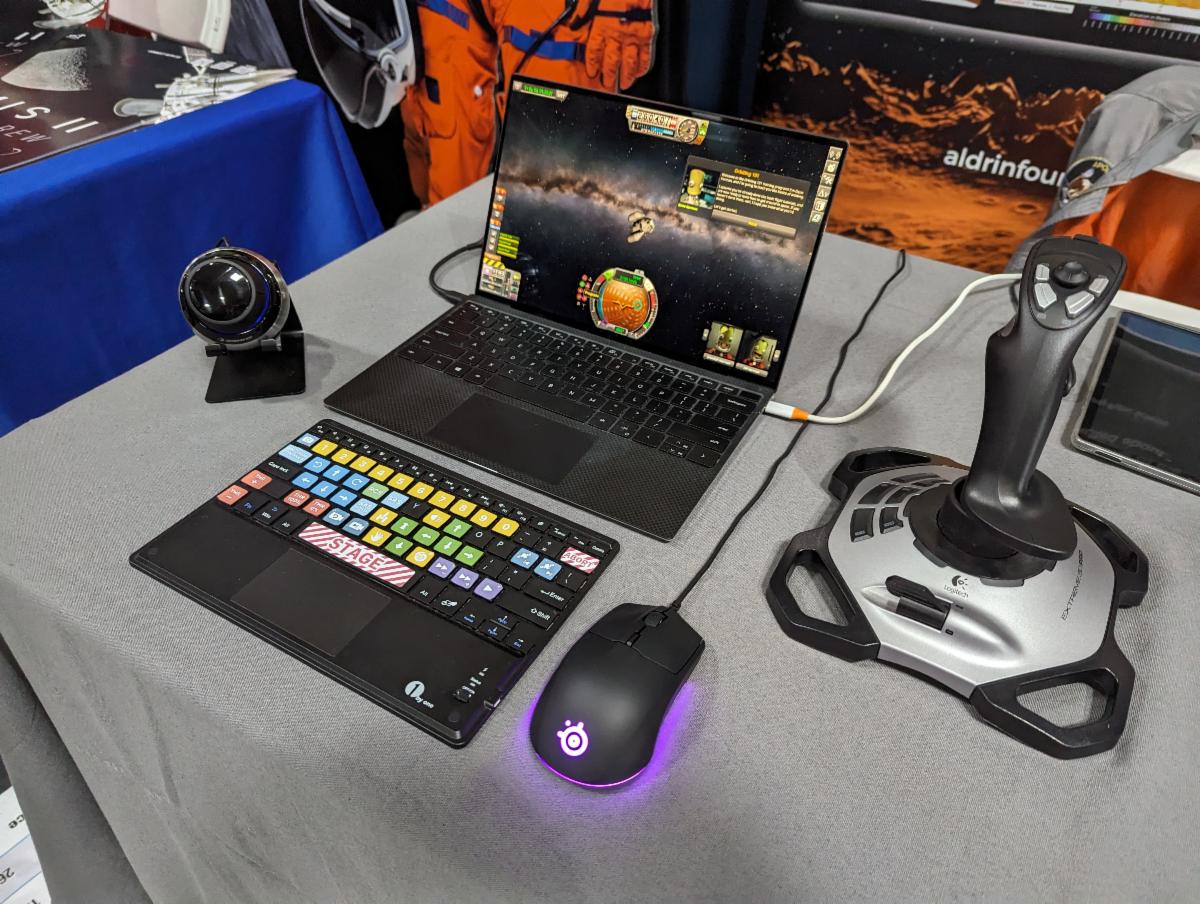
The Foundation recently partnered with Kerbal Space Program EDU (KSP EDU), a division of Private Division, to integrate its popular video game into AFF’s signature Giant Moon Map™ and Giant Mars Map™ program. Students in grades 5-12 can use the online program and large floor-sized maps to learn about space while building critical STEAM skills via a fun, sophisticated and three-dimensional experience.
“When you approach learning from a story-based perspective, versus simply giving students a problem to solve, their depth of understanding skyrockets,” said AFF President Dr. Aldrin. “The KSP EDU program offers exciting, fun narratives where complex concepts can be simplified, and students boost their chances for lifelong retention. This partnership is a perfect addition to our Giant Moon and Mars Map program and connects the full Aldrin Family Foundation story.”
|
|
|
|
Giant Moon Map™ appears at Back to Space’s “Lunar Light: Discovery VIP Preview”
|
|
|
|
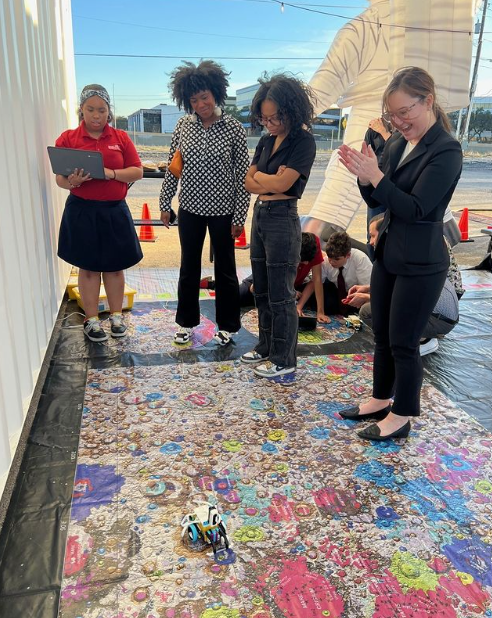
Our Giant Moon Map™ recently made an appearance in Austin, Texas as part of Back to Space’s “The Lunar Light: Discovery VIP Preview” event for local educators. “The Lunar Light: Discovery” is an immersive, virtual reality, pop-up experience where students engage their five senses to investigate the aftermath of an asteroid strike on the Moon in the year 2055. Dr. Kristina Otero, AFF Director of Education and Development, and scholars from our partner Uplift Education demonstrated how the Giant Moon Map™ could be used as an additional resource to take interactive storytelling even further. |
|
|
|
Our AFF team recently participated in multiple educational events throughout the U.S. Each event was an opportunity to introduce even more educators and industry professionals to our STEAM programs and resources to inspire the next generation of space explorers. |
|
|
|
SEEC 2024 (Feb. 6-8, in Houston, Texas)
|
|
|
|
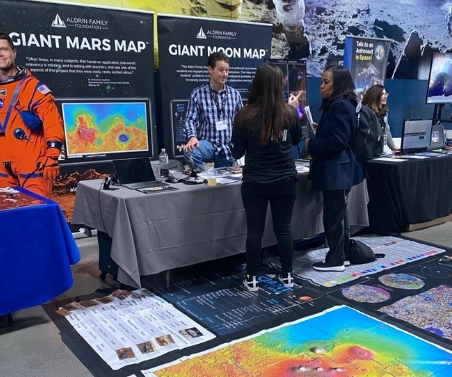
Dr. Mark Wagner, AFF’s Director of Education Partnerships, showcased our Kerbal Space Program EDU bundle to educators, who got a first look at how the space-centric video game integrates into AFF’s curriculum.
|
|
|
|
SXSW EDU Conference (March 4-7, 2024, in Austin, Texas)
|
|
|
|
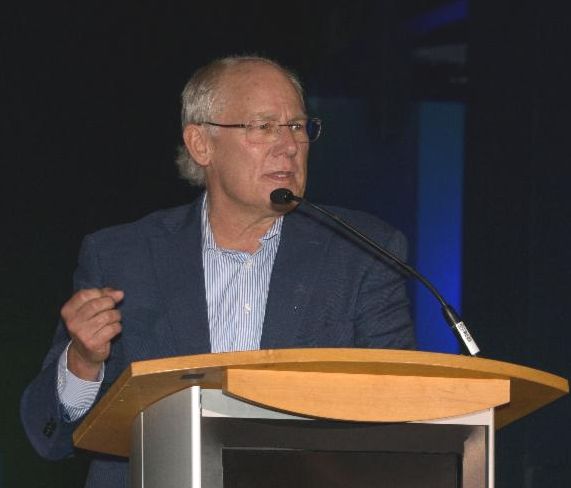
Dr. Aldrin spoke on a panel entitled, “Educating Future Space Leaders” with Greg Autry (Thunderbird School of Global Management), Michelle Hanlon (For All Moonkind) and Irina Litchfield (Lumeria). The panelists explored the current dynamics of the space economy and how humanity can prepare for “interstellar” careers that extend beyond global boundaries.
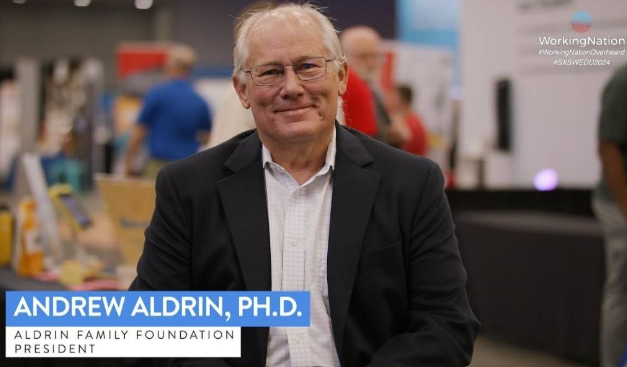
Dr. Aldrin was also interviewed by the nonprofit media organization, WorkingNation, during SXSW EDU, where he discussed how learning about space can ignite young students’ passion for STEAM learning. Watch the interview here.
|
|
|
|
Space Force/Command TEDx Talk (March 22, 2024, in Vandenberg Space Force Base, Calif.)
|
|
|
|
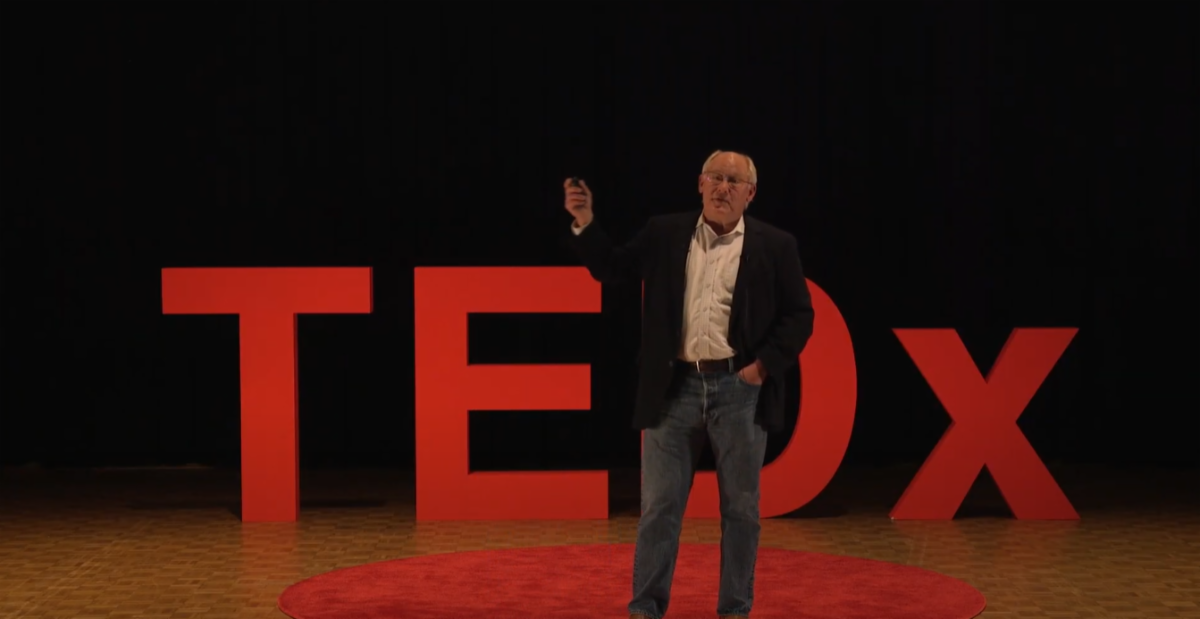
Dr. Aldrin conducted a presentation on the waves of commercialization at the Space Force’s first TEDx event on the central coast of California. During the presentation, Dr. Aldrin discusses the previous waves of space commercialization and observes future waves with the commercial space industry, SATCOM constellations, space mobility and more. |
|
|
|
NARST 2024 Conference (March 17-20, 2024, in Denver, Colorado)
|
|
|
|
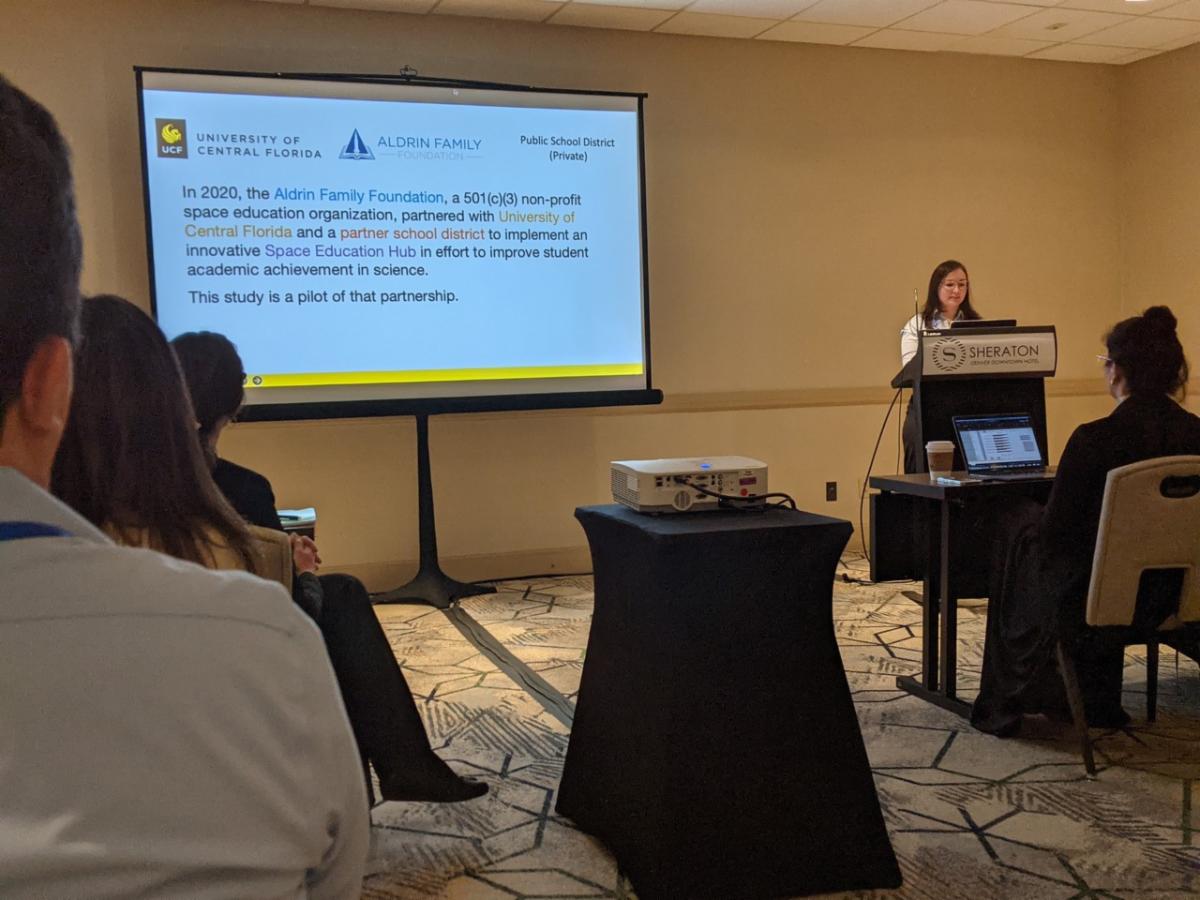
Dr. Otero presented her study with the Orange County Public Schools and the University of Central Florida, which examined space science self-efficacy among students who worked with our Giant Moon Map™. |
|
|
|
CONVERSATIONS WITH A TEACHER |
|
|
|
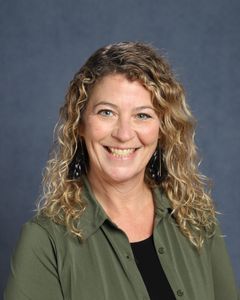
Melissa Pore, M.Ed., has 25 years of experience teaching K–12, both in public and private schools. She currently works as a satellite designer and an engineering teacher at Bishop O'Connell High School in Arlington, Va.
How have you worked with the Aldrin Family Foundation?
I work with the inventor, Bob Twiggs, of Twiggs Space Lab, designing and developing lesson plans for teachers and classrooms. That's how I got in with the Aldrin Family Foundation. My team helped them build a unique curriculum using Twiggs satellite hardware and hardware materials. We are also creating ideas for the AFF to share with teachers who want to do experiments in microgravity.
What makes you passionate about working in STEAM education?
STEM intersects with everything, and that’s like a playground for me. For example, I saw wireless technology as a STEM playground before the internet. I have always had a clear passion for space, aviation and human spaceflight. But planning a mission or reading a lunar image of the ice is a new way to see hope and be curious. When you don't know time is passing, that's when you're really learning. That’s the magic sauce.
Why is it important to uplift the next generation of space explorers and STEAM leaders?
It is important to help the Artemis Generation stand on the shoulders of the giants before them and make them understand how the power of curiosity and exploration can lead to joy and long-term happiness. The best thing we can do is show these kids how to be resilient. We need to create a space where we all belong and feel comfortable. Then, we can be curious and hopeful in building a brighter future.
What advice would you give to other teachers who want to find new and fun ways to engage their students in STEAM subjects?
Treat your students like interns. If it isn't on the cutting edge of engineering and innovation, then it's already outdated. Space education is a great way to get students thinking about things in a big, overview way. Also, take advantage of free resources and professional development opportunities and attend conferences. It’s a great opportunity to be in your element – sharing the energy from other educators who are trying to change the game of space.
|
|
|
|
On April 8, the United States, Mexico and Canada will experience one of nature’s rarest and most spectacular events – a total solar eclipse. This celestial phenomenon occurs when the sun, Moon and Earth are so perfectly aligned that the Moon completely covers the sun, casting its shadow on the Earth and revealing the unforgettable glow of the sun’s corona, visible to the unaided eye.
At the end of this article, we’ve listed some fascinating activities you can implement in your classroom with your students to get the most out of the rare event. Please share your experience on social media and tag us at @AldrinFamilyFoundation on Instagram, Facebook and LinkedIn and @AldrinFamilyFdn on X. We’d also love to see pictures and hear stories from your students about their eclipse experience!
Facts about the April 8th Eclipse
While solar eclipses occur somewhere on Earth every 1-2 years, the April 8, 2024, eclipse is special because of how many people will be able to view it. According to NASA, an estimated 99% of people living in the United States will be able to see at least some of the eclipse, with over 31.6 million people living within the path of totality, and another few million traveling to it.
Path of Totality
So where can you see the eclipse, and does the path of totality cross over your home or school? An interactive map created by NASA can help you find the best viewing times and locations, as well as percent of cover. The path of totality, or the swath of land in which the Moon appears to completely cover the sun, will start in the southern Pacific Ocean, stretch across North America, and end in the north Atlantic Ocean. If you live outside the path of totality but can travel, we recommend doing so, as the next total solar eclipse visible from somewhere in the lower 48 states will not occur until 2044.
Eclipse Glasses
Never look directly at the sun … unless you are viewing the totality of a solar eclipse and using special certified glasses. Many big-box retail stores are already selling eclipse glasses, or you may be able to pick up a pair for free from a local library or museum. Also check with local science centers, which may be hosting field trip events for teachers and students. The American Astronomical Society (AAS) is the official source for locating certified eclipse glasses (or solar filters for cameras). Hurry – with so many people viewing the eclipse this year, eclipse glasses are likely to sell out fast!
Lesson Plans
|
|
|
|
SHOW US HOW YOU MAP!
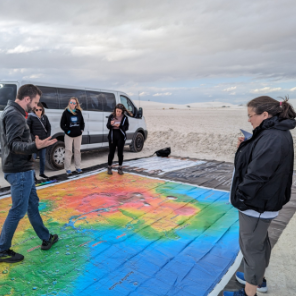
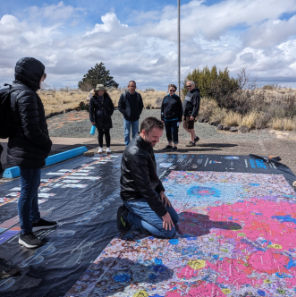
AFF’s Dr. Wagner and Dr. Kirby Runyon, a planetary geomorphologist who trains commercial astronauts, hosted an Astrogeology for Educators Workshop where educators visited the White Sands National Park, the Valley of Fires at the Carrizozo Lava Flow and the Aden Volcanic Crater. During the visit, Dr. Runyon used our Giant Moon and Mars Maps to demonstrate where similar lava flows are on the Moon and where sand dunes are on the Red Planet.
|
|
|
|
Don’t forget to show us how you map! Send us photos of your students using one of our maps or use #GiantMarsMaps or #GiantMoonMaps and your school could get featured next on our social media channels, website or right here in Mission STEAM!
|
|
|
|
|
|
Aldrin Family Foundation
|
|
|
|
|