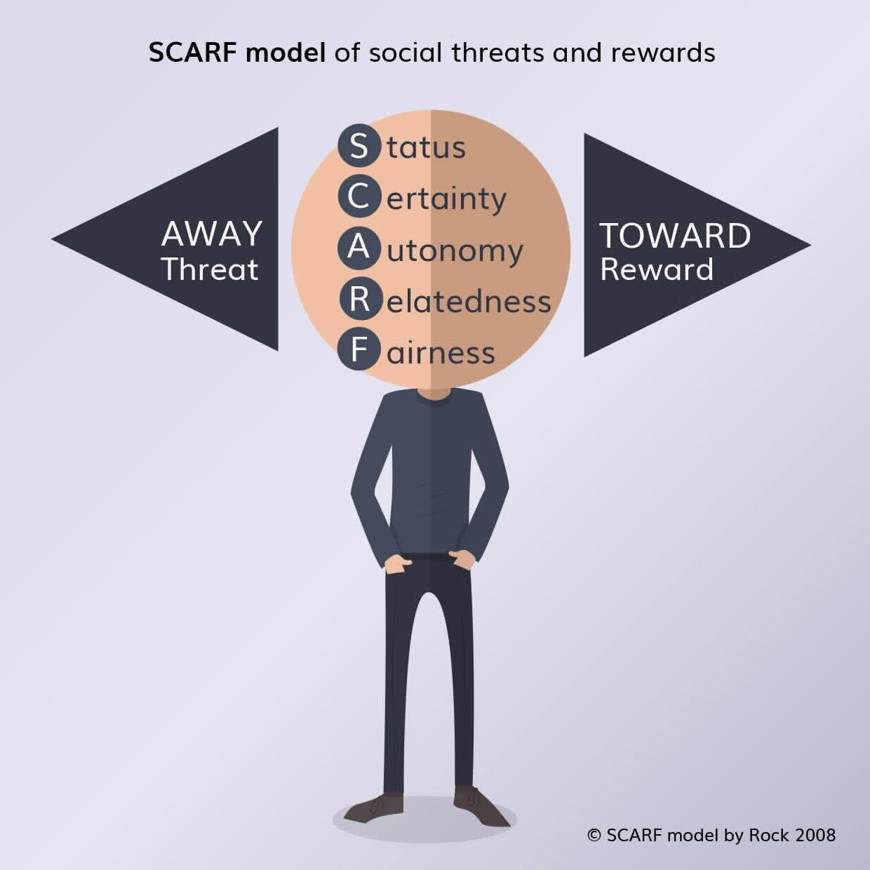
In my previous e-newsletters, I've been exploring David Rock's SCARF Model which is a way to understand how and why we perceive things as threats or rewards. So far, we've covered how threats and rewards to our Status, Certainty, and Autonomy can impact our responses to situations.
This month I'll look at the "R," which stands for Relatedness.
David Rock describes the Relatedness aspect of the SCARF Model as how we see the quality of our relationships with others and our sense of belonging.
When we interact with people, our brain quickly tries to determine if that person is a friend or foe, which then triggers different responses. As humans, we are wired to be in relationship and connection with other beings. Healthy relationships cause our brain to release "good" chemicals that contribute to our physical health. In contrast, unhealthy relationships cause our brain to release stress hormones that are not helpful to our physical health. Lack of connection with others is actually unhealthy and can trigger our brain to feel threatened - and perceived threat in the brain leads to self-preservation responses.
2020 has pushed even the most emotionally healthy people into threat mode by interfering with our basic need to be connected to others. Simple interactions that we once took for granted are now seen as invaluable. When organizations were forced to move their team members to work remotely, the nature of relationships changed quickly. Suddenly your people couldn't just pop into a co-worker's cubicle to chat about a project and connect over a conversation about the latest coffee shop that opened in town. Meetings became more methodical and people found themselves at home when they were used to being IN their workplace WITH other people. During the initial lockdown period - when people weren't allowed to go out to eat or gather with friends and family - there was a huge negative impact on peoples' emotional health because we aren't meant to be alone.
Being alone makes us vulnerable and more likely to not trust others. Horses know this and it's why they seek out other horses -- even if those horses aren't in the same space. While my horses live as a herd, they also are connected with my neighbor's horses in the pasture next door. If two of my neighbor's horses leave the pasture to be ridden, leaving the third horse by himself, he will stay within sight of my horses so he knows he's not alone.
So what can we do to decrease our brain's threat response to Relatedness?
-
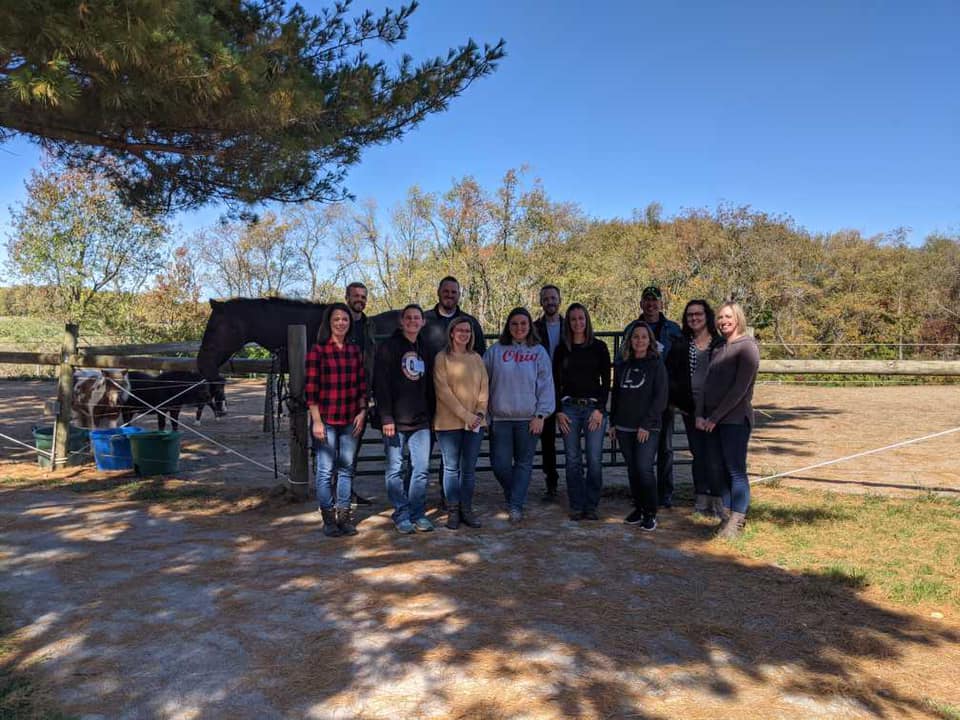
Provide opportunities for your team to build trust through connection. In his journal article, SCARF: a brain-based model for collaborating with and influencing others, David Rock (2008) states 'the greater that people trust one another, the stronger the collaboration and the more information that is shared" (pg. 6). The higher a person's threat response to relatedness (i.e. not feeling like they belong, feeling left out), the more they will have a propensity to hoard resources - including information. The Collaboration Partners provides both virtual and in-person experiences that create opportunities to build connections among teams. (In-person experiences are provided in an outdoor space to allow for social distancing.)
-
Encourage team members to have conversations that allow them to get to know each other better. The increase in people working remotely has eliminated the "water cooler conversations" that are integral to creating opportunities for team members to interact socially. If your team is working remotely, include some type of fun connection activity at the start of virtual meetings as well as "virtual social hours" at least once a month where everyone hops on a video call to do team building or just have social interaction. There are a lot of resources online now about how to do this. Check out Priya Parker's book "The Art of Gathering" as well as her podcast to get ideas.
-
Develop coaching and mentoring programs that allow team members to build strong connections with just one or two people in the organization. Working in small groups tends to create safer psychological safety for people to build relationships and feel included in conversations. Coaching and mentoring programs are a way to build healthy relationships that can lower the brain's response to threats to Relatedness. The Society for Human Resource Management (SHRM) has some great resources available on mentoring and coaching.
Observing herds of horses for the past 25 years has shown me the importance of feeling part of a collective group where one feels safe. If you have team members who are struggling in the current environment of physical and emotional disconnection, remember they may be in a heightened state of threat to their Relatedness. Once you are aware of this, you can work to mitigate negative outcomes by finding ways to help them feel connected and truly part of the team.
Stay safe and keep moving forward!
Ginny, Wager, Dolly, Gia, Cookie & Carmel