General Manager Janet Guthrie Appointed Chair of the TAGD Subcommittee on Groundwater Management | | |
The Texas Alliance of Groundwater Districts (TAGD) has appointed Janet Guthrie, General Manager of the North Plains Groundwater Conservation District, as the chairwoman of its newly formed subcommittee focused on groundwater management. This initiative responds to the House Natural Resources Committee's Interim Charge No. 2. The Texas Legislature releases interim charges each spring in even-numbered years to guide committee studies and public hearings leading up to the next legislative session. In March 2026, Speaker of the House Dustin Burrows announced the interim charges for the House Natural Resources Committee, which can be accessed here.
Mrs. Guthrie brings 24 years of experience as a member of the legislative committee and has previously chaired a subcommittee dedicated to addressing groundwater waste. The groundwater management subcommittee will evaluate Texas's existing framework with a focus on groundwater export, large-scale production, and areas not currently managed by Groundwater Conservation Districts (GCDs), considering their impact on aquifer management and long-term planning. The potential objectives include:
1. Summarizing the Current Framework: Outline the existing groundwater management framework under Chapter 36, including the roles and authorities of GCDs and the differences between managed and unmanaged areas.
2. Reviewing Export Permitting: Examine current approaches to groundwater export permitting, including statutory requirements, fee structures, and regulatory limitations, while identifying challenges for districts.
3. Evaluating Production Projects: Assess how large-scale groundwater production projects are permitted and managed, and determine their potential impacts on aquifer conditions, neighboring landowners, and Desired Future Conditions (DFCs).
4. Addressing “White Areas”: Explore issues related to unmanaged production in “white areas” and its implications on shared aquifers and regional planning challenges.
5. Reviewing Previous Materials: Analyze past TAGD white papers and policy positions on these topics to identify areas needing updates or clarifications.
6. Preparing Policy Updates: Draft a new white paper or revise existing TAGD policy materials to reflect contemporary issues, including recommendations to enhance groundwater management while upholding local control.
Through this collaborative effort, committee members aim to create valuable information for Texas Legislative members and TAGD stakeholders.
The Texas Alliance of Groundwater Districts (TAGD) was established to facilitate the exchange of ideas among groundwater conservation districts and to develop or influence programs for groundwater management, conservation, protection, and development throughout Texas. Formerly known as the Texas Groundwater Conservation Districts Association, TAGD was founded on May 12, 1988. Its membership comprises underground water conservation districts in Texas, which have the authority to manage groundwater as outlined in Chapter 36 of the Texas Water Code (voting members), along with other organizations involved in groundwater efforts (associate members). TAGD operates exclusively for charitable, educational, or scientific purposes as defined under Section 501(c)(3) of the Internal Revenue Code.
| | 5 Ways to Conserve Water This Summer | | | |
Living in the Texas Panhandle brings unique challenges, including wind, heat, and a limited water supply. With our district depending on the declining Ogallala Aquifer, every household has a role to play in preserving this vital resource. Here are some practical methods to save water while still enjoying your home and garden.
-
Check for Leaks Regularly: One of the easiest ways to begin conserving water is by routinely inspecting your pipes and fixtures for leaks. Additionally, reviewing your water bill can be beneficial; a sudden increase often indicates a leak. In our dry climate, even minor irrigation problems can lead to significant water waste. By monitoring your bill each month, you can conserve both water and your hard-earned money.
-
Upgrade Fixtures When Possible: Consider replacing fixtures that are prone to leaking. Low-flow showerheads, faucets, and toilets can make a noticeable difference. If replacement isn't feasible, try taking shorter showers and turning off the tap during your daily routines to cut down on water usage. Less time running water from a standard fixture can be more efficient than a longer duration with a low-flow option!
-
Water Wisely: Wind can greatly contribute to water loss in the Panhandle. Water early in the morning or later in the evening, avoiding windy days when spray may drift away. Drip irrigation is particularly effective as it delivers water directly to the roots with minimal evaporation. If you're contemplating changes to your irrigation system, consider whether drip irrigation might be more suitable for your garden.
-
Wash Your Car Efficiently: When it comes to washing your vehicle, using a bucket instead of a running hose can save a surprising amount of water. Many commercial car washes in our area recycle their water, making them a sustainable choice. Explore automatic washes nearby to find those that are conservation-friendly.
-
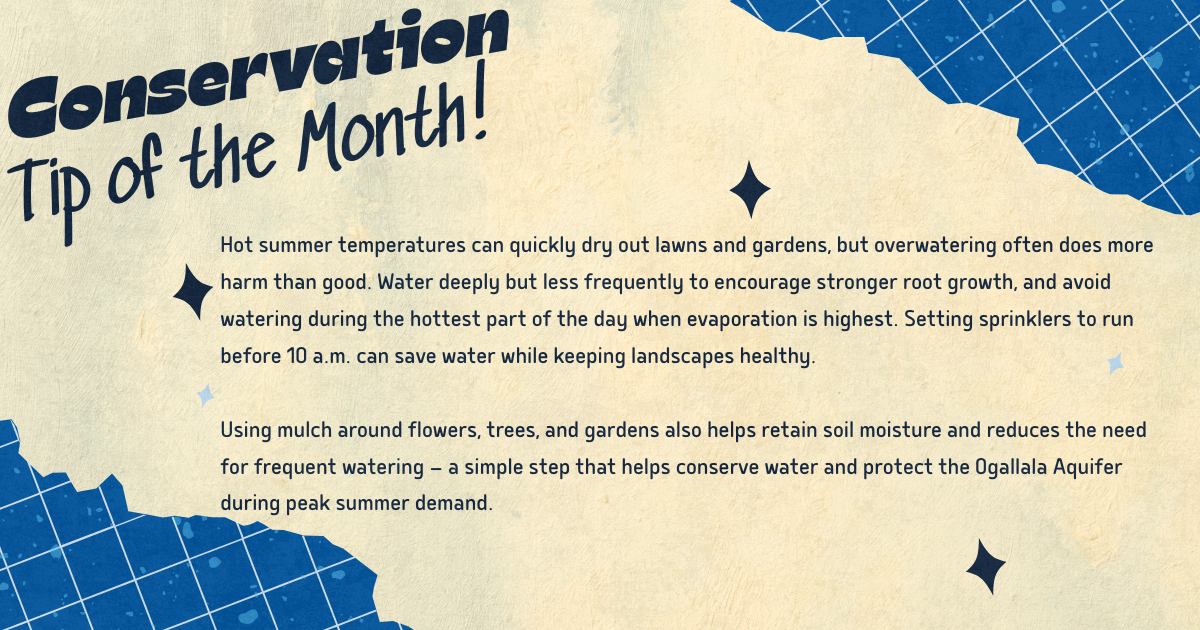
Enjoy Summer Activities with Care: Although summer in the district can be scorching, don’t let that keep you indoors. Kiddie pools provide a fun way to cool off without a continuous water flow, and you can use the water afterward on trees or shrubs. If sprinklers are part of your summer enjoyment, set a timer and use them during cooler parts of the day so that the water benefits your lawn as well.
Water conservation in the district is a shared responsibility. Whether it’s taking shorter showers, checking for leaks, or transitioning lawns to native grasses or xeriscaping, we can all contribute to saving this precious resource.
| | |
2026 Water Festival Wrap Up
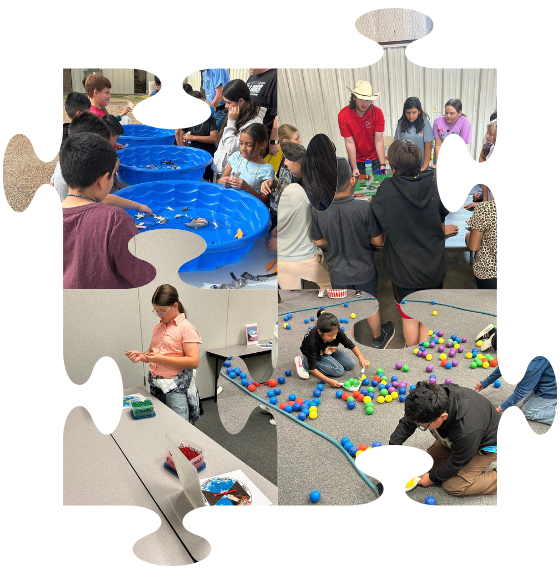
The North Plains Groundwater Conservation District was excited to once again host the annual 4th Grade Water Festival during the first week of May. This year’s event welcomed over 800 students from 10 schools across the Texas Panhandle over the course of four days for a fun-filled and educational experience focused on water conservation, the Ogallala Aquifer, and protecting our most valuable natural resource.
Students participated in hands-on activities and interactive presentations led by staff, volunteers, and industry partners. Topics included groundwater conservation, agriculture, the Ogallala, pollution, and the water cycle. The festival gave students the opportunity to learn how water impacts everyday life while encouraging responsible water use at home and in their communities.
This year’s underwater-themed festival created an exciting atmosphere for students as they rotated through educational stations, enjoyed demonstrations, and received conservation-themed giveaways. The event would not have been possible without the support of our volunteers, presenters, teachers, sponsors, and community partners who helped make the week successful.
The District would like to extend a special thank you to our 2026 sponsors, Valero and Brett Stegall, for their generous support of this year’s event. Their contributions helped provide educational materials, student giveaways, meals, and festival activities.
We would also like to thank our partners Hilmar Cheese Company Inc., Texas Corn Producers, Plains Cotton Growers, Inc., Texas 4-H Water Ambassadors Program, Amarillo College Moore County Campus, and Frank Phillips College–Dalhart for their continued support and participation in helping make this year’s Water Festival a success.
The annual Water Festival continues to be one of the District’s favorite educational outreach events and remains an important way to teach future generations about protecting the Ogallala Aquifer and conserving water resources across the Texas Panhandle.
If you are interested in participating in the 2027 Water Festival, please reach out!
| | | | Water Restrictions in the Communities | | |
Dumas, Texas:
As of April 23, 2026, Dumas has entered Stage 2, indicating moderate water shortage conditions in their Drought Response plan.
Watering Restrictions:
- Landscape watering with hose-end sprinklers or automatic irrigation systems is limited to 30 minutes before sunset and 30 minutes after sunrise on designated days.
Street Address Schedule:
- Addresses ending in (0, 2, 4, 6, or 8): Watering is permitted on Sundays, Tuesdays, and Thursdays.
- Addresses ending in (1, 3, 5, 7, or 9): Watering is allowed on Saturdays, Mondays, and Wednesdays.
For further details, please refer to the press release or contact the City of Dumas.
Perryton, Texas:
- Currently, there are no restrictions in place.
Dalhart, Texas:
- At this time, there are no restrictions in effect.
| | |
North Plains Groundwater Conservation District
(806) 935-6401
info@northplainsgcd.org
northplainsgcd.org
| |
| | | |